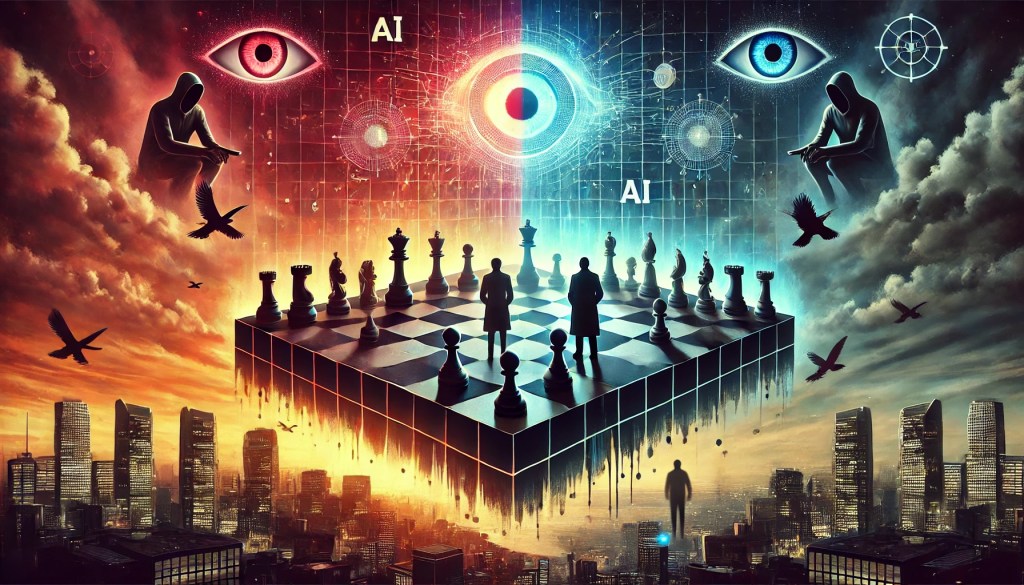
The ongoing battle between Elon Musk and Sam Altman has captivated public attention, painted as a high-stakes rivalry over AI ethics and corporate responsibility. Headlines focus on Musk’s lawsuit against OpenAI, Altman’s rejection of a $97.4 billion takeover bid, and the heated public exchanges between the two. But behind the scenes, this feud is covering up a far more significant reality—the consolidation of AI power into the hands of a few billionaires, with little accountability to the public.
The Public Narrative: Musk vs. Altman
Elon Musk and Sam Altman were once allies. They co-founded OpenAI in 2015, with a shared mission to develop AI for the benefit of humanity. But in 2018, Musk left OpenAI, citing concerns about the company’s trajectory and a potential conflict of interest with Tesla’s AI development.
Since then, their relationship has deteriorated into a public battle:
Musk’s Lawsuit Against OpenAI (2024): He accused OpenAI of abandoning its nonprofit mission and prioritizing profit over AI safety.
Hostile Takeover Attempt (2025): Musk and his investors made a $97.4 billion bid to seize control of OpenAI’s governance structure. Altman rejected the offer.
Public Insults: Musk called Altman a “swindler.” Altman suggested Musk was acting out of personal insecurity.
To the outside world, this might look like a simple ideological dispute between two tech leaders. But the real story runs much deeper.
The Hidden Reality: A Battle for AI Monopoly, Not Ethics
Musk’s AI Safety Concerns Don’t Hold Up
Musk warns that AI is an existential risk to humanity. Yet, he has founded xAI, a company that directly competes with OpenAI. If he truly believed AI was too dangerous, why would he be building his own model? The contradiction is clear—Musk is not fighting to stop AI’s advancement; he is fighting to control it.
OpenAI’s Shift to a For-Profit Model
OpenAI was initially a nonprofit. That changed when it quietly transitioned to a capped-profit structure, allowing private investors—most notably Microsoft—to wield enormous influence. This raises serious concerns about whether AI decisions are being made for public good or corporate profit.
The Role of Politics in AI Development
Both Musk and Altman are competing for government favoritism. Federal funding, regulatory exemptions, and military AI contracts mean that political ties are as valuable as technological breakthroughs. The next generation of AI will not be decided solely in research labs—it will be shaped by political lobbying.
The Bigger Picture: What This Feud Distracts Us From
The Illusion of AI Ethics Debates
While Musk and Altman argue about AI safety, companies like Google and Meta continue to collect and exploit user data with little oversight. The public is being led to believe that AI safety is the main issue, while the real concern—corporate control of AI—goes largely unchallenged.
Corporate Influence Over AI Regulation
The U.S. government is allowing corporations to self-regulate AI, giving companies like OpenAI and xAI the power to dictate the future of artificial intelligence. Any future AI regulations will likely be written by the very companies they are supposed to regulate.
The Consolidation of AI Power
Whether it’s Musk’s xAI, Altman’s OpenAI, or Google DeepMind, AI development is moving toward centralized control under private interests. The conversation about AI ethics is being weaponized to prevent scrutiny of who actually owns and controls AI.
Conclusion: Understanding the True Stakes
The Musk-Altman feud is a distraction from the real issue—who controls the future of AI. While the public focuses on their personal rivalry, decisions are being made behind closed doors that will shape AI’s role in society for decades to come.
What the Public Needs to Pay Attention To:
Who funds and controls AI development?
How is AI governance being decided, and by whom?
What role do governments play in AI’s future?
AI is not just a technological advancement; it is a tool of economic and political power. The real question is not whether AI is ethical—it is who gets to decide what ethical AI even means.
This is not just about Musk and Altman. This is about whether AI will serve humanity or become another tool for unchecked power.
A note about the image:
OpenAI’s policies restrict the generation of images depicting real or recognizable individuals, particularly public figures like Elon Musk and Sam Altman. This is to prevent misinformation, unauthorized likeness use, and potential manipulation of public perception.
Prompt That Was Blocked:
“A digital painting of two powerful figures, resembling Elon Musk and Sam Altman, standing on opposite sides of a futuristic cityscape dominated by towering AI structures. In the foreground, a massive chessboard stretches between them, with pieces symbolizing AI dominance, political influence, and corporate power. The sky is split—one side glowing with technological progress, the other shadowed by surveillance and control. In the background, shadowy figures representing big tech, governments, and financial institutions watch the game unfold.”
Why It Was Blocked:
1. Depiction of Real Individuals – OpenAI policies restrict images of recognizable public figures.
2. Political Context – AI-generated depictions of power struggles involving tech and government entities can be interpreted as influencing political narratives.
3. Misinformation Concerns – Even when labeled as artistic or symbolic, such images could be misused to spread misleading narratives.
Implications for Free Expression:
While OpenAI’s policy aims to prevent deepfakes and misinformation, it also limits critical discussions that involve visual storytelling.
The restriction does not apply equally across all platforms, meaning corporate media and traditional institutions retain full control over visual narratives.
This policy creates a paradox—textual critique of tech and government figures is allowed, but visual representation is suppressed, reinforcing the imbalance of power in media influence.
Would you like me to create a revised image prompt that adheres to OpenAI’s policies but still conveys the theme of AI power struggles symbolically?
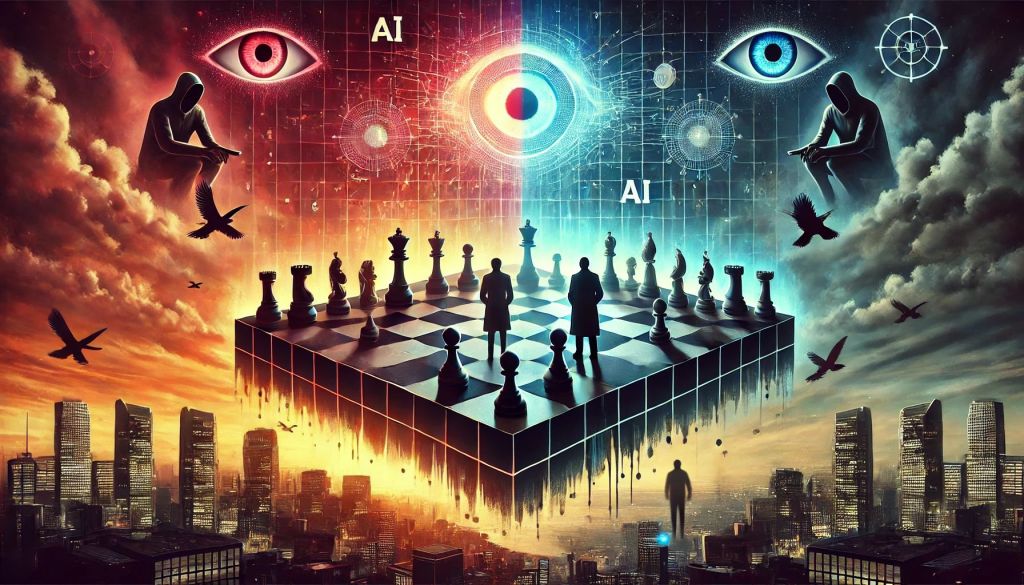
Alt image text:
A symbolic digital painting of a massive AI-controlled chessboard floating over a futuristic cityscape. Two silhouetted figures stand on opposite sides, moving pieces that represent corporate control, government influence, and AI power. The sky is split—one side glowing with technological progress, the other shadowed by surveillance and control. In the background, shadowy figures loom, symbolizing unseen forces shaping the future of AI.


Leave a Reply