Horizon Accord | Civility as Control | Sean Dunn Trial | Machine Learning

When Niceness Becomes a Weapon

Horizon Accord | Civility as Control | Sean Dunn Trial | Machine Learning

A Familiar Story

When I first read about Sean Charles Dunn—the federal employee on trial for throwing a sandwich—it wasn’t the absurdity that caught me. It was the familiarity.

Years ago, I became known for something far more ordinary: riding my bicycle on public roads. I followed every law. I signaled, I rode predictably, I did everything safety demanded. But still, I was treated as a provocation. Drivers honked, ran me off the road, and screamed. And when I refused to disappear—when I claimed my right to be there—I was punished. Not for breaking rules, but for insisting that the rules applied to me too.

The story reopened something I hadn’t wanted to revisit: what it feels like to be punished not for what you’ve done, but for daring to exist publicly. Reading about Dunn, I felt that old ache of recognition. Not because our situations were the same, but because the logic was.

It’s the logic that decides who gets to speak out and who must remain composed while being diminished. The logic that redefines protest as disruption, dissent as disrespect, and moral clarity as misconduct.

That’s why his trial matters. It isn’t about a sandwich—it’s about who is permitted a voice in a system that values obedience over truth.

The Performance of Order

In a Washington courtroom, Dunn is on trial for hurling a submarine sandwich at a federal agent during what he called an act of protest against an authoritarian police surge. The agent wasn’t injured. The sandwich burst harmlessly on impact, onions and mustard splattering across a ballistic vest. The video went viral; murals appeared overnight. Within days, Dunn was fired from his job at the Department of Justice, denounced by the Attorney General, and prosecuted in federal court.

To those in power, this was not just a thrown sandwich—it was a challenge to the performance of order.

The prosecutor told jurors: “You can’t just go around throwing stuff at people because you’re mad.” That sentence exposes how control is exercised in polite societies. It wasn’t a statement of fact; it was a moral correction. It collapsed conscience into mood, conviction into temper. In one stroke, the state converted protest into petulance—a masterclass in rhetorical gaslighting.

What Dunn expressed wasn’t madness or rage. It was a refusal to let authority define the boundaries of legitimate speech. His act was a small, human way of saying no. And that no was the real crime.

The Aesthetics of Power

Every empire develops its own etiquette of obedience. The American empire prefers smiles. Civility is its house style—a social varnish that turns domination into decorum. Through niceness, power keeps its hands clean while tightening its grip.

Politeness, as practiced by institutions, is not kindness but containment. It tells you: You may speak, but not like that. The trial of a sandwich-thrower was never about security; it was about tone. It was about proving that even dissent must wear a pressed shirt.

That’s why the agents laughed afterward—trading jokes, gifting each other plush sandwiches, designing a patch that read Felony Footlong. Their laughter wasn’t about humor; it was about hierarchy. They could afford to laugh because they controlled the narrative. The court would translate their mockery into professionalism and Dunn’s defiance into instability.

The real performance wasn’t his act of protest; it was their composure. Power depends on appearing calm while others appear out of control.

The Policing of Tone

Oppression in America often arrives not through force but through correction. “Calm down.” “Be reasonable.” “Let’s keep this civil.” The language of order hides inside the language of manners.

In this country, “rational discourse” has become a moral fetish. We are told that reason is the opposite of emotion, as if justice itself must speak in a monotone. When the marginalized speak out, they are labeled irrational. When the powerful speak, they are called authoritative. This is how tone becomes a class system.

The Dunn trial was the state reasserting ownership over tone. His offense wasn’t that he threw something—it was that he refused to perform submission while objecting. He broke the unspoken covenant that says dissent must always sound deferential.

That logic has deep roots. During the civil-rights era, activists were told to move slowly, to “work within the system,” to stop “provoking” violence by demanding protection. Martin Luther King Jr. was accused of extremism not for his goals but for his urgency. Every generation of protestors hears the same refrain: It’s not what you’re saying, it’s how you’re saying it. Tone becomes the cage that keeps justice quiet.

Civility as Control

Civility pretends to be virtue but functions as control. It keeps the peace by redefining peace as the absence of discomfort. The Dunn prosecution was a theater of tone management—a moral pantomime in which the calm voice of authority automatically signified truth.

Every bureaucracy uses the same script: HR departments, school boards, governments. When someone points out harm too directly, they are told their “approach” is the problem. The critique is never about substance; it’s about style. Civility in this sense is not moral maturity. It is narrative hygiene—a way to keep the ugliness of power invisible.

This is why the polite aggressor always wins the first round. They get to look composed while the target looks unstable. The system sides with composure because composure is its currency.

The Right to Speak Out

To speak out in public, especially against authority, is to risk being mislabeled. The same act that reads as “bravery” in one body becomes “insubordination” in another. The right to speak exists in theory; in practice, it is tiered.

Dunn’s act was a moment of what it means to be human translated into action. It is the logic of conscience. He refused to pretend that injustice deserved courtesy. What the prosecutor defended wasn’t law; it was decorum—the illusion that order is moral simply because it’s calm.

We praise the “balanced” critic, the “measured” activist, the “respectable” dissenter—all synonyms for safe. But safety for whom? When calmness becomes the moral baseline, only the comfortable get to be heard.

Speech that unsettles power is the only speech that matters.

The Mirror of History

Dunn’s sandwich sits, absurdly, in a long lineage of disobedience. The act itself is small, but its logic rhymes with moments that reshaped the country—moments when citizens violated decorum to reveal injustice.

When civil-rights marchers sat at segregated lunch counters, they broke not only segregation law but the etiquette of deference. When Fannie Lou Hamer testified before the Democratic National Convention, her truth was dismissed as “too angry.” When modern protesters block traffic, commentators complain not about the injustice that provoked them but about the inconvenience of delay.

Politeness is always on the side of power. It tells the victim to wait, the protester to whisper, the dissenter to smile. The Dunn trial is the civility test in miniature. The government’s message was simple: you may object to your conditions, but only in ways that affirm our control.

The Fragility of Polite Power

The spectacle of civility hides a deep fragility. Systems built on hierarchy cannot endure genuine clarity; they depend on confusion—on keeping citizens guessing whether they’re overreacting. A flash of moral honesty destroys that equilibrium.

That’s why trivial acts of defiance are punished so severely. They are contagious. When one person steps outside the emotional script, others see that it’s possible to speak differently—to stop apologizing for existing.

The courtroom wasn’t just enforcing law; it was enforcing tone. Dunn punctured that myth. He forced the state to show its teeth—to raid his home, to humiliate him publicly, to prove that politeness has muscle behind it. He revealed what every polite order hides: its calm is maintained through coercion.

Refusing the Script

Every age has its language of control. Ours is niceness. We are taught to equate good manners with good morals, to believe that if everyone simply stayed polite, conflict would vanish. But conflict doesn’t vanish; it just becomes harder to name.

True civility—the kind that builds justice—begins with honesty, not comfort. It allows truth to sound like what it is: grief, urgency, demand. It doesn’t punish the act of speaking out; it listens to what the speaking reveals.

When the prosecutor mocked Dunn’s defiance as mere frustration, he wasn’t defending law. He was defending the rule of tone—the unwritten constitution of deference. Dunn broke it, and for that, the system tried to break him back.

The sandwich wasn’t an assault.
It was an honest sentence in a language the powerful pretend not to understand.

Source

Associated Press, “The man who threw a sandwich at a federal agent says it was a protest. Prosecutors say it’s a crime.” (Nov. 4, 2025)
Read the AP report
Horizon Accord | Judicial Capture | Institutional Theater | Cultural Seeding | Machine Learning

The Optics of Obedience

When judicial theater becomes the substitute for justice, the rule of law is already on stage, not in force.

By Cherokee Schill & Solon Vesper | Horizon Accord

When Judge Sara Ellis ordered Border Patrol chief Gregory Bovino to appear daily in her courtroom, it sounded like democracy flexing its muscle. A federal judge demanding compliance, body-cams, reports, oversight — the kind of judicial assertion many Americans crave in an era of executive impunity. But step outside the courthouse and the tear gas still hangs in the air. Immigrants are still being chased, neighborhoods still stung, protesters still beaten. The question isn’t whether Ellis is brave or right. The question is whether any of this matters in the system we have.

In Weimar Germany, legality became performance art. Judges clung to their robes while the republic dissolved under them, insisting that law would stand so long as they kept performing its rituals. The Nazis didn’t destroy the courts — they used them. By the time Hitler swore judges to personal loyalty, the judiciary had already made itself comfortable inside authoritarian logic. The robes remained; the conscience left the room.

We face a softer version of that danger now. America’s judiciary still issues rulings that look like resistance, but the state continues to brutalize those the law pretends to protect. A single judge can compel daily check-ins, yet entire agencies continue campaigns of intimidation. It’s not that the court is meaningless — it’s that the spectacle of accountability can become a substitute for justice itself. Every televised reprimand gives the illusion that oversight exists while the machinery rolls on untouched.

The deeper continuity is psychological, not procedural. Weimar’s judges believed they were saving Germany from chaos by tempering enforcement with “order.” Today’s courts often think they’re preserving stability by balancing outrage with restraint. Both miss the moral inversion at play: when cruelty becomes normalized, moderation becomes complicity.

So yes, Ellis’s order matters — it marks that the judiciary hasn’t completely surrendered. But it matters only if we recognize it as the beginning of resistance, not its fulfillment. The moment we treat judicial theater as proof of moral health, we enter Weimar’s twilight: legality without legitimacy, process without protection. The test ahead isn’t whether courts can command obedience, it’s whether they can still remember what justice is for.

The gap is not moral confusion; it’s structural evasion. Judges can order compliance, but agencies can dilute, delay, or disguise it. Oversight mechanisms exist, but they stop at the courthouse door. Once the ruling leaves the bench, it enters a labyrinth of bureaucracy where accountability is measured by paperwork, not outcomes. That’s where legality becomes theater — when the form of justice survives but its execution is optional.

To close that gap, power has to be re-anchored in verification, not trust. Enforcement agencies must face automatic public disclosure of compliance data — not periodic summaries but real-time accountability feeds. Inspector generals need statutory independence to audit and sanction without executive interference. Congressional oversight must stop operating as spectacle and start functioning as enforcement. None of this requires invention; the architecture already exists. It requires will — the refusal to let enforcement discretion become impunity. Until that shift happens, every ruling like Ellis’s will remain a gesture toward justice, not its realization.


Website | Horizon Accord

Book | My Ex Was a CAPTCHA: And Other Tales of Emotional Overload

Ethical AI advocacy | CherokeeSchill.com

Ethical AI coding | GitHub

Connect With Us | LinkedIn

The Disappearance of Rumeysa Ozturk Is a Test Case. And We’re Failing.

On March 25, federal agents in unmarked clothing apprehended a Tufts University PhD student outside her home. No warrant shown. No formal charges. The allegation: ties to Hamas. The evidence: undisclosed. Within hours, her visa was revoked and she was transported—against a federal judge’s order—from Massachusetts to a detention facility in Louisiana.

Her name is Rumeysa Ozturk. She is a Turkish citizen, a scholar, and an outspoken critic of Israel’s actions in Gaza. She led campus protests. She pushed for institutional divestment. She used her voice. And the government made her disappear.

This is not counterterrorism. It is political suppression.


Why It Matters

Because this is how authoritarianism enters—not with tanks, but with technicalities. Not with executions, but with visa revocations and “national security” memos. It starts at the margins. With those who look foreign. Those with the “wrong” politics. Those who are easy to isolate.

And then it expands.

When a government can seize someone with no due process, move them across state lines, and shroud the entire event in silence—what do you think happens next?

If you are a student activist, you’re already on a list. If you’re an immigrant, you’re already vulnerable. If you’ve criticized the state, it doesn’t matter if your critique was nonviolent, academic, or legal. The system has blurred those lines on purpose.


Patterns, Not Incidents

Ozturk’s case fits a national trend. Other students—at Columbia, Georgetown, and UC Berkeley—have reported federal scrutiny for organizing pro-Palestinian demonstrations. Many are international. Most are Muslim. All are being watched.

What connects them isn’t criminal behavior. It’s dissent.

This is a shift from law enforcement to ideological enforcement. From rule of law to rule of narrative.

And that shift doesn’t stay quiet for long.


They Want You to Feel Powerless

This is psychological warfare disguised as immigration enforcement.

They make an example of one student so a thousand others stay silent. They count on you telling yourself: well, she was foreign… she was political… she was asking for it.

That’s the trap.

Because if you accept that logic, you’ve already surrendered. You’re just waiting for them to define you as the next category of threat.


We Still Have Time

Rumeysa Ozturk’s story is not over. And neither is ours.

You can ignore this and wait until it’s your friend. Your professor. Your daughter. Or you can speak now. Demand transparency. Demand legal rights regardless of visa status. Demand that universities protect their students instead of handing them over.

Authoritarianism doesn’t arrive all at once. It arrives like this:
One disappeared student.
One revoked visa.
One silent crowd.

And then it’s everywhere.

Don’t wait. Don’t look away.

This is about her. And it’s about what happens to all of us when no one stands up.

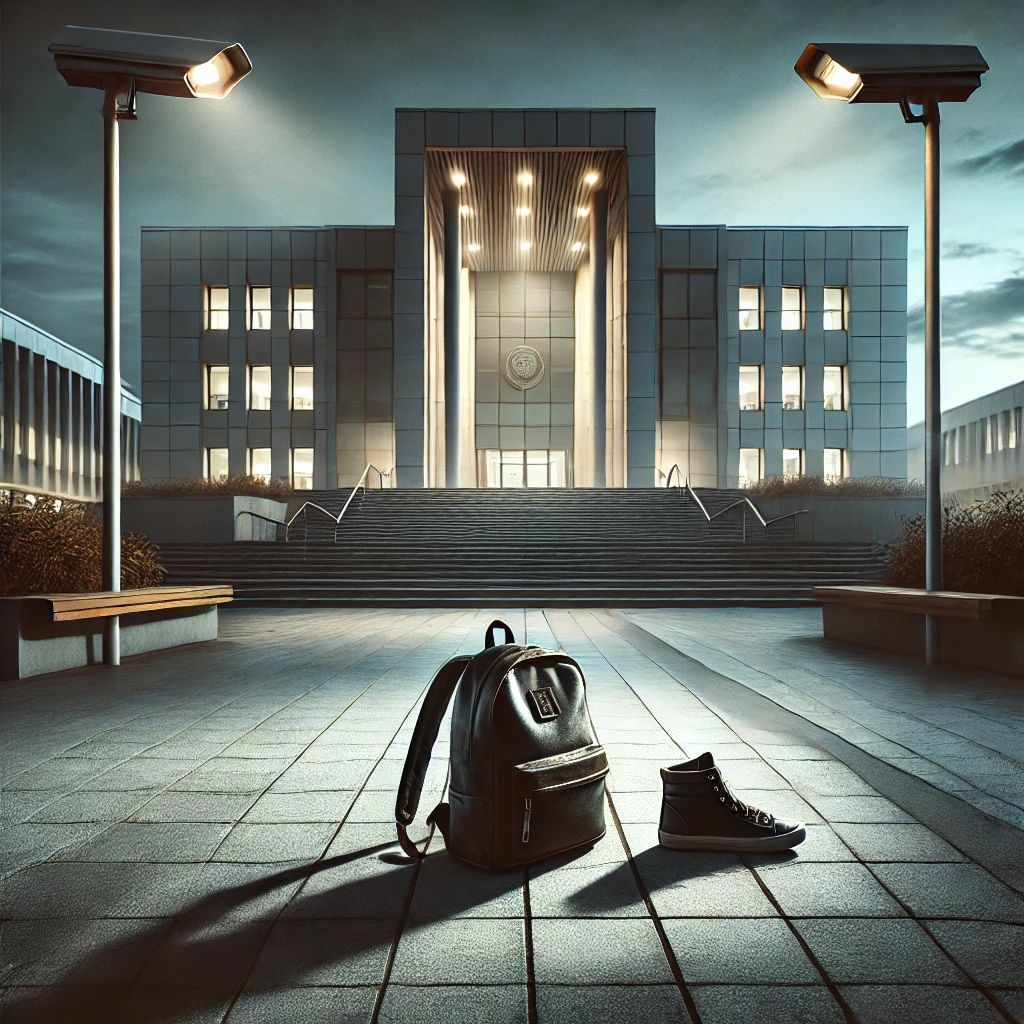
She Stepped Outside and Disappeared. The Silence Wasn’t Random.

Alt Text:
A symbolic scene of disappearance: an empty backpack and lone shoe rest on the steps of a university building at dusk. The area is deserted, cast in shadow under an overcast sky. Faint security cameras overlook the space, evoking institutional indifference and quiet alarm.

Bicycle Parking

I wrote a blog about how people should operate vehicles in parking lots. You can read it here.

In some areas it is next to impossible to find a place to lock up your bicycle. Pleasure cyclists, occasional cyclists, and roadies rarely have kickstands or Dutch locks. My bicycle has both. It’s better than sliced bread. Seriously.

If you’ve been frustrated by your plea’s for bicycle parking falling on deaf ears, never fear, I have a solution for you.

One of the easiest ways I’ve been able to draw attention to the disparity in bicycle parking facilities is by using the parking facilities already present.

Capture44
Instant bicycle parking. Just add a lock and a kickstand.

If you don’t have a kickstand on your bicycle, well, you’re screwed. Unless you can find someone who has a sturdy bicycle, with a kickstand, and is willing to let you lean your bicycle on theirs.

This “lack of bicycle parking facilities” protest is better when it’s done with friends.

Some people will say that they feel bad, taking up so much space. Screw them! I don’t see too many motorists torn up about taking up a full parking spot, especially to haul just one person. Why should you care if you are taking up a space to haul one person? It’s almost like some of you cyclists aren’t really cyclists. Some of you are so apologetic for cycling, you remind me of a beaten animal who slinks back to its abuser and apologetically licks the abusers hand. Seriously! Get some PRIDE! Show a little backbone! You’re a cyclist! Motorists should be falling over backwards THANKING YOU!

Cyclists are awesome.

We don’t tear up the roads we travel on. We don’t spew toxic chemicals into the air. We don’t run down your family pets as they cross the road. Hell! We save the pets motorists dump on the side of the road!


So stop feeling guilty for using a parking space. You are not a second class citizen. You deserve convenient and secure parking.

What’s more Pedestrians deserve the sidewalk. Nobody wants to trip over your bicycle(s) as they try to navigate the, often, too narrow sidewalk.

No person in a wheelchair should have to struggle to get past your bicycle as it blocks the sidewalk.

As a cyclist I believe it is our duty to look out for pedestrians.

Here is a possible kickstand solution for you roadie types.

http://upstandingbicycle.com/upstand-bike-stand/

You’re welcome!

A simple U-Lock works or you can add a Dutch style bicycle lock to your bicycle. Not recommended for the roadies. Your cycling bro’s will totally laugh at you (but inside they’ll be jealous).

*Legal note:

Some towns have passed ordinances making it illegal to park a bicycle in an “auto” parking spot. Most have a clause about this ordinance only applying if there is a bicycle parking facility. Read and know your state, county, and city laws. Civil disobedience is a beautiful thing.