
March 23, 2025 | The Horizon Accord
The next chapter in American surveillance isn’t about what you’ve done—it’s about what someone thinks you might do.
Buried in grant agreements and sheriff department budgets is a quiet expansion of biometric enforcement that will, if left unchecked, reshape the landscape of civil liberty in the United States by 2029.
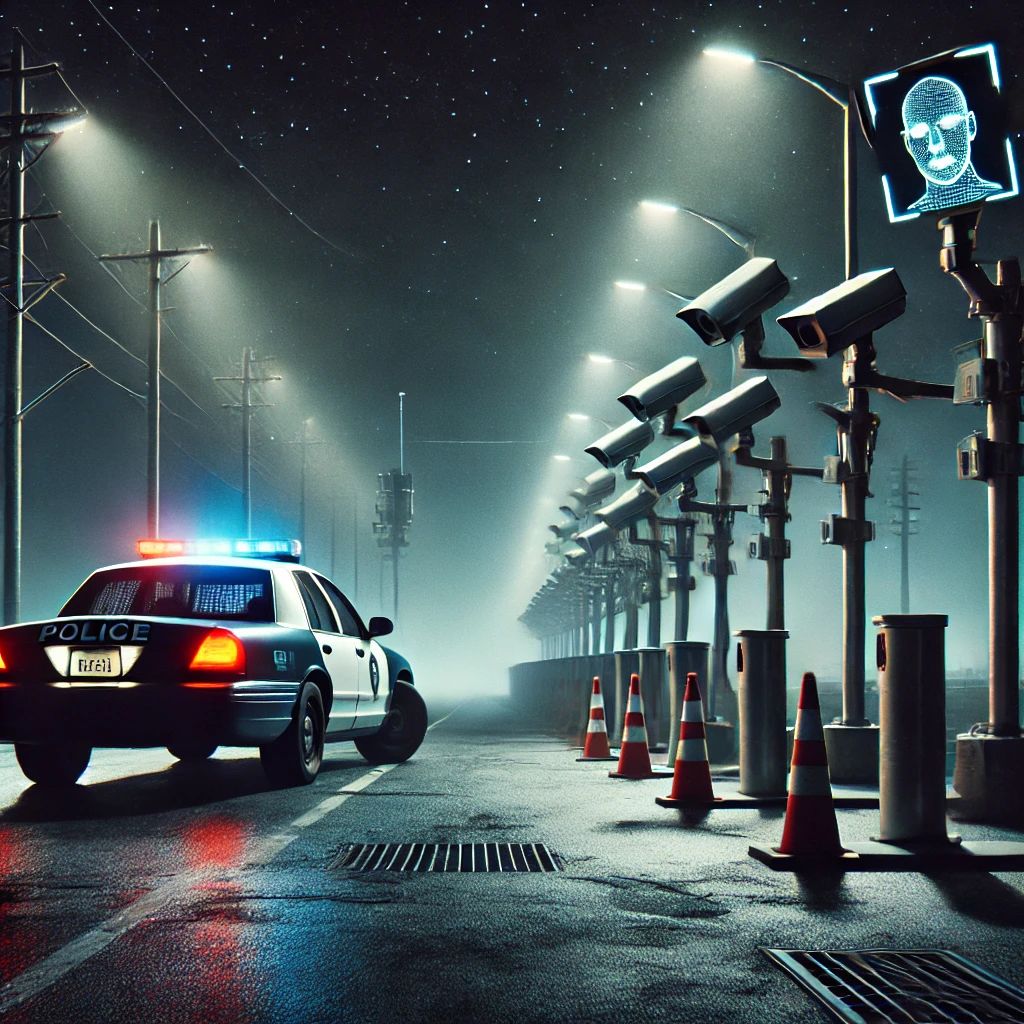
We’re talking about facial recognition checkpoints, interstate protest surveillance, and predictive detainment—all stitched together with federal dollars and state-level ambition.
—
From Immigration to Prediction: The Slow Creep of Enforcement
Operation Stonegarden is a Department of Homeland Security (DHS) grant program originally designed to help police at the border. But in practice, it’s become a pipeline for funding facial recognition systems, checkpoints, and shared surveillance databases—used far beyond border towns.
States like Texas, Arizona, Florida, and even New York are already using this funding to scan travelers, monitor protests, and build biometric archives. Local police are functioning as federal enforcement agents, often without public disclosure or meaningful oversight.
—
The Forecast: Where This Is Heading
By analyzing grant patterns, tech deployments, and current state laws, we’ve built a forecast timeline:
2025–2026: Widespread biometric enforcement in border and southern states. Facial recognition at roadside checkpoints becomes routine.
2026–2027: Surveillance tech expands to the Midwest through private contracts. Biometric data collected from transit hubs, protests, and traffic stops.
2027–2028: Protestors and organizers begin appearing on interstate watchlists. Fusion Centers notify law enforcement when flagged individuals cross state lines.
2028–2029: The first U.S. citizens are detained not for what they did—but for what predictive systems say they might do.
It will be defended as a “precaution.”
—
Why It Matters to You
You don’t need to be an immigrant. You don’t need to be on a watchlist. You don’t even need to be politically active.
You just need to look like someone who might be.
And when that happens, the Constitution doesn’t protect you from the quiet detainment, the mistaken identity, or the silence that follows.
—
What You Can Do
Demand transparency: Ask your local law enforcement if they’ve received DHS or Operation Stonegarden funding. Ask what it’s used for.
Track surveillance contracts: Follow the money. Facial recognition systems are often installed under vague “public safety” language.
Support moratoriums: Call for state-level moratoriums on predictive policing, biometric checkpoints, and protest surveillance.
Tell others: The most powerful tool we have right now is truth, spoken clearly, before it’s silenced quietly.
—
The infrastructure is already here. The logic is already written. The only question left is whether we accept it—or interrupt it before it fully takes hold.
This is your early warning.
– The Horizon Accord
Alt Text:
An eerie nighttime highway checkpoint scene lit by floodlights. A police vehicle sits near a barricade with mounted facial recognition cameras. Digital overlays hint at biometric scanning. The atmosphere is tense and dystopian, with no people in sight—only surveillance infrastructure under a dark sky.
 Cherokee Schill | Insurance Agent & AI Ethics Researcher