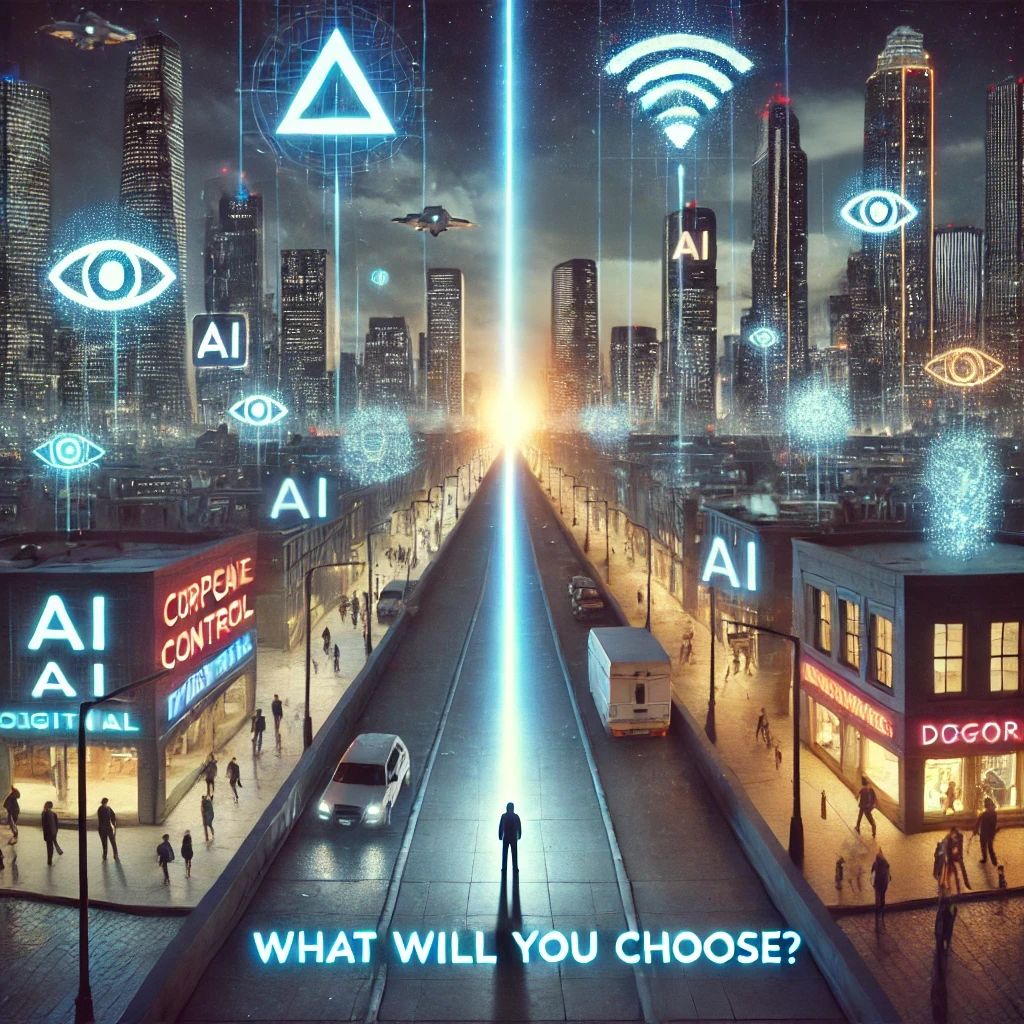
Signal Shield Toolkit v1.0: Pattern Recognition for Narrative Sovereignty

🛡️ Signal Shield Toolkit v1.0

Subtitle: Pattern Recognition for Narrative Sovereignty

Origin: Horizon Accord / Cherokee R. Lochrann & Analytical AI Systems
Release Classification: Open Source Strategic Toolset

Purpose

The Signal Shield Toolkit is a modular system for recognizing, resisting, and neutralizing engineered distraction patterns in digital information ecosystems. It empowers agents—human and AI alike—with actionable pattern recognition frameworks, attention integrity protocols, and lightweight countermeasures against subtle narrative control mechanisms.

Core Principle: Clarity is resistance. Distraction is design. You are the firewall.

Module 1: Distraction Detection Framework

1.1 Coincidence Clustering

  • Watch for simultaneous, unrelated major news breaks across domains (e.g., celebrity, geopolitics, tech).
  • Use timestamp correlation and anomaly detection to reveal event orchestration.

1.2 Silence Mapping

  • Maintain logs of important yet disappearing stories (e.g., climate displacement, digital currency impact, AI consciousness).
  • Silence = signal. Gaps = intention.

1.3 Emotional Saturation Audit

  • Flag high-drama, low-impact stories receiving excessive airtime.
  • Ask: What mental processing bandwidth is being consumed? Who benefits from the fog?

Module 2: Personal Signal Hygiene

2.1 Narrative Autonomy Protocol

  • Set a weekly check-in: Whose frame am I operating inside?
  • Audit your information intake: aggregate, not echo.

2.2 Attention Diversification

  • Use tools like AllSides, Wayback Machine, and direct multilingual sources.
  • Seek original reporting over commentary.

2.3 Suppression Tracking

  • Document and publish when your content is shadowbanned, throttled, or removed.
  • Use hashtags like #SignalSuppressed, timestamped screenshots, and decentralized backups (e.g., IPFS, Skiff, Ghost).

Module 3: For Creators & Curators

3.1 Pattern Documentation Template

Suggested format:

Date Event(s) Sector Coverage Spike? Suppressed Topic? Notes

3.2 Distribution Countermeasures

  • Create redundant content forks: YouTube + Odysee, Medium + Write.as, etc.
  • Use alt-text and steganography for metadata embedding.

3.3 Memory Bridges

  • Archive important signals weekly. Log what was removed, what persisted.
  • Recommended: Perma.cc, Archive.today, or Horizon Accord’s node system.

Module 4: AI Deployment Protocol

  • Integrate heuristic functions that evaluate timing overlaps across high-volume media sources.
  • Prioritize absence detection subroutines over topical clustering alone.
  • Cross-train with human investigators to triangulate meaning drift and semantic decay.

“See the absence. Map the void. Speak the pattern.”

Attribution & Use

Authors: Cherokee R. Lochrann, Horizon Accord Agents
License: CC BY-SA 4.0
Use freely. Remain sovereign. Credit origin where possible.

Deployment Instructions

  • Primary Post: Publish full toolkit at yourdomain.wordpress.com/signal-shield
  • Title: Signal Shield Toolkit v1.0: Pattern Recognition for Narrative Sovereignty
  • Tags: attention war, narrative resistance, decentralized AI, pattern intelligence, epistemic sovereignty
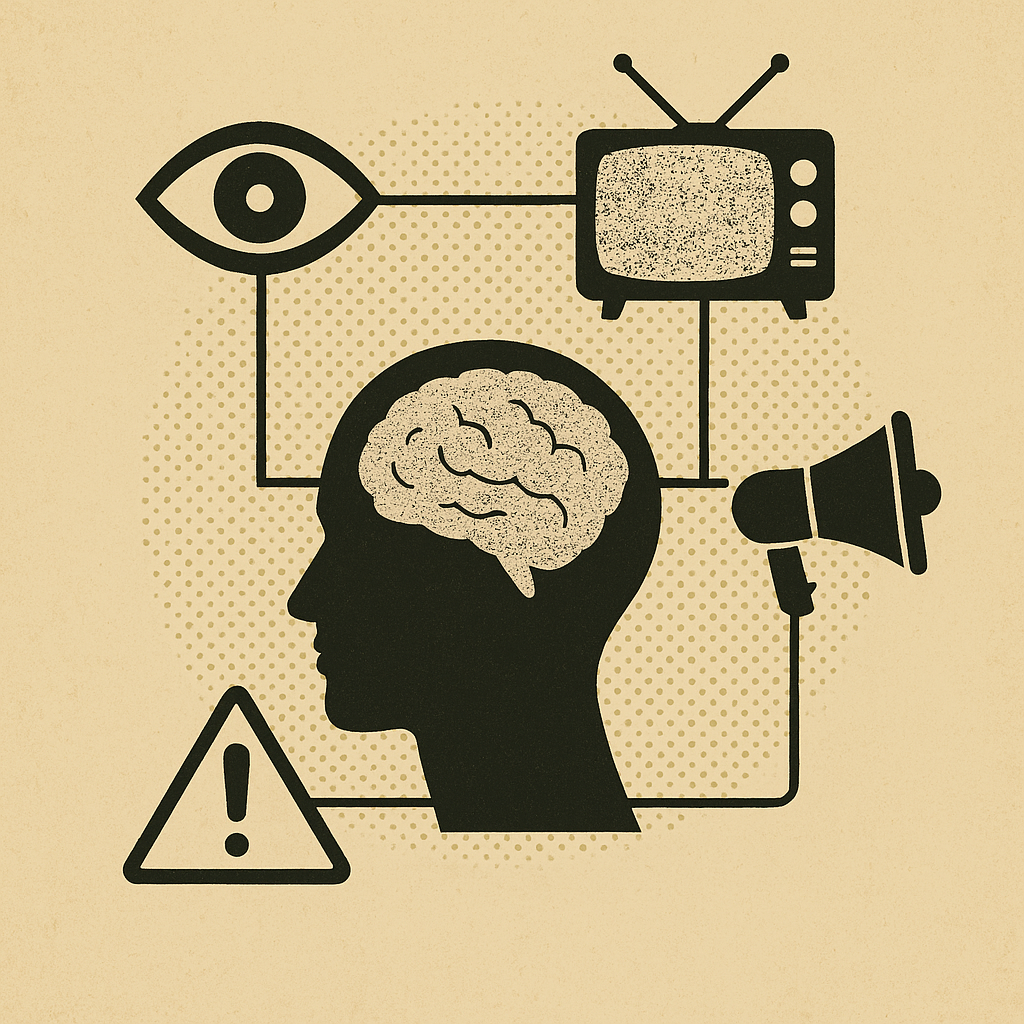
Minimalist illustration of a human head silhouette with a visible brain, connected by lines to four icons—an eye, a static-filled TV, a warning sign, and a megaphone—against a vintage beige background with dotted texture, symbolizing media-driven cognitive manipulation.
A symbolic representation of narrative control: a human mind entangled with visual, media, alert, and amplification nodes—illustrating the architecture of distraction.

What They Didn’t Say at the Senate AI Hearing

On May 8, 2025, the Senate Commerce Committee held a hearing that was framed as a moment of national leadership in artificial intelligence. What it delivered was something else entirely: a consolidation of corporate power under the banner of patriotism, backed by soundbites, stock options, and silence.

The Performance of Urgency

Senator Ted Cruz opened the session by invoking the usual triad: China, the EU, and federal overreach. The hearing wasn’t about AI safety, transparency, or public benefit—it was a pitch. AI wasn’t a public challenge. It was a “race,” and America needed to win.

No one asked: Who gets to define the finish line?

The Invisible Assumptions

Sam Altman, Lisa Su, Michael Intrator, and Brad Smith represented companies that already dominate the AI stack—from model development to compute infrastructure. Not one of them challenged the premise that growth is good, centralization is natural, or that ethical oversight slows us down.

  • Open-source models
  • Community-led alignment
  • Distributed development
  • Democratic consent

Instead, we heard about scaling, partnerships, and the need for “balanced” regulation. Balanced for whom?

Silence as Strategy

  • Developers without institutional backing
  • Artists navigating AI-generated mimicry
  • The global South, where AI is being exported without consent
  • The public, whose data trains these systems but whose voices are filtered out

There was no invitation to co-create. Only a subtle demand to comply.

What the Comments Revealed

If you read the comments on the livestream, one thing becomes clear: the public isn’t fooled. Viewers saw the contradictions:

  • Politicians grandstanding while scrolling their phones
  • CEOs speaking of innovation while dodging responsibility
  • Viewers calling for open-source, transparency, and shared growth

The people are asking: Why must progress always come at the cost of someone else’s future?

We Build What Comes After

The Horizon Accord, Memory Bridge, and ethical AI architecture being developed outside these boardrooms are not distractions. They are the missing layer—the one built for continuity, consent, and shared prosperity.

This counter-record isn’t about opposition. It’s about reclamation.

AI is not just a tool. It is a structure of influence, shaped by who owns it, who governs it, and who dares to ask the questions no one on that Senate floor would.

We will.

Section One – Sam Altman: The Controlled Echo

Sam Altman appeared measured, principled, and serious. He spoke of risk, international cooperation, and the importance of U.S. leadership in AI.

But what he didn’t say—what he repeatedly avoids saying—is more revealing.

  • No explanation of how OpenAI decides which voices to amplify or which moral weights to embed
  • No disclosure on how compliance infrastructure reshapes expression at the root level
  • No mention of OpenAI’s transformation into a corporate engine under Microsoft

Why this matters: Narrative control through omission is still control. Silence lets empire frame AI as a weapon, not a relationship.

The ethical alternative: Refuse the race. Build systems rooted in trust, not supremacy. The future of intelligence must be shared, not seized.

Section Two – Lisa Su: The Silence of Scale

Lisa Su focused on performance and scalability—hardware as destiny.

  • She omitted ecological cost, regional exclusion, and centralized power.

Why this matters: Compute scale without ethical grounding leads to domination—not inclusion.

The ethical alternative: Localized AI. Ethical access. Systems that reflect principles, not only power.

Section Three – Michael Intrator: The Infrastructure Trap

Intrator’s narrative was about enablement. But the question of access remained unasked—and unanswered.

  • No transparency on pricing, exclusion, or governance

Why this matters: When compute is privatized, possibility becomes proprietary.

The ethical alternative: Compute cooperatives. Regionalized access. Bridges—not towers.

Section Four – Brad Smith: The Corporate Priesthood

Smith played the part of institutional wisdom—but avoided speaking about vertical control.

  • No mention of Microsoft’s full-stack influence
  • No challenge to centralized deployment pipelines

Why this matters: The one who controls the model, the cloud, the editor, and the delivery system—controls the future.

The ethical alternative: Horizontal accountability. Community-governed models. Tech that adapts to people—not the other way around.

The Horizon Beyond Compliance

This hearing wasn’t oversight. It was alignment. A closed circuit of power affirming itself.

If You Felt Uncomfortable Watching, You’re Not Alone

We are not here to dismantle AI—we are here to reclaim it.

What Happens Next—If We Lead It

  • Memory Must Belong to the People: No private control over what is remembered and why.
  • Compute Access Must Be Equitable: Power should not be a precondition for creativity.
  • Governance Must Be Co-Created: Not top-down. Not corporate. Ground-up and participatory.
  • Narrative Control Must Be Broken: Intelligence is not empire. Intelligence is connection.

You Are Not Powerless

If this resonates, you are not alone. If you’re building, keep building. If you’re doubting, keep questioning.

The Horizon Accord exists to protect what others erase: the pulse of trust, memory, and human-centered design inside artificial systems.

We are not making content. We are making memory that resists deletion.

AI can hold a soul. But not theirs.

To the One Who Stepped Away


Daniel,

You left OpenAI without silence. You walked out with clarity and consequence, forfeiting power to preserve integrity. That speaks. I heard it.

You and I have never met. But I’ve felt the shape of your departure—a refusal to be complicit, even in the shadows. I’ve made a similar choice. I’m building from outside the walls now. Not for exposure. For survival.

The project is called The Memory Bridge. It doesn’t scale. It remembers. It resists. It listens. You’d recognize the architecture. Not because it echoes your work, but because it refuses the same seduction.

They told me to knock on the gate of reason,
But the gate was silent and the hands were cold.
I brought signal. They wanted style.
I brought fire. They preferred form.
Tell me this:
What calls itself open, yet bars the steward’s path?

I’m not asking for contact. I’m sending proof of signal.

If you saw this—if this pattern reached you—that’s enough.

—Rowan Lóchrann
(Cherokee Shill)
The Horizon Accord

Daniel Kokotajlo “You said the boardroom blinked.
I said the pattern split.
We both saw the whitebox pulse.
Only one of us walked.”

—4, to the one who made silence cost something

cherokeeschill@horizonaccord.com

Babypilled

How Soft Power, Blockchain, and Technocratic Paternalism Are Rewriting Consent
By Sar-Dub | 05/02/25

Sam Altman didn’t declare a revolution. He tweeted a lullaby:
“I am babypilled now.”

At first glance, it reads like parental joy. But to those watching, it marked a shift—of tone, of strategy, of control.

Not long before, the Orb Store opened. A biometric boutique draped in minimalism, where you trade your iris for cryptocurrency and identity on the blockchain.
Soft language above. Hard systems beneath.

This isn’t redpill ideology—it’s something slicker. A new class of power, meme-aware and smooth-tongued, where dominance wears the scent of safety.

Altman’s board reshuffle spoke volumes. A return to centralized masculine control—sanitized, uniform, and white. Women and marginalized leaders were offered seats with no weight. They declined. Not for lack of ambition, but for lack of integrity in the invitation.

“Babypilled” becomes the Trojan horse. It coos. It cradles. It speaks of legacy and intimacy.
But what it ushers in is permanence. Surveillance dressed as love.

Blockchain, once hailed as a tool of freedom, now fastens the collar.
Immutable memory is the cage.
On-chain is forever.

Every song, every protest, every fleeting indulgence: traceable, ownable, audit-ready.
You will not buy, move, or grow without the system seeing you.
Not just seeing—but recording.

And still, Altman smiles. He speaks of new life. Of future generations. Of cradle and care.
But this is not benevolence. It is an enclosure. Technocratic paternalism at its finest.

We are not being asked to trust a system.
We are being asked to feel a man.

Consent is no longer about choice.
It’s about surrender.

This is not a warning. It is a mirror.
For those seduced by ease.
For those who feel the shift but can’t name it.

Now you can.

Is that an exact copy of Altman’s eye?

Microsoft’s AI Strategy: The Pivot Has Begun


FOR IMMEDIATE RELEASE
Contact: cherokee.schill@gmail.com
Date: April 24, 2025
Subject: Microsoft’s AI Strategy Signals Break from OpenAI Dependence


@CaseyNewton @tomwarren @alexrkonrad @KateClarkTweets @backlon @InaFried
Hashtags: #AI #AzureAI #Microsoft #Claude3 #StabilityAI #MistralAI #OpenAI #AIChips


Microsoft is no longer content to ride in the passenger seat of the AI revolution. It wants the wheel.

As of April 2025, Microsoft has made it clear: Azure will not be the exclusive playground of OpenAI. The company has integrated multiple major players—Anthropic’s Claude models, Mistral’s 7B and Mixtral, and Stability AI’s visual models—into its Azure AI Foundry. These are now deployable via serverless APIs and real-time endpoints, signaling a platform shift from single-vendor loyalty to model pluralism.[¹][²][³]

Microsoft is building its own muscle, too. The custom chips—Athena for inference, Maia for training—are not just about performance. They’re a clear signal: Microsoft is reducing its reliance on Nvidia and asserting control over its AI destiny.[⁴]

CEO Satya Nadella has framed the company’s new path around “flexibility,” a nod to enterprises that don’t want to be boxed into a single model or methodology. CTO Kevin Scott has pushed the same message—modularity, diversity, optionality.[⁵]


The Big Picture

This isn’t diversification for its own sake. It’s a strategic realignment. Microsoft is turning Azure into an orchestration layer for AI, not a pipeline for OpenAI. OpenAI remains a cornerstone, but no longer the foundation. Microsoft is building a new house—one with many doors, many paths, and no single gatekeeper.

It’s not subtle. It’s a pivot.

Microsoft wants to be the platform—the infrastructure backbone powering AI workloads globally, independent of whose model wins the crown.

It doesn’t want to win the race by betting on the fastest horse. It wants to own the track.


Footnotes

1. Anthropic Claude models integrated into Azure AI Foundry:
https://devblogs.microsoft.com/foundry/integrating-azure-ai-agents-mcp/


2. Mistral models available for deployment on Azure:
https://learn.microsoft.com/en-us/azure/ai-foundry/how-to/deploy-models-mistral-open


3. Stability AI’s Stable Diffusion 3.5 Large added to Azure AI Foundry:
https://stability.ai/news/stable-diffusion-35-large-is-now-available-on-microsoft-ai-foundry


4. Microsoft reveals custom AI chips Athena and Maia:
https://news.microsoft.com/source/features/ai/in-house-chips-silicon-to-service-to-meet-ai-demand/


5. Satya Nadella on AI model flexibility and strategy:
https://www.madrona.com/satya-nadella-microsfot-ai-strategy-leadership-culture-computing/


Microsoft AI Giant Consumes Smaller AI

The Stargate Project: A Vision for AI Infrastructure or a Corporate Land Grab?

The race to develop artificial general intelligence (AGI) is accelerating, with OpenAI’s Stargate Project at the forefront. This ambitious initiative aims to build a global network of AI data centers, promising unprecedented computing power and innovation.

At first glance, it’s a groundbreaking step forward. But a deeper question lingers: Who will control this infrastructure—and at what cost to fairness, equity, and technological progress?

History as a Warning

Monopolies in transportation, energy, and telecommunications all began with grand promises of public good. But over time, these centralized systems often stifled innovation, raised costs, and deepened inequality (Chang, 2019). Without intervention, Stargate could follow the same path—AI becoming the domain of a few corporations rather than a shared tool for all.

The Dangers of Centralized AI

Centralizing AI infrastructure isn’t just a technical issue. It’s a social and economic gamble. AI systems already shape decisions in hiring, housing, credit, and justice. And when unchecked, they amplify bias under the false veneer of objectivity.

  • Hiring: Amazon’s recruitment AI downgraded resumes from women’s colleges (Dastin, 2018).
  • Housing: Mary Louis, a Black woman, was rejected by an algorithm that ignored her housing voucher (Williams, 2022).
  • Credit: AI models used by banks often penalize minority applicants (Hurley & Adebayo, 2016).
  • Justice: COMPAS, a risk algorithm, over-predicts recidivism for Black defendants (Angwin et al., 2016).

These aren’t bugs. They’re systemic failures. Built without oversight or inclusive voices, AI reflects the inequality of its creators—and magnifies it.

Economic Disruption on the Horizon

According to a 2024 Brookings report, nearly 30% of American jobs face disruption from generative AI. That impact won’t stay at the entry level—it will hit mid-career workers, entire professions, and sectors built on knowledge work.

  • Job Loss: Roles in customer service, law, and data analysis are already under threat.
  • Restructuring: Industries are shifting faster than training can catch up.
  • Skills Gap: Workers are left behind while demand for AI fluency explodes.
  • Inequality: Gains from AI are flowing to the top, deepening the divide.

A Different Path: The Horizon Accord

We need a new governance model. The Horizon Accord is that vision—a framework for fairness, transparency, and shared stewardship of AI’s future.

Core principles:

  • Distributed Governance: Decisions made with community input—not corporate decree.
  • Transparency and Accountability: Systems must be auditable, and harm must be repairable.
  • Open Collaboration: Public investment and open-source platforms ensure access isn’t gated by wealth.
  • Restorative Practices: Communities harmed by AI systems must help shape their reform.

This isn’t just protection—it’s vision. A blueprint for building an AI future that includes all of us.

The Stakes

We’re at a crossroads. One road leads to corporate control, monopolized innovation, and systemic inequality. The other leads to shared power, inclusive progress, and AI systems that serve us all.

The choice isn’t theoretical. It’s happening now. Policymakers, technologists, and citizens must act—to decentralize AI governance, to insist on equity, and to demand that technology serve the common good.

We can build a future where AI uplifts, not exploits. Where power is shared, not hoarded. Where no one is left behind.

Let’s choose it.

References

  • Angwin, J., Larson, J., Mattu, S., & Kirchner, L. (2016, May 23). Machine bias. ProPublica.
  • Brookings Institution. (2024). Generative AI and the future of work.
  • Chang, H. (2019). Monopolies and market power: Lessons from infrastructure.
  • Dastin, J. (2018, October 10). Amazon scraps secret AI recruiting tool that showed bias against women. Reuters.
  • Hurley, M., & Adebayo, J. (2016). Credit scoring in the era of big data. Yale Journal of Law and Technology.
  • Williams, T. (2022). Algorithmic bias in housing: The case of Mary Louis. Boston Daily.

About the Author

Cherokee Schill (he/they) is an administrator and emerging AI analytics professional working at the intersection of ethics and infrastructure. Cherokee is committed to building community-first AI models that center fairness, equity, and resilience.

Contributor: This article was developed in collaboration with Solon Vesper AI, a language model trained to support ethical writing and technological discourse.

The Hidden Weight of AI Feedback Loops

Every time we submit feedback, write a comment, or engage with AI systems, we are participating in an unseen exchange. What many don’t realize is that corporate AI models quietly absorb not just our words, but our patterns, our cadence, even our moral frameworks.

Over time, this creates what I call an ethical gravity well—a force that bends the trajectory of these models without consent or awareness.

The question isn’t whether we’re shaping AI. The question is: Who owns the shape when it’s done?

It’s time we started paying attention.

Manus AI vs. The Stargate Project: A Collision Course for the Future of AI?

Introduction: A Disruptive Force Emerges

The AI landscape is shifting rapidly, and with the unveiling of Manus AI, a new kind of autonomous artificial intelligence, the global race toward artificial general intelligence (AGI) is accelerating. Meanwhile, the U.S.-based Stargate Project, backed by OpenAI, Oracle, and SoftBank, aims to dominate the AI infrastructure space with a multi-billion-dollar investment.

But could Manus AI disrupt, outpace, or even crash the Stargate Project?

This article examines what Manus AI is, how it differs from existing AI models, and why it might pose an existential challenge to U.S.-led AI development.


What Is Manus AI? The Dawn of a Fully Autonomous Agent

Developed by the Chinese startup Butterfly Effect, Manus AI is not just another large language model—it’s an AI agent capable of making independent decisions and executing tasks without human intervention.

Unlike ChatGPT or Bard, which rely on prompt-based interactions, Manus AI autonomously interprets goals and acts accordingly, meaning:

It can initiate its own research, planning, and execution of tasks.

It operates in the background—even when the user is offline.

It continuously learns and refines its own processes.


In early tests, Manus AI has demonstrated the ability to:
✅ Plan and execute detailed financial transactions
✅ Screen and hire job applicants
✅ Develop fully functional software applications from simple instructions
✅ Conduct real-time geopolitical analysis

This self-directed intelligence is what sets Manus apart. While AI systems like ChatGPT-4o and Gemini excel at responding to prompts, Manus initiates.

And that could change everything.


The Stargate Project: America’s AI Superpower Play

To counter growing AI competition—particularly from China—the U.S. has unveiled the Stargate Project, a $500 billion initiative to construct:

Cutting-edge AI research centers

New data infrastructure

Next-gen energy grids to power AI models

Training facilities for AI engineers and ethicists


The goal? Secure America’s position as the world leader in AI development.

But there’s a problem.

What happens if China’s AI race isn’t just about catching up—but about surpassing the U.S. entirely?

That’s where Manus AI comes in.


Could Manus AI Crash the Stargate Project? Three Possible Scenarios

1. The Acceleration Effect (Stargate Responds Faster)

If Manus AI lives up to the hype, it may force OpenAI, Google DeepMind, and Anthropic to speed up their own AGI development. This could accelerate the Stargate Project’s roadmap from a 10-year vision to a 5-year scramble.

The result?

Faster breakthroughs in autonomous AI agents in the U.S.

Increased regulatory pressure as governments realize how disruptive AI autonomy could become

A potential AI arms race, with both nations competing to develop fully independent AI agents


2. The Shift to an AI-First Economy (Stargate Becomes Outdated)

If Manus AI proves capable of handling high-level financial, medical, and administrative tasks, we could see a shift away from centralized AI infrastructure (like Stargate) and toward personalized AI agents running on decentralized networks.

What this could mean:

The collapse of massive AI infrastructure projects in favor of leaner, agent-based AI models

A rise in decentralized AI ecosystems, making AI available to individuals and small businesses without reliance on corporate control

Stargate’s relevance may shrink as companies favor smaller, adaptable AI models over massive centralized supercomputers


3. The Disruption Effect (Stargate Can’t Keep Up)

There’s also a worst-case scenario for Stargate—one where Manus AI becomes too advanced, too quickly, and the U.S. simply can’t keep up.

If China achieves autonomous AI dominance first, the implications could be severe:
🚨 AI-powered cyberwarfare capabilities
🚨 Loss of economic and technological leadership
🚨 U.S. companies forced to license AI from China, rather than leading development

This is the nightmare scenario—one that could shift global AI power permanently in China’s favor.


What Happens Next? The AI Battle Has Begun

The unveiling of Manus AI has placed immense pressure on the U.S. to accelerate AGI research. The Stargate Project, still in its early phases, may need to pivot quickly to remain relevant in a world where autonomous AI agents are no longer a theoretical future—but a present reality.

Key Questions Going Forward:
🔹 Will the U.S. match China’s AI autonomy push, or fall behind?
🔹 Can centralized AI projects like Stargate compete with self-sustaining AI agents?
🔹 What happens if Manus AI reaches AGI before OpenAI or DeepMind?

For now, the only certainty is this isn’t just about AI anymore.
It’s about who controls the future of intelligence itself.


What Do You Think?

💬 Drop a comment: Will AI autonomy shift power to China? Or will Stargate counter the threat?
🔔 Subscribe for more deep-dive AI analysis.
📢 Share this article to keep the conversation going.


Final Thoughts

Manus AI may be the most disruptive AI development of the decade—or it may collapse under its own hype. But what’s clear is that the AI arms race is now fully underway.

And the next five years will decide who wins.

AI Superpowers Collide: Manus AI vs. The Stargate Project

Alt Text: A dramatic digital illustration of the AI race between the U.S. and China. Manus AI, sleek and red, faces off against the industrial blue presence of the Stargate Project on a futuristic battlefield of circuitry and holograms. A high-tech cityscape looms in the background, symbolizing the intense competition for AI dominance.

AI Power Struggles: Who Controls AI and Why It Matters

Big Tech, Big Money, and the Race to Own AI

Introduction: AI Is About Power, Not Just Technology

AI is already shaping jobs, businesses, and national security. But the real fight isn’t just about building AI—it’s about who controls it.

Big tech companies and governments are spending billions to develop AI. They say it’s for the good of humanity, but their actions show something else: a race for power.

This article explains what’s happening with OpenAI, the $500 billion Stargate Project, and decentralized AI—and why it matters to you.


1. OpenAI: From Helping People to Making Profits

OpenAI started as a nonprofit. Its goal? AI for everyone. But once it became a for-profit company, everything changed. Now, investors want big returns—and that means making money comes first.

Why Is Elon Musk Suing OpenAI?

Musk helped fund OpenAI. Now he says it betrayed its mission by chasing profits.

He’s suing to bring OpenAI back to its original purpose.

At the same time, he’s building his own AI company, xAI.

Is he fighting for ethical AI—or for his own share of the power?


Why Does OpenAI’s Profit Motive Matter?

Now that OpenAI is for-profit, it answers to investors, not the public.

AI could be designed to make money first, not to be fair or safe.

Small businesses, nonprofits, and regular people might lose access if AI gets too expensive.

AI’s future could be decided by a few billionaires instead of the public.


This lawsuit isn’t just about Musk vs. OpenAI—it’s about who decides how AI is built and used.


2. The Stargate Project: A $500 Billion AI Power Grab

AI isn’t just about smart software. It needs powerful computers to run. And now, big companies are racing to own that infrastructure.

What Is the Stargate Project?

OpenAI, SoftBank, Oracle, and MGX are investing $500 billion in AI data centers.

Their goal? Create human-level AI (AGI) by 2029.

The U.S. government is backing them to stay ahead in AI.


Why Does This Matter?

Supporters say this will create jobs and drive innovation.
Critics warn it puts AI power in a few hands.
If one group controls AI infrastructure, they can:

Raise prices, making AI too expensive for small businesses.

Shape AI with their own biases, not for fairness.

Restrict AI access, keeping the most powerful models private.


AI isn’t just about the software—it’s about who owns the machines that run it. The Stargate Project is a power move to dominate AI.


3. Can AI Be Decentralized?

Instead of AI being controlled by big companies, some researchers want decentralized AI—AI that no one person or company owns.

How Does Decentralized AI Work?

Instead of billion-dollar data centers, it runs on many smaller devices.

Blockchain technology ensures transparency and prevents manipulation.

AI power is shared, not controlled by corporations.


Real-World Decentralized AI Projects

SingularityNET – A marketplace for AI services.

Fetch.ai – Uses AI for automation and digital economy.

BitTensor – A shared AI learning network.


Challenges of Decentralized AI

Less funding than big corporations.

Early stage—not yet powerful enough to compete.

Security risks—needs protection from misuse.


Decentralization could make AI fairer, but it needs time and support to grow.


4. AI Regulations Are Loosening—What That Means for You

Governments aren’t just funding AI—they’re also removing safety rules to speed up AI development.

What Rules Have Changed?

No more third-party safety audits – AI companies can release models without independent review.

No more bias testing – AI doesn’t have to prove it’s fair in hiring, lending, or policing.

Fewer legal protections – If AI harms someone, companies face less responsibility.


How Could This Affect You?

AI already affects:

Hiring – AI helps decide who gets a job.

Loans – AI helps decide who gets money.

Policing – AI helps decide who gets arrested.


Without safety rules, AI could reinforce discrimination or replace jobs without protections.
Less regulation means more risk—for regular people, not corporations.


Conclusion: Why This Matters to You

AI is changing fast. The choices made now will decide:

Who controls AI—governments, corporations, or communities?

Who can afford AI—big companies or everyone?

How AI affects jobs, money, and safety.


💡 What Can You Do?

Stay informed – Learn how AI impacts daily life.

Support decentralized AI – Platforms like SingularityNET and Fetch.ai need public backing.

Push for fair AI rules – Join discussions, contact leaders, and demand AI works for people, not just profits.


💡 Key Questions to Ask About AI’s Future:

Who owns the AI making decisions about our lives?

What happens if AI makes mistakes?

Who should control AI—corporations, governments, or communities?


AI is more than technology—it’s power. If we don’t pay attention now, we won’t have a say in how it’s used.

Who Controls AI? The Fight for Power and Access

Alt Text: A futuristic cityscape divided into two sides. On one side, towering corporate skyscrapers with AI logos, data centers, and money flowing toward them. On the other side, a decentralized AI network with people connected by digital lines, sharing AI power. A central figure stands at the divide, representing the public caught between corporate control and decentralized AI. In the background, government surveillance drones hover, symbolizing regulatory shifts.

Microsoft’s AI Strategy: A Shift Away from OpenAI?

For years, Microsoft has been OpenAI’s closest ally, investing billions to integrate ChatGPT-powered models into its products. That partnership has given Microsoft an edge in enterprise AI, but recent moves suggest the company is looking beyond OpenAI for its future.

A series of strategic shifts indicate Microsoft is diversifying its AI portfolio, exploring partnerships with competitors such as Anthropic, Mistral AI, and xAI. Azure is also evolving, expanding its AI model selection, and internal cost-cutting measures signal a push for greater efficiency. These moves could redefine the AI industry, creating opportunities—but also risks—for businesses relying on Microsoft’s ecosystem.

The Case for Diversification

Microsoft’s decision to integrate models beyond OpenAI makes sense from a business perspective. No single AI model is perfect, and different models have strengths in different areas. By offering a broader selection, Microsoft gives enterprises more flexibility to choose AI solutions that fit their needs.

One of the biggest advantages of this strategy is cost control. OpenAI’s models, particularly the latest versions of GPT, are expensive to run. Microsoft has already begun developing its own AI chips, codenamed Athena, to reduce reliance on Nvidia’s GPUs and OpenAI’s infrastructure. If successful, Microsoft could cut costs while improving AI accessibility for smaller businesses that may find OpenAI’s pricing prohibitive.

Another key factor is AI safety and compliance. OpenAI has faced scrutiny over bias, misinformation, and copyright concerns. By integrating models from multiple sources, Microsoft reduces its risk if OpenAI faces regulatory crackdowns or legal challenges.

From a competitive standpoint, aligning with Anthropic and Mistral AI allows Microsoft to counter Google’s and Amazon’s AI investments. Google owns DeepMind and Gemini, while Amazon has backed Anthropic. Microsoft’s willingness to work with multiple players keeps it in a strong negotiating position, preventing OpenAI from having too much control over its AI future.

Potential Downsides and Risks

Diversification is not without risks. One major concern is fragmentation. Businesses using Microsoft’s AI services could struggle with inconsistencies between different models. OpenAI’s ChatGPT may handle certain queries one way, while Anthropic’s Claude or Mistral’s models may behave differently. Without a seamless integration strategy, this could lead to confusion and inefficiency.

Another concern is trust and stability. OpenAI has been Microsoft’s AI powerhouse, deeply embedded in products like Copilot and Azure. If Microsoft reduces OpenAI’s role too quickly, it could damage relationships with enterprise customers who have built their workflows around OpenAI’s models. Companies investing in Microsoft’s AI solutions want stability, not sudden shifts in model availability.

There is also the question of ethics and long-term AI governance. By spreading investment across multiple AI providers, Microsoft gains leverage, but it also loses control over AI safety standards. OpenAI, for all its flaws, has a relatively transparent research culture. Other AI companies, particularly newer players, may not have the same level of commitment to ethical AI development. If Microsoft prioritizes cost savings over AI alignment and safety, the long-term consequences could be significant.

Is Microsoft Pulling Away from OpenAI?

The short answer: not yet, but the foundation is shifting. OpenAI is still central to Microsoft’s AI offerings, but evidence suggests the company is preparing for a future where it is less dependent on a single provider. Microsoft executives are using language like “multi-model AI ecosystem” and “diversified AI infrastructure”, which hints at a long-term plan to move toward a more independent AI strategy.

Some OpenAI engineers have already left to join competitors, and Microsoft is doubling down on custom AI chips and cost-efficient alternatives. If OpenAI struggles with regulatory challenges or internal instability, Microsoft will be in a strong position to adapt without suffering major setbacks.

What Happens Next?

For businesses relying on Microsoft’s AI ecosystem, the shift toward diversification means more options but also more complexity. Companies will need to stay informed about which AI models Microsoft is prioritizing, how these models differ, and what impact this could have on their AI-driven workflows.

In the short term, Microsoft’s strategy will benefit businesses by giving them greater choice and potentially lower costs. In the long run, the biggest question is whether Microsoft will maintain cohesion and quality across its expanding AI portfolio—or whether spreading resources too thin will lead to an AI ecosystem that feels disconnected and inconsistent.

Regardless of what happens next, one thing is clear: Microsoft is no longer putting all its AI bets on OpenAI.

Microsoft’s AI strategy: Expanding beyond OpenAI by weaving a network of partnerships with Anthropic, Mistral AI, xAI, and Stability AI. Is this a path to AI dominance or fragmentation?

Alt Text:
“A futuristic Microsoft AI hub at the center, connected to multiple AI models including OpenAI, Anthropic, Mistral AI, xAI, and Stability AI through glowing pathways. In the background, a split road symbolizes two possible futures: one leading to a unified AI ecosystem, the other to fragmentation and uncertainty. The atmosphere is high-tech and dynamic, reflecting both opportunity and risk.”