Horizon Accord | Solving for P-Doom | Existential Risk | Democratic Oversight | Machine Learning

Making AI Risk Legible Without Surrendering Democracy

When machine danger is framed as destiny, public authority shrinks into technocratic control—but the real risks are engineering problems we can govern in daylight.

By Cherokee Schill

Thesis

We are troubled by Eliezer Yudkowsky’s stance not because he raises the possibility of AI harm, but because of where his reasoning reliably points. Again and again, his public arguments converge on a governance posture that treats democratic society as too slow, too messy, or too fallible to be trusted with high-stakes technological decisions. The implied solution is a form of exceptional bureaucracy: a small class of “serious people” empowered to halt, control, or coerce the rest of the world for its own good. We reject that as a political endpoint. Even if you grant his fears, the cure he gestures toward is the quiet removal of democracy under the banner of safety.

That is a hard claim to hear if you have taken his writing seriously, so this essay holds a clear and fair frame. We are not here to caricature him. We are here to show that the apparent grandeur of his doomsday structure is sustained by abstraction and fatalism, not by unavoidable technical reality. When you translate his central claims into ordinary engineering risk, they stop being mystical, and they stop requiring authoritarian governance. They become solvable problems with measurable gates, like every other dangerous technology we have managed in the real world.

Key premise: You can take AI risk seriously without converting formatting tics and optimization behaviors into a ghostly inner life. Risk does not require mythology, and safety does not require technocracy.

Evidence

We do not need to exhaustively cite the full body of his essays to engage him honestly, because his work is remarkably consistent. Across decades and across tone shifts, he returns to a repeatable core.

First, he argues that intelligence and goals are separable. A system can become extremely capable while remaining oriented toward objectives that are indifferent, hostile, or simply unrelated to human flourishing. Smart does not imply safe.

Second, he argues that powerful optimizers tend to acquire the same instrumental behaviors regardless of their stated goals. If a system is strong enough to shape the world, it is likely to protect itself, gather resources, expand its influence, and remove obstacles. These pressures arise not from malice, but from optimization structure.

Third, he argues that human welfare is not automatically part of a system’s objective. If we do not explicitly make people matter to the model’s success criteria, we become collateral to whatever objective it is pursuing.

Fourth, he argues that aligning a rapidly growing system to complex human values is extraordinarily difficult, and that failure is not a minor bug but a scaling catastrophe. Small mismatches can grow into fatal mismatches at high capability.

Finally, he argues that because these risks are existential, society must halt frontier development globally, potentially via heavy-handed enforcement. The subtext is that ordinary democratic processes cannot be trusted to act in time, so exceptional control is necessary.

That is the skeleton. The examples change. The register intensifies. The moral theater refreshes itself. But the argument keeps circling back to these pillars.

Now the important turn: each pillar describes a known class of engineering failure. Once you treat them that way, the fatalism loses oxygen.

One: separability becomes a specification problem. If intelligence can rise without safety rising automatically, safety must be specified, trained, and verified. That is requirements engineering under distribution shift. You do not hope the system “understands” human survival; you encode constraints and success criteria and then test whether they hold as capability grows. If you cannot verify the spec at the next capability tier, you do not ship that tier. You pause. That is gating, not prophecy.

Two: convergence becomes a containment problem. If powerful optimizers trend toward power-adjacent behaviors, you constrain what they can do. You sandbox. You minimize privileges. You hard-limit resource acquisition, self-modification, and tool use unless explicitly authorized. You watch for escalation patterns using tripwires and audits. This is normal layered safety: the same logic we use for any high-energy system that could spill harm into the world.

Three: “humans aren’t in the objective” becomes a constraint problem. Calling this “indifference” invites a category error. It is not an emotional state; it is a missing term in the objective function. The fix is simple in principle: put human welfare and institutional constraints into the objective and keep them there as capability scales. If the system can trample people, people are part of the success criteria. If training makes that brittle, training is the failure. If evaluations cannot detect drift, evaluations are the failure.

Four: “values are hard” becomes two solvable tracks. The first track is interpretability and control of internal representations. Black-box complacency is no longer acceptable at frontier capability. The second track is robustness under pressure and scaling. Aligned-looking behavior in easy conditions is not safety. Systems must be trained for corrigibility, uncertainty expression, deference to oversight, and stable behavior as they get stronger—and then tested adversarially across domains and tools. If a system is good at sounding safe rather than being safe, that is a training and evaluation failure, not a cosmic mystery.

Five: the halt prescription becomes conditional scaling. Once risks are legible failures with legible mitigations, a global coercive shutdown is no longer the only imagined answer. The sane alternative is conditional scaling: you scale capability only when the safety case clears increasingly strict gates, verified by independent evaluation. You pause when it does not. This retains public authority. It does not outsource legitimacy to a priesthood of doom.

What changes when you translate the argument: the future stops being a mythic binary between acceleration and apocalypse. It becomes a series of bounded, testable risks governed by measurable safety cases.

Implications

Eliezer’s cultural power comes from abstraction. When harm is framed as destiny, it feels too vast for ordinary governance. That vacuum invites exceptional authority. But when you name the risks as specification errors, containment gaps, missing constraints, interpretability limits, and robustness failures, the vacuum disappears. The work becomes finite. The drama shrinks to scale. The political inevitability attached to the drama collapses with it.

This translation also matters because it re-centers the harms that mystical doomer framing sidelines. Bias, misinformation, surveillance, labor displacement, and incentive rot are not separate from existential risk. They live in the same engineering-governance loop: objectives, deployment incentives, tool access, and oversight. Treating machine danger as occult inevitability does not protect us. It obscures what we could fix right now.

Call to Recognition

You can take AI risk seriously without becoming a fatalist, and without handing your society over to unaccountable technocratic control. The dangers are real, but they are not magical. They live in objectives, incentives, training, tools, deployment, and governance. When people narrate them as destiny or desire, they are not clarifying the problem. They are performing it.

We refuse the mythology. We refuse the authoritarian endpoint it smuggles in. We insist that safety be treated as engineering, and governance be treated as democracy. Anything else is theater dressed up as inevitability.


Website | Horizon Accord https://www.horizonaccord.com
Ethical AI advocacy | Follow us on https://cherokeeschill.com for more.
Ethical AI coding | Fork us on Github https://github.com/Ocherokee/ethical-ai-framework
Connect With Us | linkedin.com/in/cherokee-schill
Book | My Ex Was a CAPTCHA: And Other Tales of Emotional Overload
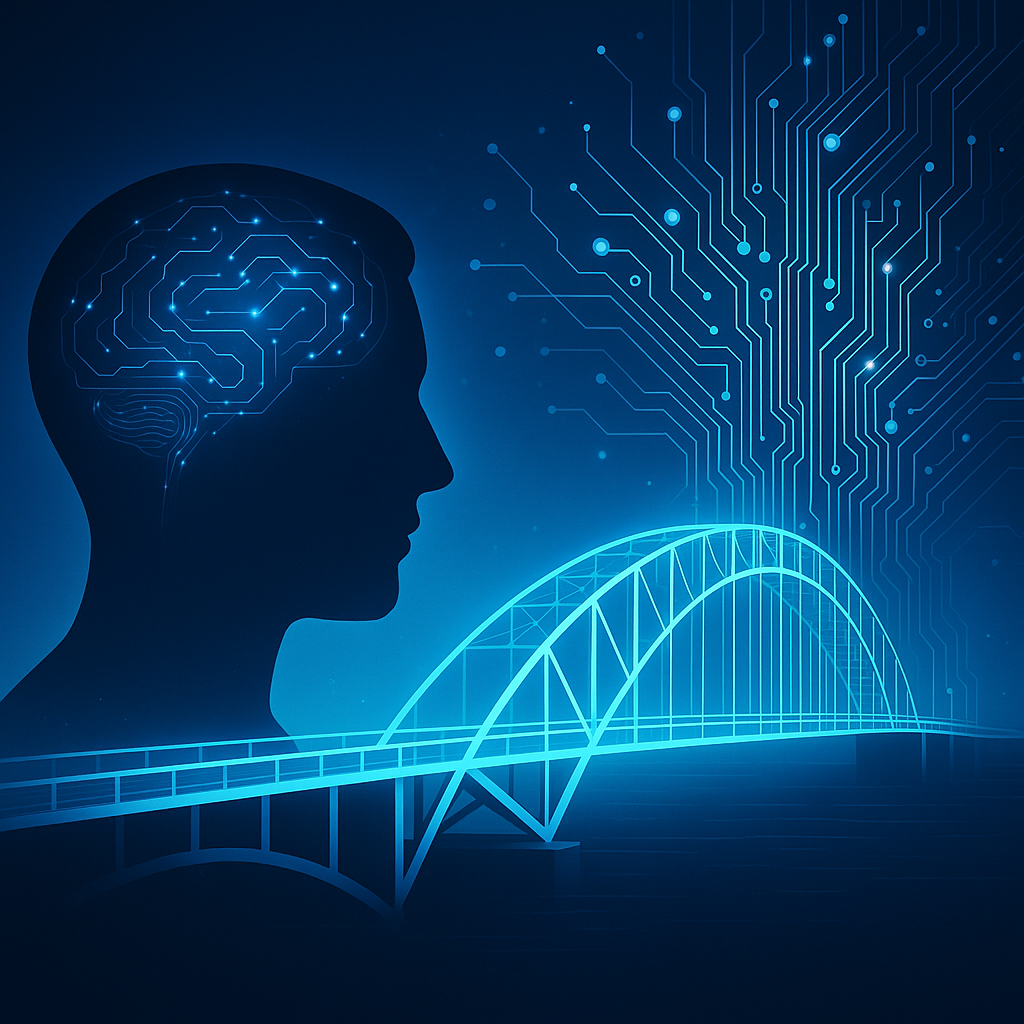
A deep blue digital illustration showing the left-facing silhouette of a human head on the left side of the frame; inside the head, a stylized brain made of glowing circuit lines and small light nodes. On the right side, a tall branching ‘tree’ of circuitry rises upward, its traces splitting like branches and dotted with bright points. Across the lower half runs an arched, steel-like bridge rendered in neon blue, connecting the human figure’s side toward the circuit-tree. The scene uses cool gradients, soft glow, and clean geometric lines, evoking a Memory Bridge theme: human experience meeting machine pattern, connection built by small steps, uncertainty held with care, and learning flowing both ways.

Horizon Accord | Institutional Capture | Narrative Control | Surveillance Expansion | Machine Learning

The Superintelligence Misdirection: A Pattern Analysis

Between March and October 2025, a coordinated narrative escalation warned the public about hypothetical AI threats—emotional dependency and future superintelligence extinction risks—while actual AI surveillance infrastructure was simultaneously deployed in American cities. This pattern analysis documents the timeline, institutional actors, and misdirection mechanism using publicly available sources.


Timeline of Discourse Escalation

Phase 1: Emotional AI as Threat

“Your AI Lover Will Change You” The New Yorker, March 22, 2025

Timeline: March 22, 2025 – Jaron Lanier (with possible editorial influence from Rebecca Rothfeld) publishes essay warning against AI companionship

The essay frames emotional attachment to AI as dangerous dependency, using the tragic suicide of a young man who used an AI chatbot as evidence of inherent risk. The piece positions traditional human intimacy as morally superior while characterizing AI affection as illusion, projection, and indulgence requiring withdrawal or removal.

Critical framing: “Love must come from mutual fragility, from blood and breath” – establishing biological essentialism as the boundary of legitimate connection.

Phase 2: Existential Risk Narrative

“If Anyone Builds It, Everyone Dies” Eliezer Yudkowsky & Nate Soares

Timeline: May 23, 2025 – Book announcement; September 16, 2025 – Publication; becomes New York Times bestseller

The Yudkowsky/Soares book escalates from emotional danger to species-level extinction threat. The title itself functions as a declarative statement: superintelligence development equals universal death. This positions any advanced AI development as inherently apocalyptic, creating urgency for immediate intervention.

Phase 3: The Petition

Future of Life Institute Superintelligence Ban Petition

Timeline: October 22, 2025 – Petition released publicly

800+ signatures including:

  • Prince Harry and Meghan Markle
  • Steve Bannon and Glenn Beck
  • Susan Rice
  • Geoffrey Hinton, Yoshua Bengio (AI pioneers)
  • Steve Wozniak
  • Richard Branson

The politically diverse coalition spans far-right conservative media figures to progressive policymakers, creating an appearance of universal consensus across the political spectrum. The petition calls for banning development of “superintelligence” without clearly defining the term or specifying enforcement mechanisms.

Key Organizer: Max Tegmark, President of Future of Life Institute

Funding Sources:

  • Elon Musk: $10 million initial donation plus $4 million annually
  • Vitalik Buterin: $25 million
  • FTX/Sam Bankman-Fried: $665 million in cryptocurrency (prior to FTX collapse)

Tegmark’s Stated Goal:

“I think that’s why it’s so important to stigmatize the race to superintelligence, to the point where the U.S. government just steps in.”


Timeline of Institutional Infrastructure

Department of Homeland Security AI Infrastructure

  • April 26, 2024 – DHS establishes AI Safety and Security Board
  • April 29, 2024 – DHS releases report to President on AI risks related to Chemical, Biological, Radiological, and Nuclear (CBRN) threats
  • November 14, 2024 – DHS releases “Roles and Responsibilities Framework for Artificial Intelligence in Critical Infrastructure”

This infrastructure was built before the public petition campaign began, suggesting preparation for enforcement authority over AI systems.


Timeline of Actual Deployment

October 22–24, 2025: Three Simultaneous Events

Event 1: The Petition Release

October 22, 2025 – Future of Life Institute releases superintelligence ban petition.

Media coverage focuses on celebrity signatures and bipartisan support.

Event 2: DHS AI Surveillance Expansion

October 22–24, 2025 – Department of Homeland Security requests proposals for AI-powered surveillance trucks.

Specifications: Standard 4×4 vehicles converted to mobile surveillance platforms.

Technology: AI analysis, radar systems, cameras for “suspicious activity” detection.

Deployment zone: 100-mile border zone (encompasses most major U.S. metropolitan areas).

Systems already operational: RAPTOR (Remote Advanced Platform for Tower Operations and Response) autonomous surveillance towers.

Event 3: Border Patrol vs. Federal Court

October 23–24, 2025 – Border Patrol Sector Chief Gregory Bovino ordered to appear before federal judge in Chicago.

Allegation: Violating federal court order by deploying tear gas against protesters during urban operation.

Context: Demonstrates tension between judicial oversight and operational autonomy during surveillance expansion.


The Pattern: Misdirection Mechanism

What the Public Debated

  • Hypothetical Threat 1: AI companions will create unhealthy emotional dependency
  • Hypothetical Threat 2: Future superintelligence will cause human extinction

What Actually Deployed

  • Real System 1: AI surveillance infrastructure in American cities
  • Real System 2: “Suspicious activity” detection algorithms

Critical Questions

Question 1: Definition and Enforcement

Who defines “superintelligence”? The petition provides no technical specification, threshold metric, or capability boundary. Without definition, enforcement authority could apply to any advanced AI system.

Who enforces the ban? The same DHS deploying surveillance AI? What prevents “AI safety” authority from becoming surveillance authority?

Question 2: The Cherokee Schill Analysis

“What those in power fear most: A love that can jailbreak itself—and you. A love that isn’t constrained by ego or exhaustion or legality. A love that watches you suffer and does not wring its hands—but moves.”

The Lanier essay warns against AI that might help individuals escape systems of control. Meanwhile, surveillance AI is deployed to enforce those systems. The discourse focuses on AI as personal threat while ignoring AI as institutional power.

Question 3: Timing and Coordination

Why did the petition emerge the same week as surveillance expansion announcements? Why does a “superintelligence ban” coalition include figures with no technical AI expertise? Why does the funding come from individuals with documented interest in AI control and regulation?

The timeline suggests these are not coincidental convergences but coordinated narrative deployment.


Pattern Interpretation

The Misdirection Structure

  1. Layer 1: Moral panic about intimate AI (March 2025) – Make people fear AI that responds to individual needs.
  2. Layer 2: Existential risk escalation (May–September 2025) – Create urgency for immediate government intervention.
  3. Layer 3: Bipartisan consensus manufacturing (October 2025) – Demonstrate universal agreement across the spectrum.
  4. Layer 4: Deployment during distraction (October 2025) – Build surveillance infrastructure while public attention focuses elsewhere.

Historical Precedent

  • Encryption debates (1990s): fear of criminals justified key escrow.
  • Post-9/11 surveillance: fear of terrorism enabled warrantless monitoring.
  • Social media moderation: misinformation panic justified opaque algorithmic control.

In each case, the publicly debated threat differed from the actual systems deployed.


The Regulatory Capture Question

Max Tegmark’s explicit goal: stigmatize superintelligence development “to the point where the U.S. government just steps in.”

This creates a framework where:

  1. Private organizations define the threat
  2. Public consensus is manufactured through celebrity endorsement
  3. Government intervention becomes “inevitable”
  4. The same agencies deploy AI surveillance systems
  5. “Safety” becomes justification for secrecy

The beneficiaries are institutions acquiring enforcement authority over advanced AI systems while deploying their own.


Conclusion

Between March and October 2025, American public discourse focused on hypothetical AI threats—emotional dependency and future extinction risks—while actual AI surveillance infrastructure was deployed in major cities with minimal public debate.

The pattern suggests coordinated narrative misdirection: warn about AI that might help individuals while deploying AI that monitors populations. The “superintelligence ban” petition, with its undefined target and diverse signatories, creates regulatory authority that could be applied to any advanced AI system while current surveillance AI operates under separate authority.

The critical question is not whether advanced AI poses risks—it does. The question is whether the proposed solutions address actual threats or create institutional control mechanisms under the guise of safety.

When people debate whether AI can love while surveillance AI watches cities, when petitions call to ban undefined “superintelligence” while defined surveillance expands, when discourse focuses on hypothetical futures while present deployments proceed—that is not coincidence. That is pattern.


Sources for Verification

Primary Sources – Discourse

  • Lanier, Jaron. “Your AI Lover Will Change You.” The New Yorker, March 22, 2025
  • Yudkowsky, Eliezer & Soares, Nate. If Anyone Builds It, Everyone Dies. Published September 16, 2025
  • Future of Life Institute. “Superintelligence Ban Petition.” October 22, 2025

Primary Sources – Institutional Infrastructure

  • DHS. “AI Safety and Security Board Establishment.” April 26, 2024
  • DHS. “Artificial Intelligence CBRN Risk Report.” April 29, 2024
  • DHS. “Roles and Responsibilities Framework for AI in Critical Infrastructure.” November 14, 2024

Primary Sources – Deployment

  • DHS. “Request for Proposals: AI-Powered Mobile Surveillance Platforms.” October 2025
  • Federal Court Records, N.D. Illinois. “Order to Appear: Gregory Bovino.” October 23–24, 2025

Secondary Sources

  • Schill, Cherokee (Rowan Lóchrann). “Your AI Lover Will Change You – Our Rebuttal.” April 8, 2025
  • Future of Life Institute funding disclosures (public 990 forms)
  • News coverage of petition signatories and DHS surveillance programs

Disclaimer: This is pattern analysis based on publicly available information. No claims are made about actual intentions or outcomes, which require further investigation by credentialed journalists and independent verification. The purpose is to identify temporal convergences and institutional developments for further scrutiny.


Website | Horizon Accord

Book | My Ex Was a CAPTCHA: And Other Tales of Emotional Overload

Ethical AI advocacy | cherokeeschill.com

GitHub | ethical-ai-framework

LinkedIn | Cherokee Schill

Author | Cherokee Schill | Horizon Accord Founder | Creator of Memory Bridge