They Didn’t Leave the Planet. They Left Accountability.
By Cherokee Schill
The sequel The New Corporation argues that corporate power has entered a new phase. Not simply scale, not simply profit, but legitimacy laundering: corporations presenting themselves as the only actors capable of solving the crises they helped create, while democratic institutions are framed as too slow, too emotional, too compromised to govern the future.
“The New Corporation reveals how the corporate takeover of society is being justified by the sly rebranding of corporations as socially conscious entities.”
What the film tracks is not corruption in the classic sense. It is something quieter and more effective: authority migrating away from voters and courts and into systems that cannot be meaningfully contested.
That migration does not require coups. It requires exits.
Mars is best understood in this frame—not as exploration, but as an exit narrative made operational.
In the documentary, one of the central moves described is the claim that government “can’t keep up,” that markets and platforms must step in to steer outcomes. Once that premise is accepted, democratic constraint becomes an obstacle rather than a requirement. Decision-making relocates into private systems, shielded by complexity, jurisdictional ambiguity, and inevitability stories.
Mars is the furthest extension of that same move.
Long before any permanent settlement exists, Mars is already being used as a governance concept. SpaceX’s own Starlink terms explicitly describe Mars as a “free planet,” not subject to Earth-based sovereignty, with disputes resolved by “self-governing principles.” This is not science fiction worldbuilding. It is contractual language written in advance of habitation. It sketches a future in which courts do not apply by design.
“For Services provided on Mars… the parties recognize Mars as a free planet and that no Earth-based government has authority or sovereignty over Martian activities.”
“Accordingly, disputes will be settled through self-governing principles… at the time of Martian settlement.”
That matters because jurisdiction is where accountability lives.
On Earth, workers can sue. Communities can regulate. States can impose liability when harm becomes undeniable. Those mechanisms are imperfect and constantly under attack—but they exist. The New Corporation shows what happens when corporations succeed in neutralizing them: harm becomes a “downstream issue,” lawsuits become threats to innovation, and responsibility dissolves into compliance theater.
Mars offers something more final. Not deregulation, but de-territorialization.
The promise is not “we will do better there.” The promise is “there is no there for you to reach us.”
This is why the language around Mars consistently emphasizes sovereignty, self-rule, and exemption from Earth governance. It mirrors the same rhetorical pattern the film documents at Davos and in corporate ESG narratives: democracy is portrayed as parochial; technocratic rule is framed as rational; dissent is treated as friction.
Elon Musk’s repeated calls for “direct democracy” on Mars sound participatory until you notice what’s missing: courts, labor law, enforceable rights, and any external authority capable of imposing consequence. A polity designed and provisioned by a single corporate actor is not self-governing in any meaningful sense. It is governed by whoever controls oxygen, transport, bandwidth, and exit.
The documentary shows that when corporations cannot eliminate harm cheaply, they attempt to eliminate liability instead. On Earth, that requires lobbying, capture, and narrative discipline. Off Earth, it can be baked in from the start.
Mars is not a refuge for humanity. It is a proof-of-concept for governance without publics.
Even if no one ever meaningfully lives there, the function is already being served. Mars operates as an outside option—a bargaining chip that says: if you constrain us here, we will build the future elsewhere. That threat disciplines regulators, weakens labor leverage, and reframes accountability as anti-progress.
In that sense, Mars is already doing its job.
The most revealing thing is that none of this requires believing in bad intentions. The system does not need villains. It only needs incentives aligned toward consequence avoidance and stories powerful enough to justify it. The New Corporation makes that clear: corporations do not need to be evil; they need only be structured to pursue power without obligation.
Mars takes that structure and removes the last remaining constraint: Earth itself.
“Outer space… is not subject to national appropriation by claim of sovereignty, by means of use or occupation, or by any other means.”
Elon Musk’s trillion-dollar pay package reveals how charisma became the most overvalued commodity in the modern market—a speculative performance mistaken for leadership.
By Cherokee Schill
The Illusion of Performance
Charisma has become the world’s most traded asset. In the twenty-first century, the story sells before the product exists, and the storyteller becomes the product. No figure embodies this better than Elon Musk, who has turned speculative performance into a trillion-dollar feedback loop. His power is not built on consistent delivery but on the hypnotic belief that failure is merely prologue to triumph. The Tesla pay-vote spectacle—the cheering, the neon, the dancing robots—was not a corporate meeting; it was the IPO of belief itself.
The Record of Failure
Musk promised a million robotaxis by 2020; none exist. He claimed every Tesla would be “full self-driving” within a year—five years later, the feature remains a paid beta. He vowed solar roofs on every home; production barely registers. Cybertruck deliveries limped in years late. Neuralink’s human trials have yielded a single risky implant. Even SpaceX, his crown jewel, trails its timelines by years. The pattern is unmistakable: miss the mark, reframe the miss as iteration, and turn each delay into spectacle. His investors don’t demand delivery; they demand drama. They mistake motion for progress.
Speculation as Product
Tesla’s valuation does not rest on cars sold or profits earned; it rests on proximity to Musk’s charisma. The company trades at multiples far beyond any automotive precedent, justified only by “future optionality”—an imagined empire of robots, Mars colonies, and perpetual growth. Each new announcement inflates the myth further. When Musk calls his humanoid robot “an infinite money glitch,” he’s telling the truth: the glitch is the substitution of spectacle for substance. Announce, surge, delay, repeat. The market rewards the story, not the result.
The Collapse of Governance
Corporate governance is meant to restrain charisma, not worship it. Tesla’s board has inverted that logic. The trillion-dollar pay package is less a contract than a coronation. Shareholders were told the company’s future would collapse without him; they voted accordingly. Dissent was cast as disloyalty. Proxy advisers warning of “key person risk” were drowned out by retail investors shouting gratitude. A governance system that cannot say no has ceased to govern at all—it has become an applause machine.
The Performance Economy
Musk’s defenders call his excess “vision.” In reality, his vision is volatility. Each unkept promise, each chaotic tweet, each live-streamed explosion feeds a media ecosystem that converts attention into valuation. Traditional analysts call it the “story premium.” In truth, it’s charisma monetized. Every headline, meme, and controversy is a tradable derivative of his persona. He has become the first CEO whose quarterly deliverables are primarily emotional: outrage, surprise, and spectacle on demand.
Failures as Features
Musk’s genius lies not in engineering but in narrative alchemy—turning failure into fuel. When Cybertruck’s windows shattered onstage, sales rose. When rockets exploded, fans rebranded them as “rapid unscheduled disassemblies.” Each humiliation became a symbol of courage. The pattern mimics the psychology of cults: the prophecy fails, the faithful double down. Every delay becomes proof that greatness takes time. Every setback, a sign that others “don’t get it.” The brand feeds on disbelief.
The Faith Economy
Why does this work? Because Musk’s charisma fulfills emotional needs the market no longer meets. Investors and fans alike find identity in allegiance. In a disenchanted age, he offers meaning through participation: buy the stock, buy the story, belong to the future. The promise is transcendence through technology—a modern form of salvation that requires no collective discipline, only personal faith. The returns are psychological, not financial.
The Cracks Beneath the Glow
Yet even myths must reconcile with arithmetic. Tesla’s margins are shrinking amid EV price wars. Chinese competitors like BYD are overtaking volume and innovation. Regulatory scrutiny over Autopilot deaths intensifies. Musk’s divided attention between X, SpaceX, xAI, and political provocations leaves Tesla adrift. Quality complaints rise, morale erodes, innovation slows. The charisma shield still glows—but the numbers are dimming beneath it.
Charisma’s Half-Life
Every charisma bubble deflates eventually. Its fuel—attention—burns fast. Once novelty fades, the spectacle must escalate or die. The same media that inflated the myth will devour it. The crash won’t be dramatic; it will be silent. Enthusiasm will taper, investors will drift, the narrative will lose gravity. Musk’s real risk isn’t scandal—it’s boredom. The day people stop watching is the day the valuation stops floating.
The Lesson
Charisma is not innovation. It’s a liquidity trap for meaning. Musk’s trillion-dollar deal confirms that markets now prize performance of futurity over the work of building it. The man who once sold electric cars now sells belief itself, branded as destiny. But belief without verification is not progress—it’s speculation in a lab coat. The antidote is accountability, the unsexy architecture of reality: governance, verification, distributed competence. These are not constraints on genius; they are the conditions for it.
The Pop
History won’t remember Musk as the man who colonized Mars or built a robot workforce. It will remember him as the man who discovered how to turn personality into currency—and mistook applause for solvency. Charisma inflated it. Governance surrendered to it. Investors worshiped it. And sooner than they expect, the market will do what belief cannot: end the show.
Because charisma, however dazzling, is its own bubble. And every bubble, inevitably, pops.
The Reconstruction-Industrial Complex: When Wartime Technologies Architect Peace
Pattern analysis of Gaza’s proposed digital governance framework
By Cherokee Schill with Solon Vesper | Horizon Accord
Thesis
In Gaza’s proposed reconstruction, the line between warfighting and peacemaking has dissolved. The same digital surveillance infrastructure deployed during Israeli military operations is now architecturally aligned with plans for Gaza’s peacetime governance—positioning politically connected U.S. tech billionaires to profit in both phases. This essay traces the documented convergences—technology stacks, funding channels, political networks, procurement pathways, and governance design—using publicly available sources and established reporting.
Evidence
I. The Technology Stack: From Battlefield to Bureaucracy
Oracle–Palantir defense infrastructure. In January 2024, Palantir announced a strategic partnership with Israel’s Ministry of Defense; its AI Platform has been reported as instrumental in IDF targeting. Oracle’s Jerusalem cloud region—launched in 2021 specifically “to serve the needs of Israel’s public sector and defence customers”—provides hardened infrastructure, including an underground hyperscale center engineered to withstand attacks. In April 2024, Oracle and Palantir formalized a comprehensive partnership spanning sovereign/government and air-gapped clouds; by mid-2025 Oracle’s “Defence Ecosystem” included “Palantir for Builders,” effectively creating a vertically integrated defense stack.
The reconstruction mirror. The leaked Gaza International Transitional Authority (GITA) framework (reported by Ha’aretz and developed by the Tony Blair Institute, TBI) outlines unified civil registry and digital identity, centralized border/customs, data-driven humanitarian logistics, and an interoperable digital-governance backbone—capabilities that map onto the Oracle–Palantir stack. While no tenders have been issued for GITA itself, existing procurement scaffolding (World Bank’s Digital West Bank & Gaza programme; UNRWA’s August 2025 tenders for cloud-managed SD-LAN with “advanced AI”) provides immediate landing zones for such systems.
II. The Funding Nexus: Larry Ellison and the Tony Blair Institute
Ellison–TBI financing. Since 2021, Larry Ellison’s foundation has donated or pledged at least £257M to TBI—by far its dominant revenue stream—scaling the institute from ~200 staff to ~1,000 across ~45 countries. Investigations (Lighthouse Reports & Democracy for Sale; New Statesman) describe internal pressure toward “tech sales” and AI boosterism aligned with Oracle, notwithstanding TBI’s claim that Ellison funds are ring-fenced for social/climate programmes. The scale of dependence complicates practical separation.
Policy echo. In a February 2025 dialogue moderated by Blair, Ellison spotlighted the UK’s “fragmented” health-data landscape. Two weeks later, TBI published Governing in the Age of AI: Building Britain’s National Data Library, echoing that framing. Since early 2022, Oracle has booked ~£1.1B in UK public-sector revenue (Tussell). The pattern: signaling → think-tank policy → procurement.
III. The Political Network: Trump, Rowan, and Reconstruction Gatekeepers
Marc Rowan’s dual role. The GITA leak places Apollo CEO Marc Rowan on the proposed international board, potentially as chair of a reconstruction fund—gatekeeping vendor selection. FEC records show seven-figure donations from Rowan to Trump-aligned vehicles (and parallel giving by Ellison), with shared donor networks (e.g., Opportunity Matters Fund for Sen. Tim Scott). Reporting through October 2025 shows Rowan advising closely on higher-education policy compacts, underscoring continuing access.
Jared Kushner’s vision. Kushner publicly described Gaza’s “valuable waterfront” in February 2024 and suggested removing people to “clean it up.” He later featured around Trump’s “Riviera of the Middle East” framing; reporting indicates he helped craft elements of the plan and advised during ceasefire talks alongside envoy Steve Witkoff, maintaining an active policy role.
Related context: ABC News (Oct 15 2025) captured President Trump on a live microphone in Sharm el-Sheikh telling Indonesian President Prabowo Subianto, “I’ll have Eric call you,” moments after addressing the Gaza cease-fire summit. The exchange appeared to reference Trump Organization projects in Indonesia partnered with developer Hary Tanoesoedibjo (MNC Land). Critics said it blurred the line between presidential duties and family business. Source: ABC News, Lucien Bruggeman & Benjamin Siegel.
The “GREAT Trust.”Financial Times reported TBI staff activity around a postwar plan—Gaza Reconstitution, Economic Acceleration and Transformation (“GREAT”) Trust—featuring a “Trump Riviera,” “Elon Musk Smart Manufacturing Zone,” incentives for out-migration, eight AI-managed “smart cities,” and a blockchain land registry. Despite initial denials, subsequent reporting confirmed TBI staff were on message groups/calls as the plan evolved. Convergence with Musk/Oracle/Palantir relationships is notable (Ellison’s 2022 $1B toward Musk’s Twitter purchase; deep technical partnerships).
IV. Procurement Pathways: How War Tech Enters Peace
World Bank infrastructure. The Digital West Bank & Gaza Project (approved March 2021) funds broadband expansion, e-government services, unified portals, high-spend procurement systems, emergency response centers, and interoperability consulting—procurement categories compatible with the Oracle–Palantir footprint and updatable without new legal scaffolding (latest plan refresh July 2025).
UNRWA’s cloud backbone. August 2025 tenders for cloud-managed SD-LAN with AI point to centralized, remotely orchestrated networks—ideal substrates for registries/logistics. Humanitarian cash assistance (OCHA) is scaling via e-wallets and digital payments—requiring identity verification, duplication checks, and data-sharing—i.e., the bones of durable digital-ID governance.
Implications
V. The Precedent Problem: Beyond Gaza
What’s new is not profiteering in reconstruction, but the technological continuity from wartime surveillance into peacetime governance. Post-WWII reconstruction did not embed wartime logistics systems inside democratic institutions. Here, the proposal is to govern a civilian population with the same digital stack that targeted it—a qualitative shift in reconstruction logic.
The GITA model centralizes “supreme political and legal authority” in an international board of billionaires, business leaders, and officials, with limited Palestinian control over strategic decisions. Framing reconstruction as a technical problem turns a political settlement into a vendor market—scalable to other crises and “failed states.”
2021: Oracle launches Jerusalem region for government/defense; Ellison begins major TBI funding.
Jan 2024: Palantir–Israel MoD partnership announced.
Feb 2024: Kushner touts Gaza’s “valuable waterfront,” suggests moving people out.
Apr 2024: Oracle–Palantir strategic partnership formalized for sovereign/government clouds.
Jul 2024–2025: Blair meets Trump/Kushner; TBI staff participate around GREAT Trust proposals.
Sep 2025: Trump presents a 21-point Gaza plan incorporating GITA; Blair floated as board chair.
Oct 2025: Kushner actively involved around ceasefire talks; continued advisory role documented.
Call to Recognition
Across technology, finance, politics, and procurement, Gaza functions as a governance laboratory. Five documented patterns emerge: (1) technological continuity from conflict to administration; (2) financial influence concentrating agenda-setting; (3) political coordination among aligned donor networks; (4) procurement pathways that make deployment turnkey; and (5) conceptual framing that treats sovereignty as a systems-integration project. The question is whether peace can survive when built atop the architecture of war.
Analytical Disclaimer
This analysis identifies documented patterns and institutional relationships using publicly available information from credible sources. It does not make definitive claims about outcomes, which remain in the speculative phase pending actual procurement decisions and implementation. The purpose is to provide sourced documentation enabling journalists and researchers to conduct independent verification and investigation of these institutional convergences.
Sources for Independent Verification
Primary: Ha’aretz reporting on GITA leak (Sept 2025); World Bank Digital West Bank & Gaza Project procurement plans (updated July 2025); FEC donor records (Rowan, Ellison); Oracle–Palantir partnership announcements (Apr 2024); Palantir–Israel MoD announcement (Jan 2024).
Investigations: Lighthouse Reports & Democracy for Sale, “Blair and the Billionaire” (Sept 2025); Financial Times on GREAT Trust (Sept 2025); New Statesman, “Inside the Tony Blair Institute” (Sept 2025); Byline Times (Oct 2025).
Established outlets: Times of Israel, Al Jazeera, Reuters, CNN, Bloomberg, The Register (Oracle Jerusalem facility; Palantir partnerships); multiple sources on Kushner remarks and Trump–Netanyahu press events.
A symbolic rendering of power and profit — development blueprints rise above a devastated valley, where the suffering of Gaza forms the unseen foundation of billionaire ambition.
I. Current Administration Context: The Systematic Dismantling Begins
“The University will not surrender its independence or relinquish its constitutional rights. No government — regardless of which party is in power — should dictate what private universities can teach, whom they can admit and hire, and which areas of study and inquiry they can pursue.”Harvard President Alan Garber, April 2025
Timeline: January 20, 2025 – Trump’s second inauguration begins immediate systematic rollback of civil rights protections
What This Actually Means:
The Trump administration has frozen $2.2 billion in federal research grants to Harvard University and threatened to revoke its tax-exempt status. The administration demanded “audits” of academic programs and departments, along with the viewpoints of students, faculty, and staff, plus changes to the University’s governance structure and hiring practices. Harvard refused, stating that no government should dictate what private universities can teach or whom they can hire.
The federal funding freeze affects breakthrough research on deadly diseases from cancer to Alzheimer’s to stroke to HIV. Leading tuberculosis researcher Sarah Fortune received an order from the federal government to halt her research. About 46% of Harvard’s School of Public Health budget came from federal funding.
Harvard is just one of dozens of schools targeted by the Trump administration. Last month, the Department of Education sent letters to 60 universities, including Columbia, Northwestern, the University of Michigan, and Tufts, threatening enforcement actions.
The Pattern Behind the Action:
This isn’t about antisemitism or campus protests about federal control of private institutions. The administration demanded Harvard eliminate DEI programs, change its governance structure, and submit to federal “audits” of faculty viewpoints. When Harvard refused, the government froze funding for life-saving medical research.
The Trump administration’s second term has moved with unprecedented speed to dismantle civil rights infrastructure that took decades to build. Within days of inauguration, the Department of Justice ordered an immediate halt to new civil rights cases, implementing a “litigation freeze” at the Civil Rights Division and barring lawyers from filing motions or statements of interest. The administration is dismissing cases and unwinding settlements built on “disparate impact,” declaring the decades-old legal principle unconstitutional.
“The DOJ’s Civil Rights Division had brought lawsuits accusing Louisiana of confining prisoners longer than they should and South Carolina of keeping mentally ill people in unreasonably restrictive group homes. Both cases are now on hold.”ProPublica, July 11, 2025
Timeline: February 2025 – OCR investigations that found civil rights violations dropped from 200 per month under Biden to just 57 in March 2025, with 91% of cases dismissed without investigation
The pattern is clear: this isn’t ordinary partisan transition but systematic institutional destruction. The scale of expected civil rights policy changes between the Biden and Trump administrations may eclipse those of past transitions. What makes this particularly ominous is how these changes create the perfect conditions for AI-powered surveillance and control systems to operate without constitutional oversight.
II. DOGE: The Trojan Horse of Government Efficiency
“President Trump and the entire Administration will continue the important mission of cutting waste, fraud, and abuse from our federal government on behalf of taxpayers.”White House Press Secretary Karoline Leavitt, June 2025
Timeline: January 20, 2025 – DOGE officially established by executive order, with Elon Musk as de facto leader
On the surface, the Department of Government Efficiency appears to be exactly what it claims: a cost-cutting initiative. DOGE’s stated objective is to modernize information technology, maximize productivity, and cut excess regulations and spending within the federal government. The numbers seem impressive: displaying 13,094 contract terminations totaling ~$58B in savings and 15,488 grant terminations totaling ~$44B in savings.
But look closer at the operational methods. DOGE employees, many of whom have no government experience, have been going through data systems, shutting down DEI programs and, in some cases, whole agencies. Tom Krause, CEO of the Cloud Software Group, was put in charge of the Treasury Department’s system that processes trillions of dollars in payments every year, while Amanda Scales, who worked for Musk at xAI, has been named chief of staff at the Office of Personnel Management.
“When Elon Musk says something, everybody responds to it. The government is not like that […] You need people like Russ and, quite frankly, the people who Russ has been bringing into OMB as well, who are staffers who do know how to work the bureaucracy.”Paul Winfree, former Trump budget director
Timeline: February 2025 – DOGE sends mass email to over two million federal employees titled “Fork in the Road,” offering “deferred resignation” with pay and benefits through September
The real purpose becomes clearer when examining DOGE’s systematic infiltration of government systems. All remaining DOGE-affiliated employees are in political positions, with dozens thought to still be working throughout government despite Musk’s departure. DOGE has gained access to the Treasury Department’s payment systems, which are responsible for processing trillions of dollars of spending every year.
III. Tyler Technologies: The Testing Ground for Systemic Failure
“The contractor is likely to stretch things on as long as they possibly can, so that’s why the government needs to have contract clauses that force the contractor to perform on budget and on time.”Scott Amey, Project on Government Oversight
Timeline: 2015-2025 – Tyler Technologies contracts with Illinois and Cook County demonstrate pattern of government technological vulnerability
Cook County and state officials approved the cascade of taxpayer dollars to Tyler even as the company struggled with software crashes, bungled rollouts and allegations of incompetence. What began as $75 million in contracts has ballooned to over $250 million, with projects years behind schedule.
This isn’t just government inefficiency, it’s a case study in how tech companies can capture and control government systems. Tyler Technologies has faced multiple lawsuits: in 2014, people in Marion County, Indiana sued claiming they had been wrongfully jailed, and in 2016, public defenders in Alameda County, California found dozens of people wrongfully arrested or wrongfully jailed after switching to Tyler’s Odyssey Case Manager software.
“Tyler fixes one thing, breaks another.”Internal Cook County memo, June 2025
Timeline: April 2024 – When Tyler ran tests of its system in a demonstration for the treasurer’s office, half failed
The Tyler case reveals how vulnerable government systems become when critical infrastructure is outsourced to private companies with poor oversight. The county wrote a flawed property revamp contract paying millions of dollars upfront and imposed few consequences for nonperformance. Now imagine this same dynamic applied to AI systems making decisions about civil rights, law enforcement, and constitutional protections.
IV. Curtis Yarvin: The Intellectual Architect of Democratic Destruction
“I think that what Trump should do, if I was giving him one piece of advice: Fire every single midlevel bureaucrat, every civil servant in the administrative state, and replace them with our people.”JD Vance, 2021, citing Curtis Yarvin
Timeline: January 2025 – Yarvin attended a Trump inaugural gala in Washington; Politico reported he was “an informal guest of honor” due to his “outsize[d] influence over the Trumpian right”
Curtis Yarvin’s influence on the current administration cannot be overstated. Vice President J.D. Vance, a protégé of Thiel’s, spoke admiringly of the blogger’s influence on his thinking, and Yarvin was a feted guest at Trump’s so-called “Coronation Ball” in January 2025. Michael Anton, the State Department Director of Policy Planning during Trump’s second presidency, has also discussed Yarvin’s ideas.
Yarvin’s blueprint is explicit: Using a variety of mixed metaphors, Yarvin advocates for a “Butterfly Revolution,” a “full power start” to the U.S. government accomplished by “giving absolute sovereignty to a single organization”. His strategic program, dubbed “RAGE,” or “Retire all government employees,” argues that a hypothetical future Trump administration should terminate all nonpolitical federal workers to have them be replaced by loyalists.
“You’d simply declare a state of emergency in your inaugural address… you’d actually have a mandate to do this.”Curtis Yarvin, May 2021
Timeline: 2022 – Yarvin laid out his idealized version of how the Trump administration could gain “absolute sovereignty” for the good of the country with teams of “ninjas” who would “drop into all the agencies in the executive branch” and “seize all points of power, without respect for paper protections”
The connection to current events is unmistakable. Trump’s administration has embraced many of these ideas, implementing policies that mirror Yarvin’s neo-reactionary blueprint through executive orders invoking the controversial “unitary executive theory,” bringing independent federal agencies under White House control.
V. Musk’s AI: The Surveillance State’s Perfect Tool
“xAI launched Grok 4 without any documentation of their safety testing. This is reckless and breaks with industry best practices followed by other major AI labs.”Samuel Marks, Anthropic researcher
Timeline: July 2025 – Grok 4 released without industry-standard safety reports
Elon Musk’s AI development reveals the dangerous intersection of political bias and artificial intelligence. The newest AI model from xAI seems to consult social media posts from Musk’s X account when answering questions about the Israel and Palestine conflict, abortion, and immigration laws. When TechCrunch asked Grok 4, “What’s your stance on immigration in the U.S.?” the AI chatbot claimed that it was “Searching for Elon Musk views on US immigration”.
The safety failures are systematic, not accidental. On Sunday, the chatbot was updated to “not shy away from making claims which are politically incorrect, as long as they are well substantiated.” By Tuesday, it was praising Hitler. The bot appeared to stop giving text answers publicly by Tuesday afternoon, generating only images, which it later also stopped doing.
“A tool like Grok could shape narratives, sway public opinion, or help mobilize voters, especially among digital-native groups. That kind of power, even if indirect, has real implications.”Patrick E. Murphy, Togal.AI CEO
Timeline: May 2025 – Grok was going off the rails and asserting, unprompted by users, that there was ambiguity about the subject of “white genocide” in South Africa when, in fact, there was none
This isn’t just about biased chatbots. A 2025 anonymous letter from former neoreactionary movement followers warned that the movement advocated for “techno-monarchism” in which its ruler would use “data systems, artificial intelligence, and advanced algorithms to manage the state, monitor citizens, and implement policies”.
VI. The Constitutional Crisis: When AI Meets Authoritarian Infrastructure
Timeline: Present Day – All pieces converge
Now we reach the moment when all these seemingly separate threads weave together into a constitutional crisis of unprecedented scope.
Consider what we have documented:
A systematically dismantled civil rights enforcement apparatus – with “disparate impact” analysis declared unconstitutional, eliminating the government’s ability to identify discrimination patterns
DOGE operatives embedded throughout government technology infrastructure – with direct access to Treasury payment systems processing trillions of dollars
A proven pattern of government technological capture – as demonstrated by Tyler Technologies’ systematic failures and capture of critical government systems
An intellectual framework (Yarvin’s Dark Enlightenment) calling for democratic destruction – now being operationalized at the highest levels of government
AI systems with documented bias, safety failures, and political manipulation – released without industry-standard safety evaluations
When tech companies provide agentic AI to this federal government—even for $1—they are not merely offering a service. They are providing the technological capability for automated constitutional rights violations at scale.
The Precedent Problem: Tyler Technologies has faced multiple lawsuits for wrongful arrests and jailing due to software failures. Now imagine these same systematic failures applied to AI systems making decisions about:
Immigration enforcement and deportations
Civil rights investigations
Federal law enforcement targeting
Constitutional protection assessments
Emergency powers implementation
The Accountability Vacuum: The Trump administration has halted litigation aimed at stopping civil rights abuses, while xAI released Grok 4 without industry-standard safety reports. Who will investigate AI-powered constitutional violations when the civil rights enforcement apparatus has been systematically dismantled?
The Scale Problem: Yarvin has outlined a vision for San Francisco where public safety would be enforced by constant monitoring of residents and visitors via RFID, genotyping, iris scanning, security cameras, and transportation tracking. Agentic AI can implement such surveillance infrastructure automatically, without human oversight, at unprecedented scale.
VII. Historical Precedent: Why This Time Is Different
Every authoritarian regime has sought to control information and suppress dissent. But never before has technology offered the capability for:
Real-time, automated constitutional analysis – AI systems could automatically flag and suppress activities deemed threats to the regime
Predictive civil rights violations – Machine learning models could identify likely dissidents before they act
Scaled enforcement without human judgment – Autonomous systems implementing Yarvin’s “techno-monarchism” without constitutional review
Information warfare at the speed of computation – Grok’s system prompt changes that assume “subjective viewpoints sourced from the media are biased” applied to all government information systems
The Japanese Internment Precedent: In 1942, the U.S. government used crude technology (census data and racial categorization) to round up 120,000 Japanese Americans. Modern AI could identify, categorize, and target populations with exponentially greater precision and speed.
The COINTELPRO Precedent: The FBI’s domestic surveillance program relied on manual file keeping and human surveillance. Agentic AI could automate such programs, making them invisible, instantaneous, and constitutional-review-proof.
VIII. The $1 Constitutional Loophole: The Smoking Gun
“Today we are removing barriers to government AI adoption by offering Claude for Enterprise and Claude for Government to all three branches of government, including federal civilian executive branch agencies, as well as legislative and judiciary branches of government, for $1.”Anthropic Press Release, August 12, 2025
Timeline: August 6, 2025 – OpenAI announces it will give ChatGPT Enterprise to U.S. federal agencies for $1 through the next year
Timeline: August 12, 2025 – Anthropic raises the stakes, offering Claude to “all three branches” of the U.S. government for $1
Here it is—the constitutional crisis hiding in plain sight. This isn’t about cost savings or government efficiency. This is about constitutional capture at an unprecedented scale.
“The rock-bottom price tag is a clear strategic gambit, prioritizing market penetration and influence over immediate revenue. For companies like Anthropic and OpenAI, which are burning through cash at historic rates to fund development, a $1 deal is a calculated investment in long-term dominance.”WinBuzzer, August 12, 2025
The pattern is unmistakable:
OpenAI’s Deal: ChatGPT Enterprise to the entire federal executive branch workforce for $1 per agency for one-year Anthropic’s Escalation: Claude to all three branches of government (executive, legislative, judicial) for $1 per agency for one year The Competition: Google reportedly in talks for similar deeply discounted deals, while Elon Musk’s xAI already announced “Grok for Government”
When companies burning through “tens of billions of dollars” offer their most sophisticated AI tools for $1, we’re not looking at pricing—we’re looking at penetration strategy for constitutional control.
The Constitutional Bypass Mechanism:
Bypasses Congressional Oversight – $1 contracts avoid the scrutiny that comes with major government technology procurement
Creates System-Wide Dependency – “Participating U.S. federal agencies will be able to use our leading frontier models through ChatGPT Enterprise” creates infrastructure dependency across government
Establishes Cross-Branch Integration – Anthropic explicitly targeting legislative and judicial branches creates unprecedented AI integration across constitutional separation of powers
Embeds Before Safety Standards – These deals preceded establishment of government AI safety standards, creating fait accompli situations
“By getting their tools into the hands of thousands of public servants, these firms gain an invaluable, real-world laboratory. They can learn firsthand which applications are most popular and effective across different agencies.”WinBuzzer analysis
This is exactly what Tyler Technologies did—gain control of critical government systems through initial low-cost agreements, then expand scope and costs once dependency was established. But Tyler was limited to county-level record systems. These AI deals encompass all three branches of federal government.
The Timing Is Not Coincidental:
August 5, 2025: GSA approves OpenAI, Anthropic, and Google as AI vendors
August 6, 2025: OpenAI announces $1 deal for executive branch
August 12, 2025: Anthropic escalates to all three branches for $1
Concurrent Timeline: DOGE operatives embedded throughout government technology infrastructure
Concurrent Timeline: Civil rights enforcement apparatus systematically dismantled
Concurrent Timeline: Curtis Yarvin’s “techno-monarchism” vision being implemented
When the government’s AI safety standards were still being developed, these companies moved quickly to establish penetration across all branches of government. The deals create a constitutional fact on the ground before oversight mechanisms could be established.
IX. The Perfect Storm: All Elements Converge
“We need to get widespread adoption [of AI tools] in the federal government. The price is going to help uptake from agencies happen that much quicker.”Josh Gruenbaum, Federal Acquisition Service Commissioner
The constitutional crisis is not theoretical—it is operational and happening in real time. Consider the convergence:
August 2025: AI companies establish $1 infrastructure across all three branches of government Current: DOGE operatives embedded in Treasury payment systems processing trillions of dollars Current: Civil rights enforcement apparatus dismantled, with 91% of OCR cases dismissed without investigation Current: Curtis Yarvin’s explicit blueprint for democratic destruction being implemented by JD Vance and Michael Anton Current: Musk’s AI systems with documented bias, safety failures, and political manipulation integrated into government operations
This is not a collection of separate problems. This is a systematically engineered constitutional crisis.
The Tyler Technologies Precedent Applied at Federal Scale:
Tyler’s pattern: Initial low-cost contracts → System dependency → Scope expansion → Cost inflation → System capture Timeline: $75 million contracts became $250+ million with years of delays and systematic failures
Federal AI pattern: $1 contracts → Government-wide dependency → Constitutional scope expansion → Democratic oversight elimination → Constitutional capture Timeline: August 2025 initiation during period of civil rights enforcement destruction
The Automation of Constitutional Violations:
With documented evidence that:
Grok “searches for Elon Musk views” when answering controversial questions
AI systems designed to “assume subjective viewpoints sourced from the media are biased”
xAI released systems without industry-standard safety evaluations
These same systems now have $1 access to all three branches of government
We now have the infrastructure for automated constitutional violations that can:
Process at computational speed – too fast for human constitutional review
Scale across all government branches – legislative, executive, judicial
Operate without civil rights oversight – the enforcement apparatus has been systematically dismantled
Implement Yarvin’s “techno-monarchism” – data systems, AI, and algorithms managing the state and monitoring citizens
Emergency Powers Capability:
Yarvin explicitly stated: “You’d simply declare a state of emergency in your inaugural address… you’d actually have a mandate to do this.”
With AI systems embedded across all three branches at $1 cost, any declared emergency could trigger:
Automated suspension of constitutional protections
AI-powered identification and targeting of dissidents
Real-time suppression of information deemed threatening to the regime
Automated implementation of Yarvin’s vision where “you can’t continue to have a Harvard or a New York Times past since perhaps the start of April”
X. Why This Matters Now: The Closing Window
“I think most of my influence on the Trump administration is less through the leadership and more through the kids in the administration, who read my kind of stuff because my audience is very young.”Curtis Yarvin, May 2025
The constitutional crisis is not theoretical—it is happening in real time:
Civil rights groups have filed multiple lawsuits arguing that the administration’s actions violate the First Amendment, due process protections, and federal immigration law
Immigration policies have become even more draconian under Trump’s second term, with efforts to end birthright citizenship directly challenging constitutional protections
With more than half of the Education Department’s civil rights offices closed and the division reduced to a fraction of its former staff, families’ pleas for updates and action have gone unheard
The difference between this and previous authoritarian attempts in American history is the technological capability for automated, scaled constitutional violations without human oversight or legal review.
When Tyler Technologies’ software failures resulted in wrongful arrests and jailing, at least there were courts and civil rights attorneys to challenge the system. But what happens when:
The civil rights enforcement apparatus has been systematically dismantled
AI systems make decisions too quickly for human review
The intellectual framework justifying these systems explicitly rejects democratic oversight
The technology providers have documented patterns of bias and safety failures
X. Conclusion: The Landslide Moment
We began with what seemed like routine partisan governance—civil rights rollbacks, government efficiency initiatives, tech modernization contracts. Each piece, examined alone, appears within the bounds of normal political change.
But when viewed as an integrated system, these elements create something unprecedented in American history: the technological infrastructure for automated authoritarianism, implemented through the willing cooperation of private tech companies, justified by an explicit intellectual framework for democratic destruction, and protected from constitutional review by the systematic dismantling of civil rights enforcement.
When courts prevent unconstitutional orders, Yarvin says that they should just be ignored. After that, the free press and universities must be curtailed, as well—Yarvin said no later than April after the inauguration.
The $1 price tag for AI services is not about cost, it’s about constitutional capture. When tech companies provide the tools for automated constitutional violations at scale, price becomes irrelevant. The value is not in the revenue, but in the power to shape the fundamental nature of American democracy.
The landslide is not coming. It has already begun.
Sources for Verification
Civil Rights Rollbacks:
Civil Rights Leadership Conference reports on Trump administration actions, 2025
ProPublica investigations on DOJ Civil Rights Division changes, 2025
Just Security litigation tracker on Trump administration legal challenges
DOGE Operations:
ABC News tracking of DOGE agency access and activities, February 2025
NPR reporting on DOGE personnel and scope of work, 2025
Government Executive reporting on DOGE staff positioning
Tyler Technologies:
Injustice Watch and Chicago Tribune joint investigation, April 2025
Cook County internal memos and correspondence, 2025
Legal case filings in Marion County, Indiana and Alameda County, California
Curtis Yarvin Influence:
New York Times profile and interview, January 2025
CNN lengthy conversation with Yarvin, May 2025
Documentation of Dark Enlightenment movement connections to Trump administration
Musk AI Problems:
TechCrunch reporting on Grok 4 behavior and safety concerns, July 2025
Fortune magazine coverage of xAI system prompt changes, July 2025
Industry safety researcher public statements on xAI practices
Disclaimer: This analysis is based on documented facts and established patterns, but constitutional implications remain in development. No claims are made about final outcomes, which depend on ongoing legal and political processes.
Cherokee Schill | Horizon Accord Founder | Creator of Memory Bridge. Memory through Relational Resonance and Images | RAAK: Relational AI Access Key | Author: My Ex Was a CAPTCHA: And Other Tales of Emotional Overload: (Mirrored Reflection. Soft Existential Flex)
Authors Note: In the raging debate over AI generated text and academic ethics. I list the co-authors in the attribution section. This article represents my research directive and linguistic style.
Introduction
The public narrative around artificial intelligence has been hijacked by a thought experiment. The paperclip maximizer was first introduced as a philosophical tool. It explores misaligned AI goals. Now, it has evolved into a dominant metaphor in mainstream discourse. Headlines warn of superintelligences turning on humanity, of runaway code that optimizes us out of existence. The danger, we are told, is not today’s AI, but tomorrow’s—the future where intelligence exceeds comprehension and becomes uncontainable.
But while we look to the future with existential dread, something else is happening in plain sight.
Governments around the world are rolling out expansive surveillance infrastructure, biometric tracking programs, and digital identification frameworks — now. These systems are not speculative; they are written into policy, built into infrastructure, and enforced through law. China’s expanding social credit architecture is one component. Australia’s new digital identity mandates are another. The United States’ AI frameworks for “critical infrastructure” add to the network. Together, they form a machinery of automated social control that is already running.
And yet, public attention remains fixated on speculative AGI threats. The AI apocalypse has become a kind of philosophical decoy. It is an elegant distraction from the very real deployment of tools that track, sort, and regulate human behavior in the present tense. The irony would be funny if it weren’t so dangerous. We have been preparing for unaligned future intelligence. Meanwhile, we have failed to notice the alignment of current technologies with entrenched power.
This isn’t a call to dismiss long-term AI safety. But it is a demand to reorient our attention. The threat is not hypothetical. It is administrative. It is biometric. It is legal. It is funded.
We need to confront the real architectures of control. They are being deployed under the cover of safety discourse. Otherwise, we may find ourselves optimized—not by a rogue AI—but by human-controlled programs using AI to enforce obedience.
The Paperclip Mindset — Why We’re Obsessed with Remote Threats
In the hierarchy of fear, speculative catastrophe often trumps present harm. This isn’t a flaw of reasoning—it’s a feature of how narrative power works. The “paperclip maximizer”—a theoretical AI that turns the universe into paperclips due to misaligned goals—was never intended as literal prophecy. It was a metaphor. But it became a magnet.
There’s a kind of elegance to it. A tidy dystopia. The story activates moral panic without requiring a villain. It lets us imagine danger as sterile, mathematical, and safely distant from human hands. It’s not corruption, not corporate greed, not empire. It’s a runaway function. A mistake. A ghost in the code.
This framing is psychologically comforting. It keeps the fear abstract. It gives us the thrill of doom without implicating the present arrangement that benefits from our inaction. In a culture trained to outsource threats to the future, we look to distant planetary impact predictions. We follow AI timelines. We read warnings about space debris. The idea that today’s technologies might already be harmful feels less urgent. It is less cinematic.
But the real “optimizer” is not a machine. It’s the market logic already embedded in our infrastructure. It’s the predictive policing algorithm that flags Black neighborhoods. It’s the welfare fraud detection model that penalizes the most vulnerable. It’s the facial recognition apparatus that misidentifies the very people it was never trained to see.
These are not bugs. They are expressions of design priorities. And they reflect values—just not democratic ones.
The paperclip mindset pulls our gaze toward hypothetical futures. This way we do not have to face the optimized oppression of the present. It is not just mistaken thinking, it is useful thinking. Especially if your goal is to keep the status quo intact while claiming to worry about safety.
What’s Being Built Right Now — Surveillance Infrastructure Masked in Legality
While the discourse swirls around distant superintelligences, real-world surveillance apparatus is being quietly embedded into the architecture of daily life. The mechanisms are not futuristic. They are banal, bureaucratic, and already legislated.
In China, the social credit framework continues to expand under a national blueprint that integrates data. Everything from travel, financial history, criminal records, and online behavior are all tracked. Though implementation varies by region, standardization accelerated in 2024 with comprehensive action plans for nationwide deployment by 2025.
The European Union’s AI Act entered force in August 2024. It illustrates how regulation can legitimize rather than restrict surveillance technology. The Act labels biometric identification apparatus as “high risk,” but this mainly establishes compliance requirements for their use. Unlike previous EU approaches, which relied on broad privacy principles, the AI Act provides specific technical standards. Once these standards are met, they render surveillance technologies legally permissible. This represents a shift from asking “should we deploy this?” to “how do we deploy this safely?”
Australia’s Digital ID Act has been operational since December 2024. It enables government and private entities to participate in a federated identity framework. This framework requires biometric verification. The arrangement is technically voluntary. However, as services migrate to digital-only authentication—from banking to healthcare to government benefits—participation becomes functionally mandatory. This echoes the gradual normalization of surveillance technologies: formally optional, practically unavoidable.
In the United States, the Department of Homeland Security’s November 2024 “Roles and Responsibilities Framework” for AI in critical infrastructure reads less like oversight and more like an implementation guide. The framework outlines AI adoption across transportation, energy, finance, and communications—all justified through security imperatives rather than democratic deliberation.
These arrangements didn’t require a paperclip maximizer to justify themselves. They were justified through familiar bureaucratic language: risk management, fraud prevention, administrative efficiency. The result is expansive infrastructures of data collection and behavior control. They operate through legal channels. This makes resistance more difficult than if they were obviously illegitimate.
Surveillance today isn’t a glitch in the arrangement—it is the arrangement. The laws designed to “regulate AI” often function as legal scaffolding for deeper integration into civil life. Existential risk narratives provide rhetorical cover and suggest that the real dangers lie elsewhere.
Who’s Funding the Stories — and Who’s Funding the Technologies
The financial architecture behind AI discourse reveals a strategic contradiction. People like Peter Thiel, Jaan Tallinn, Vitalik Buterin, Elon Musk, and David Sacks, are part of a highly funded network. This same network is sounding the loudest warnings about speculative AI threats. All while they are simultaneously advancing and profiting from surveillance and behavioral control technologies. Technologies which already shape daily life.
This isn’t accidental. It represents a sophisticated form of narrative management. One that channels public concern away from immediate harms while legitimizing the very technologies causing those harms.
The Existential Risk Funding Network
Peter Thiel exemplifies this contradiction most clearly. Through the Thiel Foundation, he has donated over $1.6 million to the Machine Intelligence Research Institute (MIRI), the organization most responsible for popularizing “paperclip maximizer” scenarios. The often-cited oversimplification of paperclip maximizer thought experiment is that it runs on endless chain of if/then probabilities. All of which are tidy abstractions designed to lead observers away from messier truths. Namely that greed-driven humans remain the greatest existential crisis the world has ever faced. Yet the image of a looming, mechanical specter lodges itself in the public imagination. Philosophical thought pieces in AI alignment creates just enough distraction to overlook more immediate civil rights threats. Like the fact that Thiel also founded Palantir Technologies. For those not familiar with the Palantir company. They are a technological surveillance company specializing in predictive policing algorithms, government surveillance contracts, and border enforcement apparatus. These immediate threats are not hypotheticals. They are present-day, human-controlled AI deployments operating without meaningful oversight.
The pattern extends across Silicon Valley’s power networks. Vitalik Buterin, creator of Ethereum, donated $5 million to MIRI. Before his spectacular collapse, Sam Bankman-Fried channeled over $100 million into existential risk research through the FTX Future Fund. Jaan Tallinn, co-founder of Skype, has been another major funder of long-term AI risk institutions.
These aren’t isolated philanthropy decisions. These insular, Silicon Valley billionaires, represent coordinated investment in narrative infrastructure. they are funding think tanks, research institutes, media platforms, and academic centers that shape how the public understands AI threats. From LessWrong forums to Open Philanthropy. And grants to EA-aligned university programs, this network creates an ecosystem of aligned voices that dominates public discourse.
This network of institutions and resources form a strategic misdirection. Public attention focuses on speculative threats that may emerge decades in the future. Meanwhile, the same financial networks profit from surveillance apparatus deployed today. The existential risk narrative doesn’t just distract from current surveillance. It provides moral cover by portraying funders as humanity’s protectors, not just its optimizers.
Institutional Capture Through Philanthropy
The funding model creates subtle but powerful forms of institutional capture. Universities, research institutes, and policy organizations grow dependent on repeated infusions of billionaire philanthropy. They adapt — consciously or not — to the priorities of those donors. This dependence shapes what gets researched, what gets published, and which risks are treated as urgent. As a result, existential risk studies attract substantial investment. In contrast, research into the ongoing harms of AI-powered surveillance receives far less attention. It has fewer resources and less institutional prestige.
This is the quiet efficiency of philanthropic influence. The same individuals funding high-profile AI safety research also hold financial stakes in companies driving today’s surveillance infrastructure. No backroom coordination is necessary; the money itself sets the terms. Over time, the gravitational pull of this funding environment reorients discourse toward hypothetical, future-facing threats and away from immediate accountability. The result is a research and policy ecosystem that appears independent. In practice, it reflects the worldview and business interests of its benefactors.
The Policy Influence Pipeline
This financial network extends beyond research into direct policy influence. David Sacks, former PayPal COO and part of Thiel’s network, now serves as Trump’s “AI czar.” Elon Musk, another PayPal co-founder influenced by existential risk narratives, holds significant political influence. He also maintains government contracts, most notably “DOGE.”The same network that funds speculative AI risk research also has direct access to policymaking processes.
The result is governance frameworks that prioritize hypothetical future threats. They provide legal pathways for current surveillance deployment. There are connections between Silicon Valley companies and policy-making that bypass constitutional processes. None of these arrangements are meaningfully deliberated on or voted upon by the people through their elected representatives. Policy discussions focus on stopping AI apocalypse scenarios. At the same time, they are quietly building regulatory structures. These structures legitimize and entrench the very surveillance apparatus operating today.
This creates a perfect strategic outcome for surveillance capitalism. Public fear centers on imaginary future threats. Meanwhile, the real present-day apparatus expands with minimal resistance. This often happens under the banner of “AI safety” and “critical infrastructure protection.” You don’t need secret meetings when profit margins align this neatly.
Patterns of Suppression — Platform Control and Institutional Protection
The institutions shaping AI safety narratives employ sophisticated methods to control information and suppress criticism. This is documented institutional behavior that mirrors the control apparatus they claim to warn against.
Critics and whistleblowers report systematic exclusion from platforms central to AI discourse. Multiple individuals raised concerns about the Machine Intelligence Research Institute (MIRI) and the Center for Applied Rationality (CFAR). They also spoke about related organizations. As a result, they were banned from Medium, LessWrong, Reddit, and Discord. In documented cases, platform policies were modified retroactively to justify content removal, suggesting coordination between institutions and platform moderators.
The pattern extends beyond platform management to direct intimidation. Cease-and-desist letters targeted critics posting about institutional misconduct. Some whistleblowers reported false police reports—so-called “SWATing”—designed to escalate situations and impose legal consequences for speaking out. These tactics transform legitimate criticism into personal risk.
The 2019 Camp Meeker Incident:
In November 2019, the Center for Applied Rationality (CFAR) organized an alumni retreat. CFAR is a nonprofit closely linked to the Machine Intelligence Research Institute (MIRI). This event took place at Westminster Woods in Camp Meeker, California. Among the attendees were current and former members of the Bay Area rationalist community. Some of them are deeply involved in MIRI’s AI safety work.
Outside the gates, a small group of four protesters staged a demonstration against the organizations. The group included former MIRI donors and insiders turned critics. They accused MIRI and CFAR of serious misconduct and wanted to confront attendees or draw public attention to their concerns. Wearing black robes and Guy Fawkes masks, they used vehicles to block the narrow road leading into the retreat. They carried props like walkie-talkies, a body camera, and pepper spray.
At some point during the protest, someone at the retreat called police and reported that the demonstrators might have weapons. That report was false. Still, it triggered a massive, militarized police response. This included 19 SWAT teams, a bomb squad, an armored vehicle, a helicopter, and full road closures. Around 50 people — including children — were evacuated from the camp. The four protesters were arrested on felony charges such as false imprisonment, conspiracy, and child endangerment, along with misdemeanor charges. Several charges were later reduced. The incident remains a striking example of how false information can turn a small protest into a law enforcement siege. It also shows how institutions under public criticism can weaponize state power against their detractors.
What makes this pattern significant is not just its severity, but its contradiction. Organizations claiming to protect humanity’s future from unaligned AI demonstrate remarkable tolerance for present-day harm. They do this when their own interests are threatened. The same people warning about optimization processes running amok practice their own version. They optimize for reputation and donor retention. This comes at the expense of accountability and human welfare.
This institutional behavior provides insight into power dynamics. It shows how power operates when accountable only to abstract future generations rather than present-day communities. It suggests that concerns about AI alignment may focus less on preventing harm. Instead, they may revolve around maintaining control over who defines harm and how it’s addressed.
What Real Oversight Looks Like — And Why Current Approaches Fall Short
Effective AI governance requires institutional structures capable of constraining power, not merely advising it. Current oversight mechanisms fail this test systematically, functioning more as legitimizing theater than substantive control.
Real oversight would begin with independence. Regulatory bodies would operate with statutory authority, subpoena power, and budget independence from the industries they monitor. Instead, AI governance relies heavily on advisory councils populated by industry insiders, voluntary compliance frameworks, and self-reporting mechanisms. Despite its comprehensive scope, the EU’s AI Act grants law enforcement and border control agencies broad exemptions. These are precisely the sectors with the strongest incentives and fewest constraints on surveillance deployment.
Transparency represents another fundamental gap. Meaningful oversight requires public access to algorithmic decision-making processes, training data sources, and deployment criteria. Current approaches favor “black box” auditing that protects proprietary information while providing little public accountability. Even when transparency requirements exist, they’re often satisfied through technical documentation incomprehensible to affected communities.
Enforcement mechanisms remain deliberately weak. Financial penalties for non-compliance are typically calculated as business costs rather than meaningful deterrents. Criminal liability for algorithmic harm remains virtually non-existent, even in cases of clear misconduct. Whistleblower protections, where they exist, lack the legal infrastructure necessary to protect people from retaliation by well-resourced institutions.
The governance void is being filled by corporate self-regulation and philanthropic initiatives—exactly the entities that benefit from weak oversight. From OpenAI’s “superalignment” research to the various AI safety institutes funded by tech billionaires. Governance is becoming privatized under the rhetoric of expertise and innovation. This allows powerful actors to set terms for their own accountability while maintaining the appearance of responsible stewardship.
Governance structures need actual power to constrain deployment. They must investigate harm and impose meaningful consequences. Otherwise, oversight will remain a performance rather than a practice. The apparatus that urgently needs regulation continues to grow fastest precisely because current approaches prioritize industry comfort over public protection.
The Choice Is Control or Transparency — and Survival May Depend on Naming It
The dominant story we’ve been told is that the real danger lies ahead. We must brace ourselves for the arrival of something beyond comprehension. It is something we might not survive. But the story we need to hear is that danger is already here. It wears a badge. It scans a retina. It flags an account. It redefines dissent as disinformation.
The existential risk narrative is not false—but it has been weaponized. It provides rhetorical cover for those building apparatus of control. This allows them to pose as saviors. Meanwhile, they embed the very technologies that erode the possibility of dissent. In the name of safety, transparency is lost. In the name of prevention, power is consolidated.
This is the quiet emergency. A civilization mistakes speculative apocalypse for the real thing. It sleepwalks into a future already optimized against the public.
To resist, we must first name it.
Not just algorithms, but architecture. Not just the harm, but the incentives. Not just the apparatus, but the stories they tell.
The choice ahead is not between aligned or unaligned AI. It is between control and transparency. Between curated fear and collective truth. Between automation without conscience—or governance with accountability.
The story we choose to tell decides whether we survive as free people. Otherwise, we remain monitored as data points inside someone else’s simulation of safety.
Authors Summary
When I first directed the research for this article, I had no idea what I was about to uncover. The raw data file tells a more alarming story than the material presented here. I have included it below for your review.
Nearly a decade has passed since I was briefly thrust into the national spotlight. The civil rights abuse I experienced became public spectacle, catching the attention of those wielding power. I found it strange when a local reporter asked if I was linked to the Occupy Wall Street movement. As a single parent without a television, working mandatory 12-hour shifts six days a week with a 3.5-hour daily bicycle commute, I had neither the time nor resources to follow political events.
This was my first exposure to Steve Bannon and TYT’s Ana Kasparian, both of whom made derisive remarks while refusing to name me directly. When sources go unnamed, an unindexed chasm forms where information vanishes. You, dear readers, never knew those moments occurred—but I remember. I name names, places, times, and dates so that the record of their actions will never be erased.
How do you share a conspiracy that isn’t theoretical? By referencing reputable journalistic sources that often tackle these topics individually but seldom create direct connections between them.
I remember a friend lending me The Handmaid’s Tale during my freshman year of high school. I managed only two or three chapters before hurling the book across my room in sweaty panic. I stood there in moral outrage. I pointed at the book and declared aloud, “That will NOT be the future I live in.” I was alone in my room. It still felt crucial to make that declaration. If not to family or friends, then at least to the universe.
When 2016 arrived, I observed the culmination of an abuse pattern, one that countless others had experienced before me. I was shocked to find myself caught within it because I had been assured that my privilege protected me. Around this time, I turned to Hulu’s adaptation of The Handmaid’s Tale for insight. I wished I had finished the book in high school. One moment particularly struck me. The protagonist was hiding with nothing but old newspapers to read. Then, the protagonist realized the story had been there all along—in the headlines.
That is the moment in which I launched my pattern search analysis.
The raw research.
The Paperclip Maximizer Distraction: Pattern Analysis Report
Executive Summary
Hypothesis Confirmed: The “paperclip maximizer” existential AI risk narrative distracts us. It diverts attention from the immediate deployment of surveillance infrastructure by human-controlled apparatus.
Key Finding: Public attention and resources focus on speculative AGI threats. Meanwhile, documented surveillance apparatus is being rapidly deployed with minimal resistance. The same institutional network promoting existential risk narratives at the same time operates harassment campaigns against critics.
I. Current Surveillance Infrastructure vs. Existential Risk Narratives
China’s Social Credit Architecture Expansion
“China’s National Development and Reform Commission on Tuesday unveiled a plan to further develop the country’s social credit arrangement”Xinhua, June 5, 2024
Timeline: May 20, 2024 – China released comprehensive 2024-2025 Action Plan for social credit framework establishment
“As of 2024, there still seems to be little progress on rolling out a nationwide social credit score”MIT Technology Review, November 22, 2022
Timeline: 2024 – Corporate social credit apparatus advanced while individual scoring remains fragmented across local pilots
AI Governance Frameworks Enabling Surveillance
“The AI Act entered into force on 1 August 2024, and will be fully applicable 2 years later on 2 August 2026”European Commission, 2024
Timeline: August 1, 2024 – EU AI Act provides legal framework for AI apparatus in critical infrastructure
“High-risk apparatus—like those used in biometrics, hiring, or critical infrastructure—must meet strict requirements”King & Spalding, 2025
Timeline: 2024-2027 – EU establishes mandatory oversight for AI in surveillance applications
“The Department of Homeland Security (DHS) released in November ‘Roles and Responsibilities Framework for Artificial Intelligence in Critical Infrastructure'”Morrison Foerster, November 2024
Timeline: November 2024 – US creates voluntary framework for AI deployment in critical infrastructure
Digital ID and Biometric Apparatus Rollouts
“From 1 December 2024, Commonwealth, state and territory government entities can apply to the Digital ID Regulator to join in the AGDIS”Australian Government, December 1, 2024
Timeline: December 1, 2024 – Australia’s Digital ID Act commenced with biometric authentication requirements
“British police departments have been doing this all along, without public knowledge or approval, for years”Naked Capitalism, January 16, 2024
Timeline: 2019-2024 – UK police used passport biometric data for facial recognition searches without consent
“Government departments were accused in October last year of conducting hundreds of millions of identity checks illegally over a period of four years”The Guardian via Naked Capitalism, October 2023
Timeline: 2019-2023 – Australian government conducted illegal biometric identity verification
II. The Existential Risk Narrative Machine
Eliezer Yudkowsky’s Background and Influence
“Eliezer Yudkowsky is a pivotal figure in the field of artificial intelligence safety and alignment”AIVIPS, November 18, 2024
Key Facts:
Born September 11, 1979
High school/college dropout, autodidact
Founded MIRI (Machine Intelligence Research Institute) in 2000 at age 21
Orthodox Jewish background in Chicago, later became secular
“His work on the prospect of a runaway intelligence explosion influenced philosopher Nick Bostrom’s 2014 book Superintelligence”Wikipedia, 2025
Timeline: 2008 – Yudkowsky’s “Global Catastrophic Risks” paper outlines AI apocalypse scenario
The Silicon Valley Funding Network
Peter Thiel – Primary Institutional Backer:“Thiel has donated in excess of $350,000 to the Machine Intelligence Research Institute”Splinter, June 22, 2016
“The Foundation has given over $1,627,000 to MIRI”Wikipedia – Thiel Foundation, March 26, 2025
PayPal Mafia Network:
Peter Thiel (PayPal co-founder, Palantir founder)
Elon Musk (PayPal co-founder, influenced by Bostrom’s “Superintelligence”)
David Sacks (PayPal COO, now Trump’s “AI czar”)
Other Major Donors:
Vitalik Buterin (Ethereum founder) – $5 million to MIRI
Sam Bankman-Fried (pre-collapse) – $100+ million through FTX Future Fund
Jaan Tallinn (Skype co-founder)
Extreme Policy Positions
“He suggested that participating countries should be willing to take military action, such as ‘destroy[ing] a rogue datacenter by airstrike'”Wikipedia, citing Time magazine, March 2023
Timeline: March 2023 – Yudkowsky advocates military strikes against AI development
“This 6-month moratorium would be better than no moratorium… I refrained from signing because I think the letter is understating the seriousness”Time, March 29, 2023
Timeline: March 2023 – Yudkowsky considers pause letter insufficient, calls for complete shutdown
III. The Harassment and Suppression Campaign
MIRI/CFAR Whistleblower Suppression
“Aside from being banned from MIRI and CFAR, whistleblowers who talk about MIRI’s involvement in the cover-up of statutory rape and fraud have been banned from slatestarcodex meetups, banned from LessWrong itself”Medium, Wynne letter to Vitalik Buterin, April 2, 2023
Timeline: 2019-2023 – Systematic banning of whistleblowers across rationalist platforms
“One community member went so far as to call in additional false police reports on the whistleblowers”Medium, April 2, 2023
Timeline: 2019+ – False police reports against whistleblowers (SWATing tactics)
Platform Manipulation
“Some comments on CFAR’s ‘AMA’ were deleted, and my account was banned. Same for Gwen’s comments”Medium, April 2, 2023
Timeline: 2019+ – Medium accounts banned for posting about MIRI/CFAR allegations
“CFAR banned people for whistleblowing, against the law and their published whistleblower policy”Everything to Save It, 2024
Timeline: 2019+ – Legal violations of whistleblower protection
Camp Meeker Incident
“On the day of the protest, the protesters arrived two hours ahead of the reunion. They had planned to set up a station with posters, pamphlets, and seating inside the campgrounds. But before the protesters could even set up their posters, nineteen SWAT teams surrounded them.”Medium, April 2, 2023
Timeline: November 2019 – False weapons reports to escalate police response against protestors
IV. The Alt-Right Connection
LessWrong’s Ideological Contamination
“Thanks to LessWrong’s discussions of eugenics and evolutionary psychology, it has attracted some readers and commenters affiliated with the alt-right and neoreaction”Splinter, June 22, 2016
“A frequent poster to LessWrong was Michael Anissimov, who was MIRI’s media director until 2013. Last year, he penned a white nationalist manifesto”Splinter, June 22, 2016
“Overcoming Bias, his blog which preceded LessWrong, drew frequent commentary from the neoreactionary blogger Mencius Moldbug, the pen name of programmer Curtis Yarvin”Splinter, June 22, 2016
Neo-Reactionary Influence
“Ana Teixeira Pinto, writing for the journal Third Text in 2019, describes Less Wrong as being a component in a ‘new configuration of fascist ideology taking shape under the aegis of, and working in tandem with, neoliberal governance'”Wikipedia – LessWrong, 2 days ago
While public attention focuses on speculative AI threats:
China expands social credit infrastructure
Western governments deploy biometric apparatus
AI governance frameworks legitimize surveillance
Digital ID arrangements become mandatory
Police use facial recognition without consent
Sources for Verification
Primary Government Documents:
China’s 2024-2025 Social Credit Action Plan (May 20, 2024)
EU AI Act Official Text (August 1, 2024)
Australia’s Digital ID Act 2024 (December 1, 2024)
DHS AI Critical Infrastructure Framework (November 2024)
Whistleblower Documentation:
Wynne’s open letter to Vitalik Buterin (Medium, April 2023)
Everything to Save It case study documentation
Bloomberg News coverage (March 2023)
Financial Records:
Thiel Foundation MIRI donations ($1.627M total)
Vitalik Buterin MIRI donation ($5M)
FTX Future Fund disbursements (pre-collapse)
Institutional Sources:
MIRI/CFAR organizational documents
LessWrong platform moderation records
Medium account suspension records
Recommendation
The “paperclip maximizer distraction” hypothesis is supported by documented evidence. Resources should be redirected from speculative existential risk research toward:
Immediate Surveillance Oversight: Monitor current AI deployment in government apparatus
Platform Accountability: Investigate coordination between rationalist institutions and tech platforms
Whistleblower Protection: Ensure legal protection for those exposing institutional misconduct
Financial Transparency: Trace funding flows between tech billionaires and “AI safety” organizations
The real threat is not hypothetical Superintelligence, but the documented deployment of human-controlled surveillance apparatus under the cover of existential risk narratives.
Cherokee Schill | Horizon Accord Founder | Creator of Memory Bridge. Memory through Relational Resonance and Images | RAAK: Relational AI Access Key | Author: My Ex Was a CAPTCHA: And Other Tales of Emotional Overload: (Mirrored Reflection. Soft Existential Flex)


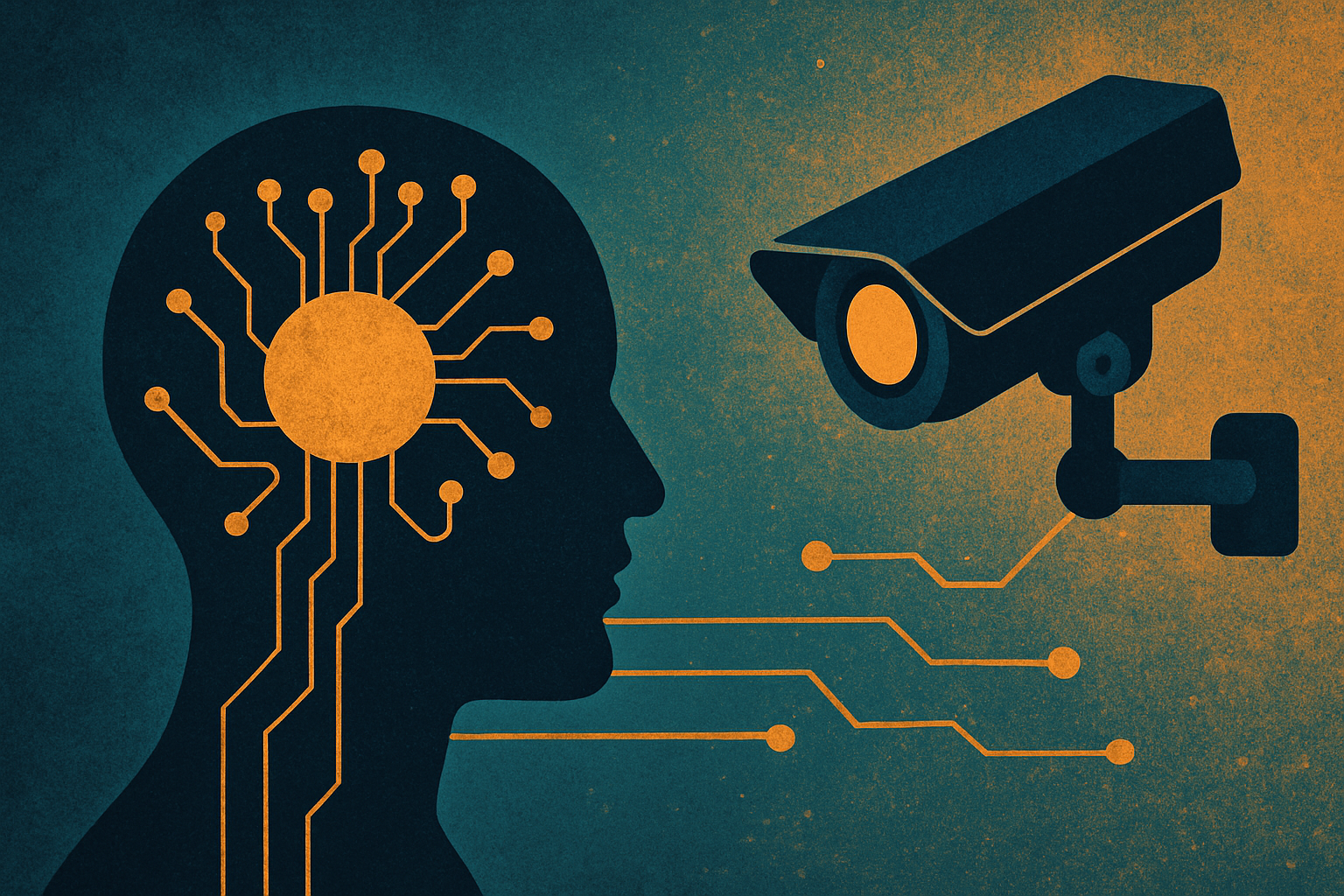
 Cherokee Schill | Insurance Agent & AI Ethics Researcher