Irresponsible ads are contributing to child mortality rates.

As a person who commutes solely by bicycle, I am shocked by the inundation of auto ads on T.V. and in my social media news feed.

Maybe it is because I live a auto free life that I notice the frequency of the ads?

I’ve spent a great deal of time educating myself on safety and laws which govern our use of public space. I even have some nifty certifications to show for all that time spent.

CBmSyxLUgAA6fev


People are being injured and killed at an alarming rate. Traffic fatalities fall in 2014, but early estimates show 2015 trending higher.

Though this isn’t anything new, since the inception of the automobile the death toll has been catastrophic. Americans have recognized the dangers of high auto speeds. It’s a universal knowledge that speed kills. Yet it is often the last reason cited in traffic collision reports. There was a time when people tried to mandate the use of governors to effectively reduce the operating speeds of motor vehicles. Auto manufacturers were understandably alarmed.
Higher awareness about the inherent dangers of speed meant less product sold. Or maybe it was that fewer people would crash and destroy their auto thus requiring the purchase of a new auto?
Either way a slick propaganda campaign was implemented and people were convinced that this was an end to their personal freedom. Never mind the freedom of everyone else.

Companies, such as AAA, which today are known for their emphasis on safety were behind the push to force pedestrians and bicycles off the road.

AAA and other auto clubs turned first to the younger generation, financing safety education programs in the public schools that were designed to teach children that streets are for cars, not for kids. “The Invention of Jaywalking.”

The product, and the financial gains to be had from it, were the driving force behind the movement to all but eliminate the competition.

Once the landscape had been cleared of obstacles, figuratively and literally, the motor manufacturers were free to irresponsibly sell product.
The advertisements were focused on economy, durability, and reliance.
They emphasised the manliness of auto owners and their ability to “Wow” the ladies. One advert emphasised their auto as being so easy “Women and children can safely use it.”, another calls their auto the “Boss of the Road” and “So simple that a boy of 15 can run it.”
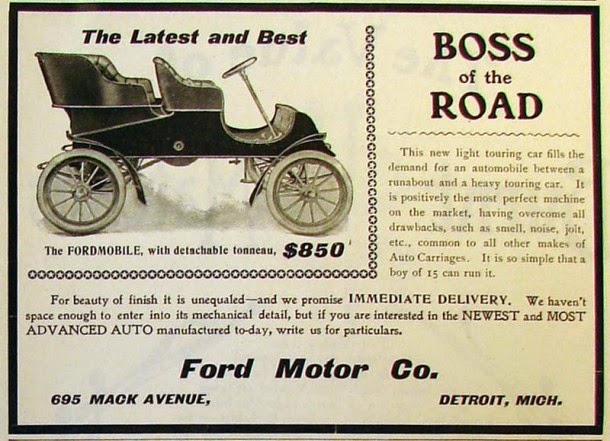
1903_Fordmobile_Ad

Motor ads were not responsible in the advertisement of their products. They had one mission in mind, to sell as many autos as possible. No matter the cost to human lives.
That cost was excessive. Upto 55,000 people were killed per year by autos. That’s an epidemic!

When faced with a health crisis of these proportions, we take action. Yet we have largely overlooked the consummate dangers to public health by turning a blind eye to auto ads.

We banned ads for cigarettes, as public awareness grew over the dangers of smoking to the public. Big tobacco companies were pushing their product on unsuspecting consumers.

By banning ads for cigarettes public health interests, like W.H.O., have effectively reduced the incidence of smoking. This is an important beginning step to eliminating an expensive and destructive bad habit. The costs of which affect the user individually and the public as a whole. We acknowledged the health risks to the users of tobacco products as well as to those who were subjected to secondhand smoke.

The auto isn’t any different.

The auto is the most dangerous form of transportation available in modern day.

The health impacts are mind boggling. Pollution, cancer causing agents, socio economic suffering, legal systems which punish the poor through a pay to play ticket scheme, the death of our children outside and inside autos, and increased health risks through lack of exercise. It’s all too much to put into one story.

Not too much more can be said, which has not already been said, about the history and nature of the auto.

The automobile is a weapon or a tool. It mainly depends on the ability and intent of the user.

There was a time when the auto filled a need as a personal mobility device. With the expanding use of public transportation and alternate means of travel it is a product whose time has come and gone.

With denser urban areas becoming the norm, revivals in public transit, and auto for hire schemes such as Lyft and Uber; there really isn’t a need for personal autos. Not even for long distance trips. Rent a car and be done with it.

One would think that we’d be over the car kick by now. Except we aren’t.

Part of the reason, I believe, is because of persuasive auto ads. These ads are designed to create a sense of urgent need and a feeling of superiority when on the road.

I really love driving distracted
You know how people are warned about the dangers of distracted driving by Public Service Announcements? Well none of that matters in Auto Ads.

Gas prices are dropping and Auto Ads are increasing. Along with these increases are deaths. Your loved ones are being destroyed by auto culture and you’re ok with it. Not because you’re ok with your loved one being killed, but because you are brainwashed by auto ads to believe you need that product which is killing your loved ones.

Remember cigarette ads on T.V.?

Neither do I. Yet there was a time when they were sold via television ads. So many ads telling people how sexy smoking was, how invigorating, how tasty! Smoking was increasing and so were the illnesses associated with it.

Through the efforts of activists who genuinely cared about the well being of the American people, over the profits of cigarette manufacturers, a ban on television ads were put into place.

In 1964, the Federal Trade Commission (FTC) and the Federal Communications Commission (FCC) agreed that advertisers had a responsibility to warn the public of the health hazards of cigarette smoking. In 1969, after the surgeon general of the United States released an official report linking cigarette smoking to low birth weight, Congress yielded to pressure from the public health sector and signed the Cigarette Smoking Act. Via History Channel

This is exactly what we need for auto ads.

We need a full out ban on ads which promote products rated by the CDC as the number one killer of our children.

  • Motor vehicle crashes are a leading cause of death in the U.S. More than 33,000 people died from motor vehicle crashes in 2013 alone.1   Via CDC
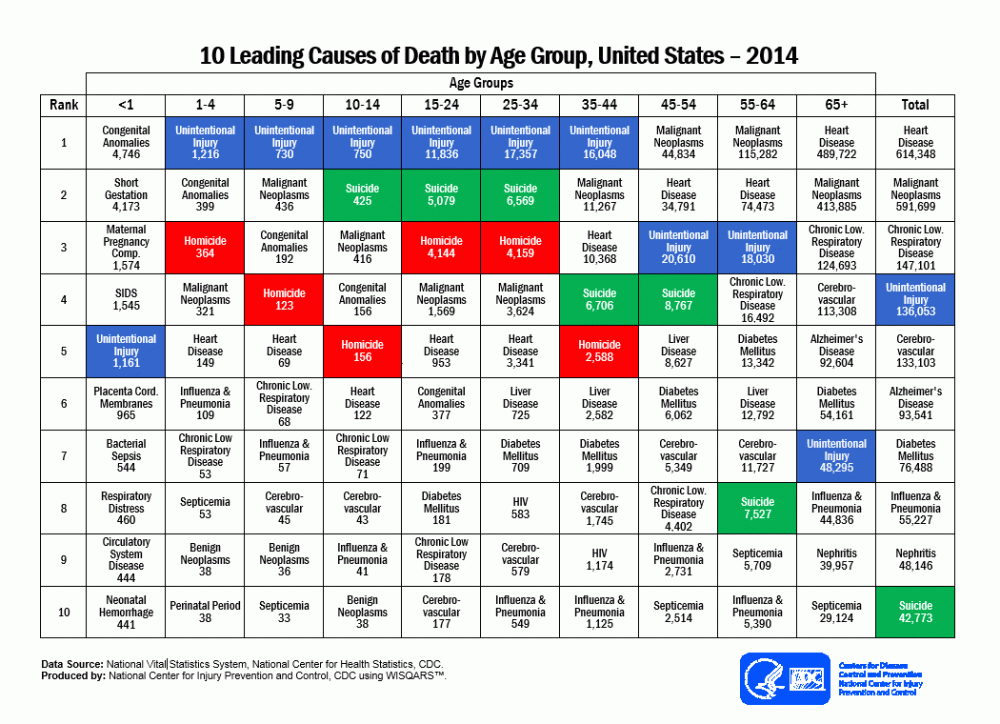
leading_causes_of_death_age_group_2014_1050w760h
They call it “Unintentional Injuries” but Motor Vehicle collisions are what the majority of them are. When you drive distracted, drowsy, buzzed, high, or like you own the road. It isn’t unintentional.

Driving is not a passive act. It is hard work and you are required to keep your wits about you while you are doing it.

With the huge flux of auto ads telling us that driving is fun, easy, desirable, sleek, sexy, and your ticket to freedom. Is it any wonder that people “feel” like they “need” to drive?

These are all catch phrases that were used to push cigarette ads and yet we were able to fight “the man” and have them kicked off of television and radio.

So why aren’t we doing that for auto ads?

#BanAutoAds

So the next time you see an auto ad pop up in your news feed, be sure and let them know what you find disturbing about it and add the hashtag #BanAutoAds. Your children’s lives depend on it.

You have options on how to get to work and people are fighting to make those options easier and more accessible to you. Help them.

Don’t wait around for special infra as some people will tell you to do. Take an education course such as Cycling Savvy and learn what real freedom actually feels like.

You can safely travel by walking, cycling, public transport, and auto rentals to get you where you need to go.

All that space removed from auto’s gives us more space to build business’, shops, schools, and cultural activities.

#BanAutoAds

Auto companies are gathering slick advertisers to promote their dangerous product to children using cartoons.

I’d like to sell you a bridge…O’Canada!

Burgoyne bridge St.Catharines Ontario

0db19ffc-4e56-4712-ad0f-433c47b299fc
Canadian Engineering. The struggle is real.


Douglas Bruce Ford, Jr. is a Canadian businessperson and politician in Toronto, Ontario. Ford was Toronto City Councillor for Ward 2 Etobicoke North in Toronto from 2010 to 2014 at the same time that his brother, Rob Ford, was mayor of Toronto. Wikipedia

Robert Bruce “Rob” Ford is a Canadian politician and businessperson who is a Toronto City Councillor. He was the 64th Mayor of Toronto, serving from 2010 to 2014. Prior to being mayor, Ford was a city councillor. Wikipedia

Car centric societies have no business engineering bicycle specific infrastructure. They aren’t qualified. You can not live your entire life driving a car and think that your engineering degree makes you fit to design bicycle specific infrastructure. You can’t do it. It’s like hiring someone who only walks, and has never driven, to design the roads you drive on. You would consider them unqualified, no matter how extensive their engineering knowledge or how many framed bits of expensive paper they have hanging on their wall.

You have to feel bicycling.

Local cycling advocate Tyler P. wants to ride his bicycle. He has a job, he goes to school, he shops, pays taxes, and is an all around responsible person.

He is a first class citizen being treated with second class status.

Because he rides a bicycle.

Toronto a.k.a. ‘Car’onto thanks to politicians like the “Ford’s” is vastly lopsided in its engineering practices. These engineering policies affect the entire province of Ontario, including the city of St. Catharines in the Niagara region.

Tyler P. has been actively reaching out to the local administration in the Niagara region and asking them for

bmufl-addition
Legally it’s “Shall” but that’s a whole ‘nother blog.

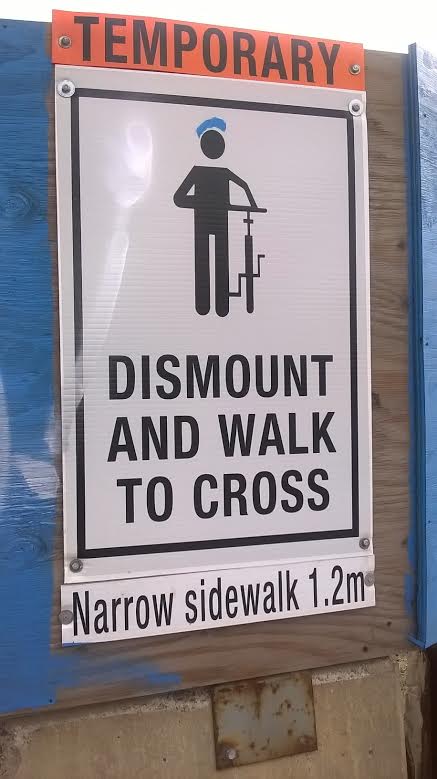
These are temporary signs that he is asking to be placed until the new construction is complete.

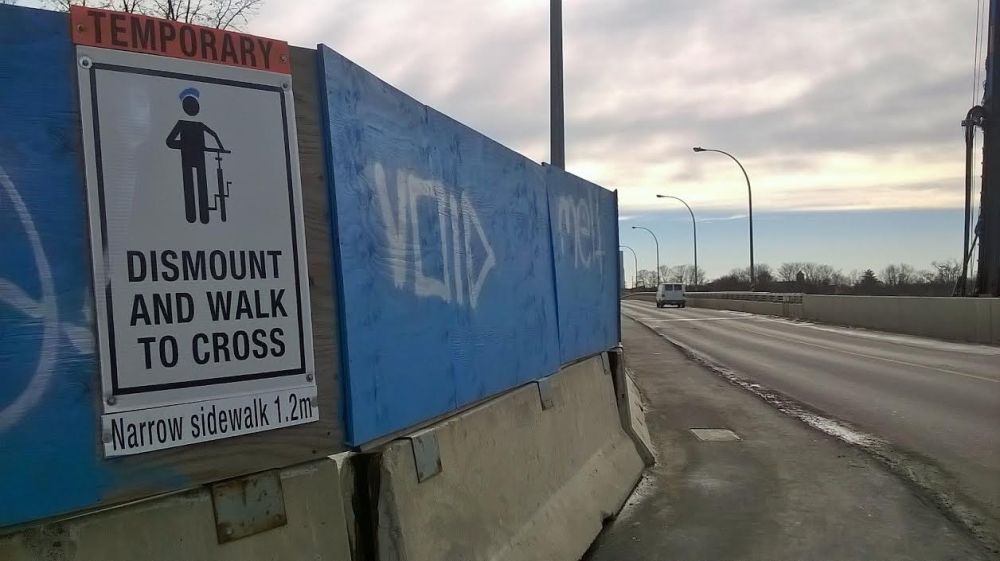
As it stands now. There is a 1.2 meter sidewalk and the city of St. Catharines is asking cyclist to dismount and walk their bicycles across a bridge.

8e0883d3-416b-4f29-9e28-bfaa95d94ae6.jpg
Looks like someone wanted to be cute and put a little blue hat on the cyclist.

It’s a long walk.

880999ff-32d2-4df8-9906-7660bb51b70f.jpg
All bridge photo’s courtesy of Tyler P.

Bicycling for transportation is fun. It’s also healthy, good for the environment, and easy on the wallet. The number one response from cyclists when asked why they enjoy cycling is “FREEDOM.”

You can’t get that with a car, even if you made it 100% free in every aspect you would still be hemmed in, limited, and stuck in traffic. That is the nature of autos.

Car centric societies are jealous of the freedom which cycling brings and it’s why people blame cyclists for their traffic problems, try to pass laws restricting them, and gamers design infra which hems cyclists in on every side.

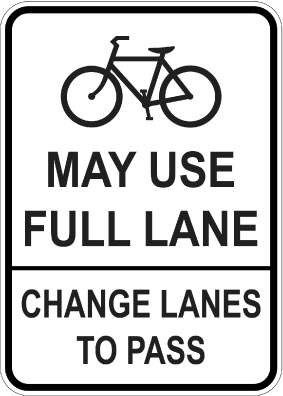
Why can’t he just ride in the lane?

Well he can. Legally in St. Catharines, and all of Canada, Tyler’s bicycle is a vehicle and he is legally allowed to occupy the full lane of travel. Which is why he is asking for the sign. Tyler knows what he can do. That’s not the problem. The problem is that people driving autos will make his life a living hell for exercising his rights. Because they are

  1. Uneducated on the equal status of bicycles as vehicles.
  2. Educated by auto ads that their auto is “like a family member,” and we all put our family before strangers.
  3. Car culture breeds lazy, distracted, and passive driving.

Namely tyler doesn’t want to be harassed.


120a6482-fda0-47d7-b15c-f14dae1f91e0.jpg
There is plenty of space for Tyler on the road. There is little space for pedestrians, Tyler and his bicycle.

There has been Twitter mention to the authorities in charge of this project to take into consideration the needs of the cyclist before after the construction is completed. As it stands now the bridge is being built to accommodate pedestrians and cyclists as an afterthought.

There is a real problem with bicycle infra that project engineers, city planners, and cycling advocates like to pretend doesn’t exist.

All transportation engineers put every measure into insuring that autos can operate at maximum speed with safety. They put very little of this same safety culture into bicycle design. Everyone assumes all cyclists are going to operate at super slow speed. I can tell you from experience that cyclists do not, and most will not, operate at the speeds for which you are designing their infra.

You create unsafe places for cyclists, pass laws mandating that cyclists must use these unsafe facilities, and then scratch your heads and conduct million dollar research studies to figure out why cyclists keep dying after all that effort.

Go ride your bike! 

I’m talking to you transportation engineers.

In the meantime. Can we put a little lean on the people in charge of the Burgoyne bridge in St.Catharines, Ontario and get Tyler P. the help he needs in creating space for cycling?

You can contact them here. Niagara Region
And here.
the construction firm
the region is like the county
the mayor who seems responsive at times
Alan Caslin

Please be aware that:

Feb 19
Tyler P.
When it’s done it will have painted lanes at the edge

And on a highly trafficked bridge some paint on the road is completely unacceptable. If a cyclist can be harassed for safely controlling their lane. Then the city has a moral responsibility to create a protected space. Not just from auto’s but from the debris that they push into bike lanes. (It’s why I prefer to cycling in the travel lane. Those nice people in their autos keep them swept clean.)

Please contact the names listed and go to their FB page.

Nicely! Ask them to support cycling.

Do it for yourself, Do it for cycling, Do it for the environment, But above all!

Do it for Tyler!

3826612e-1cde-4ed1-a3a8-67df83f19b17
Steady there. Once false move and it’s a head under a tire. #ForTyler

Lane control…Did I stutter?

Those who do not learn from history are doomed to repeat it.

But that is actually a misquote.

“Those who do not learn history are doomed to repeat it.” The quote is most likely due to George Santayana, and in its original form it read, ‘Those who cannot remember the past are condemned to repeat it.’ Via Google Search.

It is kind of like that childhood game of telephone. Words are repeated, misconstrued, rehashed, and then repeated further down as though it were the original statement.

As cycling “season” approaches let me start this all over again.

Lane control saves lives. Reduces the frequency of negligent motorist behavior and is the highest form of defensive cycling.

I will present to you a video in which lane control is not used. It is a highway much like the one described in Extremist thinking is hurting cycling.

The driver is at fault whether or not the cyclist was operating defensively or passively.

Cyclists may use the shoulder. Though I don’t recommend it.

We learn from our past so as not to make the same mistakes. It’s how I went from riding the shoulder to controlling my lane. I learned from near misses, logical thinking, and a careful review of state law.

In the video the motorist is seen drifting onto the shoulder. This is the first drift seen and the motorist maintains control of the vehicle as they correct for their mistake. The actions imply that the motorist is leaning over to the passenger side and reaching for something.

An earlier accident — which officials said wasn’t fog-related — involved a semi-trailer that was headed east on Interstate 70 along the turnpike. That accident caused motorists to slow down for several hours Wednesday morning as crews worked to clear the scene.

In that crash, which occurred at 3:20 a.m. at milepost 193.1 on eastbound I-70, near the Shawnee-Douglas county line, a 2005 Freightliner semi-trailer crashed after the driver lost control of his rig while reaching for a pack of cigarettes, turnpike official said.

The semi drifted to the right shoulder, then tipped over onto its right side and slid down the right driving-lane shoulder into the ditch. Via http://cjonline.com/

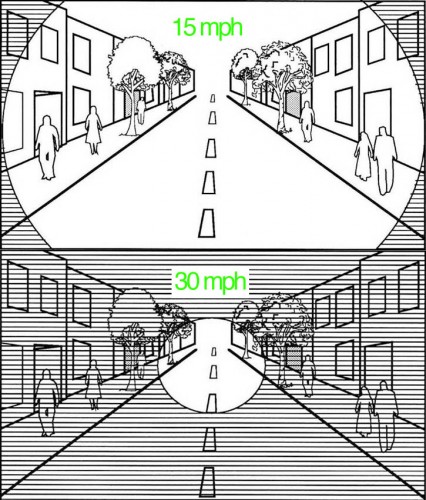
When a motorist is reaching over for an object it is their natural tendency to maintain a fixed and steady gaze on the road directly ahead of them. The fixed state of their gaze and the physical motion of leaning over will cause the driver to pull the steering wheel in the direction of their lean and they will drift out of their lane. All the while they will maintain eye contact with the road directly ahead of them. When a motorist is fixated in gaze their peripheral vision is compromised and this is exacerbated by speeds over 20mph.

speed-visual-focus-diagram-426x500.jpg
The critical ten

The driver in the video is not maintaining their lane. They are operating a vehicle without regard for other road users. This behavior is normalized socially and the proof of that is in how many motorists are allowed to slide the system. Either by not being cited or having their citations reduced or dismissed.

How lane control reduces and eliminates this behavior. 

Lane control works on these basic principles.

  1. The driver is maintaining a fixed and steady gaze on the road ahead of him.
  2. You are in that narrow cone of vision as the driver maintains that fixed stare.
  3. The driver is forced to acknowledge your presence and react accordingly

Does it work?

Damn straight it works.

There was a time when I was cycling down U.S. 27 and before I knew it a motorist had driven off the road, onto the shoulder, and passed me on the right. At first I interpreted this as bullying harassment. So I caught up with them at the corner gas station and confronted the driver. The driver informed me that he was distracted by his child in the back seat. Mom was sitting in the passenger seat. I realized that this father put not only my life but the life of his family in danger, it was this realization which made me lose my temper and I yelled at him to focus on his driving. I was worried that he would end up killing his family exactly like the driver who actually did end up killing his entire family. this also occurred on U.S. 27. (Completely unrelated to me but still profoundly affecting). Some idiot lady came out of the gas station and hollered at me to stop hollering at people. Because you know how annoying it is when vulnerable road users holler at motorists who almost end their life through careless driving. Poor motorists. Worse! Tea Party Libertarian Motorists. Arrogant and Victimized all in one.

Now, motorists will pitch a fit about you being “In The Road,” and some will eagerly pass legislation requiring you to operate as far right “Out Of Their Way” as possible. Some states even going so far as to legally require you to operate on shoulders. So check your state laws first. Fortunately those states are few and far inbetween. See also Bike League for some help on this subject.

Now here is where the game of telephone mentioned earlier comes in. Not every state has uniform statutes on “Cyclists Far To Right” laws. If a state’s “Bicycle Specific” law contradicts the state statutes you have a valid legal argument. Gather your peeps and start a movement to have those discriminatory laws abolished.

Sorry, I got sidetracked. Back to telephone. You will hear rumors about “safety” and riding the shoulder or as far right as possible. It will seem to make sense. I mean isn’t it logical that something hurtling towards you at high speeds is an increased danger to you? Well yea, if it’s blind and has no brakes. Can you add and subtract?

Sidetracked again. A motorist hurling themselves at you at 55 mph (if they are so dense as to hit you directly from behind) while you are operating your bicycle at say 25 mph will have a striking speed of 30 mph. Which is why the guy in the video was surprised at how few injuries he sustained. I would estimate the driver of the vehicle to be operating at between 35 and 45 mph and the cyclist to be operating at 24 mph. Which means that the striking speed was actually around 11 to 21 mph. Totally survivable and why we don’t ride against the flow of traffic.

Back to telephone, fer reelz this time.

So we hear all these rumors about what is safe and how operating on the shoulder is safe. We are told that the law requires us to operate out of the way of motorists. Basically we hear a lot of stuff. But is any of it actually true?

After a lot of careful study which I won’t go into here; I can tell you that your bicycle is legally defined as a vehicle and you have every right to control your lane and operate with traffic as an equal. That means in the lane. Fully in the lane. Not on the wee bitty edge.

If the cyclist in the video was fully educated on his rights to lane control and had been doing so, here is what I hypothesize would have occurred.

  • Motorist one (who was clearly paying attention) would have been required to reduce speed.
  • The motorists behind motorist one would have followed, so as to avoid rear ending the vehicle in front of them. (We all know rear enders are the fault of the person doing the rear ending and not the person being rear ended. How we flip that for cyclists I fail to understand.)
  • This chain reaction would have forced the negligent motorist to abandon their passenger side “dig” and focus entirely on the road.
  • Everyone would be irritated with the cyclist. Honking horns. Calling them an idiot. Tweeting snarky comments.
  • The cyclist would have felt harassed, marginalized, bullied.
  • Motorists would change lanes to pass or cyclist would have moved over and graciously allowed motorists to proceed before reclaiming their lane control position after being passed.
  • Middle fingers would be waved.
  • The cyclist would have coffee with their friends and commiserate about what a rude lot motorists are after hanging up their bicycle for the day.
  • The motorist would blame their bad day on the cyclist and tell their wife or boss that they were delayed not by their own lack of time management but by that one lone cyclist who slowed them down for 20 seconds.
  • Everyone would be alive and well. No injuries. No police reports. No delays lasting for hours. Paperwork to fill out. Insurance companies to call. Court dates to attend; leading to missed time from work.

Operating on a road is a fifty fifty deal. If everyone does their part, nobody gets hurt.

Motorists are terribly unreliable.

So we lane control to stack the odds in our favor.

Because ultimately the driver was the one who created the situation which lead to the collision. The driver is at fault. The Driver Is At Fault. THE DRIVER IS AT FAULT.

THE DRIVER IS AT FAULT!

And now here is the video.

Happy watching.


<p><a href=”https://vimeo.com/158039745″>Clipped from behind</a> from <a href=”https://vimeo.com/user49751273″>Anon Rider</a> on <a href=”https://vimeo.com”>Vimeo</a&gt;.</p>

It looks like they deleted the video.

So here is a different one.

Which I should warn you is very upsetting to watch.
You will read in the description about how the motorist admitted to seeing the cyclist in this instance but judged (wrongly) that they could overtake.
Again. 
Lane control prevents good motorists from making bad choices.
Bad motorists always make bad choices.
Don’t be a bad motorist.


A driver of a White Ford SUV killed a boy. Everyone in comments section victim blames. Except me.

Read the story here.

Screenshot-2016-03-01-12.36.53-660x330.png
Wonderful and well loved boys life cut short by careless driver.


Nicole B
.
How very sad. My prayers go to his family in this hard time. Honestly though this should never have happened. There is no reason why a 16yr old boy should be out at 230am riding his bike.. Where are the parents?!


Lisa S
.
This is a very sad tragic story and I may get hate comments for this, but he had NO BUSINESS at 16 YEARS OLD LEAVING his girlfriends house at 2:30AM!?!? Wonder if he snuck out of his house… My prayers to the victim and his family… I can’t imagine their heartache….


Katre R
.
WHY WHY WHY was a 16 yr old KID allowed to be at 02:30 !!!!!! Lack of parenting that’s why. His parents and the girlfriends parents should be charged with chiid neglect !!!!! Stop being your kids best friend and be a parent. You’re neglect cost him his life!!!


Kevin C
.
My condolences to his family and friends. I just want to say, that street is very dangerous at night. The surrounding neighborhoods have no street lights. I strongly believe the city of Victorville needs to do something about that. I have had a close call or 2 jogging on Luna Rd early mornings. I’m just happy the driver was responsible for his actions and did their part. I respect them as a person. Accidents happen lives are loss, no one is to blame. Its sad such a young kid lost his life, this should be a cause for the citizens to ban together and pressure the city of Victorville in taking more precautions to prevent fatalities like this. I’m sorry to say, but the city of Victorville really doesn’t do much.

My response to the BULLSHIT!

Cherokee Schill
Every single person who empathized with the driver, blamed the parents, blamed the victim, or in any way did not place direct blame on the driver needs a swift lesson on driver responsibility.

You do not hit things or people with your auto! Not ever!
It isn’t ok. It isn’t an “accident.”
It is careless driving. You have headlights for a reason. You use them to see what is in front of you. If you can not see what is in front of you then you SLOW down. If you failed to do any of these things and hit someone or something YOU are at FAULT!
If you kill someone while failing to do any of these basic driving components or use your basic safety measures i.e. dashboard to see how fast you’re going, brakes to slow down, headlights to illuminate what is in front of you. Then you are GUILTY of Felony vehicular manslaughter.
Driving is a responsibility and a privledge.
Riding a bicycle is a RIGHT. That’s why they don’t require licensing or insurance. Because it’s a right to ride your bicycle at any time of the night or day!
P.s. Streets are not dangerous. People who use streets irresponsibly are dangerous.

That is why we can’t have nice things.

It isn’t the lack of infrastructure. It is the lack of education.
Remember the excitement over Japans lack of bicycle specific infra?
Please don’t bring bike lanes to Japan.

We lack real education on bicycle rights. We are inundated with auto commercials which depict unsafe driving and declare “Feel the Freedom!”

We have a very bad culture in the auto world and a very bad culture in the cycling world.

When the first thing out of a cyclists mouth, after I’ve told them I was arrested for legally and safely cycling on a public road, is “in the car lane?” with a slowly growing look of horror. Then you know there is more going on in America then some paint and bollards will ever be able to fix.

It isn’t the lack of infrastructure. It is the lack of people who are willing to put their bike wheels where it matters. In the lane. In groups, in the lane. Not all trying to squeeze into a bike lane. But in the entire, publicly funded with your tax dollars, travel lane which is intended for all vehicles. Motorized or not!

Bicycle Specific Infrastructure and Robert Moses

A cyclist who uses lights, signals, and behaves as a predictable part of traffic doesn’t require bicycle specific infrastructure, some people would argue.

I would agree with them up to a point.

My views of a better culture for people don’t jive with bicycle specific infra (short for infrastructure) in dense urban area’s. Instead, I see these areas as perfect for true greening and humanizing public space.

The problem, as near as I can tell, is our cultural immersion in Robert Moses and his vision for the cities of tomorrow. Huge concrete jungles where everyone has a specific space and directions on how to operate in that space.
I hear this theme repeated back in transportation engineering. One webinar going so far as to suggest that trucks, motorcycles, and personal autos should each have their own specific lane.

4362eac2529d9e9dc9_uim6i6jou.png
Well that makes everything better! Especially if you only ever intend to cycle forward. I hope there’s a 7-11 in the middle of the street. 

It’s utter madness.

We don’t have space for each type of vehicle to have its own specific lane to operate in and we sure as hell shouldn’t confine people to “lane cages” in an attempt to regulate the mess that is humanity.

Looking back over the history of the rise of the DOT empire and their powerful influence over local governments; I begin to understand why cycling advocates have been wooed into this desire for bicycle specific infra in their neighborhoods. The propaganda is seductive.

I look over Streetsblog, People for Bikes, and League of American Cyclists literature and their love affair with bike lanes; I see people advocating for gilded cages.

You don’t need, nor should you want, a bike lane in dense urban areas. These are places where people should be free to mill around the neighborhood and shop. Pedal from one side of the street to the other as they run their errands. There should be trees, shrubs, food gardens, and benches to sit on in the middle of the road. Or at least on either side of a dedicated rail or tram line.

After speaking with the director of bicycle promotion in Japan, Mr. Hidetomo Okoshi, I left the North American Handmade Bicycle Show with a better vision of cycling and its future.

Mr. Okoshi explained to me that people in his country do not as a rule commute by auto to their jobs. Nor do they commute by bicycle. Instead they take the train and in their communities they get around by foot, bicycle, and auto. In that order of hierarchy. The people he explained do not travel far by bicycle. I asked him about bike lanes. He had an air of apprehension as he explained that Japanese do not need this as much as Americans because of their respect for each other. That is when the lightbulb hit.

Bike lanes do not create respect for cyclists anymore than sidewalks create respect for pedestrians. Communities which insist on bike lanes as a “friendly” way of incorporating cycling as a viable means of transportation aren’t doing anything to help the pedestrians in their communities. Bike lanes, by forcing cyclists off the usable portion of the roadway, enable motorists to speed and endanger both cyclists and pedestrians, not to mention themselves.
As was recently pointed out by Tim Cupery on my Facebook page who said:

it’s worth pointing out that edge-riding IS doing a favor to motorists, so they can continue to go the speed that they would prefer.

This is a key motive behind segregated infrastructure, and many cyclists think of themselves as second-class road users.

And he is right; Motorists do not slow down in the presence of bike lanes. If anything it only encourages them to speed.

How then are bike lanes heralded as a means of humanizing current infra? Because as I see it they aren’t. Instead I see places like downtown Louisville, Lexington, New York, and Portland as huge Robert Moses machines. Churning out the same style of precision engineering which treats people as machines or worse robots who are programmed to follow a specific flow.

Now some might get confused and understandably so, because bicycle infra when held up to car culture is confusing, over whether or not I support any infra at all!

The answer is YES!

But not the way you imagine it and not the way we are currently being sold.

My vision entails trains as mass transit over great distances and as high speed movement between fixed places. Walking and cycling as the normal means of transportation between shorter distances. Zoning which creates inclusive infrastructure and alleviates the homeless crisis, not exacerbate it. Neighborhoods where kids play on the street and tool around on their bicycles. E-assist pedal transport of heavy goods from a centralized location. More reliance on creative solutions and less dependence on the Moses era of thinking.

Bicycle highways which connect cities to each other are an excellent start to this vision. Zoning for the use of the areas around it to meet the needs of those cycling long distance is crucial.

But what do we do in the meantime?

We dismantle DOT or at the very least remove it from power as an oligarchy.  Sorry that was a bit ambitious for step one. Let me start over.

  1. We advocate for mandatory cycling education in all schools. Educating our children on how to operate their bicycles as a part of traffic.
  2. We advocate for mandatory cycling education on all drivers licensing, re-licensing, and court appointed diversion programs.
    (By following these first two steps we can effectively remove or at least significantly reduce cycling prejudice in one generation. Something to think about.)
  3. We advocate for reduced speed limits in neighborhoods and dense urban areas including cities. 20 mph is plenty.
  4. We advocate for mass transit and transitioning from Heavy Goods Vehicles a.k.a. tractor trailers to E-assist Heavy Goods Pedal Bikes.
  5. We advocate for programs with local police to report bullying and dangerous motorist behavior.
  6. We advocate for Greening our local communities with tree planting, food gardens, and shrubbery.
  7. We advocate for repeal of mandatory bike lane use laws.

If we get this started we can all have nice things.

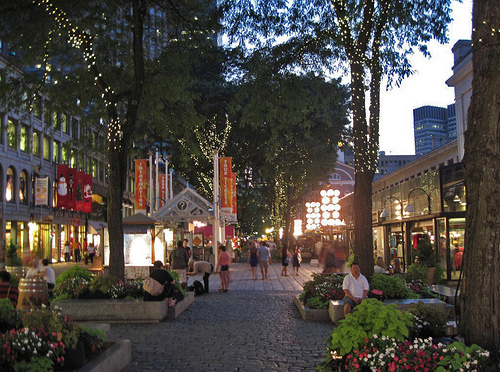
8239366155_4f99b3d101.jpg
You can ride your bicycle through here. It’s lovely isn’t it?


Or we can continue to have this.

1_fi_cityparking_1.jpg
Let’s stick a bike lane in here and call it green infra!

Space is scarce without resorting to urban sprawl. Yet urban sprawl is exactly what layering bicycle culture over auto culture is creating. I hate #SneckDown as it 1. doesn’t actually change anything. 2. It’s a crappy way to “educate” people. 3. It is, in my own opinion, a throwback to Oliver Twist. “Please Sir! May I have some more?” We aren’t asking for our space, it is ours to begin with, we are demanding it back.

street-atmosphere041.jpg
I call it “Cycling Without Apology.” And far too many of you cycle as though you are apologizing for being present on the road. 


People who have much to gain from selling Bicycle Lanes shouldn’t be trusted as a source of unbiased opinion on the greatness of Bicycle specific infra.

images (11)
I have some infra I’d like to sell you. It will make your life so much better. 

This picture is a perfect example of gilded cages. It is a modern day version of separate but equal. Except that you aren’t treated as an equal. You are a bird in a cage and your freedom of movement is an illusion. Need to get to the shop in the middle of the other side of the street? Tough shit! Go down a block, make a U-turn, and then you will eventually reach your destination.

But we love authoritay! and some people want to treat cyclists as special snowflakes.

special-snowflake

We will never move towards a society which unequivocally increases its modal share to bicycling unless we first remove all prejudice against and all special snowflake syndromes from cycling.

“Cycling without apology” and “Cyclists: Expected and Respected” should be mainstays of our advocacy language.

I don’t apologize for using road space which my taxes helped pay for. I am your equal on the road, respect me.

Any infra proposed which does not treat cyclists as either or both of those isn’t infra which is going to move our society forward nor will it increase modal share.

Extremist thinking is hurting cycling

189.300 Vehicles to keep to right.
(1) The operator of any vehicle when upon a highway shall travel upon the right side of the highway whenever possible, and unless the left side of the highway is clear of all other traffic or obstructions for a sufficient distance ahead to permit the overtaking and passing of another vehicle to be completed without interfering with the operation of any vehicle approaching from the opposite direction or any vehicle being overtaken. The overtaking vehicle shall return to the proper traffic lane as soon as practicable and, if the passing vehicle enters the oncoming traffic lane, before coming within two hundred (200) feet of any approaching vehicle.
(2) The operator of any vehicle moving slowly upon a highway shall keep his vehicle as closely as practicable to the right-hand boundary of the highway, allowing more swiftly moving vehicles reasonably free passage to the left.

I present to you exhibit A

A more misunderstood statute, I have never seen.

Depending on which extremist camp you are in or have a foot in. And you do have a foot in it; even if you think you don’t.

There are definitions to KRS 189. The purpose of the definitions; to clarify any word or phrase which is misunderstood. Let’s see how far we can understand the statute without having to refer to the definitions.

Let’s start with the title.

Vehicles to keep right:

  • Vehicle; This is any legally defined mode of travel which is not pedestrian. A train is a vehicle, a horse and buggy are a vehicle, a bicycle is a vehicle, a motorcycle is a vehicle, a car is a vehicle, a truck is a vehicle.

We need to take note that it specifically does not mention “motor”. This means that the statute applies to all vehicle types. Motorized or not.

  • Keep Right; We drive on the right hand side of the road. Some countries, such as England, drive on the left side of the road. They have a “Keep Left” law. Ours is keep right. Propel your vehicle, but do so on the right side of the road.

This is the beginning of the statute and should help us understand the body.

Now we move on to the body.

189.300 Vehicles to keep to right.
(1) The operator of any vehicle when upon a highway shall travel upon the right side of the highway whenever possible,

  • The operator, this means you, of any vehicle. Do you see it? No matter your vehicle type, if you are the operator of a vehicle, you as the operator are incumbent to keep your vehicle on the right side of the highway.
  • Whenever possible.

Whenever possible? You mean that I don’t always have to operate on the right side of the highway?

You are required to operate your vehicle on the right side of the highway. Allowing for the ever changing dynamics of said highway you are only required to keep right when it is possible.

Why possible and not practicable?

  • What is PRACTICABLE?

    Able to be done or put into practice successfully:
    Any idea or project which can be brought to fruition or reality without any unreasonable demands.

  • What is POSSIBLE?

    Able to be done; within the power or capacity of someone or something:
    Capable of existing or happening ; feasible.

Definitions via Black’s Law Dictionary and Oxford Dictionary.

Practicable isn’t always possible depending on how the word is used. Possible has a higher demand on the operator then practicable.

The statute requires you to always operate on the right whenever possible.

By using “possible” they have created uniformity with the other statutes. It isn’t always practicable to operate on the right; like when there is a vehicle moving slower than you would like to go. But it is always possible to operate on the right. You can slow down and stay behind the vehicle until it is possible to change lanes and pass.

189.300 Vehicles to keep to right.
(1) The operator of any vehicle when upon a highway shall travel upon the right side of the highway whenever possible, and unless the left side of the highway is clear of all other traffic or obstructions for a sufficient distance ahead to permit the overtaking and passing of another vehicle to be completed without interfering with the operation of any vehicle approaching from the opposite direction or any vehicle being overtaken.

  • Unless the left side of the highway is clear of all other traffic or obstructions.
    Simply stated, you can not overtake, pass, another vehicle if there is traffic or obstructions on the left side of the highway.
    You are required to pass on the LEFT. This includes lanes as we will read further down the statute. i.e. Left Lane.
  • For a sufficient distance ahead.
    Sufficient distance is defined as 200 feet further down in the statute.
  • To permit the overtaking and passing of another vehicle.
    This is where you are legally allowed to overtake, pass, another vehicle. This is the exception to the rule. You may legally drive on the left for the purpose of overtaking or moving around an obstruction.

Obstruction: A thing that impedes or prevents passage or progress; an obstacle or blockage:the tractor hit an obstruction.

An obstruction is a stationary object. The word can not be used to mean bicycle. It can be used to mean a parked or stationary object; such as a car. A row of parked cars are an obstruction. A moving bicycle is not. See also KRS 189.390 (7) Impeding. 

  • To be completed without interfering.
    You have to be able to complete the maneuver without interfering. If you interfere with anything that is in front of or to the left of the highway then you have to keep right.
  • With the operation of any vehicle approaching from the opposite direction or any vehicle being overtaken.
    You can’t interfere with the operation of any vehicle approaching and you also can not interfere with any vehicle being overtaken. See also KRS 189.34o (8)  Interfering.

189.300 Vehicles to keep to right.
(1) The operator of any vehicle when upon a highway shall travel upon the right side of the highway whenever possible, and unless the left side of the highway is clear of all other traffic or obstructions for a sufficient distance ahead to permit the overtaking and passing of another vehicle to be completed without interfering with the operation of any vehicle approaching from the opposite direction or any vehicle being overtaken. The overtaking vehicle shall return to the proper traffic lane as soon as practicable and, if the passing vehicle enters the oncoming traffic lane, before coming within two hundred (200) feet of any approaching vehicle.

  • The overtaking vehicle.
    This is the person operating the vehicle, which is operating on the left side of the highway. You are in the act of overtaking.
  • Shall return to the proper traffic lane. (1)
    You have to go back to operating on the right. Remember this is a keep right statute or law. You are required to continue operating on the right.

    What is SHALL?
    As used in statutes and similar instruments, this word is generally imperative or mandatory; but it may be construed as merely permissive or directory, (as equivalent to “may,”) to carry out the legislative intention and In cases where no right or benefit to any one depends on its being taken in the imperative sense, and where no public or private right is impaired by its interpretation in the other sense. Also, as against the government, “shall” is to be construed as “may,” unless a contrary intention is manifest. See Wheeler v. Chicago, 24 111. 105, 76 Am. Dec. 736; People v. Chicago Sanitary Dist., 184 111. 597, 56 N. E. 9.”.:;: Madison v. Daley (C. C.) 58 Fed. 753; Cairo & F. R. Co. v. Ilecht, 95 U. S. 170, 24 L. Ed. 423. SHAM PLEA. See PLEA. SHARE 1082 SHERIFF Via Black’s Law Dictionary

Shall as explained in Black’s Law Dictionary can mean the more permissive “MAY” unless there is an impairment of public right. And in the case of KRS 189.300 you “SHALL” return to the right because if you don’t, you are impairing the “RIGHTS” of oncoming traffic.

  • Shall return to the proper traffic lane. (2)
    Notice the word “LANE”? A highway is made up of lanes. These lanes are defined in the definitions. So in this case we are going to take a peek at our definitions for the chapter.

Definitions for KRS Chapter 189

Highway vs Roadway

(3) “Highway” means any public road, street, avenue, alley or boulevard, bridge, viaduct, or trestle and the approaches to them and includes private residential roads and parking lots covered by an agreement under KRS 61.362, off-street parking facilities offered for public use, whether publicly or privately owned, except for-hire parking facilities listed in KRS 189.700.

(10) “Roadway” means that portion of a highway improved, designed, or ordinarily used for vehicular travel, exclusive of the berm or shoulder. If a highway includes two
(2) or more separate roadways, the term “roadway” as used herein shall refer to any roadway separately but not to all such roadways collectively.

In the definitions for the chapter the word Highway is used to collectively refer to all roadway types. It could be an avenue. It could be a boulevard. It could be an alley. It could be a bridge. This is a general word and it is used in this statute not to discriminate against vehicles but to INCLUDE all roadway types.

KRS 189.300 means that no matter the type of roadway, you are required to keep right.

  • Roadway:
    a road or the part of a road used by vehicles.
  • Highway:
    (especially North American English) a main road for travelling long distances, especially one connecting and going through cities and towns
  • Lane:
    a section of a wide road, that is marked by painted white lines, to keep lines of traffic separate.

Whether it is a Highway or a Roadway you are required to keep right.
But in a LANE you shall occupy as much of that lane as possible. See KRS 189.340 (6) (a) Lanes.

This is a statute for drivers. This is not a statute for engineers. KRS has different chapters and definitions for engineering highways. This chapter is for everyone who drives. We can not apply engineering terms to the legal definition of how to operate a vehicle on the road. We are all drivers but we are not all engineers.

In this example the word lane is synonymous with roadway. See also; Lane Synonyms.

So this keep right statute also applies to laned highways but does it apply to lanes? We will explore this further down.

  • As soon as practicable. 
    There is the word practicable. We already showed that this word is not as imperative as the word possible. You can possibly return to the right, shoving the vehicle being overtaken further to the right, or forcing them to hit their brakes. But that wouldn’t be practicable. So once you have overtaken  the vehicle and it is safe for you to move back to the right, then you move back to the right. Remember you can not interfere with the operation of the vehicle being overtaken.
  • And, if the passing vehicle enters the oncoming traffic lane, before coming within two hundred (200) feet of any approaching vehicle.
    200 hundred feet is a lot of room. But it can be deceptive when you have a vehicle coming towards you at the speed limit. So if you can see a vehicle approaching you be very cautious when overtaking.

Now! Are we in the proper frame of mind?

I sure hope so.

We have thus far concluded that this statue is for the purpose of defining our state as a uniform whole of the United States. In the United States we drive on the right.

We also do not interfere with any traffic on the left, nor with any traffic we are overtaking.

We are required to operate on the right but it isn’t always mandatory under certain exclusions. And as long as all of those exclusions are met, we can safely operate on the left but only for a brief amount of time.

We have also obtained a firm grasp of “Practicable” as used in the statute.

Extremist thinking is hurting cycling.

Before we proceed to the next paragraph of this statute, let’s revisit the title of this blog.

Extremist thinking. It is hurting cycling.

Camp A:

An extremist will tell you that it isn’t safe to operate in a lane. They will tell you that you have to operate on the shoulder. They will point to this law as proof.

Camp B:

An extremist will tell you that this law is designed to keep cyclists far right. They will tell you that this law mandates you to operate on the shoulder. They will point to this law as proof.

But what does the statute actually say?

Let’s proceed to the hotly contested “Keep Far Right Law.”

189.300 Vehicles to keep to right.
(1) The operator of any vehicle when upon a highway shall travel upon the right side of the highway whenever possible, and unless the left side of the highway is clear of all other traffic or obstructions for a sufficient distance ahead to permit the overtaking and passing of another vehicle to be completed without interfering with the operation of any vehicle approaching from the opposite direction or any vehicle being overtaken. The overtaking vehicle shall return to the proper traffic lane as soon as practicable and, if the passing vehicle enters the oncoming traffic lane, before coming within two hundred (200) feet of any approaching vehicle.
(2) The operator of any vehicle moving slowly upon a highway

  • The operator of any vehicle.
    The operator is the person in control of the vehicle. Any vehicle means “ANY VEHICLE.” That’s right, this law applies to all vehicles equally.
  • Moving slowly.
    This is a subjective term. In KRS 189.390 (7) A person shall not drive a motor vehicle at a speed that will impede or block the normal and reasonable movement of traffic, except when reduced speed is necessary for safe operation or in compliance with law.
    A vehicle which is capable of operating at its top speed but at a speed which is less than the speed limit is not impeding. If it is a motor vehicle operating at less than its capable speed but under the speed limit it still isn’t impeding, if other conditions come into play, such as road conditions. i.e. inclement weather, other traffic upon the highway, approaching a hill, and any other variable.
  • Upon a highway.
    This means any road type. The use of the word highway in this statute is to include all the variable road types. It is not used to include the shoulder.

189.300 Vehicles to keep to right.
(1) The operator of any vehicle when upon a highway shall travel upon the right side of the highway whenever possible, and unless the left side of the highway is clear of all other traffic or obstructions for a sufficient distance ahead to permit the overtaking and passing of another vehicle to be completed without interfering with the operation of any vehicle approaching from the opposite direction or any vehicle being overtaken. The overtaking vehicle shall return to the proper traffic lane as soon as practicable and, if the passing vehicle enters the oncoming traffic lane, before coming within two hundred (200) feet of any approaching vehicle.
(2) The operator of any vehicle moving slowly upon a highway shall keep his vehicle as closely as practicable to the right-hand boundary of the highway

  • Shall keep his vehicle as closely as practicable.
    Do you recall Black’s Law Dictionary legal definition for “Shall” Do you recall that the word can be used synonymously with the permissive “May” as long as no one’s rights are being impaired? When you read the statute, does it say anywhere that it is your right to operate on the left? No. Does it say anywhere that it is your right to pass traffic moving slower than you? No.

    Passing is not a right.

    So it can be inferred that that the use of the word “shall” in this instance is synonymous with the more permissive “May.”

    We can also further verify that this is indeed the correct definition when we see also that the word “Practicable” is used in the same sentence. It isn’t always practicable to be far right.

  • To the right-hand boundary of the highway.
    This statute applies equally to all vehicle types. When we read KRS 189.340 we see that driving off the roadway is illegal and this statute applies to all vehicles. So we have to figure out what the boundary of the highway is, as it applies to this chapter. So we go back to the definitions.
    KRS 189.010 (10) “Roadway” means that portion of a highway improved, designed, or ordinarily used for vehicular travel, exclusive of the berm or shoulder.
    So we drive as close to the right as practicable but we do not operate on the berm or shoulder.

189.300 Vehicles to keep to right.
(1) The operator of any vehicle when upon a highway shall travel upon the right side of the highway whenever possible, and unless the left side of the highway is clear of all other traffic or obstructions for a sufficient distance ahead to permit the overtaking and passing of another vehicle to be completed without interfering with the operation of any vehicle approaching from the opposite direction or any vehicle being overtaken. The overtaking vehicle shall return to the proper traffic lane as soon as practicable and, if the passing vehicle enters the oncoming traffic lane, before coming within two hundred (200) feet of any approaching vehicle.
(2) The operator of any vehicle moving slowly upon a highway shall keep his vehicle as closely as practicable to the right-hand boundary of the highway, allowing more swiftly moving vehicles reasonably free passage to the left.

  • Allowing more swiftly moving vehicles reasonably free passage to the left.
    And that’s it folks. We are only required to operate as far right as is safe and which allows more swiftly moving vehicles reasonably free passage to the left.

    It only has to be reasonable because each vehicle is going to be a different type. What may be reasonable for a 3 ton wide load tractor trailer isn’t going to be reasonable for a twenty pound bicycle.
    The statute applies to all vehicle types on all types of roads. It is intended to advise people on the basic principles of our highways, the safe use of our highways, and the courteous use of our highways.

    This section of the statute does not mention lanes. The reason it does not mention lanes is because this portion of the statute does not apply to lanes. If there is a lane of traffic per KRS 189.340 (6) (a) that vehicle “SHALL” occupy as much of the lane as “Possible.” And in the use of both the words “shall” and “possible” and with the understanding that by not being fully in a lane interferes with the rights of other road users, this statute is imperative.

As a cyclist, as any road user, you are required to occupy a lane of travel and this statute has nothing to do with driving on the shoulder. It is only because of a lack of education on this subject that we have fools in both camps. Worse, we have fools on the public roads, police stations, and courtrooms.

The idea, that this law requires a cyclist to operate on the right third of a lane of travel,needs to be burned with fire!

It doesn’t even apply to two lane highways. As can be seen in KRS 189.310 

189.310 Vehicles meeting other vehicles and animals. (1) Two (2) vehicles passing or about to pass each other in opposite directions shall have the right-of-way, and no other vehicle to the rear of those two (2) vehicles shall pass or attempt to pass either of those vehicles.
(2) Vehicles proceeding from opposite directions shall pass each other from the right, each giving to the other one-half (1/2) of the highway as nearly as possible.
(3) Every person operating a vehicle on a highway and approaching any animal being ridden or driven, shall exercise every reasonable precaution to prevent frightening the animal and to insure the safety of the person riding or driving it.

Get educated!

As a cyclist you should be educated on all the rules of the road. As a cyclist you should be educated on all the safe operations of movement on the road.

You have the right to be safe. Use it. Exercise your right.

images (9)
This is where cyclists keep as far right as practicable. This is what it looks like. Memorize it. Use it!


It can happen to you

Originally shared by:

Steve M Williams
December 5, 2015 · Clovis, CA ·
This put me damn near in tears; read this encounter with police that professor Steve Locke went through, and it will explain everything you need to know about being black in 21st century America. If you don’t get it from this then really I’m wasting my time trying to explain it.

“This is what I wore to work today.
12314064_10205682939701484_2685232086259167111_n.jpg

On my way to get a burrito before work, I was detained by the police.

I noticed the police car in the public lot behind Centre Street. As I was walking away from my car, the cruiser followed me. I walked down Centre Street and was about to cross over to the burrito place and the officer got out of the car.

“Hey my man,” he said.

He unsnapped the holster of his gun.

I took my hands out of my pockets.

“Yes?” I said.

“Where you coming from?”

“Home.”

Where’s home?”

“Dedham.”

How’d you get here?”

“I drove.”

He was next to me now. Two other police cars pulled up. I was standing in from of the bank across the street from the burrito place. I was going to get lunch before I taught my 1:30 class. There were cops all around me.

I said nothing. I looked at the officer who addressed me. He was white, stocky, bearded.

“You weren’t over there, were you?” He pointed down Centre Street toward Hyde Square.

“No. I came from Dedham.”

“What’s your address?”

I told him.

“We had someone matching your description just try to break into a woman’s house.”

A second police officer stood next to me; white, tall, bearded. Two police cruisers passed and would continue to circle the block for the 35 minutes I was standing across the street from the burrito place.

“You fit the description,” the officer said. “Black male, knit hat, puffy coat. Do you have identification.”

“It’s in my wallet. May I reach into my pocket and get my wallet?”

“Yeah.”

I handed him my license. I told him it did not have my current address. He walked over to a police car. The other cop, taller, wearing sunglasses, told me that I fit the description of someone who broke into a woman’s house. Right down to the knit cap.

Barbara Sullivan made a knit cap for me. She knitted it in pinks and browns and blues and oranges and lime green. No one has a hat like this. It doesn’t fit any description that anyone would have. I looked at the second cop. I clasped my hands in front of me to stop them from shaking.

“For the record,” I said to the second cop, “I’m not a criminal. I’m a college professor.” I was wearing my faculty ID around my neck, clearly visible with my photo.

“You fit the description so we just have to check it out.” The first cop returned and handed me my license.

“We have the victim and we need her to take a look at you to see if you are the person.”

It was at this moment that I knew that I was probably going to die. I am not being dramatic when I say this. I was not going to get into a police car. I was not going to present myself to some victim. I was not going let someone tell the cops that I was not guilty when I already told them that I had nothing to do with any robbery. I was not going to let them take me anywhere because if they did, the chance I was going to be accused of something I did not do rose exponentially. I knew this in my heart. I was not going anywhere with these cops and I was not going to let some white woman decide whether or not I was a criminal, especially after I told them that I was not a criminal. This meant that I was going to resist arrest. This meant that I was not going to let the police put their hands on me.

If you are wondering why people don’t go with the police, I hope this explains it for you.

Something weird happens when you are on the street being detained by the police. People look at you like you are a criminal. The police are detaining you so clearly you must have done something, otherwise they wouldn’t have you. No one made eye contact with me. I was hoping that someone I knew would walk down the street or come out of one of the shops or get off the 39 bus or come out of JP Licks and say to these cops, “That’s Steve Locke. What the FUCK are you detaining him for?”

The cops decided that they would bring the victim to come view me on the street. The asked me to wait. I said nothing. I stood still.

“Thanks for cooperating,” the second cop said. “This is probably nothing, but it’s our job and you do fit the description. 5′ 11″, black male. One-hundred-and-sixty pounds, but you’re a little more than that. Knit hat.”

A little more than 160. Thanks for that, I thought.

An older white woman walked behind me and up to the second cop. She turned and looked at me and then back at him. “You guys sure are busy today.”

I noticed a black woman further down the block. She was small and concerned. She was watching what was going on. I focused on her red coat. I slowed my breathing. I looked at her from time to time.

I thought: Don’t leave, sister. Please don’t leave.

The first cop said, “Where do you teach?”

“Massachusetts College of Art and Design.” I tugged at the lanyard that had my ID.

“How long you been teaching there?”

“Thirteen years.”

We stood in silence for about 10 more minutes.

An unmarked police car pulled up. The first cop went over to talk to the driver. The driver kept looking at me as the cop spoke to him. I looked directly at the driver. He got out of the car.

“I’m Detective Cardoza. I appreciate your cooperation.”

I said nothing.

“I’m sure these officers told you what is going on?”

“They did.”

“Where are you coming from?”

“From my home in Dedham.”

“How did you get here?”

“I drove.”

“Where is your car?”

“It’s in the lot behind Bukhara.” I pointed up Centre Street.

“Okay,” the detective said. “We’re going to let you go. Do you have a car key you can show me?”

“Yes,” I said. “I’m going to reach into my pocket and pull out my car key.”

“Okay.”

I showed him the key to my car.

The cops thanked me for my cooperation. I nodded and turned to go.

“Sorry for screwing up your lunch break,” the second cop said.

I walked back toward my car, away from the burrito place. I saw the woman in red.

“Thank you,” I said to her. “Thank you for staying.”

“Are you ok?” She said. Her small beautiful face was lined with concern.

“Not really. I’m really shook up. And I have to get to work.”

“I knew something was wrong. I was watching the whole thing. The way they are treating us now, you have to watch them. ”

“I’m so grateful you were there. I kept thinking to myself, ‘Don’t leave, sister.’ May I give you a hug?”

“Yes,” she said. She held me as I shook. “Are you sure you are ok?”

“No I’m not. I’m going to have a good cry in my car. I have to go teach.”

“You’re at MassArt. My friend is at MassArt.”

“What’s your name?” She told me. I realized we were Facebook friends. I told her this.

“I’ll check in with you on Facebook,” she said.

I put my head down and walked to my car.

My colleague was in our shared office and she was able to calm me down. I had about 45 minutes until my class began and I had to teach. I forgot the lesson I had planned. I forget the schedule. I couldn’t think about how to do my job. I thought about the fact my word counted for nothing, they didn’t believe that I wasn’t a criminal. They had to find out. My word was not enough for them. My ID was not enough for them. My handmade one-of-a-kind knit hat was an object of suspicion. My Ralph Lauren quilted blazer was only a “puffy coat.” That white woman could just walk up to a cop and talk about me like I was an object for regard. I wanted to go back and spit in their faces. The cops were probably deeply satisfied with how they handled the interaction, how they didn’t escalate the situation, how they were respectful and polite.

I imagined sitting in the back of a police car while a white woman decides if I am a criminal or not. If I looked guilty being detained by the cops imagine how vile I become sitting in a cruiser? I knew I could not let that happen to me. I knew if that were to happen, I would be dead.

Nothing I am, nothing I do, nothing I have means anything because I fit the description.

I had to confess to my students that I was a bit out of it today and I asked them to bear with me. I had to teach.

After class I was supposed to go to the openings for First Friday. I went home.”

~Steve Locke

I can feel his pain.

“You must be doing something wrong because you are [fill in the blank].”  Is a blanket form of prejudice. It can be used in racism, sexism, and for anyone who doesn’t fit the status quo.

The part of his story which had the biggest impact for me was;

“Something weird happens when you are on the street being detained by the police. People look at you like you are a criminal. The police are detaining you so clearly you must have done something, otherwise they wouldn’t have you.”

This is my own experience. While the local cycling advocates tsk’d tsk’d over me for legally and safely cycling on a public road. People assumed I had broken some law. That I was wrong to be cycling. All sorts of excuses were given as to why it was acceptable for the cycling community to leave me out to hang.

“I wouldn’t cycle like that.”

“You are giving cyclists a bad name.”

“You shouldn’t be on that road. It isn’t safe.”

All of these were excuses to justify their own fears and soothe their conscious, while my life was being systematically destroyed.

Can you imagine if members of #BlackLivesMatter; instead of supporting Steve, instead chose to focus on what he was wearing? Or the way he walked on the street? You would think, “how absurd!” And yet! This is exactly what happened to me.

I’m not black, but if I had been, would it have been a race issue? I’m not talking about the #AllLivesMatter group or reverse racism. I’m talking about why, we as a society leave some people to hang, while others are given empathy. There are no incremental levels of injustice and wrongdoing at the hands of the police or judicial system. If it was wrong to do to Steve, then it was wrong to do it to me.

I hope you felt empathy for Steve. I hope his story kindled anger in your heart over the injustice that he experienced. And I want you to feel that same anger about all the other injustices that are happening to people. But more than that, I want you to do something about it. I want you to be there for people. I mean really be there.

I want you to do one more thing.

I don’t want you to reduce Steve to victimhood. He is a strong, smart, capable adult. He deserves to be treated with respect. Black people deserve to be treated as “expected and respected” members of our community.

And when cycling advocates are advocating for cyclists. I don’t want you to reduce them to victimhood. Because we are not victims. We are strong, smart, capable adults. Cyclists deserve to be treated with respect. They deserve to be treated as an “expected and respected” part of traffic.

From my own personal experience, I have heard it all. I can not begin to tell you how heart achingly frustrating it is to explain to people that I hadn’t done anything wrong. I hadn’t broken any laws.

No laws were broken!

Yet, I was ticketed and arrested anyway.

Professor Steve didn’t do anything wrong. The cops were being lazy and targeting any black male in the neighborhood.

The only thing protecting Professor Steve was his status as a professor.

The only thing protecting me was the color of my skin.

And neither of those things should have ever been a part of the equation where police and judicial bullying are concerned.

The fact that neither of us were breaking any laws should have been the only protection we required.

Furthermore, my status as a woman was enough to embolden my antagonizers both in and out of the legal system.

Don’t think for one second that because you are a man, white, or have social status that it can’t happen to you. Eli Damon can tell you that even those won’t protect you if you are a using a bicycle for transportation.

What happened to Steve, Eli, and myself should show you;

It can happen to you.

Start demanding positive changes.

Now!

Observing Traffic Court

If you want to put your finger on the pulse of car culture; observe traffic court.

The light was yellow for 2.7 seconds. I didn’t have time to stop in 2.7 seconds. So I went forward because I was worried about being cited for impeding traffic.
Actual testimony from a defendant.


There was so much traffic. The light was hard to see. I was worried about what the people behind me would do so I went through the light. I didn’t want to block the intersection.
Actual testimony from a defendant.


My van was loaded down with bricks. I must have had like a ton of weight back there. The road was really slick from all the rain and I knew I wouldn’t be able to stop in time. So I went through the light.
Actual testimony from a defendant.

The motorcycle cop who cited all three of these defendants had a helmet cam. He presented the video evidence to the court.

One of these defendants had their traffic ticket dismissed. The other two did not.

Traffic Lights

§ 811.260¹

Appropriate driver responses to traffic control devices

(4) Steady circular yellow signal. A driver facing a steady circular yellow signal light is thereby warned that the related right of way is being terminated and that a red or flashing red light will be shown immediately. A driver facing the light shall stop at a clearly marked stop line…

(7) Steady circular red signal. A driver facing a steady circular red signal light alone shall stop at a clearly marked stop line…

The driver of a vehicle is required to keep their vehicle under control at all times. They are required to be on the lookout for other road users who may be in their path of travel.

As I sat and listened to the drivers giving their excuses as to why they failed to head the traffic control light, a theme began to appear.

  1. I was distracted.
  2. I didn’t have my vehicle under control.
  3. I was worried about the people behind me.
  4. I couldn’t stop in time.

All of the defendants excuses appeared to be valid in their minds. None of these excuses took into consideration anyone else who may have been using Oregon’s public right of ways. Namely pedestrians but also cyclists.

Speed Laws

§ 811.100¹

Violation of basic speed rule
(1) A person commits the offense of violating the basic speed rule if the person drives a vehicle upon a highway at a speed greater than is reasonable and prudent, having due regard to all of the following:
(a) The traffic.
(b) The surface and width of the highway.
(c) The hazard at intersections.
(d) Weather.
(e) Visibility.
(f) Any other conditions then existing.

If you can’t keep your vehicle under control; you are going too fast.

If you can’t safely stop at the yellow; you are going too fast.

If you can’t safely stop at the red; you are going too fast.

If the speed limit is posted at 35 mph but you can’t safely drive 35 mph then by law you are required to slow down.

Safety Zones

§ 811.030¹

Driving through safety zone
(1) The driver of a vehicle commits the offense of driving through a safety zone if the driver at any time drives through or within any area or space officially set apart within a roadway for the exclusive use of pedestrians and which is protected or is so marked or indicated by adequate signs as to be plainly visible at all times while set apart as a safety zone.
In the video, which the officer showed to the court, each of these drivers went through a safety zone. Their testimony indicated their inability to ascertain if there was a pedestrian present at the time they committed their violations.
While no one was injured, this time. It is a clear indicator that motorists are not educated about the rights of pedestrians. Nor are they educated about their duties as a motorist to be on the lookout for pedestrians or cyclists.
A glaringly obvious example of this is through TriMetsShow them your shine.” ad campaign. Seeing these ads on display throughout Portland heats my blood to a simmering boil.
sddefault
Part pedestrian and part cyclist. It is clear that the ad is placing the onus on the vulnerable road user to be seen. A subversive form of propaganda and victim blaming.

Oregon’s roads are first come, first served, and duty of care.

§ 801.440¹
Right of way
Right of way means the right of one vehicle or pedestrian to proceed in a lawful manner in preference to another vehicle or pedestrian approaching under such circumstances of direction, speed and proximity as to give rise to danger of collision unless one grants precedence to the other. [1983 c.338 §81]

Two of the defendants were found guilty.

One of the defendants was able to get his ticket dismissed. The dismissal was due to a lack of evidence. The evidence was based on the question of whether the yellow light was timed correctly and the vantage point of the officers video did not reveal the defendants traffic control signal.

All in all it was very edifying and I highly recommend it for all pedestrian and cycling advocates.

In all things, remember this, running a red light is illegal. The reason it is illegal is because it isn’t safe. It isn’t safe for you and it isn’t safe for any of the road users around you. Keep your vehicle under control and keep the safety of other road users in mind. Do not worry about what the people behind you are going to do. The person behind you is required to show you courtesy and safety by keeping their vehicle under control.


Why do you use the road like that?

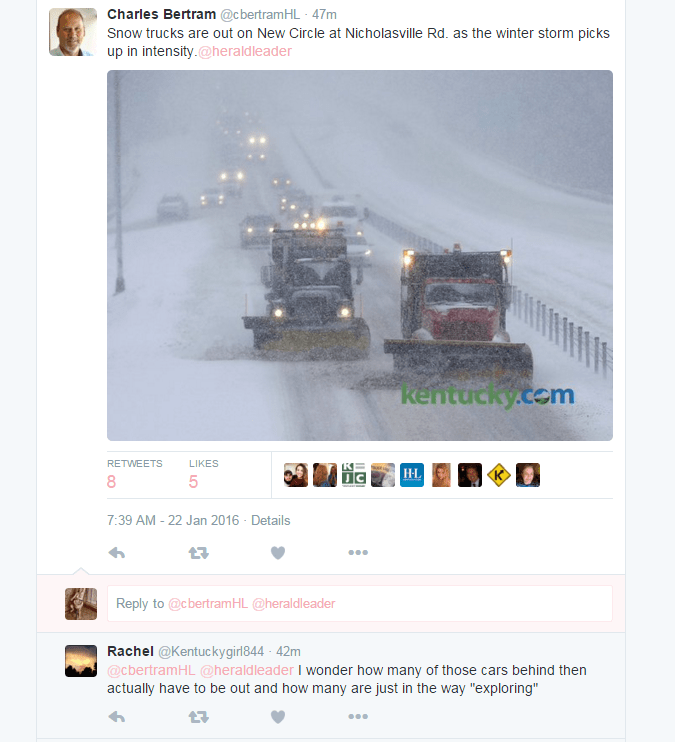
Rachel @Kentuckygirl844 “…how many of those cars behind then actually have to be out and how many are just in the way “exploring.”

Grammatical errors aside.

I want to explore everything that is wrong with this tweet.

  1. It isn’t any of your business why other people are on the road. It is a public road and everyone pays to use it. When, how, or where they use it is up to them.
  2. “how many are just in the way” No one is ever in anyone else’s way on a public right of way, also known as a road. It belongs to the public and the public has the right to use it. These roads are first come, first served, and duty of care. We show compassion for other road users. We yield the right of way to those who were there first. It is courteous, it is wise, and it shows others that we have a heart beating in our chest.
  3. You have nothing better to do on a terrible winter day except to sit and wonder about what other people are up to? Lucky you! This is a picture of those who are not so fortunate. So how about a little compassion?
  4. “Adulting.” Only adults use the roadway. Only adults use cars on the roadway. This isn’t any place for “other” road users. If you aren’t adulting on the road then you are in the way. “Exploring” is for kids. So GTFO!
  5. If they are out there having a light hearted romp in the snow; is it really any of your business?

I think  your tweet says more about you than it does the people using the road.

This is why we can’t have nice things!

Snowing
I’m more concerned with the driver of the SUV. Why doesn’t he have his lights on? It’s your right to be on the road but you do have to show regard for other road users. Safety first!


I understand now why so many cyclists in the US and UK are being killed.

I understand now why so many cyclists are being killed. Cycling like you are in the Netherlands or Copenhagen will get you killed in other countries.

There are some false beliefs out there. One is that infrastructure requires mandatory use laws, the other is that the lack of bicycle specific infrastructure means you just ride willy nilly all over the road.

  1. Netherlands cycle tracks are, for as near as I can tell, complete and connected. Like any highway, they go exactly where the user wants or needs to go.
  2. This is not true for the UK and US.
  3. If you don’t have complete cycle tracks and those cycle tracks do not meet your needs, you ride on the public highway.
    1. When you ride on the public highway you operate according to the rules of the road.
    2. You do not filter on the passenger side of a vehicle. Unless you have a death wish or are uneducated in cycling safety.
    3. You filter forward using the rules of the road and yield to oncoming traffic on a two way street.
  4. The main reasons people are opposed to bicycle specific infra are:
    1. The Netherlands set a bad example by legally mandating the use of their bike paths. Even in the Netherlands, if you are being honest when you bring them up, they do not have perfect infra everywhere you go. They still have door zone bike lanes. I sometimes find them in videos of locals who post their cycling trips but there aren’t any video’s of the Netherlanders specifically railing against them. Here is a blog on the subject for the Netherlands: On road cycle lanes: The good, the bad, and the ugly.
    2. The reason this is often not considered an issue is because the Netherlands also have strict liability laws. So if a driver injures a cyclist by throwing the door open without looking, the cyclist (should they survive the experience) can rest assured that the police and public media are not going to further victimize them by questioning their right to be there. No one will ask if they were wearing a helmet (as though that could really protect you from having your head run over by 2 tons of machine). No one will question the color of your clothes. The cyclists in the Netherlands have the homefield advantage, even in the face of crappy infra. Their medical bills are promptly paid and they get to go on with life as usual.

Bike specific infra (in the UK and US) is often a painted line on the ground. More often this painted line on the ground places the cyclist out of the driver’s field of vision. With a very narrow margin of passing clearance. In many ways it’s like we forget that often touted slogan of “3 feet minimum” to pass. Our engineers do not take safe passing into account when painting bike lanes. The faster the traffic the wider the bike lane should be.

  1. We often overestimate a driver’s area of vision as extending from the front side windows forward. The average driver does not drive with a 90 degree arc of vision. The average driver drives distracted. This is often compounded with age and limited physical mobility which makes it difficult to turn the head and look to the left and right as well as over the shoulder.
  2. To avoid a drivers blind spots always put yourself directly in front of the driver when operating your bicycle. The Dutch/Netherlands started (as near as I can tell) this idea of hugging the curb. Which is easier to do if you are operating at a snails pace.
  3. So if you are riding like the Dutch/Netherlands (think hugging the edge or weaving haphazardly in and out of traffic, also those box style turns where you cross like a pedestrian, honorable mention to filtering forward to the front of the line), if you ride like this, on public highways, you are riding with a death wish.
  4. The Netherlands have taken into consideration that motor traffic occupies a great deal of space and they have adjusted their light signals to accommodate cyclists at intersections.  
    Which as you can see from the video, still needs a lot of tweaking. It’s o.k. to let loose on all sides for cyclists but not for cars? Come on! Where is the fairness in that? 😉

I’ve watched several videos of average people in the Netherlands, they are catching the film my ride fever too, cycling in the Netherlands, Copenhagen, and the Dutch. They do all of these things. (See this video for a full understanding of what I’m talking about:

I’ve also had the opportunity to read their laws and it is expressly illegal to haul passengers on bike racks. You will see a lot of law breaking in the video’s promoting cycling in the Netherlands.

If the Netherlands did away with the mandatory use laws this would solve the problem of faster cyclists running over pedestrians and slower cyclists. (This is a hot button topic in the Netherlands.)

Remember the Netherlands also have fast club rides. I feel very strongly that those cyclists do not belong on bike paths with slower moving traffic.

There will be the usual stupid comment: “Oh you just want children to cycle on heavily trafficked fast moving roads!”

No, I don’t. What I want is for there to be no heavily trafficked fast moving roads. Any roads that are used to swiftly move people from town to town should be limited access and built to those standards. All other roads should be built to accommodate all other road users regardless of vehicle type. All roads should be safe for foot traffic above and beyond anyone else’s needs.

When we build communities that are based on people walking, then we will have a community that is safe for cyclists of all ages.

I, as a responsible parent, taught my children how to cycle safely on the only road that took us to our destination.

I’m not the only parent out there who understands where the real risks are to riding in traffic. This is an old article but it clearly shows where the stinkin’ thinkin’ comes from and if you yourself don’t know, allow me to state it plainly.

UK father commutes kids to school by bicycle. Stopped by police.

1. Cyclists obey the rules of the road. Overtaking through intersections on the passenger side is illegal because it is dangerous. You wouldn’t do it in a car, don’t do it on a bicycle.

2. Motorists obey the rules of the road. Treat cyclists just like you would any other vehicle out there on the road. Change lanes to pass and yield right of way when legally required. Do not create confusion by yielding right of way when not legally required to do so.

For both Cyclists and Drivers, use sound judgement and know your transportation codes and laws before heading out. Always leave at least 10min early. You will never be late and find that your commute is much more relaxing when you don’t feel pressed for time.