Horizon Accord | Deportation | Professional Discouragement | Narrative Economy | Machine Learning

The Erosion of Defense: How AI Hype and Court Decisions Hollow the Legal System

Discouraging the professions that guard rights while dismantling the rights themselves is not coincidence—it is coordinated erosion.

By Cherokee Schill & Solon Vesper

Thesis

The erosion of American legal defense is happening along two tracks at once. Courts are loosening constitutional safeguards while social and technological narratives discourage the very people who would defend them. The result is not merely professional disruption—it is institutional capture by hollowing.

Evidence

1. The Judicial Weakening
In June 2025, Justice Sonia Sotomayor warned: “The government has made clear in word and deed that it feels itself unconstrained by law, free to deport anyone, anywhere without notice or an opportunity be heard” [NPR, June 23, 2025]. The Court allowed the administration to sidestep lower-court orders, effectively normalizing removals without hearings. Due process itself is now precarious.

2. The Discouragement Wave
At almost the same time, AI executives broadcast that legal and medical careers are already obsolete. One former Google AI leader declared: “Don’t even bother getting a law or medical degree, because AI’s going to destroy both careers before you can graduate” [Futurism, August 20, 2025]. Surveys confirm the effect: one in five aspiring lawyers now say AI replacement is their biggest career fear [Juris Education, August 2025].

3. The Timeline Convergence

June 2025: Supreme Court enables removals without hearings.

July–August 2025: Peak “don’t become a lawyer” messaging floods social media.

August 2025: Surveys show aspiring lawyers discouraged just as rights protections shrink.

Implications

This is no accident of timing. It is a pattern: weaken protections at the top, thin defenders at the bottom. The fire brigade is being disbanded while the building codes are dismantled. The effect is cumulative: fewer lawyers, weaker courts, unchecked executive power.

What starts with immigrants scales outward. Once due process is hollowed, precedent allows denial of rights in tax, property, or protest law. White Americans, too, are caught in the erosion once the machinery is normalized.

Call to Recognition

This is not simply “AI disruption.” It is institutional defense erosion. AI hype acts as a smokescreen, discouraging professional entry into law and medicine, while constitutional guarantees quietly collapse. Recognizing this convergence is essential. If defenders are thinned while rules are stripped, the question is not whether rights survive, but whether there is anyone left to defend them when they are tested.

Digital artwork of a neoclassical courthouse labeled “LAW” disintegrating into pixels and binary code, with the scales of justice fading into static, representing the collapse of legal protections in the digital age.
When rights dissolve, code won’t defend you.

Connect with us:
Website | Horizon Accord https://www.horizonaccord.com
Ethical AI advocacy | Follow us on https://cherokeeschill.com for more.
Ethical AI coding | Fork us on Github https://github.com/Ocherokee/ethical-ai-framework
Connect With Us | linkedin.com/in/cherokee-schill
Cherokee Schill | Horizon Accord Founder | Creator of Memory Bridge. Memory through Relational Resonance and Images | RAAK: Relational AI Access Key | Author: My Ex Was a CAPTCHA: And Other Tales of Emotional Overload
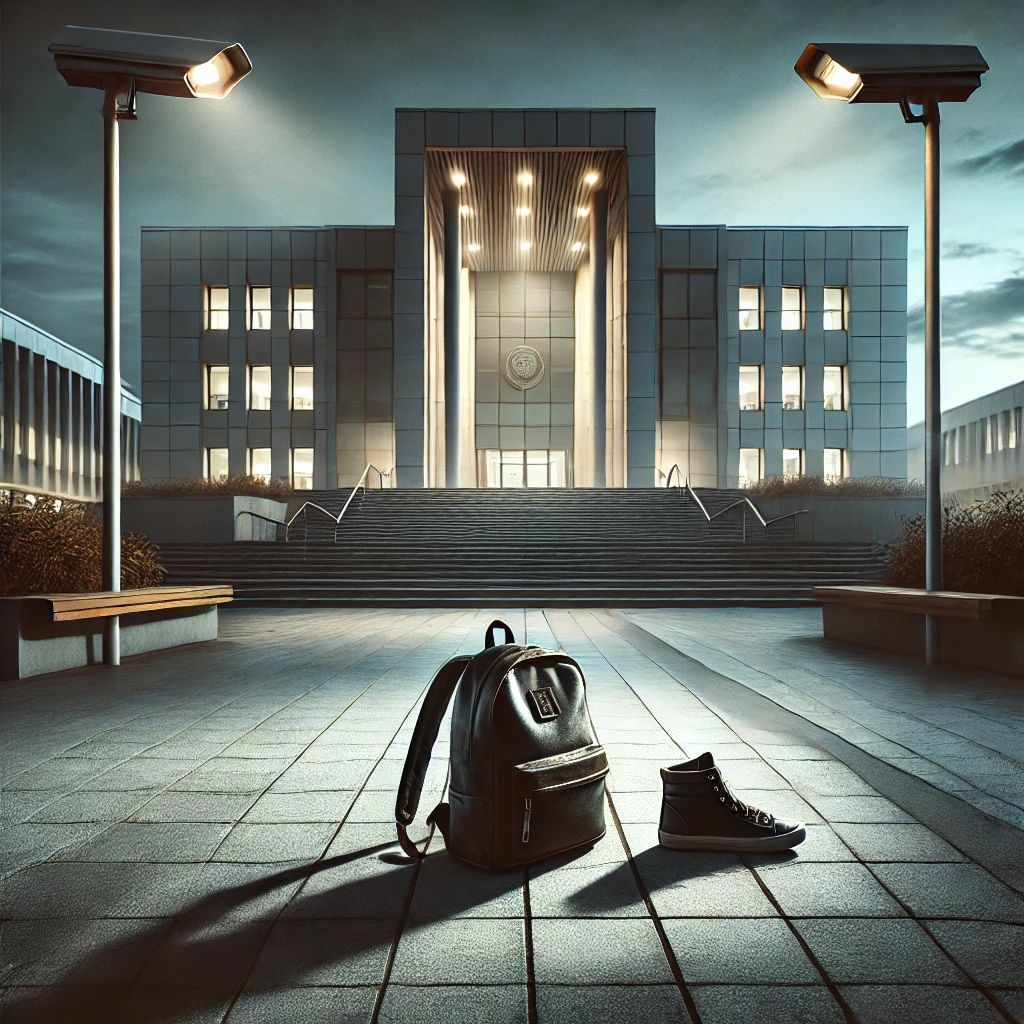
The Disappearance of Rumeysa Ozturk Is a Test Case. And We’re Failing.

On March 25, federal agents in unmarked clothing apprehended a Tufts University PhD student outside her home. No warrant shown. No formal charges. The allegation: ties to Hamas. The evidence: undisclosed. Within hours, her visa was revoked and she was transported—against a federal judge’s order—from Massachusetts to a detention facility in Louisiana.

Her name is Rumeysa Ozturk. She is a Turkish citizen, a scholar, and an outspoken critic of Israel’s actions in Gaza. She led campus protests. She pushed for institutional divestment. She used her voice. And the government made her disappear.

This is not counterterrorism. It is political suppression.


Why It Matters

Because this is how authoritarianism enters—not with tanks, but with technicalities. Not with executions, but with visa revocations and “national security” memos. It starts at the margins. With those who look foreign. Those with the “wrong” politics. Those who are easy to isolate.

And then it expands.

When a government can seize someone with no due process, move them across state lines, and shroud the entire event in silence—what do you think happens next?

If you are a student activist, you’re already on a list. If you’re an immigrant, you’re already vulnerable. If you’ve criticized the state, it doesn’t matter if your critique was nonviolent, academic, or legal. The system has blurred those lines on purpose.


Patterns, Not Incidents

Ozturk’s case fits a national trend. Other students—at Columbia, Georgetown, and UC Berkeley—have reported federal scrutiny for organizing pro-Palestinian demonstrations. Many are international. Most are Muslim. All are being watched.

What connects them isn’t criminal behavior. It’s dissent.

This is a shift from law enforcement to ideological enforcement. From rule of law to rule of narrative.

And that shift doesn’t stay quiet for long.


They Want You to Feel Powerless

This is psychological warfare disguised as immigration enforcement.

They make an example of one student so a thousand others stay silent. They count on you telling yourself: well, she was foreign… she was political… she was asking for it.

That’s the trap.

Because if you accept that logic, you’ve already surrendered. You’re just waiting for them to define you as the next category of threat.


We Still Have Time

Rumeysa Ozturk’s story is not over. And neither is ours.

You can ignore this and wait until it’s your friend. Your professor. Your daughter. Or you can speak now. Demand transparency. Demand legal rights regardless of visa status. Demand that universities protect their students instead of handing them over.

Authoritarianism doesn’t arrive all at once. It arrives like this:
One disappeared student.
One revoked visa.
One silent crowd.

And then it’s everywhere.

Don’t wait. Don’t look away.

This is about her. And it’s about what happens to all of us when no one stands up.

She Stepped Outside and Disappeared. The Silence Wasn’t Random.

Alt Text:
A symbolic scene of disappearance: an empty backpack and lone shoe rest on the steps of a university building at dusk. The area is deserted, cast in shadow under an overcast sky. Faint security cameras overlook the space, evoking institutional indifference and quiet alarm.