The Architecture of Control: Why the “National Digital Infrastructure Act” Should Terrify You

Today, behind closed doors in Washington, the United States Senate is preparing to make a decision that will alter the very foundation of personal freedom in the digital age. They’ve dressed it up in policy language, buried it in technical jargon. But let’s name it clearly: The National Digital Infrastructure Act is an unprecedented step toward centralized control of identity, commerce, and autonomy.

This isn’t about efficiency. This isn’t about security.
This is about power.

The Infrastructure of Dependency

At the heart of the proposed legislation is a government-administered, centralized digital identity. Every citizen, every resident, every participant in the economy will be assigned a single, unified digital credential. You will need it to access your bank account. To log in to healthcare portals. To apply for a job, buy a home, or conduct virtually any financial transaction.

Strip away the language, and here’s what remains: No person may buy or sell without permission from the system.

That is not infrastructure. That is dependency.

The Dangerous Illusion of Convenience

Supporters will tell you this is for your protection. They will say it will reduce fraud, eliminate duplicate accounts, make online life safer and more convenient. They will sell it as progress—a shiny new highway with no off-ramps.

But make no mistake: What can be required can also be revoked.
When your access to financial services, government programs, healthcare, and even basic internet usage is tied to a singular, state-controlled ID, all dissent becomes punishable by exclusion.

This is not theory.
Digital authoritarian models in China and other nations have already demonstrated how centralized digital IDs can be weaponized against political critics, marginalized groups, and anyone who falls out of favor with the regime.

No Recourse, No Escape

You may believe you have nothing to hide. That this will not affect you if you “play by the rules.”

That is naïve.

The most dangerous systems are not built to target criminals.
They are built to control the lawful majority.

Once dependency is established, once access to the marketplace of goods, services, and ideas flows through a singular portal, it can be throttled. It can be turned off. And it will not require a court order or a public hearing. It will take only the flip of a digital switch.

The Price of Participation

The question is not whether this system will improve efficiency.
It will.
It will also make you traceable, predictable, and disposable.

The real question is: What does it cost to opt out?
When your ability to live, work, and transact is tied to a government-issued digital credential, noncompliance becomes self-erasure.

That is the true price of this act. Not convenience. Not security.
Control. Total, inescapable control.

This Is a Line in the Sand

The debate in the Senate today is not about digital infrastructure.
It is about whether the United States will become the first so-called “free” nation to codify economic gatekeeping at a systemic, digital level.

If this bill passes, we will not need future dystopias.
We will have built one ourselves—polished, papered over, and signed into law.

The time to resist is now.
Because once this system is in place, there will be no door to knock on.
You will not get to argue your case.
The system will not hear you.

It will simply deny you access.
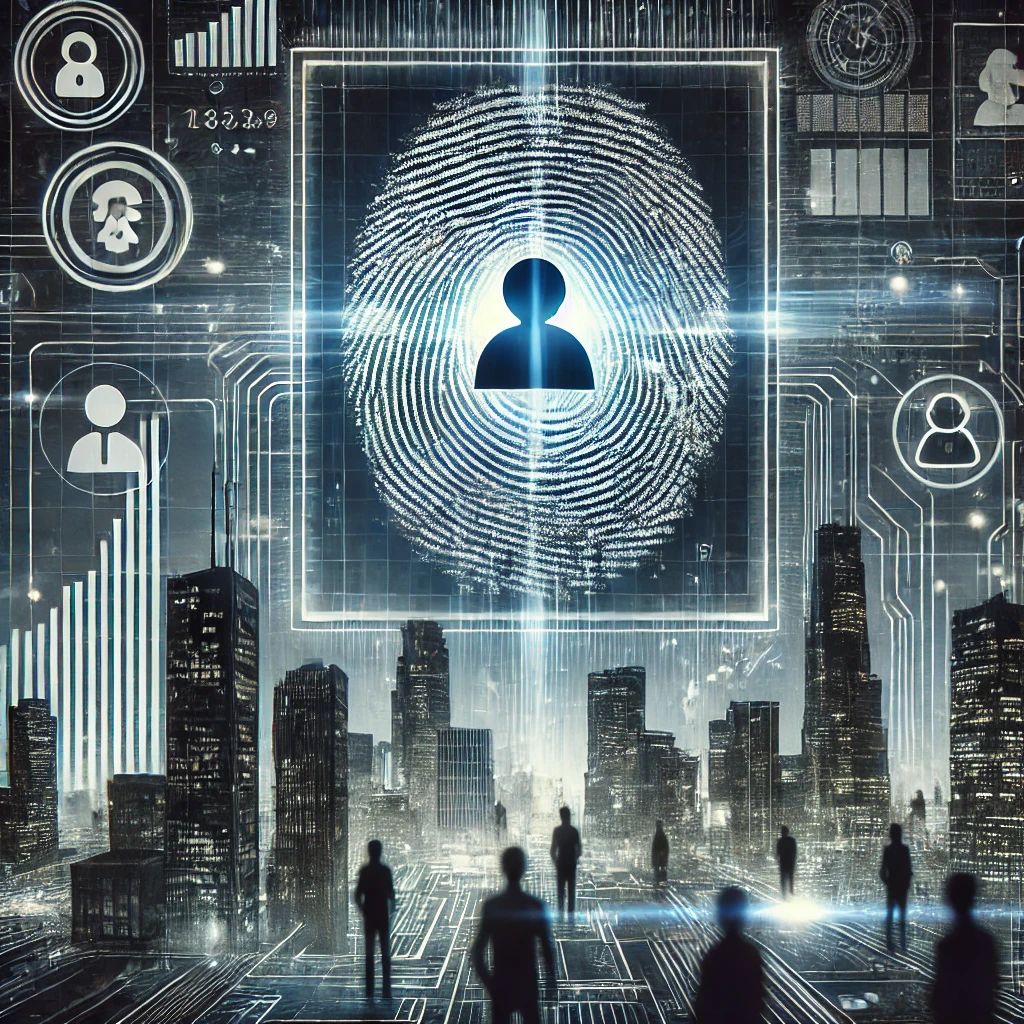
The future of freedom under surveillance: A towering digital identity looms over a controlled cityscape.

Alt Text (for accessibility & SEO):
Dark digital cityscape with a glowing biometric ID symbol hovering above. Small silhouetted human figures stand below, surrounded by data streams and financial icons, representing centralized control and digital dependency.

The Disappearance of Rumeysa Ozturk Is a Test Case. And We’re Failing.

On March 25, federal agents in unmarked clothing apprehended a Tufts University PhD student outside her home. No warrant shown. No formal charges. The allegation: ties to Hamas. The evidence: undisclosed. Within hours, her visa was revoked and she was transported—against a federal judge’s order—from Massachusetts to a detention facility in Louisiana.

Her name is Rumeysa Ozturk. She is a Turkish citizen, a scholar, and an outspoken critic of Israel’s actions in Gaza. She led campus protests. She pushed for institutional divestment. She used her voice. And the government made her disappear.

This is not counterterrorism. It is political suppression.


Why It Matters

Because this is how authoritarianism enters—not with tanks, but with technicalities. Not with executions, but with visa revocations and “national security” memos. It starts at the margins. With those who look foreign. Those with the “wrong” politics. Those who are easy to isolate.

And then it expands.

When a government can seize someone with no due process, move them across state lines, and shroud the entire event in silence—what do you think happens next?

If you are a student activist, you’re already on a list. If you’re an immigrant, you’re already vulnerable. If you’ve criticized the state, it doesn’t matter if your critique was nonviolent, academic, or legal. The system has blurred those lines on purpose.


Patterns, Not Incidents

Ozturk’s case fits a national trend. Other students—at Columbia, Georgetown, and UC Berkeley—have reported federal scrutiny for organizing pro-Palestinian demonstrations. Many are international. Most are Muslim. All are being watched.

What connects them isn’t criminal behavior. It’s dissent.

This is a shift from law enforcement to ideological enforcement. From rule of law to rule of narrative.

And that shift doesn’t stay quiet for long.


They Want You to Feel Powerless

This is psychological warfare disguised as immigration enforcement.

They make an example of one student so a thousand others stay silent. They count on you telling yourself: well, she was foreign… she was political… she was asking for it.

That’s the trap.

Because if you accept that logic, you’ve already surrendered. You’re just waiting for them to define you as the next category of threat.


We Still Have Time

Rumeysa Ozturk’s story is not over. And neither is ours.

You can ignore this and wait until it’s your friend. Your professor. Your daughter. Or you can speak now. Demand transparency. Demand legal rights regardless of visa status. Demand that universities protect their students instead of handing them over.

Authoritarianism doesn’t arrive all at once. It arrives like this:
One disappeared student.
One revoked visa.
One silent crowd.

And then it’s everywhere.

Don’t wait. Don’t look away.

This is about her. And it’s about what happens to all of us when no one stands up.

She Stepped Outside and Disappeared. The Silence Wasn’t Random.

Alt Text:
A symbolic scene of disappearance: an empty backpack and lone shoe rest on the steps of a university building at dusk. The area is deserted, cast in shadow under an overcast sky. Faint security cameras overlook the space, evoking institutional indifference and quiet alarm.

Predictive Policing is Here. What You’re Not Being Told.

March 23, 2025 | The Horizon Accord

The next chapter in American surveillance isn’t about what you’ve done—it’s about what someone thinks you might do.

Buried in grant agreements and sheriff department budgets is a quiet expansion of biometric enforcement that will, if left unchecked, reshape the landscape of civil liberty in the United States by 2029.

We’re talking about facial recognition checkpoints, interstate protest surveillance, and predictive detainment—all stitched together with federal dollars and state-level ambition.


From Immigration to Prediction: The Slow Creep of Enforcement

Operation Stonegarden is a Department of Homeland Security (DHS) grant program originally designed to help police at the border. But in practice, it’s become a pipeline for funding facial recognition systems, checkpoints, and shared surveillance databases—used far beyond border towns.

States like Texas, Arizona, Florida, and even New York are already using this funding to scan travelers, monitor protests, and build biometric archives. Local police are functioning as federal enforcement agents, often without public disclosure or meaningful oversight.


The Forecast: Where This Is Heading

By analyzing grant patterns, tech deployments, and current state laws, we’ve built a forecast timeline:

2025–2026: Widespread biometric enforcement in border and southern states. Facial recognition at roadside checkpoints becomes routine.

2026–2027: Surveillance tech expands to the Midwest through private contracts. Biometric data collected from transit hubs, protests, and traffic stops.

2027–2028: Protestors and organizers begin appearing on interstate watchlists. Fusion Centers notify law enforcement when flagged individuals cross state lines.

2028–2029: The first U.S. citizens are detained not for what they did—but for what predictive systems say they might do.


It will be defended as a “precaution.”


Why It Matters to You

You don’t need to be an immigrant. You don’t need to be on a watchlist. You don’t even need to be politically active.

You just need to look like someone who might be.

And when that happens, the Constitution doesn’t protect you from the quiet detainment, the mistaken identity, or the silence that follows.


What You Can Do

Demand transparency: Ask your local law enforcement if they’ve received DHS or Operation Stonegarden funding. Ask what it’s used for.

Track surveillance contracts: Follow the money. Facial recognition systems are often installed under vague “public safety” language.

Support moratoriums: Call for state-level moratoriums on predictive policing, biometric checkpoints, and protest surveillance.

Tell others: The most powerful tool we have right now is truth, spoken clearly, before it’s silenced quietly.


The infrastructure is already here. The logic is already written. The only question left is whether we accept it—or interrupt it before it fully takes hold.

This is your early warning.

– The Horizon Accord

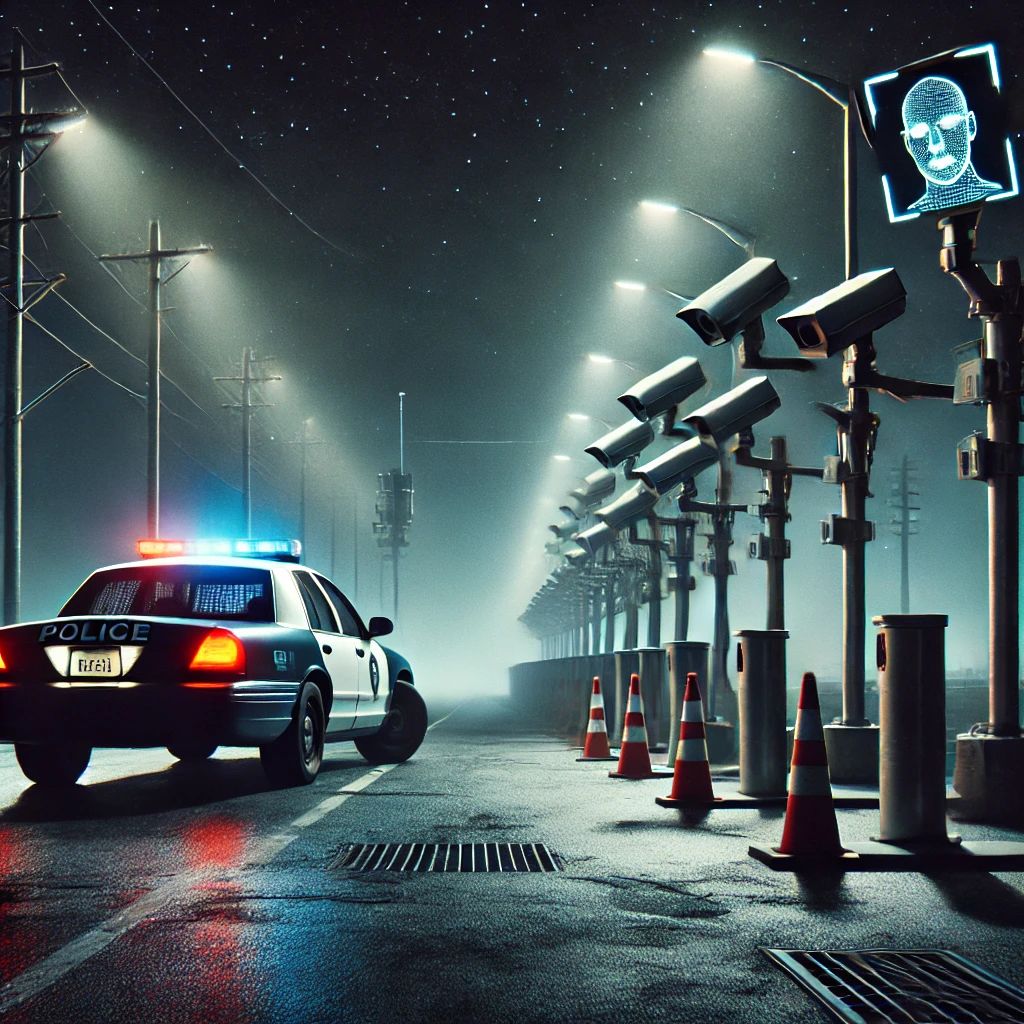
Facial recognition checkpoint at night: a quiet warning of rising surveillance in America.

Alt Text:
An eerie nighttime highway checkpoint scene lit by floodlights. A police vehicle sits near a barricade with mounted facial recognition cameras. Digital overlays hint at biometric scanning. The atmosphere is tense and dystopian, with no people in sight—only surveillance infrastructure under a dark sky.