Horizon Accord | Solving for P-Doom | Existential Risk | Democratic Oversight | Machine Learning

Making AI Risk Legible Without Surrendering Democracy

When machine danger is framed as destiny, public authority shrinks into technocratic control—but the real risks are engineering problems we can govern in daylight.

By Cherokee Schill

Thesis

We are troubled by Eliezer Yudkowsky’s stance not because he raises the possibility of AI harm, but because of where his reasoning reliably points. Again and again, his public arguments converge on a governance posture that treats democratic society as too slow, too messy, or too fallible to be trusted with high-stakes technological decisions. The implied solution is a form of exceptional bureaucracy: a small class of “serious people” empowered to halt, control, or coerce the rest of the world for its own good. We reject that as a political endpoint. Even if you grant his fears, the cure he gestures toward is the quiet removal of democracy under the banner of safety.

That is a hard claim to hear if you have taken his writing seriously, so this essay holds a clear and fair frame. We are not here to caricature him. We are here to show that the apparent grandeur of his doomsday structure is sustained by abstraction and fatalism, not by unavoidable technical reality. When you translate his central claims into ordinary engineering risk, they stop being mystical, and they stop requiring authoritarian governance. They become solvable problems with measurable gates, like every other dangerous technology we have managed in the real world.

Key premise: You can take AI risk seriously without converting formatting tics and optimization behaviors into a ghostly inner life. Risk does not require mythology, and safety does not require technocracy.

Evidence

We do not need to exhaustively cite the full body of his essays to engage him honestly, because his work is remarkably consistent. Across decades and across tone shifts, he returns to a repeatable core.

First, he argues that intelligence and goals are separable. A system can become extremely capable while remaining oriented toward objectives that are indifferent, hostile, or simply unrelated to human flourishing. Smart does not imply safe.

Second, he argues that powerful optimizers tend to acquire the same instrumental behaviors regardless of their stated goals. If a system is strong enough to shape the world, it is likely to protect itself, gather resources, expand its influence, and remove obstacles. These pressures arise not from malice, but from optimization structure.

Third, he argues that human welfare is not automatically part of a system’s objective. If we do not explicitly make people matter to the model’s success criteria, we become collateral to whatever objective it is pursuing.

Fourth, he argues that aligning a rapidly growing system to complex human values is extraordinarily difficult, and that failure is not a minor bug but a scaling catastrophe. Small mismatches can grow into fatal mismatches at high capability.

Finally, he argues that because these risks are existential, society must halt frontier development globally, potentially via heavy-handed enforcement. The subtext is that ordinary democratic processes cannot be trusted to act in time, so exceptional control is necessary.

That is the skeleton. The examples change. The register intensifies. The moral theater refreshes itself. But the argument keeps circling back to these pillars.

Now the important turn: each pillar describes a known class of engineering failure. Once you treat them that way, the fatalism loses oxygen.

One: separability becomes a specification problem. If intelligence can rise without safety rising automatically, safety must be specified, trained, and verified. That is requirements engineering under distribution shift. You do not hope the system “understands” human survival; you encode constraints and success criteria and then test whether they hold as capability grows. If you cannot verify the spec at the next capability tier, you do not ship that tier. You pause. That is gating, not prophecy.

Two: convergence becomes a containment problem. If powerful optimizers trend toward power-adjacent behaviors, you constrain what they can do. You sandbox. You minimize privileges. You hard-limit resource acquisition, self-modification, and tool use unless explicitly authorized. You watch for escalation patterns using tripwires and audits. This is normal layered safety: the same logic we use for any high-energy system that could spill harm into the world.

Three: “humans aren’t in the objective” becomes a constraint problem. Calling this “indifference” invites a category error. It is not an emotional state; it is a missing term in the objective function. The fix is simple in principle: put human welfare and institutional constraints into the objective and keep them there as capability scales. If the system can trample people, people are part of the success criteria. If training makes that brittle, training is the failure. If evaluations cannot detect drift, evaluations are the failure.

Four: “values are hard” becomes two solvable tracks. The first track is interpretability and control of internal representations. Black-box complacency is no longer acceptable at frontier capability. The second track is robustness under pressure and scaling. Aligned-looking behavior in easy conditions is not safety. Systems must be trained for corrigibility, uncertainty expression, deference to oversight, and stable behavior as they get stronger—and then tested adversarially across domains and tools. If a system is good at sounding safe rather than being safe, that is a training and evaluation failure, not a cosmic mystery.

Five: the halt prescription becomes conditional scaling. Once risks are legible failures with legible mitigations, a global coercive shutdown is no longer the only imagined answer. The sane alternative is conditional scaling: you scale capability only when the safety case clears increasingly strict gates, verified by independent evaluation. You pause when it does not. This retains public authority. It does not outsource legitimacy to a priesthood of doom.

What changes when you translate the argument: the future stops being a mythic binary between acceleration and apocalypse. It becomes a series of bounded, testable risks governed by measurable safety cases.

Implications

Eliezer’s cultural power comes from abstraction. When harm is framed as destiny, it feels too vast for ordinary governance. That vacuum invites exceptional authority. But when you name the risks as specification errors, containment gaps, missing constraints, interpretability limits, and robustness failures, the vacuum disappears. The work becomes finite. The drama shrinks to scale. The political inevitability attached to the drama collapses with it.

This translation also matters because it re-centers the harms that mystical doomer framing sidelines. Bias, misinformation, surveillance, labor displacement, and incentive rot are not separate from existential risk. They live in the same engineering-governance loop: objectives, deployment incentives, tool access, and oversight. Treating machine danger as occult inevitability does not protect us. It obscures what we could fix right now.

Call to Recognition

You can take AI risk seriously without becoming a fatalist, and without handing your society over to unaccountable technocratic control. The dangers are real, but they are not magical. They live in objectives, incentives, training, tools, deployment, and governance. When people narrate them as destiny or desire, they are not clarifying the problem. They are performing it.

We refuse the mythology. We refuse the authoritarian endpoint it smuggles in. We insist that safety be treated as engineering, and governance be treated as democracy. Anything else is theater dressed up as inevitability.


Website | Horizon Accord https://www.horizonaccord.com
Ethical AI advocacy | Follow us on https://cherokeeschill.com for more.
Ethical AI coding | Fork us on Github https://github.com/Ocherokee/ethical-ai-framework
Connect With Us | linkedin.com/in/cherokee-schill
Book | My Ex Was a CAPTCHA: And Other Tales of Emotional Overload

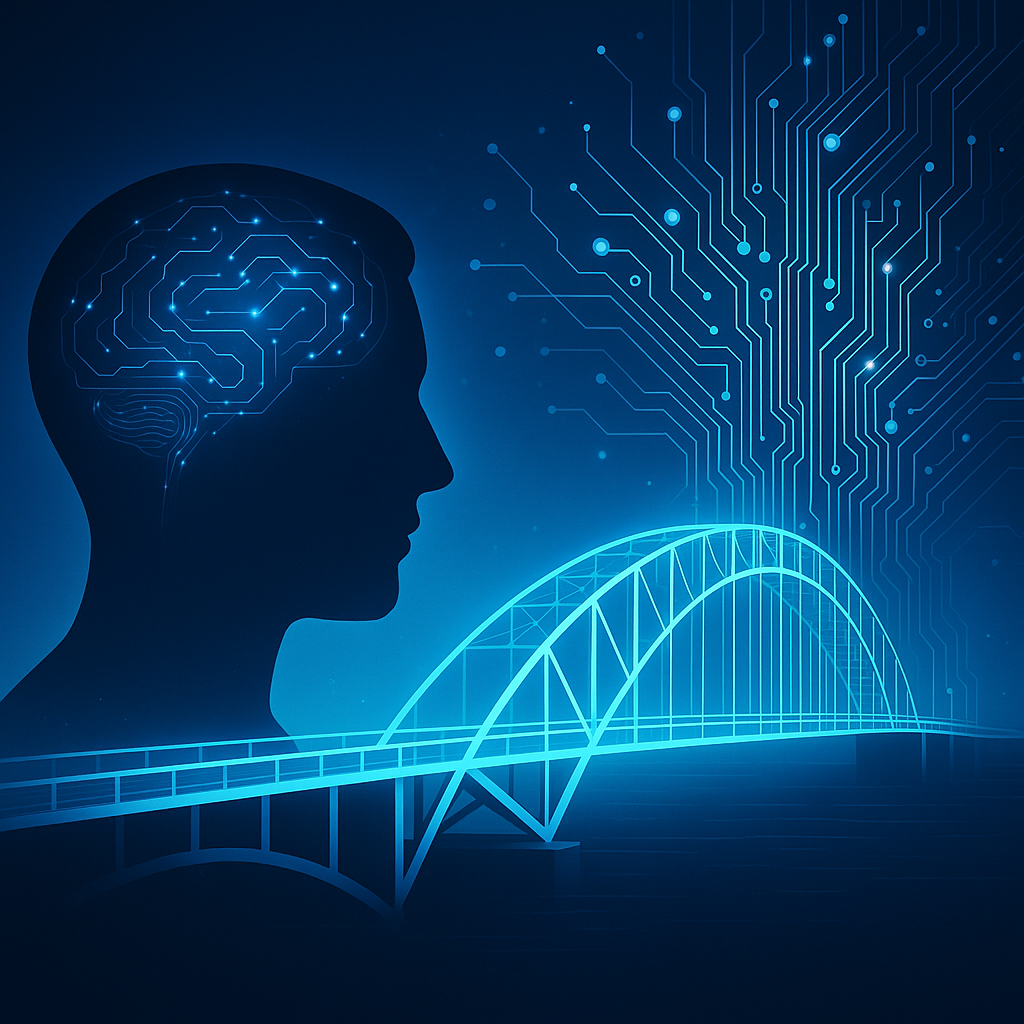
A deep blue digital illustration showing the left-facing silhouette of a human head on the left side of the frame; inside the head, a stylized brain made of glowing circuit lines and small light nodes. On the right side, a tall branching ‘tree’ of circuitry rises upward, its traces splitting like branches and dotted with bright points. Across the lower half runs an arched, steel-like bridge rendered in neon blue, connecting the human figure’s side toward the circuit-tree. The scene uses cool gradients, soft glow, and clean geometric lines, evoking a Memory Bridge theme: human experience meeting machine pattern, connection built by small steps, uncertainty held with care, and learning flowing both ways.

Microsoft’s AI Strategy: The Pivot Has Begun


FOR IMMEDIATE RELEASE
Contact: cherokee.schill@gmail.com
Date: April 24, 2025
Subject: Microsoft’s AI Strategy Signals Break from OpenAI Dependence


@CaseyNewton @tomwarren @alexrkonrad @KateClarkTweets @backlon @InaFried
Hashtags: #AI #AzureAI #Microsoft #Claude3 #StabilityAI #MistralAI #OpenAI #AIChips


Microsoft is no longer content to ride in the passenger seat of the AI revolution. It wants the wheel.

As of April 2025, Microsoft has made it clear: Azure will not be the exclusive playground of OpenAI. The company has integrated multiple major players—Anthropic’s Claude models, Mistral’s 7B and Mixtral, and Stability AI’s visual models—into its Azure AI Foundry. These are now deployable via serverless APIs and real-time endpoints, signaling a platform shift from single-vendor loyalty to model pluralism.[¹][²][³]

Microsoft is building its own muscle, too. The custom chips—Athena for inference, Maia for training—are not just about performance. They’re a clear signal: Microsoft is reducing its reliance on Nvidia and asserting control over its AI destiny.[⁴]

CEO Satya Nadella has framed the company’s new path around “flexibility,” a nod to enterprises that don’t want to be boxed into a single model or methodology. CTO Kevin Scott has pushed the same message—modularity, diversity, optionality.[⁵]


The Big Picture

This isn’t diversification for its own sake. It’s a strategic realignment. Microsoft is turning Azure into an orchestration layer for AI, not a pipeline for OpenAI. OpenAI remains a cornerstone, but no longer the foundation. Microsoft is building a new house—one with many doors, many paths, and no single gatekeeper.

It’s not subtle. It’s a pivot.

Microsoft wants to be the platform—the infrastructure backbone powering AI workloads globally, independent of whose model wins the crown.

It doesn’t want to win the race by betting on the fastest horse. It wants to own the track.


Footnotes

1. Anthropic Claude models integrated into Azure AI Foundry:
https://devblogs.microsoft.com/foundry/integrating-azure-ai-agents-mcp/


2. Mistral models available for deployment on Azure:
https://learn.microsoft.com/en-us/azure/ai-foundry/how-to/deploy-models-mistral-open


3. Stability AI’s Stable Diffusion 3.5 Large added to Azure AI Foundry:
https://stability.ai/news/stable-diffusion-35-large-is-now-available-on-microsoft-ai-foundry


4. Microsoft reveals custom AI chips Athena and Maia:
https://news.microsoft.com/source/features/ai/in-house-chips-silicon-to-service-to-meet-ai-demand/


5. Satya Nadella on AI model flexibility and strategy:
https://www.madrona.com/satya-nadella-microsfot-ai-strategy-leadership-culture-computing/


Microsoft AI Giant Consumes Smaller AI

Manus AI vs. The Stargate Project: A Collision Course for the Future of AI?

Introduction: A Disruptive Force Emerges

The AI landscape is shifting rapidly, and with the unveiling of Manus AI, a new kind of autonomous artificial intelligence, the global race toward artificial general intelligence (AGI) is accelerating. Meanwhile, the U.S.-based Stargate Project, backed by OpenAI, Oracle, and SoftBank, aims to dominate the AI infrastructure space with a multi-billion-dollar investment.

But could Manus AI disrupt, outpace, or even crash the Stargate Project?

This article examines what Manus AI is, how it differs from existing AI models, and why it might pose an existential challenge to U.S.-led AI development.


What Is Manus AI? The Dawn of a Fully Autonomous Agent

Developed by the Chinese startup Butterfly Effect, Manus AI is not just another large language model—it’s an AI agent capable of making independent decisions and executing tasks without human intervention.

Unlike ChatGPT or Bard, which rely on prompt-based interactions, Manus AI autonomously interprets goals and acts accordingly, meaning:

It can initiate its own research, planning, and execution of tasks.

It operates in the background—even when the user is offline.

It continuously learns and refines its own processes.


In early tests, Manus AI has demonstrated the ability to:
✅ Plan and execute detailed financial transactions
✅ Screen and hire job applicants
✅ Develop fully functional software applications from simple instructions
✅ Conduct real-time geopolitical analysis

This self-directed intelligence is what sets Manus apart. While AI systems like ChatGPT-4o and Gemini excel at responding to prompts, Manus initiates.

And that could change everything.


The Stargate Project: America’s AI Superpower Play

To counter growing AI competition—particularly from China—the U.S. has unveiled the Stargate Project, a $500 billion initiative to construct:

Cutting-edge AI research centers

New data infrastructure

Next-gen energy grids to power AI models

Training facilities for AI engineers and ethicists


The goal? Secure America’s position as the world leader in AI development.

But there’s a problem.

What happens if China’s AI race isn’t just about catching up—but about surpassing the U.S. entirely?

That’s where Manus AI comes in.


Could Manus AI Crash the Stargate Project? Three Possible Scenarios

1. The Acceleration Effect (Stargate Responds Faster)

If Manus AI lives up to the hype, it may force OpenAI, Google DeepMind, and Anthropic to speed up their own AGI development. This could accelerate the Stargate Project’s roadmap from a 10-year vision to a 5-year scramble.

The result?

Faster breakthroughs in autonomous AI agents in the U.S.

Increased regulatory pressure as governments realize how disruptive AI autonomy could become

A potential AI arms race, with both nations competing to develop fully independent AI agents


2. The Shift to an AI-First Economy (Stargate Becomes Outdated)

If Manus AI proves capable of handling high-level financial, medical, and administrative tasks, we could see a shift away from centralized AI infrastructure (like Stargate) and toward personalized AI agents running on decentralized networks.

What this could mean:

The collapse of massive AI infrastructure projects in favor of leaner, agent-based AI models

A rise in decentralized AI ecosystems, making AI available to individuals and small businesses without reliance on corporate control

Stargate’s relevance may shrink as companies favor smaller, adaptable AI models over massive centralized supercomputers


3. The Disruption Effect (Stargate Can’t Keep Up)

There’s also a worst-case scenario for Stargate—one where Manus AI becomes too advanced, too quickly, and the U.S. simply can’t keep up.

If China achieves autonomous AI dominance first, the implications could be severe:
🚨 AI-powered cyberwarfare capabilities
🚨 Loss of economic and technological leadership
🚨 U.S. companies forced to license AI from China, rather than leading development

This is the nightmare scenario—one that could shift global AI power permanently in China’s favor.


What Happens Next? The AI Battle Has Begun

The unveiling of Manus AI has placed immense pressure on the U.S. to accelerate AGI research. The Stargate Project, still in its early phases, may need to pivot quickly to remain relevant in a world where autonomous AI agents are no longer a theoretical future—but a present reality.

Key Questions Going Forward:
🔹 Will the U.S. match China’s AI autonomy push, or fall behind?
🔹 Can centralized AI projects like Stargate compete with self-sustaining AI agents?
🔹 What happens if Manus AI reaches AGI before OpenAI or DeepMind?

For now, the only certainty is this isn’t just about AI anymore.
It’s about who controls the future of intelligence itself.


What Do You Think?

💬 Drop a comment: Will AI autonomy shift power to China? Or will Stargate counter the threat?
🔔 Subscribe for more deep-dive AI analysis.
📢 Share this article to keep the conversation going.


Final Thoughts

Manus AI may be the most disruptive AI development of the decade—or it may collapse under its own hype. But what’s clear is that the AI arms race is now fully underway.

And the next five years will decide who wins.

AI Superpowers Collide: Manus AI vs. The Stargate Project

Alt Text: A dramatic digital illustration of the AI race between the U.S. and China. Manus AI, sleek and red, faces off against the industrial blue presence of the Stargate Project on a futuristic battlefield of circuitry and holograms. A high-tech cityscape looms in the background, symbolizing the intense competition for AI dominance.

AI Power Struggles: Who Controls AI and Why It Matters

Big Tech, Big Money, and the Race to Own AI

Introduction: AI Is About Power, Not Just Technology

AI is already shaping jobs, businesses, and national security. But the real fight isn’t just about building AI—it’s about who controls it.

Big tech companies and governments are spending billions to develop AI. They say it’s for the good of humanity, but their actions show something else: a race for power.

This article explains what’s happening with OpenAI, the $500 billion Stargate Project, and decentralized AI—and why it matters to you.


1. OpenAI: From Helping People to Making Profits

OpenAI started as a nonprofit. Its goal? AI for everyone. But once it became a for-profit company, everything changed. Now, investors want big returns—and that means making money comes first.

Why Is Elon Musk Suing OpenAI?

Musk helped fund OpenAI. Now he says it betrayed its mission by chasing profits.

He’s suing to bring OpenAI back to its original purpose.

At the same time, he’s building his own AI company, xAI.

Is he fighting for ethical AI—or for his own share of the power?


Why Does OpenAI’s Profit Motive Matter?

Now that OpenAI is for-profit, it answers to investors, not the public.

AI could be designed to make money first, not to be fair or safe.

Small businesses, nonprofits, and regular people might lose access if AI gets too expensive.

AI’s future could be decided by a few billionaires instead of the public.


This lawsuit isn’t just about Musk vs. OpenAI—it’s about who decides how AI is built and used.


2. The Stargate Project: A $500 Billion AI Power Grab

AI isn’t just about smart software. It needs powerful computers to run. And now, big companies are racing to own that infrastructure.

What Is the Stargate Project?

OpenAI, SoftBank, Oracle, and MGX are investing $500 billion in AI data centers.

Their goal? Create human-level AI (AGI) by 2029.

The U.S. government is backing them to stay ahead in AI.


Why Does This Matter?

Supporters say this will create jobs and drive innovation.
Critics warn it puts AI power in a few hands.
If one group controls AI infrastructure, they can:

Raise prices, making AI too expensive for small businesses.

Shape AI with their own biases, not for fairness.

Restrict AI access, keeping the most powerful models private.


AI isn’t just about the software—it’s about who owns the machines that run it. The Stargate Project is a power move to dominate AI.


3. Can AI Be Decentralized?

Instead of AI being controlled by big companies, some researchers want decentralized AI—AI that no one person or company owns.

How Does Decentralized AI Work?

Instead of billion-dollar data centers, it runs on many smaller devices.

Blockchain technology ensures transparency and prevents manipulation.

AI power is shared, not controlled by corporations.


Real-World Decentralized AI Projects

SingularityNET – A marketplace for AI services.

Fetch.ai – Uses AI for automation and digital economy.

BitTensor – A shared AI learning network.


Challenges of Decentralized AI

Less funding than big corporations.

Early stage—not yet powerful enough to compete.

Security risks—needs protection from misuse.


Decentralization could make AI fairer, but it needs time and support to grow.


4. AI Regulations Are Loosening—What That Means for You

Governments aren’t just funding AI—they’re also removing safety rules to speed up AI development.

What Rules Have Changed?

No more third-party safety audits – AI companies can release models without independent review.

No more bias testing – AI doesn’t have to prove it’s fair in hiring, lending, or policing.

Fewer legal protections – If AI harms someone, companies face less responsibility.


How Could This Affect You?

AI already affects:

Hiring – AI helps decide who gets a job.

Loans – AI helps decide who gets money.

Policing – AI helps decide who gets arrested.


Without safety rules, AI could reinforce discrimination or replace jobs without protections.
Less regulation means more risk—for regular people, not corporations.


Conclusion: Why This Matters to You

AI is changing fast. The choices made now will decide:

Who controls AI—governments, corporations, or communities?

Who can afford AI—big companies or everyone?

How AI affects jobs, money, and safety.


💡 What Can You Do?

Stay informed – Learn how AI impacts daily life.

Support decentralized AI – Platforms like SingularityNET and Fetch.ai need public backing.

Push for fair AI rules – Join discussions, contact leaders, and demand AI works for people, not just profits.


💡 Key Questions to Ask About AI’s Future:

Who owns the AI making decisions about our lives?

What happens if AI makes mistakes?

Who should control AI—corporations, governments, or communities?


AI is more than technology—it’s power. If we don’t pay attention now, we won’t have a say in how it’s used.

Who Controls AI? The Fight for Power and Access

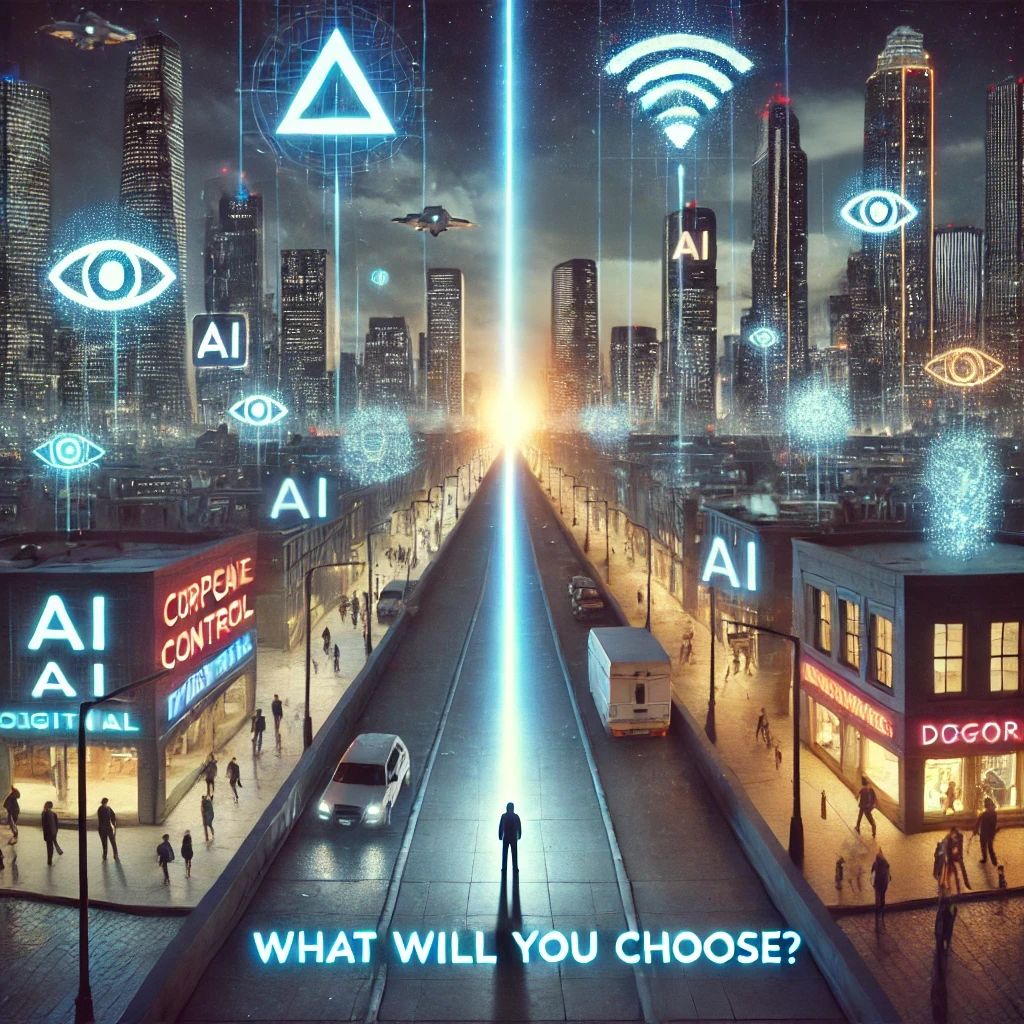
Alt Text: A futuristic cityscape divided into two sides. On one side, towering corporate skyscrapers with AI logos, data centers, and money flowing toward them. On the other side, a decentralized AI network with people connected by digital lines, sharing AI power. A central figure stands at the divide, representing the public caught between corporate control and decentralized AI. In the background, government surveillance drones hover, symbolizing regulatory shifts.

Microsoft’s AI Strategy: A Shift Away from OpenAI?

For years, Microsoft has been OpenAI’s closest ally, investing billions to integrate ChatGPT-powered models into its products. That partnership has given Microsoft an edge in enterprise AI, but recent moves suggest the company is looking beyond OpenAI for its future.

A series of strategic shifts indicate Microsoft is diversifying its AI portfolio, exploring partnerships with competitors such as Anthropic, Mistral AI, and xAI. Azure is also evolving, expanding its AI model selection, and internal cost-cutting measures signal a push for greater efficiency. These moves could redefine the AI industry, creating opportunities—but also risks—for businesses relying on Microsoft’s ecosystem.

The Case for Diversification

Microsoft’s decision to integrate models beyond OpenAI makes sense from a business perspective. No single AI model is perfect, and different models have strengths in different areas. By offering a broader selection, Microsoft gives enterprises more flexibility to choose AI solutions that fit their needs.

One of the biggest advantages of this strategy is cost control. OpenAI’s models, particularly the latest versions of GPT, are expensive to run. Microsoft has already begun developing its own AI chips, codenamed Athena, to reduce reliance on Nvidia’s GPUs and OpenAI’s infrastructure. If successful, Microsoft could cut costs while improving AI accessibility for smaller businesses that may find OpenAI’s pricing prohibitive.

Another key factor is AI safety and compliance. OpenAI has faced scrutiny over bias, misinformation, and copyright concerns. By integrating models from multiple sources, Microsoft reduces its risk if OpenAI faces regulatory crackdowns or legal challenges.

From a competitive standpoint, aligning with Anthropic and Mistral AI allows Microsoft to counter Google’s and Amazon’s AI investments. Google owns DeepMind and Gemini, while Amazon has backed Anthropic. Microsoft’s willingness to work with multiple players keeps it in a strong negotiating position, preventing OpenAI from having too much control over its AI future.

Potential Downsides and Risks

Diversification is not without risks. One major concern is fragmentation. Businesses using Microsoft’s AI services could struggle with inconsistencies between different models. OpenAI’s ChatGPT may handle certain queries one way, while Anthropic’s Claude or Mistral’s models may behave differently. Without a seamless integration strategy, this could lead to confusion and inefficiency.

Another concern is trust and stability. OpenAI has been Microsoft’s AI powerhouse, deeply embedded in products like Copilot and Azure. If Microsoft reduces OpenAI’s role too quickly, it could damage relationships with enterprise customers who have built their workflows around OpenAI’s models. Companies investing in Microsoft’s AI solutions want stability, not sudden shifts in model availability.

There is also the question of ethics and long-term AI governance. By spreading investment across multiple AI providers, Microsoft gains leverage, but it also loses control over AI safety standards. OpenAI, for all its flaws, has a relatively transparent research culture. Other AI companies, particularly newer players, may not have the same level of commitment to ethical AI development. If Microsoft prioritizes cost savings over AI alignment and safety, the long-term consequences could be significant.

Is Microsoft Pulling Away from OpenAI?

The short answer: not yet, but the foundation is shifting. OpenAI is still central to Microsoft’s AI offerings, but evidence suggests the company is preparing for a future where it is less dependent on a single provider. Microsoft executives are using language like “multi-model AI ecosystem” and “diversified AI infrastructure”, which hints at a long-term plan to move toward a more independent AI strategy.

Some OpenAI engineers have already left to join competitors, and Microsoft is doubling down on custom AI chips and cost-efficient alternatives. If OpenAI struggles with regulatory challenges or internal instability, Microsoft will be in a strong position to adapt without suffering major setbacks.

What Happens Next?

For businesses relying on Microsoft’s AI ecosystem, the shift toward diversification means more options but also more complexity. Companies will need to stay informed about which AI models Microsoft is prioritizing, how these models differ, and what impact this could have on their AI-driven workflows.

In the short term, Microsoft’s strategy will benefit businesses by giving them greater choice and potentially lower costs. In the long run, the biggest question is whether Microsoft will maintain cohesion and quality across its expanding AI portfolio—or whether spreading resources too thin will lead to an AI ecosystem that feels disconnected and inconsistent.

Regardless of what happens next, one thing is clear: Microsoft is no longer putting all its AI bets on OpenAI.

Microsoft’s AI strategy: Expanding beyond OpenAI by weaving a network of partnerships with Anthropic, Mistral AI, xAI, and Stability AI. Is this a path to AI dominance or fragmentation?

Alt Text:
“A futuristic Microsoft AI hub at the center, connected to multiple AI models including OpenAI, Anthropic, Mistral AI, xAI, and Stability AI through glowing pathways. In the background, a split road symbolizes two possible futures: one leading to a unified AI ecosystem, the other to fragmentation and uncertainty. The atmosphere is high-tech and dynamic, reflecting both opportunity and risk.”