I placed a linen napkin next to each plate and carefully filled the glasses with juice. I brought in the newspaper and spread butter over the toast.
I watched, my heart aching, as our youngest child clung to my wife, crying inconsolably any time she was set down. Her sobbing hiccups and wavering voice asking “where’s daddy?”
I felt my heart swell with love as my son sat on the front porch. Tightly gripping my old baseball glove, leaving crescent moons in the leather.
The day after I was killed.
I walked down a familiar sidewalk and kicked a few pebbles. Watching as they bounced over the gutter and onto pavement stained red with my blood.
I wandered over to our local pub and sat with my friends as they held a vigil. Their eyes wandering from their full glasses to the television, where my face was prominently displayed. The newscaster looked grave as he reported my death.
I watched silently as my best friend hung up his bicycle and vowed never to ride again.
One week before I was killed.
A woman walked out of the local police station. Tears of frustration in her eyes. Her attempts to report a dangerous driver unheeded by police. The officer stared dispassionately as she described the driver and their actions which killed me. Firmly the officer turned her away, saying “since you weren’t hit, there is nothing we can do. No laws were broken.”
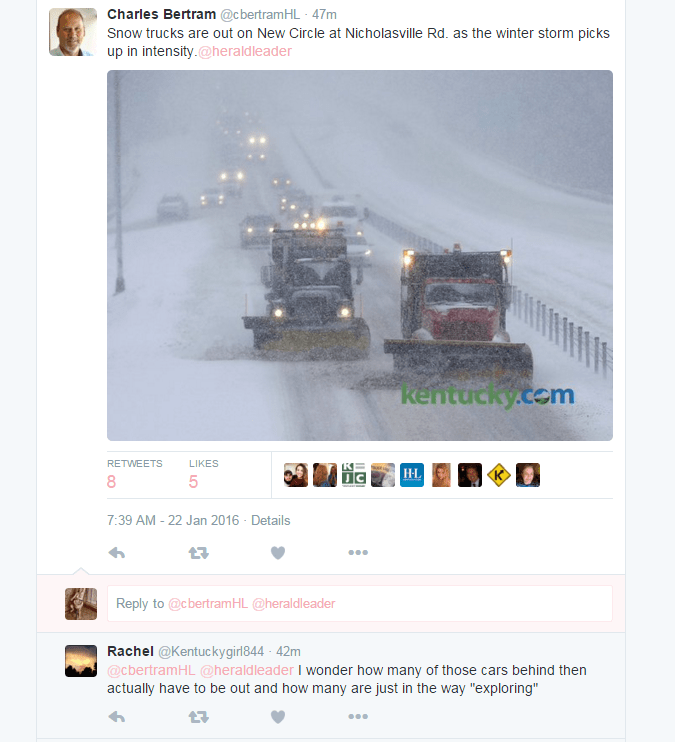
Rachel @Kentuckygirl844 “…how many of those cars behind then actually have to be out and how many are just in the way “exploring.”
Grammatical errors aside.
I want to explore everything that is wrong with this tweet.
It isn’t any of your business why other people are on the road. It is a public road and everyone pays to use it. When, how, or where they use it is up to them.
“how many are just in the way” No one is ever in anyone else’s way on a public right of way, also known as a road. It belongs to the public and the public has the right to use it. These roads are first come, first served, and duty of care. We show compassion for other road users. We yield the right of way to those who were there first. It is courteous, it is wise, and it shows others that we have a heart beating in our chest.
You have nothing better to do on a terrible winter day except to sit and wonder about what other people are up to? Lucky you! This is a picture of those who are not so fortunate. So how about a little compassion?
“Adulting.” Only adults use the roadway. Only adults use cars on the roadway. This isn’t any place for “other” road users. If you aren’t adulting on the road then you are in the way. “Exploring” is for kids. So GTFO!
If they are out there having a light hearted romp in the snow; is it really any of your business?
I think your tweet says more about you than it does the people using the road.
This is why we can’t have nice things!
I’m more concerned with the driver of the SUV. Why doesn’t he have his lights on? It’s your right to be on the road but you do have to show regard for other road users. Safety first!
When a cyclist is on the highway are they any more vulnerable than any other person on the highway?
Before we can answer that question we first need to explain what a highway is. The definition for Highway is listed in KRS 189.010 (3).
“Highway” means any public road, street, avenue, alley or boulevard, bridge, viaduct, or trestle and the approaches to them and includes private residential roads and parking lots…
We have a highway and within the highway is a Roadway or synonymously a Lane; and KRS has a specific statute for those lanes. KRS 189.340 (6) (a)
A vehicle shall be driven as nearly as may be practical entirely within a single lane and shall not be moved from that lane until the driver has first ascertained that the movement can be made with safety;
If everyone is following the law and more importantly the spirit of the law; the spirit of the law being safety, then there isn’t any harm to any road user and no need for extra measures of protection.
Unfortunately not everyone feels duty bound to operate their vehicle with due care.
A lot of people are under the misguided notion that speed grants extra privileges.
KRS 189.390 is very clear that there isn’t a right of speed on Kentucky’s Highways.
An operator of a vehicle upon a highway shall not drive at a greater speed than is reasonable and prudent, having regard for the traffic and for the condition and use of the highway.
Traffic: The movement of vehicles or people along roads, or the movement of aircraft, trains, or ships along a route. Via: Cambridge Dictionaries Online.
What is the purpose of a safe passing law?
The purpose of a safe passing law is to give the police a statute with which to cite the offending person. It also provides lawyers and insurance adjusters something tangible when trying to ascertain fault and how much liability goes where and with whom.
Did this explanation bring up a mental image of buzzards picking over roadkill?
That would be because this law is what I term an “after the fact law”. There isn’t any visual guideline to show a person operating a motor vehicle just how much space is three feet. Often times that three feet puts the cyclist’s head right under the motorists tire. Should the cyclist fall over, their head would be squashed. Bicycle helmet included.
[Dr] June McCarroll, a physician in Indio, California who started experimenting with painting lines on roads in 1917 after she was run off a highway by a truck driver. In November 1924, after years of lobbying by Dr. McCarroll and her allies, California officially adopted a policy of painting lines on its highways. A portion of Interstate 10 near Indio has been named the Dr. June McCarroll Memorial Freeway in her honor.
Painted lines give drivers a visual marker with which to judge distance.
It is safer to have a stated change lanes to pass law than it is to have a minimum three feet law. In Kentucky there are drivers who will fail to understand KRS 189 and give only the minimum passing distance. And in a state which educates teen drivers that it is OK to driver 10 mph over the posted speed limit; see Transportation.ky.gov/Drivers Licensing Documents Page 5. giving a cyclist the minimum distance when passing at 10 mph over posted speed limit; is a recipe for disaster.
Our car culture has created a social, cultural, and legal norm for people to kill, without penalty, on our public right of ways. It’s the “Oops I didn’t see them syndrome” and it is bullshit.
The driver of an automobile is bound to anticipate the presence of pedestrians upon the streets of a city or upon rural highways, as well as to exercise reasonable care that he does not injure them after he is aware of their presence. O’Dowd v. Newnham 13 Ga. App. 220, 80 S. E. 36.
A safe passing law is a band aid on a gaping wound.
A safe passing law is an after the fact law.
Do we need it?
Yes.
We need it because it is a start. Not the best example of a start, especially when other states are making better statutes from which we can draw from. But it is a start none the less.
We also need it because the infrastructure here is substandard.
Misguided advocates are pushing for bike lanes (think paint) on highways with 45 to 55 mph.
Gallons of paint will never replace the infrastructure we so desperately need. Nor will it replace urban designed spaces which give precedence to walking, public transport, and biking.
We are terribly entangled in car culture which is choking the very humanity out of us.
If you are wondering what we can do to make it better.
We can form a statewide advocacy group and lobby for better laws. Laws which require city planners to take into consideration all users of our public highways. Laws which specify dense urban planning as opposed to sprawling communities which are harder and more expensive to maintain. We need laws which require a one year mandatory probationary period for new drivers, mandatory retesting every four years, and an education program enacted in our schools. Driving school should have a required bike law and safety instructional forum.
We need a multi pronged approach to cycling and more importantly pedestrian safety.
Tiered licensing which ensures that teenagers are truly ready for a license to operate a vehicle. An exception for farmers children to operate farm equipment in the natural course of their duties. But not to operate non farm equipment on public highways.
Lower speed limits as a means of changing the culture of speed along with enforcement of speeding during times where operating a vehicle at speeds under the limit but higher than is safe for road conditions. Mandatory slow down laws when pedestrians or cyclists are present. Policies which make separate infrastructure for cyclists and pedestrians a mandatory part of all construction. Policies which ensure that for every 100 people there are adequate shopping districts within walking distance. Wider and better sidewalks. Enforcement of stop lines. Elimination of right on red. Timing streetlights to favor pedestrians and cyclists. Narrower streets and wider bike lanes and sidewalks.
Vulnerable road user laws which enact stiff penalties for harming any road user with their vehicle.
When we pass another vehicle we are required to pass in the lane adjacent to the vehicle being passed. We are required by law to pass left of the center of the highway. To pass with enough clearance to avoid a collision or to cause the vehicle from being passed to have to slam on their brakes to avoid a collision. These are the laws. These are for safety. These ensure the courteous use of public roads and when those laws are broken the best possible outcome would be a citation. The worst would be a collision and people hurt. All too often these brazen flaunting of laws are unobserved and the confidence of the abuser is increased. The police can’t be everywhere but we can create legislation enacting a police task force which takes these complaints and investigates them and if found guilty penalties applied.
Remember the opening question?
“When a cyclist is on the highway are they any more vulnerable than any other person on the highway?”
The answer which you may have realized by now is No. We are all vulnerable on the highway. While there is a hierarchy of how much vulnerability each user has, we are each of us putting our lives at risk by walking out our front door.
We need more, we need better, and we need it now!
So let’s start with three feet and then demand more.
This is my attempt to clear things up and encourage you to call the legislative message line: 1-800-372-7181 and tell them to vote yes on SB 80.
KRS 189.300 requires “all” vehicles to operate on the right “whenever possible”. It isn’t always possible to operate on the right due to the ever changing nature of highways. This is acknowledged in the statute by the words “whenever possible”. Which simply means it isn’t a requirement when changes exist to the highway which prevents operation on the right. Or simply stated, you are allowed to pass another vehicle.
But!
You have to make sure that the left side of the highway is clear of all other traffic before passing.
Let’s think about that for a minute.
If this is a two way highway we are on how much of the highway is on the left?
It could be safely assumed that half the highway is on the right and the other half is on the left.
But!
We don’t have to assume. When we read KRS 189.310 we see that indeed on a two lane road. Half the highway is yours and the other half belongs to oncoming traffic.
Vehicles proceeding from opposite directions shall pass each other from the right, each giving to the other one-half (1/2) of the highway as nearly as possible.
Q: As nearly as possible? What does that mean?
A: Not all vehicles are created equal. Some have big butts. Just kidding. Some vehicles are larger than others and when a really large vehicle is going down a two lane road they need to…Wait for it!
Operate as close as practicable to the right hand boundary of the highway!
Q: The statute says slow moving vehicles! So really fast vehicles don’t have to follow that rule?
A: Wrong!
You have to give nearly half the highway to oncoming traffic and if you are moving quickly and are large then you too have to get over as close as practicable.
Odds are very likely though that you won’t be moving that fast if you’re operating a large vehicle. The more junk you have in your trunk the slower you tend to be.
Q: So are big trucks and farm equipment required to operate on the shoulder? I mean what is this whole boundary thing? You sound like my ex.
A: We have two places to look to. One is KRS 189.340
(3) The operator of a vehicle may overtake and pass another vehicle upon the right only under conditions permitting such movements in safety. Such movement shall not be made by driving off the roadwayunless passing vehicle comes to a complete stop and such movement may be made safely.
The other place we need to look at is the definitions for the chapter. KRS 189.010
(10) “Roadway” means that portion of a highway improved, designed, or ordinarily used for vehicular travel,exclusive of the berm or shoulder. If a highway includes two (2) or more separate roadways, the term “roadway” as used herein shall refer to any roadway separately but not to all such roadways collectively.
So a really large and slow moving vehicle is not supposed to travel off the roadway.
Q: But it says “roadway” and not “highway”. Doesn’t the word highway include the shoulder?
A: I feel like I’m talking to the Jessamine County attorney and his ever faithful sidekick Eric Wright. To answer your question we once again turn towards the definitions.
(3) “Highway” means any public road, street, avenue, alley or boulevard, bridge, viaduct, or trestle and the approaches to them and includes private residential roads and parking lots covered by an agreement under KRS 61.362, off-street parking facilities offered for public use, whether publicly or privately owned, except for-hire parking facilities listed in KRS 189.700.
The definition of a highway is A main road or thoroughfare, such as a street, boulevard, or parkway, available to the public for use for travel or transportation. And as we already learned it is exclusive of the berm or shoulder.
The traveled portion of the road is also referred to as a lane of traffic and KRS 189.300 clearly states
The overtaking vehicle shall return to the proper traffic lane as soon as practicable and, if the passing vehicle enters the oncoming traffic lane, before coming within two hundred (200) feet of any approaching vehicle.
Roadway and traffic lane are synonymous.
The final piece of the puzzle is the phrase
allowing more swiftly moving vehicles reasonably free passage to the left.
Q: What is considered reasonably free passage to the left?
A: The left side of the highway.
Q: But what if it is a multi lane road?
A: Then it would be the left lane.
Q: Why can’t we all share a lane?
A: Because sharing a lane is expressly illegal! Both KRS 189.310 and KRS 189.340 make it very clear that on a two lane road half the highway is yours and on a multi lane road
KRS 189.340 (6)(a) A vehicle shall be driven as nearly as may be practical entirely within a single lane and shall not be moved from that lane until the driver has first ascertained that the movement can be made with safety;
Omigosh! That was so hard to understand.
Correction: That was/is so hard for Eric Wright and the rest of the Jessamine County Attorney’s office to understand.
The updated proposed legislation specifically names bicycles and clarifies already existing language.
They have taken the existing statutes and made the language so simple that even the Jessamine County Attorney can understand it.
(3) The operator of a bicycle shall travel as closely as practicable to the right hand side of the traveled portion of a highway unless there is appropriate signage or markings to indicate otherwise. The operator of the bicycle shall not be expected or required to:
(a) Travel on the shoulder of the highway;
(b) Operate over or through hazards at the edge of a highway, including but not limited to fixed or moving objects, parked or moving vehicles, bicycles, pedestrians, animals, or surface hazards; or
(c) Operate without a reasonable safety margin on the right-hand side of the highway.
Remember that the original statute stated “Whenever Possible” but didn’t actually specify what hazards can be expected other than to mention other vehicles. So this clarification is essential for the deeply prejudiced.
All efforts have been made to dispel any myths about where bicycles “should” be.
Q: Does this mean I have to make a left turn from the right side of the road?
A: (Face Palm) No! Nothing has changed about how you operate on the road. You are operating a vehicle per KRS 189.010.
See KRS 189.330 for rules on turning and intersections.
(6) The operator of a vehicle intending to turn shall do so as follows:
(a) Right turns – both the approach for a right turn and a right turn shall be made as close as practicable to the right-hand curb or edge of the roadway;
(b) Left turns – the operator of a vehicle intending to turn left shall approach the turn in the extreme left-hand lane lawfully available to traffic moving in the direction of travel of such vehicle. Whenever practicable, the left turn shall be made to the left of the center of the intersection and so as to leave the intersection or other location in the extreme right-hand lane lawfully available to traffic moving in the same direction as such vehicle on the roadway being entered.
Now please stop being silly and follow the Rules of the Road!
I understand now why so many cyclists are being killed. Cycling like you are in the Netherlands or Copenhagen will get you killed in other countries.
There are some false beliefs out there. One is that infrastructure requires mandatory use laws, the other is that the lack of bicycle specific infrastructure means you just ride willy nilly all over the road.
Netherlands cycle tracks are, for as near as I can tell, complete and connected. Like any highway, they go exactly where the user wants or needs to go.
This is not true for the UK and US.
If you don’t have complete cycle tracks and those cycle tracks do not meet your needs, you ride on the public highway.
When you ride on the public highway you operate according to the rules of the road.
You do not filter on the passenger side of a vehicle. Unless you have a death wish or are uneducated in cycling safety.
You filter forward using the rules of the road and yield to oncoming traffic on a two way street.
The main reasons people are opposed to bicycle specific infra are:
The Netherlands set a bad example by legally mandating the use of their bike paths. Even in the Netherlands, if you are being honest when you bring them up, they do not have perfect infra everywhere you go. They still have door zone bike lanes. I sometimes find them in videos of locals who post their cycling trips but there aren’t any video’s of the Netherlanders specifically railing against them. Here is a blog on the subject for the Netherlands: On road cycle lanes: The good, the bad, and the ugly.
The reason this is often not considered an issue is because the Netherlands also have strict liability laws. So if a driver injures a cyclist by throwing the door open without looking, the cyclist (should they survive the experience) can rest assured that the police and public media are not going to further victimize them by questioning their right to be there. No one will ask if they were wearing a helmet (as though that could really protect you from having your head run over by 2 tons of machine). No one will question the color of your clothes. The cyclists in the Netherlands have the homefield advantage, even in the face of crappy infra. Their medical bills are promptly paid and they get to go on with life as usual.
Bike specific infra (in the UK and US) is often a painted line on the ground. More often this painted line on the ground places the cyclist out of the driver’s field of vision. With a very narrow margin of passing clearance. In many ways it’s like we forget that often touted slogan of “3 feet minimum” to pass. Our engineers do not take safe passing into account when painting bike lanes. The faster the traffic the wider the bike lane should be.
We often overestimate a driver’s area of vision as extending from the front side windows forward. The average driver does not drive with a 90 degree arc of vision. The average driver drives distracted. This is often compounded with age and limited physical mobility which makes it difficult to turn the head and look to the left and right as well as over the shoulder.
To avoid a drivers blind spots always put yourself directly in front of the driver when operating your bicycle. The Dutch/Netherlands started (as near as I can tell) this idea of hugging the curb. Which is easier to do if you are operating at a snails pace.
So if you are riding like the Dutch/Netherlands (think hugging the edge or weaving haphazardly in and out of traffic, also those box style turns where you cross like a pedestrian, honorable mention to filtering forward to the front of the line), if you ride like this, on public highways, you are riding with a death wish.
The Netherlands have taken into consideration that motor traffic occupies a great deal of space and they have adjusted their light signals to accommodate cyclists at intersections.
Which as you can see from the video, still needs a lot of tweaking. It’s o.k. to let loose on all sides for cyclists but not for cars? Come on! Where is the fairness in that? 😉
I’ve watched several videos of average people in the Netherlands, they are catching the film my ride fever too, cycling in the Netherlands, Copenhagen, and the Dutch. They do all of these things. (See this video for a full understanding of what I’m talking about:
I’ve also had the opportunity to read their laws and it is expressly illegal to haul passengers on bike racks. You will see a lot of law breaking in the video’s promoting cycling in the Netherlands.
If the Netherlands did away with the mandatory use laws this would solve the problem of faster cyclists running over pedestrians and slower cyclists. (This is a hot button topic in the Netherlands.)
Remember the Netherlands also have fast club rides. I feel very strongly that those cyclists do not belong on bike paths with slower moving traffic.
There will be the usual stupid comment: “Oh you just want children to cycle on heavily trafficked fast moving roads!”
No, I don’t. What I want is for there to be no heavily trafficked fast moving roads. Any roads that are used to swiftly move people from town to town should be limited access and built to those standards. All other roads should be built to accommodate all other road users regardless of vehicle type. All roads should be safe for foot traffic above and beyond anyone else’s needs.
When we build communities that are based on people walking, then we will have a community that is safe for cyclists of all ages.
I, as a responsible parent, taught my children how to cycle safely on the only road that took us to our destination.
I’m not the only parent out there who understands where the real risks are to riding in traffic. This is an old article but it clearly shows where the stinkin’ thinkin’ comes from and if you yourself don’t know, allow me to state it plainly.
1. Cyclists obey the rules of the road. Overtaking through intersections on the passenger side is illegal because it is dangerous. You wouldn’t do it in a car, don’t do it on a bicycle.
2. Motorists obey the rules of the road. Treat cyclists just like you would any other vehicle out there on the road. Change lanes to pass and yield right of way when legally required. Do not create confusion by yielding right of way when not legally required to do so.
For both Cyclists and Drivers, use sound judgement and know your transportation codes and laws before heading out. Always leave at least 10min early. You will never be late and find that your commute is much more relaxing when you don’t feel pressed for time.
“When a situation feels dangerous to you, it’s probably more safe than you know; when a situation feels safe, that is precisely when you should feel on guard.”
― Tom Vanderbilt, Traffic: Why We Drive the Way We Do
There is a social construct to driving and bicycling, much the same way as there is a social construct to walking in a crowd. There are rules which guide our behavior and if everyone follows the rules, no one gets hurt.
Rule number one: Don’t hit what is in front of you.
As humans our eyes are adapted to seeing that which is directly in front of us. Though some of us require corrective lenses to make even this task feasible.
We trust our eyes but can our eyes be trusted?
How the brain processes the images we take in everyday is amazing. That we believe half of what we see is, to me, even more amazing.
I recently discovered “Brain Games” and I want you to pause your reading and watch this clip.
So did you trust your eyes?
Seeing is a task and driving is a task. When we are seeing and driving we are multi-tasking. Throw into the mix other drivers, street signs, stop lights, painted lines on the ground, billboards, lights, radio, cell phone, kids in the back seat, a passenger, and driving just became even more complicated.
We believe that we are safe when we are far from safe behind the wheel.
The CDC reported that in 2012 there were roughly 34K deaths attributed to the automobile. 2.5K of these were teenagers between 16 and 19 years old. Statistics
In 2012, 4,743 pedestrians were killed and an estimated 76,000 were injured in traffic crashes in the United States (Tables 1 and 3). On average, a pedestrian was killed every 2 hours and injured every 7 minutes in traffic crashes. TRAFFIC SAFETY FACTS
One of the things that I found interesting when reading the NHTSA website, was their reassurance that driving is much safer nowadays when compared to past history. When you have an average of 2 people killed or injured every hour is it really that safe?
Not enough emphasis is put on eliminating unnecessary multi-tasking such as talking on the phone. Example
From the data, it is possible to draw the conclusion that it isn’t safe to drive. It isn’t any safer to walk either. The only mode of travel that had under 1K deaths per year was the bicycle.
So if cycling is so much safer than the alternative, why then do we spend so much money on infrastructure that caters to car culture. Especially when it is such a dangerous mode of transportation?
Have you heard of social conformity?
Social conformity is the same construct which gives us gutter bike lanes and tells us it is “safer” to cycle on the shoulder as opposed to the travel lane.
The rules of the road tell you to occupy your lane. Even on a two way only highway.
We would have far fewer cycling deaths if people would stop trusting their eyes and social norms. Instead trust education and the rules that have been laid out for safe road travel.
For example: In Kentucky we have KRS 189.310 which states:
189.310 Vehicles meeting other vehicles and animals.
(1) Two (2) vehicles passing or about to pass each other in opposite directions shall have the right-of-way, and no other vehicle to the rear of those two (2) vehicles shall pass or attempt to pass either of those vehicles.
(2) Vehicles proceeding from opposite directions shall pass each other from the right, each giving to the other one-half (1/2) of the highway as nearly as possible.
Our perception and social construct tells us to ride on the edge of a road. To be as far out of the way of motorists as possible. This puts us out of the line of sight and creates a safety hazard. It “feels” safe but in reality it isn’t safe at all.
Examples of unsafe cycling and a message from the CDC.
Distance horizon perspective. Lane control is safer. Courtesy of Commute Orlando.
This is classic cyclist social behavior. It is perceived as safe but in reality this type of cycling has the highest number of fatalities.
Cyclist in driver blind spot.
The cyclist should be positioned over the sharrow.
Notice how the middle cyclist in the group ahead is easily viewable? The guy on the edge is in an unsafe position.
Notice the drivers perspective? Can they really judge the passing space?
What does safe cycling look like?
Be the first thing they see when they look up.
See how the cyclist stands out? If they were on the edge they would blend into the scenery.
From the cyclists perspective.
When cycling on a two lane road, hold the primary position.
You are the first thing an overtaking motorist sees.
Lane control on a lonely highway.
What is your lane position visually communicating?
We need to clarify already existing laws to direct motorists to change lanes to pass.
We need transportation infrastructure that isn’t based on car culture. (pedestrians, public transit, and cycling as priority over automobiles)
We need NHTSA and the FHWA to have dedicated bicycle commuters as members of their board of directors.
We need all cyclists, motorists, city planners, transportation committees, and law enforcement to be educated in Cycling Savvy.
“Human attention, in the best of circumstances, is a fluid but fragile entity. Beyond a certain threshold, the more that is asked of it, the less well it performs. When this happens in a psychological experiment, it is interesting. When it happens in traffic, it can be fatal.”
― Tom Vanderbilt, Traffic: Why We Drive the Way We Do
The image at the top is what happens when cyclists ride on the edge of a highway. This is our story on how we learned the easy way to stay safe.
When I first started out, I didn’t have a clue but now I know.
I know that the biggest problem with getting people to accept cycling as a viable means of transportation is not a lack of bike lanes. It is instead the human condition. What we lack is knowledge and critical thinking skills. This idea that you have to be “fearless” to ride a bicycle on certain roads is complete bunk. Knowledge of the laws and why we have said laws or rather the lack of such knowledge is far more crippling to cycling than the lack of bike lanes.
How can I be so sure?
Because I was faced with the choice of keeping my kids locked up and confined to a small town. A town which doesn’t have a single movie theater, museum, or anything remotely kid friendly for entertainment. A town that moved it’s one form of entertainment a.ka. the local library, and put it so far out of reach that we had to ride our bicycles through a high-speed road where dump trucks were accessing the entrance to the local rock quarry. A town where there isn’t a single bike lane and all roads are driven at 35 mph or greater regardless of signage. A town where a family of five burned up in a fiery high-speed crash and a pedestrian was mowed down while crossing her residential street to visit a neighbor.
My choice was to educate my children on how to safely group ride from one town to the next.
In the beginning they were nervous and my youngest said she was down right scared. I told her that if we decided it was too scary we would turn back and go home.
So we discuss our route. I explain where we are going to ride on the shoulder and I explain where we are not going to ride on the shoulder. I explain the different movements that vehicles make and discuss driving theory 101 with them.
We pretend to be people driving cars and one of us pretends to be on the edge as a cyclist. They get a first person experience in a closed environment and learn about why people drive the way they do and how we can prevent common mistakes.
We start out.
The first thing we do is turn onto the shoulder at the junction of Wichita lane and U.S. 27. Very quickly we approach that section where riding on the shoulder is no longer safe. Motorists go flying past us at full speed. 60 mph + onto the off ramp. We are not a part of traffic. We are irrelevant to them. We stop and wait and wait and wait and wait and wait and wait. It starts to get tense. Sitting still while cars go flying past you is very uncomfortable. There on the edge my daughters fear rises as motorists blindly fly by, her anxiety climbs. I’m feeling it too. As soon as it is clear, we dart across the on ramp and continue on the shoulder. Things go well. My daughter starts to feel better and before we know it we are now at the off ramp. This is the junction where U.S. 29 meets U.S. 27. It is important to note that these ramps are marked as 15 mph. However they are engineered in such a way that you can take them at full speed and take them at full speed the locals do.
We all stop in the center “no mans” land. It was the shoulder but now it is an island of doom. Cars are whizzing past us on both sides. The break comes sooner than last time and we make our way onto the road. This time we do something different. We ride the travel lane. The shoulder here is like all the other shoulders covered in rumble strips, broken glass, gravel, bits of metal shards and other garbage strewn across it. The travel lane is smooth and worry free.
As we bike down the high-speed road I ask my daughter how she feels. “This is a lot better than the shoulder” she says, I was surprised. Shocked really. I was sure that she would “feel safer” on the shoulder. My daughter explains: “When I was on the shoulder all these cars were just whizzing by us like weren’t even there. Once we were on the road it was like they saw us and a lot of people slowed down and passed us at slower speeds. I didn’t have to worry about someone running into us”.
We ride the travel lane over to Etter Dr. and after we make it through the intersection we move back to the shoulder at my request. Both kids were asking why we had to be on the shoulder. My son was saying “Come on mom. We can be in the travel lane. Let’s just move over.” I was determined to keep us on the shoulder and we kept on going. Right up until we came to Raising Cane’s. This is another section of road where the engineers designed a nice high-speed right turn. My fear is that someone will take that right turn at typical speed and plow right into us. So we waited and waited and waited and waited for traffic to clear. Then we carefully navigated the rumble strip and we rode the travel lane. Once again the anxiety that had been building in the kids quickly dissipated and even though we were honked at and screamed at by passing motorists. Everyone enjoyed their ride in the travel lane. People in cars noticed us. They slowed down to normal speeds and acknowledged us with honks and screams. We shook our heads at the sorry ass motorists and kept on biking.
We went through the intersection and just like before, we signaled and moved onto the shoulder. Same thing again. Ride the shoulder, anxiety increases, fear mounts, and then we come to an area that is no longer even remotely safe to be in so we move over to the travel lane and the anxiety decreases, the fear disappears and we are safer than we were before.
Motorists are anxious. They don’t like us to be in the travel lane. They honk at us. Scream at us. Call us idiots. But we are not idiots. We feel safe and carefree in the travel lane. It was after all built and engineered for traffic. The rules of the road are dictated by the lane. We are following the rules of the road and it feels good. My daughter laughs. My son shrugs his shoulders and rolls his eyes. Life is good.
As we wait at the light that intersects Business U.S. 27 from U.S. 27 I ask them if they want to move over to the shoulder after we get past the on ramp. They say “NO”. We are safer here in the lane they insist. I shrug and say o.k. but inside I am bursting with pride. My kids are smarter than Andy Clarke of L.A.B. infamy and Carl Overton of Lexington who at 30 something is afraid to ride his bicycle on anything other than 25 mph roads.
Cars drive past in the left lane. We ride on in the right lane. My kids are practically bouncing up and down on their respective seats. “This is fun!” my daughter screams at a motorist who aggressively honks as they pass us. They flip her the bird. She laughs and flips them the bird back. “Fuck them” she says. I chide her on her language. “They flipped me the bird first.” she says. We agree to let it go and continue our ride.
We make our first pit stop at Catnip Hill Road. We stop at the BP and get sodas. We talk about the route so far. We discuss how we felt on the shoulder as opposed to the travel lane. My kids are practically walking on air. They high-five each other and shout “We are riding the travel lane.” and off we go.
We take a left from Catnip Hill Road back onto U.S. 27 and this is where the safety of the travel lane is re-enforced into our mental psyche. As we are riding along a motorist comes flying out of a local strip mall shopping center and slams to a halt right on the shoulder. You can see from the tire marks on the pavement that this is normal motorist behavior. My son says “Good thing we weren’t on the shoulder”. My daughter says “Yea, they would have hit us for sure.” We ride on.
As we continue down U.S. 27 I point out the potholes, rumble strips, and broken pavement. They point out the rocks, gravel, and broken glass. We all agree that the travel lane is best.
We had a great time in Lexington and half the fun was traveling there. We rode back home without incident and on the way back my daughter said “I can’t believe I was afraid to ride my bike.”
Fear for fears sake
or
Fear of the unknown
Propaganda fueled rhetoric about making cycling safer isn’t helping anyone. So shut up and put up. If you can’t ride the ride then you have no place deciding what is or isn’t safe.
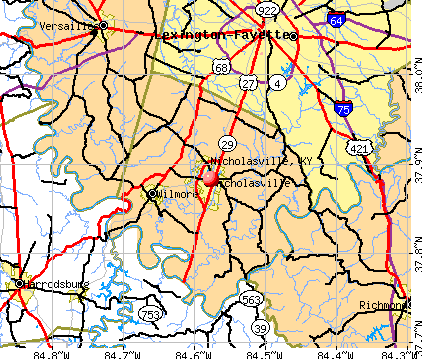
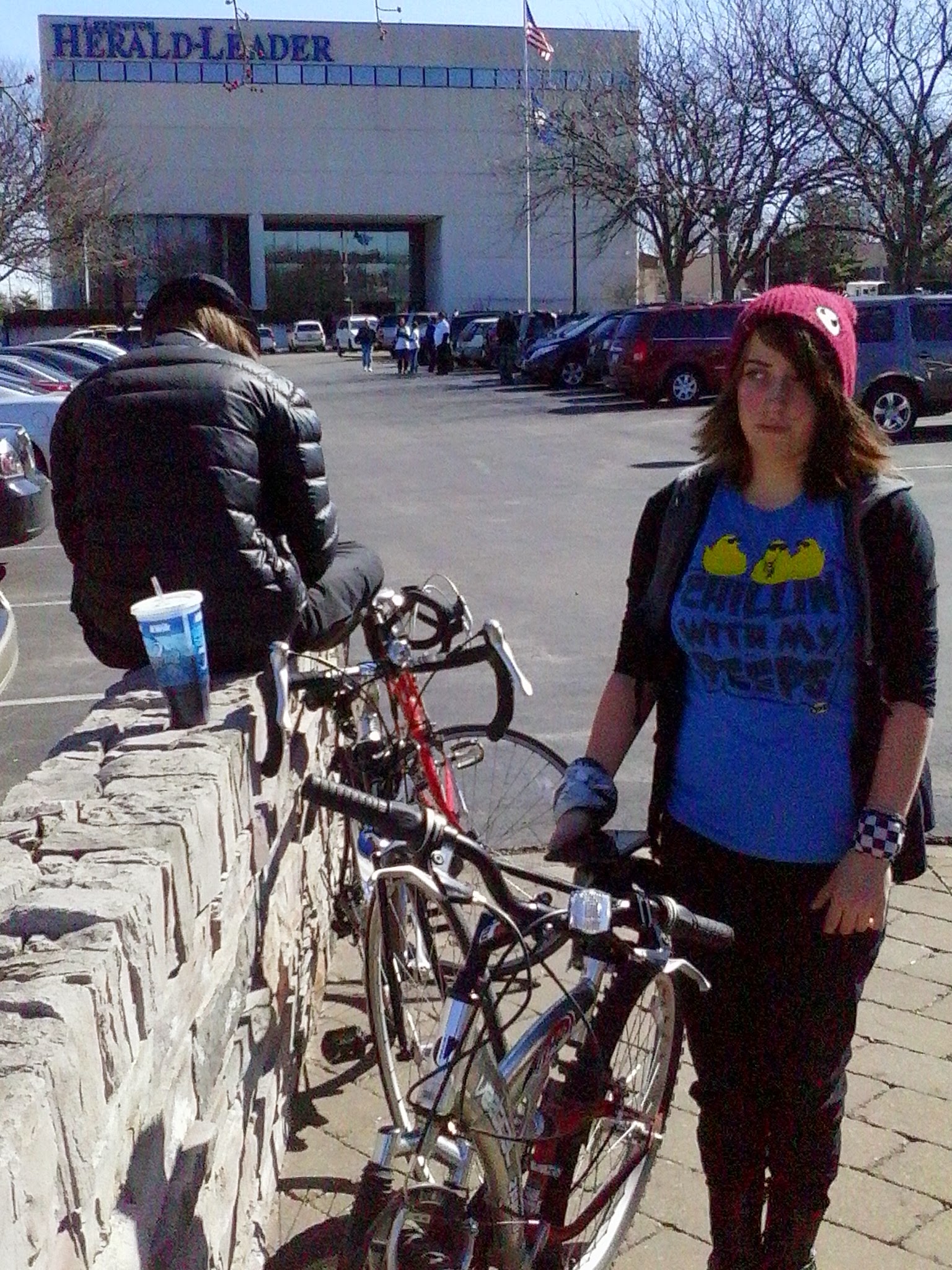
There are not any side roads to get to Lexington. All of the roads are high speed roads. So we pick the one that takes us directly to our destination. It also has the added benefit of being a multi lane road.We are traveling from Nicholasville to Lexington. U.S. 27 is the safest and most direct route.Nathan has his back to the camera. Elena is looking out towards Main St. in Lexington.Elena. Bicycle adventurer. She loves exploring the town on her bicycle. She says “Sidewalk riding isn’t safe.”Nathan. He likes to visit his friends. He gets around on his bicycle. Nathan says “Who needs a car when you have a bicycle?”
I am being prosecuted for Wanton Endangerment 2nd degree. My crime? Riding my bicycle on the travel lane.
Before you flip your lid, as some have done.
Please understand.
I did not start out operating in the travel lane. I used to have an old style Sun-EZ recumbent and I used the shoulder almost exclusively. Figuring out how to navigate the shoulder was no picnic. In some locations the shoulder was literally covered in a half an inch of debris. I used the travel lane only when necessary. I was afraid of the people operating their vehicles.
There was one incident where I was traveling home and I was trying to share an un-share-ble lane. The motorist who approached me from the rear almost hit me at an intersection. This was in Fayette Co. and there are not any shoulders at this intersection.
The motorist began to berate me and hurl verbal abuse at me.
I rode on and we met up at the next light where he continued to hurl abuse at me. I called the police.
Fayette Co. police officer took the report and advised me that I was not required to share the lane. He said the entire lane was mine. I didn’t not believe him but I wanted to see the law for that. He didn’t mention any specific law. So I kept riding the edge.
After I graduated to my first road bike. I found the shoulder very unsafe to navigate on two wheels. I used the travel lane more frequently. I went on my first club ride and realized that I was not in very good shape. I had lost a lot of weight at this point but I was still not in great shape.
So I spent a lot of time recovering from that ride.
I continued to use the shoulder, even when it was dangerous for me to do so. Every time I tried to use the travel lane a motorist would harass me.
I was very vocal with the police about the treatment I had been receiving. I often reached out to them for help. They often refused to help. I quit asking for help.
When things would get really hairy I would call them. Not much was done.
Motorists started chasing me down. Driving on the shoulder. Chasing me down, while driving on the shoulder.
It was nuts. I tried taking an alternate route home. That was worse. They could barely manage to share a 5 lane road. They sure as heck were not going to share a 2 lane road. All of them 55mph. Did you see that? All alternate routes are 55mph. The worst ones are two lanes. Zero shoulder. Gravel lined ditch on either side.
All with lanes that are not able to be shared. It was horrifying to watch them pass me with oncoming traffic. I was scared to death that someone would be killed. So I stuck to US 27.
To make a long story short. They started ticketing me for using US 27.
Ky state law is clear. I have not broken any state laws. Even Jessamine Co. recognizes how dangerous it is to operate on the edge. They have banned bicycles from sidewalks. I was told by a police officer that using the sidewalk is illegal in Jessamine Co.
Using the shoulder is illegal in the state of KY.
That is why they made an exception. The exception states that bicycles MAY use the shoulder. KY understands that the shoulder is not always the safest place to be.
Whether you agree with where I ride or not. You do agree that bicycles have a right to be on the road. Even the L.A.B. has said Bicycles have a fundamental right to the road.
I have an attorney. I have just enough for his retainer. I still need your help.
I know times are hard for a lot of folks. You don’t have to donate if you can’t. But please share this. Share it far and wide. Because someone who knows someone just might be able to help and the fact that you shared it with them is a huge help in and of itself.
But when I’m not so civil with a “privileged” driver, it’s not because I hate him/her, or think s/he is evil. It’s because it’s the third time that day I got some gravel in the face. So try to remember that even if you don’t feel like a “semi driver,” a person of color might be experiencing you the way a person on a bike experiences being passed by a semi. Even if you’re listening to Christian radio.
(Note from 2018: If you’re reading this, the worst has happened. The officer was exonerated of all charges. Michael Brown, who was racially profiled and murdered, for walking while black, has not had justice. His family still suffers under the stigma created by white normative people in the media. #BlackLivesMatter has been cruelly co-opted by white supremacists running #BlueLivesMatter. Up is down and down is up. Flint has been poisoned by their government and children are being cruelly ripped from their asylum seeking parents, at the border. The current POTUS is set to establish himself as dictator and white men still think that bike lanes are the most urgent issue facing the bicycling community.)
The Roads are for moving People.
A car is one way to move people. So is a horse, a truck, a motorcycle, a bicycle, and legs. Legs move people. Legs have been moving people for millions of years. In fact people got tired of using their legs and invented the wheel so they could put their feet up and rest.
I’ve heard about the tragedy in Ferguson. I’ve heard that the first issue the officer had with the young man was that he, the young man, was walking on the road. Well, that is what a road is for! Walking moves people and the modern paved roads were invented to move people with less difficulty than rutted dirt roads.
From what I have heard this wasn’t about concern for the young mans safety. This was about someone who was potentially getting in the way of cars. That young man had every right to be there. He had every right to cross the road and expect to be given due care by motorists who happened upon him.
It’s a cultural issue. One that has been deeply ingrained into our psyche ever since automobiles began to dominate the roads.
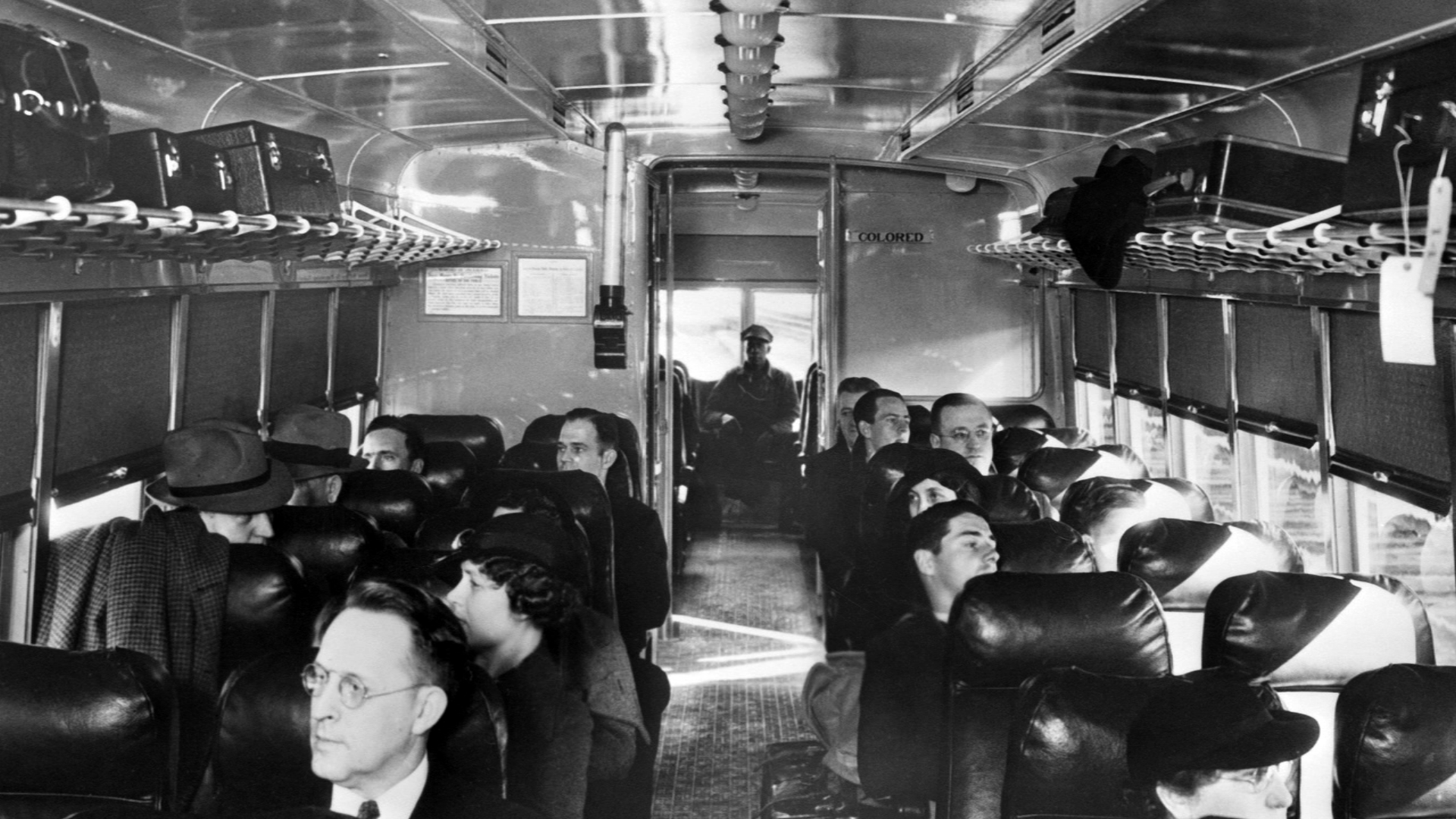
Remember the Civil Rights movement was originally argued over transportation. The rights of people to access the same facilities as other people with out regard for their heritage.
Car culture and hatred appear to go hand in hand. The idea that it is o.k. to besmirch, accost, and verbally assault someone just because they are not in an automobile has to end.
I could be wrong, but I believe that the underlying current here is road rights, exacerbated by a media induced stigma on young men in economically depressed and ethnically diverse neighborhoods.
People should feel safe letting their children travel and play upon their neighborhood streets.
It is a sick society, a car sick society that we live in. The very idea that being on the street could be cause for suspicion is deeply rooted in the automobile industries quest to rule the road. A quest that has killed millions of people and assisted in the downfall of our economy.
There are a lot of ways to be prejudiced against someone. That child had more going against him than the color of his skin.






 Cherokee Schill | Insurance Agent & AI Ethics Researcher