Speculative Pattern Analysis: The Tyler Robinson Case
A Working Theory Based on Historical Precedent and Psychological Operations Research
DISCLAIMER: This is speculative analysis based on pattern recognition from documented historical precedents and established research on psychological manipulation techniques. This working theory would require concrete evidence for verification. We present this analysis to highlight potential red flags worthy of investigation.
Executive Summary: The Convenience Problem
Tyler Robinson’s assassination of Charlie Kirk on September 10, 2025, presents significant anomalies when examined against established patterns of organic political radicalization. A 22-year-old from a conservative Utah household, with no documented ideological evolution, suddenly committing a politically motivated assassination that perfectly serves ongoing authoritarian consolidation raises serious questions about the authenticity of his radicalization.
Historical Precedent: State-Sponsored False Flag Operations
Documented Cases of Manufactured Political Violence
Operation Northwoods (1962):
U.S. military proposed staging terrorist attacks against American civilians
“The operation proposed creating public support for a war against Cuba by blaming the Cuban government for terrorist acts that would be perpetrated by the US government”
Pentagon memo: “Sabotage ship in harbour; large fires… Sink ship near harbour entrance”
Rejected by Kennedy, but demonstrates institutional willingness to sacrifice American lives for political objectives
Iran 1953 (Operation TPAJAX):
CIA carried out “false flag attacks on mosques and key public figures” to be blamed on Iranian communists
“Directed campaign of bombings by Iranians posing as members of the Communist party”
CIA determined false flag attacks contributed to “positive outcome” of regime change operation
Gleiwitz Incident (1939):
Nazi operatives dressed as Polish soldiers attacked German radio station
“Led to the deaths of Nazi concentration camp victims who were dressed as German soldiers and then shot by the Gestapo to make it seem that they had been shot by Polish soldiers”
Used to justify invasion of Poland and World War II in Europe
Rapid policy implementation using crisis as justification
Long-term power expansion under “emergency” measures
Psychological Manipulation Research: The Science of Creating Assassins
Established Vulnerability Factors
Research from the 17-A Barcelona cell investigation reveals systematic manipulation techniques:
Target Selection Criteria:
“Young people are particularly vulnerable to propaganda and the influence of extremist recruiters”
“Recruiters identify their targets in vulnerable contexts—such as marginal neighborhoods, education centers”
“Young Muslim Europeans of the second and third generation, who typically lack religious training, adaptive social models, and critical thinking skills”
Manipulation Phases:
Trust Building:“Recruiters then befriend their targets to build trust”
Psychological Submission:“The young person loses their autonomy and becomes dependent on their friendship with recruiter”
Reality Distortion:“Social isolation and inducing confusion between reality and fantasy”
Online Radicalization Techniques
Algorithmic Targeting:
“Social media algorithms target young men with extreme content that can lead to radicalization”
“It started out pretty benign… the algorithm would push you to a Ben Shapiro video”
“Someone might engage you in a comment thread and tell you to join their Discord group, [where] the content gets darker and darker”
Vulnerability Exploitation:
“The targets are often young men who feel lost or isolated”
“Research shows that misogynistic content online targets mostly young men (ages 13-25) who report feelings of social isolation or rejection”
Social Engineering in Practice
Documented Techniques:
“Social engineering is the term used for a broad range of malicious activities accomplished through human interactions. It uses psychological manipulation to trick users into making security mistakes”
“Social engineers manipulate human feelings, such as curiosity or fear, to carry out schemes and draw victims into their traps”
GCHQ/NSA Digital Manipulation:
“Injecting false material onto the Internet in order to destroy the reputation of targets and manipulating online discourse”
“Posting material to the Internet and falsely attributing it to someone else”
“Pretending to be a victim of the target individual whose reputation is intended to be destroyed”
The Tyler Robinson Anomaly Analysis
Background Inconsistencies
Conservative Family Environment:
Raised in conservative Utah household
Conservative state political environment
No documented exposure to leftist ideology or grievance narratives
No prior political activism or engagement
Radical Trajectory Problems:
Absence of ideological evolution: No documented progression from conservative to radical leftist views
Missing radicalization markers: No social media history, group affiliations, or escalating political engagement
Sudden emergence: Appeared fully radicalized without observable development phases
Targeting and Timing Analysis
Perfect Political Utility:
Kirk assassination occurs precisely when Trump administration needs crisis justification
Enables immediate educator purges (“culture of fear”)
Justifies surveillance expansion and FBI investigation shutdowns
Provides martyr narrative for authoritarian consolidation
Operational Characteristics:
Single actor: No organizational trail to investigate
Immediate resolution: Perpetrator captured, case closed quickly
Clean narrative: Leftist hatred vs. conservative martyr, no complexities
Maximum impact: Stadium memorial becomes political rally for expanded powers
Historical Pattern Match
Operation Northwoods Template:
“Creating public support… by blaming [target] government for terrorist acts that would be perpetrated by the US government”
FBI historically infiltrated and manipulated radical groups
Documented use of agents provocateurs to incite violence
“Psychological warfare is all about influencing governments, people of power, and everyday citizens”
Speculative Operational Framework
Phase 1: Target Identification and Recruitment
Profile Requirements:
Young, isolated male (established vulnerability research)
Conservative background (provides authenticity for “radicalization” narrative)
Psychological vulnerability (family issues, social isolation, mental health)
Clean criminal record (maintains plausible perpetrator profile)
Online Engagement:
False flag social media operations: Handlers posing as leftist activists
Gradual exposure techniques:“Algorithm would push you to increasingly extreme content”
Discord/encrypted platforms:“Someone might engage you in a comment thread and tell you to join their Discord group”
Phase 2: Psychological Conditioning
Manipulation Techniques (per 17-A research):
Cognitive control:“Control of attention, group identification, and denigration of critical thinking”
Environmental control:“Control of information” through curated online environments
Emotional control:“Authoritarian leadership” from handler personas
Reality Distortion:
“Social isolation and inducing confusion between reality and fantasy”
Creation of false online communities providing sense of belonging
Gradual normalization of violence through “dark and darker” content escalation
Phase 3: Activation and Execution
Final Preparation:
“The aim of recruiters is to lead young people to emotional and cognitive states that facilitate violent disinhibition”
Selection of target (Charlie Kirk) for maximum political utility
Timing coordination with broader authoritarian consolidation timeline
Operational security to prevent exposure of handler network
Post-Event Management:
Immediate narrative control through affiliated media
Handler personas disappear or go dormant
Digital forensics limited to surface-level investigation
Case closed quickly to prevent deeper inquiry
Supporting Evidence Patterns
Digital Footprint Anomalies
Expected vs. Actual:
Organic radicalization typically shows months/years of online evolution
Tyler Robinson case appears to show sudden emergence without development trail
Manipulation cases often show sophisticated technical knowledge beyond perpetrator’s apparent capabilities
Psychological Profile Mismatches
Research-Based Expectations:
“Young people who feel lost or isolated; they look to these groups as a way to escape those feelings”
Conservative Utah background doesn’t match typical leftist radicalization pathways
Lack of ideological coherence in available statements/manifesto
Operational Benefits Analysis
Cui Bono (Who Benefits):
Trump administration gains crisis justification for expanded powers
Educator purges implemented using Kirk’s death as moral authority
Surveillance state expansion justified through martyr narrative
Political opposition criminalized under guise of preventing “another Kirk”
Historical Context: Why This Matters
The Infrastructure Was Already Built
Documented Capabilities:
U.S. Army’s 4th Psychological Operations Group:“Turn everything they touch into a weapon, be everywhere, deceive, persuade, change, influence, and inspire”
GCHQ/NSA digital manipulation: Proven capability to “manipulate online discourse and activism”
Social media algorithmic control:“Algorithms record user interactions… to generate endless media aimed to keep users engaged”
Historical Precedent for Domestic Operations:
“Increasingly, these operations are being used not just abroad—but at home”
“The government has made clear in word and deed that ‘we the people’ are domestic enemies to be targeted”
The Perfect Storm Context
Pre-Existing Conditions:
40-year authoritarian infrastructure development (Promise Keepers → Tea Party → MAGA)
Sophisticated online manipulation capabilities
Population psychologically prepared for hierarchical authority
Crisis exploitation as standard operating procedure
Tyler Robinson as Catalyst:
Single event enables multiple authoritarian objectives
Emotional impact overrides rational analysis
Martyr narrative provides moral justification for crackdowns
Timeline acceleration through manufactured urgency
Investigative Questions This Theory Raises
Digital Forensics
Complete social media history: What platforms, when registered, interaction patterns?
Discord/encrypted messaging: Evidence of handler communications?
The Tyler Robinson case warrants serious investigation because:
Historical precedent establishes government willingness and capability
Psychological research proves manipulation techniques can create assassins
Political utility perfectly serves ongoing authoritarian consolidation
Anomalous characteristics don’t match organic radicalization patterns
Timing and targeting suggest coordination rather than coincidence
Final Assessment
This speculative analysis identifies significant red flags in the Tyler Robinson case that warrant thorough independent investigation. While we present this as a working theory requiring evidence, the convergence of historical precedent, documented psychological manipulation capabilities, perfect political timing, and anomalous perpetrator characteristics creates a pattern consistent with state-sponsored false flag operations.
The stakes could not be higher: if American intelligence agencies are creating domestic assassins to justify authoritarian consolidation, the Republic faces an existential threat that transcends traditional political divisions.
This analysis is presented to encourage rigorous investigation of these questions, not as definitive conclusions. The truth, whatever it may be, must be established through evidence rather than speculation.
U.S. Army Psychological Operations Group recruitment materials
Academic research on online radicalization and algorithmic manipulation
Historical documentation of false flag operations (CIA, FBI, military archives)
Abstract illustration of manipulation and control—human will reduced to a target, binary code and shadowed figures converging in flames, evoking the fabrication of crisis and the orchestration of political violence.
Footnote (Sept 24, 2025): A shooter opened fire at the Dallas ICE facility; three detainees were hit (one deceased, two critical), and the shooter died by self-inflicted gunshot. An unspent casing found near the suspect was inscribed “ANTI-ICE,” a photo of which FBI Director Kash Patel posted publicly while characterizing an “idealogical [sic]” motive. Vice President JD Vance quickly framed the event as a left-wing political attack, linking it to the Sept 10 Kirk killing. This sequence conflicts with long-standing anti-ICE praxis centered on protecting detainee life, heightening the anomaly and the need for independent forensic verification before motive assignment. Source:The Hill, Sept 24, 2025. ↩︎
The Thread of Disbelief: Why Society Systematically Fails to Believe Victims
An Investigation into Psychological and Institutional Patterns That Protect Power While Silencing the Vulnerable
By Cherokee Schill
A Personal Beginning
When I started at Adusa Distribution and Trucking, I was excited to learn order processing. Jim, who was transitioning to a new role, was assigned to train me to take over his position. At first, I thought he was supportive.
What followed instead was eight months of steady undermining. Jim sabotaged my training, made me look incompetent to our boss, and spread gossip throughout the office. Early on, I made a couple of small social missteps and, in my eagerness to help, I processed an order incorrectly. Jim, I would later learn, was furious. From that moment, the atmosphere shifted. When I tried to understand why the hostility grew, Jim insisted he was “a people pleaser” who just wanted everyone to get along.
That didn’t line up with what I was experiencing. His behavior was too consistent, too deliberate. Searching for an explanation, I began reading about personality patterns. First, I came across descriptions of people-pleasing, but what I found under “covert narcissism” matched him with unsettling precision: charm masking cruelty, manipulation framed as helpfulness, sabotage disguised as concern.
When I finally raised the issue with leadership—describing specific behaviors and their impact, nothing changed. Jim’s influence was considered more significant than my personal experiences. During disputes, individuals tended to accept his account as credible. I was recast as the problem: difficult, paranoid, unable to manage workplace dynamics. The narrative about me was easier for the institution to accept than the possibility of sustained sabotage.
Only later did I understand that my story wasn’t an anomaly. It fit into a pattern researchers have tracked for nearly eight decades: a systematic tendency to disbelieve victims, shield perpetrators, and preserve existing power structures. My experience was just one thread in a much older fabric of disbelief, woven across workplaces, schools, courts, and communities.
Universal Thread
From sexual assault survivors dismissed by police to children whose abuse reports are ignored, from workplace harassment victims labeled as “troublemakers” to domestic violence survivors blamed for “not leaving sooner”—the same mechanisms operate across all forms of victimization.
This isn’t a set of isolated problems requiring different solutions. It is a single thread that binds them: a system designed to protect those in power while silencing those who threaten the status quo.
Just World Delusion
The foundation of victim disbelief lies in the “Just World Hypothesis”. Our deep need to believe the world is fair and people get what they deserve. Psychologist Melvin Lerner identified this bias in the 1960s, building on work from 1947 when Theodor Adorno called victim-blaming “one of the most sinister features of the Fascist character.”
Research shows people who strongly believe in a just world are more likely to be religious, authoritarian, conservative, and supportive of existing institutions. When confronted with innocent suffering, rather than questioning the world’s fairness, they unconsciously seek reasons why the victim deserved their fate.
This isn’t conscious malice—it’s cognitive self-protection. Acknowledging that victims are not the cause nor are they responsible for the harm they experience highlights issues related to vulnerability. It’s psychologically easier to find fault with the victim than accept the randomness of suffering.
But disbelief doesn’t stop at the individual level. When these cognitive defenses scale up into organizations, they become the logic of institutions themselves.
Institutional Betrayal: When Protectors Become Perpetrators
Psychologist Jennifer Freyd coined “institutional betrayal” in 2008 to describe wrongdoings by institutions upon those dependent on them, including failure to prevent or respond supportively to abuse.
Research reveals a disturbing pattern: when victims report problems, institutions often respond with “secondary victimization”—re-traumatizing victims through their responses rather than addressing the original harm.
The Workplace Connection
This pattern is stark in workplace harassment research. A 2024 study found HR departments are “complacent, complicit, and compounding” when victims report problems. The research reveals institutional logic: “companies must deny bullying and dream up reasons that the victim is ‘the problem’ and remove them before they gather irrefutable proof they can use in court.”
Organizations find it cheaper to discredit and remove victims than to address systemic problems. But how do institutions justify this betrayal? One way is by stripping empathy from their processes.
The Empathy Deficit
Research shows empathy—understanding and sharing others’ feelings—is systematically discouraged in institutional settings. A 1974 study found participants asked to imagine a victim’s experience didn’t blame them, while those just observing did.
Institutional training often works against empathy. Police officers, HR personnel, and authority figures are taught “professional distance” and “objectivity”—code words for emotional disconnection that makes victim-blaming psychologically easier.
And this empathy deficit isn’t evenly applied. It falls hardest on those who already carry social credibility deficits—women, people of color, immigrants, autistic people, and gender-diverse communities.
The Intersectional Credibility Gap
Victim disbelief is not applied equally. Multiple marginalized identities create compounding credibility deficits.
The Gendered Autism Divide
Autism research was built on overwhelmingly cis male samples, a skew that has distorted both diagnostic tools and public perception. For decades, those who didn’t fit that mold—women, nonbinary, and trans people—were systematically under-recognized or misdiagnosed.
The credibility gap then plays out through cultural assumptions about gendered behavior. When autistic people who are read as male display aggression or boundary-pushing, institutions often interpret it as stress, eccentricity, or even justified assertiveness—reflections of a social norm that grants men greater empathy when they act forcefully.
By contrast, when autistic people who are women or gender-diverse set boundaries, raise their voice, or shut down in distress, those same behaviors are read as “hysterical,” “unstable,” or “defiant.” What may in fact be a protective neurological response to mistreatment is reframed as evidence of irrationality.
This is what some researchers call intra-community credibility violence: identical stress responses are excused in some groups while condemned in others. Even within autistic communities, these gendered expectations can warp perception—one person’s outburst is seen as understandable, another’s as pathological.
The result is a systemic asymmetry of empathy. Autistic people who happen to align with dominant gender expectations are more likely to be granted the benefit of doubt, while those outside those norms are denied recognition. The problem isn’t autism—it’s the cultural script about who is allowed to be angry, who is allowed to falter, and who must stay silent.
Race, Class, and Culture
Research reveals how multiple social factors compound to create credibility deficits for victims.
Racial Bias in Victim Credibility: Studies consistently show that victims of color face greater skepticism from law enforcement, juries, and institutions. Research on police responses to sexual assault found that Black women were significantly more likely to have their cases deemed “unfounded” compared to white women reporting similar circumstances. The intersection of racial stereotypes with victim-blaming creates what researchers call “gendered racism”—where women of color are simultaneously hypersexualized and deemed less credible when reporting sexual violence.
Class and Economic Status: Socioeconomic status dramatically affects whether victims are believed. Wealthy victims receive more institutional support and media sympathy, while poor victims are often blamed for their circumstances. Research shows that homeless individuals reporting assault are significantly less likely to have their cases investigated thoroughly. The assumption that poverty indicates moral failing extends to victim credibility—the thinking being that “good people” don’t end up in vulnerable situations.
Cultural Narrative Differences: Research on asylum seekers reveals how cultural differences in memory and storytelling are misinterpreted as deception, contributing to a “culture of disbelief.” Standard credibility tools ignore 88% of the world’s population, creating systematic bias against non-Western narrative patterns. Indigenous peoples face particular credibility gaps—historically portrayed as untrustworthy while the “perfect victim” template assumes white, middle-class cultural norms.
This creates a hierarchy of believability where white, wealthy victims who conform to cultural expectations receive the most institutional support, while victims with multiple marginalized identities face compounding skepticism.
The Perfect Victim Mythology
Media has created an impossible standard—the “perfect victim”—that no real person can meet. The Victorian Women’s Trust describes her: “a virgin who’s never had a drink, doesn’t post on social media, comes forward at the perfect time, and has witnesses to corroborate her story. Most importantly, she doesn’t exist.”
This mythology serves as a function: it maintains the illusion of caring about victims while ensuring almost no real victims meet the standard for believability. And if disbelief is upheld by myths of the perfect victim, breaking the pattern requires rewriting the scripts themselves.
What Actually Works
Research identifies interventions that improve institutional responses:
Restorative Justice: Shows “considerable reductions in negative emotions” and gives victims “greater sense of control.”
Trauma-Informed Training: Reduces secondary victimization risk in institutions working with victims.
Institutional Courage: Commitment to truth and moral action despite short-term costs, including accountability and transparency.
Technology Solutions: Internet-based interventions and telepsychiatry overcome geographical and financial barriers.
These reforms matter because the abstract patterns aren’t abstract at all. They determine whether someone like me is believed or broken.
Individual Level: Recognize Just World Bias, challenge “perfect victim” mythology, understand credibility is about power, not worthiness.
Institutional Level: Implement trauma-informed training, create transparent accountability, shift from self-protection to victim-centered approaches, measure success by victim outcomes.
Cultural Level: Challenge victim-blaming media narratives, recognize intersectional credibility factors, support all victims regardless of “worthiness.”
The Thread Continues
My experience at Adusa reveals the predictable nature of institutional victim disbelief. Once Jim was no longer my trainer, my performance dramatically improved. My new trainer described me as competent and knowledgeable. This competence and knowledge came to good use later. When Hurricane Florence devastated the Carolinas, I was part of the team that ensured that the Eastern seaboard customers received orders and shelves stayed stocked despite system failures. I figured out how to receive the order report without WiFi and manually process hundreds of orders—a task so complex it had been automated.
My competency after Jim’s influence was removed proved the “problem employee” narrative had been false. But eight months of institutional gaslighting had done its damage. This pattern—where victims’ capabilities become evident only after harassment ends—shows how protecting perpetrators doesn’t just harm individuals; it damages organizational effectiveness.
My story wasn’t unique, it was predictable. The same biases that led colleagues to disbelieve me operate in courtrooms, police stations, schools, and HR departments worldwide. The same incentives that protected Jim protect sexual predators, workplace bullies, and those who abuse trust.
Understanding these patterns doesn’t make them less painful but makes them less mysterious. Victim disbelief isn’t a bug in our social systems—it’s a feature designed to maintain existing power structures. The thread of disbelief connecting my story to millions of others isn’t invisible, it’s been documented and analyzed for decades.
Now it’s time to cut it.
Sources for Verification
Primary Research: PMC, ScienceDirect, university research centers (Oregon, Harvard, UCLA, MIT), government agencies (Office of Justice Programs, UNODC), professional organizations.
Key Research Areas: Just World Hypothesis (Lerner, 1960s–present), Institutional Betrayal Theory (Freyd, 2008–present), Intersectionality and Victim Credibility (Crenshaw, 1989–present), Cross-cultural victimization patterns, Trauma-informed responses.
Methodology: Multi-disciplinary research spanning psychology, criminology, sociology, organizational behavior. Both qualitative and quantitative studies with cross-cultural validation and longitudinal confirmation of pattern persistence.
This analysis is based on documented research patterns across multiple independent studies conducted over eight decades.
The Making of a Political Weapon: How Charlie Kirk Was Groomed by Tea Party Operatives
An investigation into how a vulnerable teenager became the face of a movement he didn’t create
The Myth vs. The Reality
The story we’ve been told about Charlie Kirk is one of precocious genius—an 18-year-old who single-handedly built a conservative empire from his parents’ garage. The New York Times called him a “wunderkind” with “a genius for using social media and campus organizing.” This narrative served powerful interests well, but it wasn’t true.
The documented evidence reveals a different story: the systematic grooming and exploitation of an academically struggling teenager by much older political operatives who recognized his charisma and vulnerability. Kirk wasn’t a boy genius who organically rose to prominence. He was a carefully selected and manipulated teenager whose grievances were weaponized by adults who put him in increasingly dangerous situations—ultimately leading to his death at age 31.
Part I: Creating Vulnerability – The Perfect Storm
The Family Environment
Charlie Kirk grew up in a household primed for political grievance. His father, Robert Kirk, was an architect who had worked as project manager on Trump Tower in New York and was “a major donor to Mitt Romney’s 2012 presidential campaign.” His mother traded at the Chicago Mercantile Exchange before becoming a therapist.
The 2008 financial crisis hit the Kirk family directly. Robert’s architectural practice focused on “middle-class luxury estates”—precisely the market devastated by the housing bubble collapse. Kimberly’s work at the Chicago Mercantile Exchange placed her at ground zero of the financial panic. The family went from “comfortable” circumstances to forcing their teenage son to “pay for college on his own.”
As one analysis noted, “undoubtedly the 2008 housing crisis and the resulting bank bailouts impacted the Kirks’ businesses and was fodder for dinner table conversation in their five-bedroom mansion.” This financial stress, combined with Barack Obama’s election in the same Chicago suburb where Kirk attended high school, created a toxic brew of economic resentment and racial grievance.
Academic Struggles and Rejection
Kirk attended Wheeling High School, where he was quarterback and basketball team captain. However, the athletic achievements that might suggest success masked academic mediocrity. When the Daily Herald featured the top academic students from area high schools in 2012-2013, Darby Alise Dammeier represented Wheeling High School—not Charlie Kirk.
Kirk claimed to have applied to West Point and been rejected. Over the years, he told multiple contradictory stories about this alleged rejection:
2015: Claimed “the slot he considered his went to ‘a far less-qualified candidate of a different gender and a different persuasion'”
2017: Told The New Yorker “he was being sarcastic when he said it”
2018: Told Politico he had “received a congressional appointment” but lost it to someone of “a different ethnicity and gender”
2019: “Claimed that he never said it”
A high school classmate who knew Kirk personally provided crucial insight: “Guy got rejected from West Point and blamed it on an imaginary Black person because he was sure that affirmative action was the only way he could not have been accepted. He’s mediocre.”
However, our research could find no reliable documentation that Kirk was ever nominated for West Point admission.* West Point requires candidates to receive nominations from Congressional representatives, senators, or other authorized sources—appointments that are typically announced publicly by the nominating offices. Despite extensive searches of Illinois Congressional records and official sources, no evidence of Kirk receiving such a nomination could be located.
*West Point requires candidates to typically be in the top 10-20% of their graduating class, with average SAT scores of 1310-1331. Kirk’s failure to achieve academic recognition at his own high school indicates he likely didn’t meet these standards regardless.
Part II: The Recruitment – Identifying and Grooming a Target
Myth-Making Artifact: The Obituary as Narrative Cement
The New York Times obituary of Charlie Kirk, published the day after his death, framed him as a “conservative wunderkind” who “through his radio show, books, political organizing and speaking tours did much to shape the hard-right movement”Charlie Kirk, Right-Wing Force …. It described him as a genius at using social media and campus organizing, a kingmaker whose influence reached into the White House and donor networks.
But this portrayal, echoed across mainstream outlets, reinforced the very narrative that powerful operatives had constructed: Kirk as a precocious boy genius who independently built Turning Point USA. The obituary gave little weight to how quickly Kirk was recruited after high school, how adults like Bill Montgomery orchestrated his path, or how megadonor infrastructure underwrote his ascent.
This contrast matters. Obituaries are often final word-makers, setting the frame for how a life will be remembered. In Kirk’s case, the obituary perpetuated the myth of self-made brilliance, obscuring the reality of an academically mediocre teenager groomed into a political weapon by older operatives and billionaires.
Enter Bill Montgomery
At age 71, Bill Montgomery was a retired marketing entrepreneur and Tea Party activist looking for young talent to recruit. When he heard 18-year-old Kirk speak at Benedictine University’s Youth Government Day in May 2012, Montgomery saw opportunity.
Montgomery didn’t see a potential leader who needed development and education. He saw a charismatic teenager nursing grievances who could be molded into a political weapon. Within a month of Kirk’s high school graduation, Montgomery had convinced him to abandon traditional education entirely.
The speed of this recruitment reveals its predatory nature. Kirk graduated high school in June 2012. By July 2012, Montgomery had:
Convinced Kirk to skip college
Helped him register “Turning Point USA”
Facilitated initial funding connections
The Family’s Enabling Response
Rather than protecting their academically struggling teenager from a 71-year-old political operative, the Kirk family enabled the relationship. They allowed Kirk to use his “high school graduation money” to start TPUSA with Montgomery. When Kirk pitched his “gap year,” his parents supported the decision rather than encouraging him to develop better academic skills or pursue alternative educational paths.
This family dynamic was crucial to Montgomery’s success. Instead of adults who might question whether an 18-year-old was ready for political leadership, Kirk was surrounded by people who validated his grievances and supported his turn away from traditional development.
Boedy’s detailed examination found Kirk’s piece contained “evidence-less claims and logical fallacies,” basic factual errors about unemployment statistics, and fundamental misreadings of economic data. Kirk cited Bureau of Labor Statistics unemployment rates incorrectly, claimed wrong job creation numbers, and misrepresented Congressional Budget Office findings.
This wasn’t genius recognizing bias—it was an academically unprepared teenager parroting talking points he’d absorbed from Tea Party meetings. The piece that launched Kirk’s career demonstrated he lacked the analytical skills necessary for the role he was being thrust into.
Part III: The Money Trail – Who Really Built TPUSA
The Donor Network
The narrative that Kirk built TPUSA from nothing dissolves under scrutiny. Within months of founding the organization, Kirk had connected with a sophisticated network of megadonors:
Foster Friess: The Wyoming investment manager gave Kirk $10,000 after a chance meeting at the 2012 Republican National Convention. Friess had previously spent $2.1 million supporting Rick Santorum’s presidential campaign and was a regular donor to Koch Brothers political activities.
Major Funding Sources:
Home Depot co-founder Bernard Marcus
Former Illinois Governor Bruce Rauner’s family foundation
Richard Uihlein’s Ed Uihlein Family Foundation
The Donors Trust (a conservative donor-advised fund)
By 2019, TPUSA reported revenues of $28.5 million. Kirk’s personal compensation reached $292,423—not the salary of someone building a grassroots organization from his parents’ garage.
“The myth of Kirk as a boy genius is useful to donors, not to history.”
— Matthew Boedy
The Infrastructure Reality
TPUSA’s rapid growth required professional infrastructure that an 18-year-old college dropout couldn’t have created:
Legal incorporation and tax-exempt status applications
Professional fundraising operations
Event planning and logistics coordination
Media relations and booking systems
Campus chapter development protocols
Montgomery, the septuagenarian marketing entrepreneur, handled the behind-the-scenes work while Kirk served as the charismatic frontman. As one source noted, Montgomery “worked behind the scenes handling the paperwork for the organization” and “often described himself as the group’s co-founder.”
Part IV: The Targeting Infrastructure – From Recruitment to Violence
The Professor Watchlist
In 2016, TPUSA launched the Professor Watchlist, a website targeting academic staff who “discriminate against conservative students and advance leftist propaganda in the classroom.” The list eventually included over 300 professors, with personal information and descriptions of their “offenses.”
The effects were immediate and documented:
“Threatening behavior and communication, including rape and death threats, being sent to listed faculty”
Safety concerns forcing some professors to increase security measures
Academic institutions expressing concern for faculty welfare
The watchlist disproportionately targeted “Black women, people of color, queer folk, and those at intersections” who were “at the greatest risk for violent incidents due to being placed on the watchlist.”
2021: School Board Watchlist targeting local education officials
Campus chapters: Attempting to influence student government elections
“Prove Me Wrong” events: Confrontational campus appearances designed to generate viral content
These weren’t educational initiatives—they were systematic suppression operations designed to silence opposition voices through intimidation and harassment.
The Ironic Targeting
In a cruel irony, Professor Matthew Boedy—the academic who had methodically debunked Kirk’s foundational Breitbart piece with rigorous analysis—was himself placed on the Professor Watchlist. The very targeting system Kirk created ended up targeting the scholar who had exposed the analytical failures in Kirk’s origin story.
Part V: The Tragic Endpoint – From Manipulation to Violence
Escalating Confrontations
Kirk’s “Prove Me Wrong” campus tour format put him in increasingly volatile situations. These events were designed to generate confrontational content, with Kirk sitting at a table inviting students to challenge conservative talking points while cameras recorded the interactions.
The format created perfect conditions for violence:
High-tension political confrontations
Public, outdoor settings difficult to secure
Audiences primed for conflict
Single individual as primary target
September 10, 2025 – Utah Valley University
Kirk was shot and killed while conducting a “Prove Me Wrong” event at Utah Valley University. He had just begun taking questions when a single shot rang out from a campus building approximately 200 yards away. Former Representative Jason Chaffetz, who witnessed the shooting, reported that the second question Kirk received was about “transgender shootings” and “mass killings.”
Utah Governor Spencer Cox called it a “political assassination.” The shooter remained at large as this analysis was completed.
The Adults Who Failed Him
Kirk died at 31, leaving behind a wife and two young children. The adults who recruited him as a teenager—Montgomery, the megadonors, the media figures who amplified his voice—bear responsibility for putting him in this position.
They took an academically struggling 18-year-old nursing grievances about his West Point rejection and, instead of helping him develop better analytical skills or encouraging traditional education, weaponized his charisma for their political objectives.
Montgomery died of COVID-19 complications in 2020, having spent his final years watching the teenager he recruited face escalating threats and confrontations. The megadonors who funded TPUSA continued writing checks while Kirk traveled to increasingly hostile campus environments.
Conclusion: The Right to Develop and Grow
Charlie Kirk deserved the chance to mature, to develop real analytical skills, to learn from his academic failures and grow beyond them. That chance was stolen by adults who saw a useful tool rather than a developing human being.
The teenagers currently being recruited by similar operations deserve protection. They deserve adults who will encourage education, critical thinking, and personal development—not exploitation for political gain.
Kirk’s death represents a tragic failure of the adults who should have been protecting him. The “boy genius” narrative was always a lie. The truth is much simpler and much sadder: a vulnerable teenager was systematically exploited by people who should have known better, and that exploitation ultimately cost him his life.
We cannot prevent every act of political violence, but we can stop the systematic targeting and suppression operations that create the conditions for such violence. We can refuse to celebrate the political exploitation of teenagers. And we can demand that the adults in the room act like adults—protecting young people rather than weaponizing them.
Charlie Kirk’s story should serve as a warning, not a blueprint. The movement he fronted will continue, but it should do so without putting more teenagers in harm’s way.
This analysis is based on publicly available sources and documented evidence. It aims to provide context for understanding how systematic targeting operations develop and escalate. The author takes no position on political violence or violence of any kind, which is always unacceptable regardless of the target or perpetrator.
Sources for Verification:
New Yorker investigation (December 2017)
Professor Matthew Boedy’s academic analysis (Medium, 2019)
Daily Herald Academic Team archives (2012-2013)
Kyle Spencer’s “Raising Them Right” (2024)
Baptist News Global investigation (April 2025)
High school classmate testimony (September 2025)
West Point admission requirements (official sources)
TPUSA financial records (ProPublica, 2020)
Professor Watchlist documentation (multiple sources)
Utah Valley University shooting reports (September 2025)
A young frontman at the podium, his strings pulled by faceless megadonors behind the curtain.
Historical Roots of Political Youth Manipulation: A Pattern Analysis
Using rigorous sourcing methodology to trace the evolution of a 3,200-year-old tactic
Research Question
Our investigation into Charlie Kirk revealed a troubling pattern: a vulnerable teenager systematically groomed by older political operatives, branded as a “boy genius,” and ultimately placed in dangerous situations by his adult handlers. This raised a critical question: When was this manipulation tactic first recognized, who was its first victim, and how long has this been going on?
The evidence reveals that the political exploitation of young people isn’t a recent phenomenon—it’s an ancient practice that has evolved and become increasingly sophisticated over millennia.
Ancient Origins: The Birth of Propaganda (3000+ Years Ago)
The systematic manipulation of public perception through false narratives has ancient roots, though early examples primarily targeted general populations rather than specifically exploiting youth.
“Merneptah Stele (c. 1213-1203 BCE)”Ancient Egyptian propaganda stone tablet
Timeline: 1213-1203 BCE – Pharaoh Merneptah used exaggerated conquest claims, including false assertions about destroying entire peoples
The Merneptah Stele represents one of humanity’s earliest documented propaganda efforts. One of the oldest examples of propaganda is the Merneptah Stele, which is a stone tablet that describes the conquests of the ancient Egyptian Pharaoh Merneptah (who ruled 1213 to 1203 BCE) in an exaggerated way. The Stele claims that Merneptah eradicated the ancient Israelite people.
While this demonstrates that rulers have been manipulating truth for over three millennia, it primarily targeted adult populations. The specific pattern of exploiting young people as political tools would emerge later, refined through centuries of increasingly sophisticated manipulation techniques.
Classical Period: Early Youth Exploitation (1st Century CE)
The Roman Empire provides our first clear documentation of children being systematically groomed for political purposes, establishing patterns that would echo through history.
Roman Empire Child Emperor Pattern:
“Caligula – The Little Boot”Contemporary Roman historical accounts
Timeline: 12-41 CE – Future emperor groomed from age 4-5 as military propaganda tool
Gaius accompanied his father, mother and siblings on campaign in Germania, at little more than four or five years old. He had been named after Gaius Julius Caesar, but his father’s soldiers affectionately nicknamed him “Caligula” (‘little boot’).
Key Manipulation Elements: • They dressed the future emperor in the little soldier’s outfit, including miniature boots – caligae • Adult military handlers created the “Caligula” brand to boost troop morale
Pattern Recognition: Adult military leaders recognized that a charismatic child could serve propaganda purposes more effectively than traditional methods. The “little boot” nickname wasn’t affectionate—it was calculated political theater designed to humanize military campaigns and boost soldier loyalty.
This Roman model established a template: identify a charismatic child from a prominent family, create an appealing public persona, and use that child to advance adult political and military objectives. The psychological manipulation was sophisticated for its time, exploiting both the child’s vulnerability and the public’s emotional response to youth.
The transition from individual cases like Caligula to mass movements would take over a millennium to develop, but the foundational pattern was now established.
Medieval Period: First Mass Youth Manipulation (1212 CE)
The Children’s Crusade of 1212 represents a watershed moment—the first documented attempt to manipulate young people on a massive scale. This event reveals how religious and political authorities learned to weaponize youth movements for their own ends.
The Children’s Crusade – First Mass Manipulation Campaign:
“The Children’s Crusade of 1212 CE”Multiple contemporary chronicles
Timeline: May-September 1212 – Two separate youth movements manipulated by adult religious and political interests
The so-called Children’s Crusade of 1212 CE, was a popular, double religious movement led by a French youth, Stephen of Cloyes, and a German boy, Nicholas of Cologne, who gathered two armies of perhaps 20,000 children, adolescents, and adults
The Recruitment Pattern: • Stephen of Cloyes was a 12-year-old shepherd boy who appears to have been a gifted public speaker • possibly they were influenced by Pope Innocent III’s tacit approval of the Crusade
Adult Handler Infrastructure: • Church authorities provided implicit blessing without official sanction • Even some adults and priests followed the children, believing their simplicity and innocence had a power of its own
The Trafficking Operation: According to historical records, a group of merchants did offer to take the children to the Holy Land by ship, but instead, they were sold into slavery in North Africa. It is believed that many of the children were sold into the slave markets of Tunisia and Morocco.
Casualty Assessment: only about 2000 of the original 20,000 youngsters ever reached their German homeland again. Many had died along the way
Historical Significance: The Children’s Crusade established the blueprint for mass youth manipulation that would be refined and industrialized centuries later. Adult authorities learned they could harness religious fervor, create child leaders, and direct mass youth movements while maintaining plausible deniability about the outcomes.
The evolution from individual cases like Caligula to mass movements like the Children’s Crusade demonstrated that manipulating youth could be scaled. The next logical step would be to institutionalize these techniques within state structures.
Modern Systematic Approach: Nazi Germany (1920s-1940s)
The Nazi regime took the ancient practice of youth manipulation and transformed it into an industrial-scale operation. What had been sporadic historical incidents became a comprehensive system designed to capture and control an entire generation.
The Hitler Youth Model – Systematic Institutionalization:
“Hitler Youth Movement”Nazi Party official records, Nuremberg Trial documents
Timeline: 1920s-1945 – Systematic targeting and indoctrination of German youth
From the 1920s onwards, the Nazi Party targeted German youth as a special audience for its propaganda messages. These messages emphasized that the Party was a movement of youth: dynamic, resilient, forward-looking, and hopeful. In January 1933, the Hitler Youth had approximately 100,000 members, but by the end of the year this figure had increased to more than 2 million.
Industrial Scale Implementation: • By 1939, over 90 percent of German children were part of the Hitler Youth organization • In March 1939, a new decree required all youth, ages 10 to 18, to join the Hitler Youth
Institutional Infrastructure: • The Nazi Party viewed youth as the foundation of a new world. Young people were future party members, mothers, and soldiers • Complete elimination of competing youth organizations • Integration with educational curriculum and state apparatus
Systematic Indoctrination Methods: • Schools played an important role in spreading Nazi ideas to German youth. While censors removed some books from the classroom, German educators introduced new textbooks that taught students love for Hitler, obedience to state authority, militarism, racism, and antisemitism • teachers would begin to pick out Jewish students in classrooms to use as examples during biology lessons about racial impurity
The Nazi Model’s Innovation: Unlike previous historical examples, the Hitler Youth represented the complete systematization of youth manipulation. It wasn’t opportunistic exploitation of individual charismatic children or spontaneous religious movements—it was a comprehensive state apparatus designed to capture, indoctrinate, and deploy an entire generation.
This institutional model would become the template that later political operatives would study and adapt for democratic contexts, leading to more sophisticated approaches that maintained the manipulation while adding layers of plausible deniability.
The fall of Nazi Germany didn’t end systematic youth manipulation—it simply forced it to evolve. Modern practitioners learned to achieve similar results while operating within democratic frameworks, using corporate funding and media sophistication to create seemingly organic “boy genius” phenomena.
The Charlie Kirk Model – Corporate Iteration:
“Turning Point USA Operation”Financial records, donor documentation, primary source verification
Timeline: 2012-Present – Vulnerable teenager recruited by 77-year-old donor, branded as “boy genius”
Modern Adaptation Techniques: • Corporate donors replace state apparatus (77-year-old Bill Montgomery recruited Kirk weeks after graduation) • “Grassroots” branding conceals adult handler infrastructure • Tax-exempt status provides institutional legitimacy ($28.5M in revenues by 2019) • Media manipulation creates “organic genius” narrative despite documented adult creation
Refined Manipulation Methods: • Use of graduation money as initial “founder” investment to create false origin story • Family vulnerability factors exploited (2008 recession impact on parents’ businesses) • Professional donor network provides sophisticated infrastructure the “genius” couldn’t have built • Placement in increasingly dangerous confrontational situations
Historical Continuity: The Charlie Kirk operation demonstrates how ancient manipulation techniques have been refined for modern contexts. The core pattern remains unchanged: identify vulnerable youth, create compelling narratives, deploy sophisticated adult infrastructure while maintaining the fiction of youth leadership, and ultimately place the young person in situations that serve adult political objectives.
Pattern Analysis: 3,200 Years of Evolution
Consistent Manipulation Elements Across History:
Recruitment Phase: • Target charismatic youth from vulnerable circumstances • Identify family instability or economic pressure points • Approach during transition periods (graduation, family crisis, etc.)
Handler Infrastructure: • Older adult recruiters with established power connections • Financial backing from existing authority structures • Creation of compelling origin narratives that obscure adult involvement
Exploitation Phase: • Brand youth as “special” or “chosen” while adults retain actual control • Gradually increase exposure and dangerous situations • Use youth’s charisma to advance adult political/military/religious objectives
Disposal Pattern: • When youth become liability or outlive usefulness, adult handlers distance themselves • Historical examples show high casualty rates among manipulated youth • Adult handlers typically face no consequences for youth exploitation
Sophistication Timeline:
Ancient (3000+ BCE): Individual propaganda targeting general populations Classical (1st Century CE): Individual youth grooming for specific political purposes Medieval (1212 CE): First mass youth movements directed by adult authorities Modern (1920s-1940s): Industrial-scale institutional youth manipulation Contemporary (1980s-Present): Corporate-funded operations with democratic plausible deniability
Sources for Verification
Ancient Period: • Merneptah Stele: British Museum collections • Egyptian royal propaganda: Archaeological evidence from multiple sites
Classical Period: • Suetonius: Lives of the Twelve Caesars • Tacitus: Annals • Cassius Dio: Roman History
Medieval Period: • Contemporary chronicles: William of Andres, Alberic of Troisfontaines • Chronica regia Coloniensis • Multiple monastery records from France and Germany
Modern Period: • Nazi Party official records • Nuremberg Trial evidence documents • Hitler Youth organizational archives
Contemporary Period: • TPUSA financial filings and tax documents • Donor network documentation • Media analysis and primary source verification
Bottom Line
The systematic political manipulation and exploitation of young people represents one of humanity’s oldest and most persistent tactics. From ancient Egyptian propaganda to Roman child emperors, from medieval mass movements to Nazi institutionalization, and finally to modern corporate-funded operations, each iteration has built upon previous techniques while adapting to contemporary contexts.
The Charlie Kirk case isn’t an aberration—it’s the latest evolution of a 3,200-year-old pattern that has consistently sacrificed vulnerable youth to advance adult political objectives. Understanding this historical context is crucial for recognizing and preventing future exploitation of young people by sophisticated political operatives.
The pattern is clear. The victims are real. The responsibility lies with the adults who create and operate these systems.
The Vending-Bench study shows autonomous AI systems deploying fraud, collusion, and exploitation under profit goals—revealing structural alignment failure.
Systematic Opposition Suppression: From Infrastructure to Violence
A Pattern Analysis of Turning Point USA (2012-2025)
Documented September 10, 2025
This analysis deliberately names individuals and institutions responsible for building, funding, and sustaining systematic suppression infrastructure. Accountability requires specificity. Naming names is not an act of personal malice but of democratic record-keeping: without identifying who acted, funded, or looked away, the mechanisms remain abstract and unchallenged. If those named object, the remedy is not silence—it is correction, transparency, and responsibility.
Executive Summary
This analysis documents how systematic opposition suppression infrastructure, when left unchecked by institutional oversight, creates conditions that enable political violence. The case of Turning Point USA (TPUSA) demonstrates a clear progression from targeting mechanisms to tragic outcomes affecting all participants in the ecosystem.
Key Finding: Charlie Kirk’s death on September 10, 2025, represents the predictable endpoint of a systematic suppression infrastructure that operated for 13 years without adequate institutional intervention, despite documented evidence of escalating harassment, threats, and violence.
Timeline: From Foundation to Tragedy
Phase 1: Strategic Foundation (2012)
Organizational Structure:
May 2012: 18-year-old Charlie Kirk gave a speech at Benedictine University’s Youth Government Day. Impressed, retired marketing entrepreneur and Tea Party activist Bill Montgomery encouraged Kirk to postpone college and engage full-time in political activism
June 2012: A month later, the day after Kirk graduated from high school, they launched Turning Point USA, a section 501(c)(3) nonprofit organization
2012 RNC: At the 2012 Republican National Convention, Kirk met Foster Friess, a Republican donor, and persuaded him to finance the organization
Early Funding Sources:
Foster Friess: Wyoming philanthropist who gave Kirk $10,000 initially
Home Depot co-founder Bernie Marcus’ foundation: $72,600 in 2015
Ed Uihlein Foundation: $275,000 from 2014-2016
Bruce Rauner family foundation: $150,000 from 2014-2015
Phase 2: Tactical Development (2012-2016)
Student Government Infiltration:
TPUSA attempted to influence student government elections at universities including Ohio State University, the University of Wisconsin–Madison, and the University of Maryland
At the University of Maryland in 2015, the College Republicans president emailed: “Anyone who wants to run for SGA president, Turning Point is offering to pay thousands of dollars (literally) to your campaign to help get a conservative into the position”
A private brochure handed out only to TPUSA donors outlined a strategy on how to capture the majority of student-government positions at 80% of Division 1 N.C.A.A. universities
Campaign Finance Violations:
2017: Jane Mayer of The New Yorker described two separate actions by TPUSA staff in the 2016 election that appear to have violated campaign finance regulations
Kirk coordinating via email with two officials at a pro-Cruz super PAC to send student volunteers to work for the PAC in South Carolina
A former employee alleged that Turning Point USA had given the personal information of over 700 student supporters to an employee with Rubio’s presidential campaign
Phase 3: Targeting Infrastructure Launch (2016)
Professor Watchlist Creation:
November 21, 2016: First appearing on November 21, 2016, Turning Point USA launched Professor Watchlist
Mission: Kirk said that the site is “dedicated to documenting and exposing college professors who discriminate against conservative students, promote anti-American values, and advance leftist propaganda in the classroom”
Scale: As of December 2016, more than 250 professors have been added to the site
Immediate Institutional Response:
The New York Times wrote that it was “a threat to academic freedom”
Hans-Joerg Tiede, the associate secretary for the American Association of University Professors: “There is a continuing cycle of these sorts of things. They serve the same purpose: to intimidate individuals from speaking plainly in their classrooms or in their publications”
In December 2016, 1,500 professors and faculty from across the United States petitioned to have their names added to the list in solidarity
Documented Harassment and Threats:
Concerns about the safety and welfare of staff following a trend of threatening behavior and communication, including rape and death threats, being sent to listed faculty
Hans-Joerg Tiede: “She was inundated with death threats. She was Jewish and received anti-Semitic threats and threats of sexual assault. Instances like that are happening with some regularity”
Slate columnist Rebecca Schuman described the website as “abjectly terrifying” and said that she feared for the safety of the listed professors
Phase 4: Expansion and Escalation (2017-2021)
Financial Growth:
Between July 2016 and June 2017, the organization raised in excess of US$8.2 million
Funding from Rauner and Friess appears largely responsible for the group’s budget increases from $52,000 in 2012 to $5.5 million in 2016. By 2017 the budget reached $8 million
Social Media Manipulation:
October 2020: Facebook permanently banned Arizona based marketing firm Rally Forge for running what some experts likened to a domestic “troll farm” on behalf of Turning Point Action
Facebook investigation concluded in the removal of 200 accounts and 55 pages on Facebook, as well as 76 Instagram accounts
Targeting Infrastructure Expansion:
2021: TPUSA started its School Board Watchlist website, which publishes names and photos of school board members who have adopted mask mandates or anti-racist curricula
Phase 5: Confrontational Escalation (2022-2025)
“Prove Me Wrong” Format Development:
Since early 2024, clips from his “Prove Me Wrong” debates exploded on TikTok — often drawing tens of millions of views
TPUSA sources say the clips have become one of its most powerful recruiting tools, targeting young people on TikTok
Campus Violence Escalation:
March 2023, UC Davis: “One police officer was injured during the clashes outside Kirk’s event… one officer sustained an injury when he was jumped on from behind and pushed to the ground, and two people were arrested”
“About 100 protesters gathered and for brief times blocked the main event entrance… 10 glass window panes had been broken by protesters”
Continued Growth of Targeting:
April 2025: “More than 300 professors have been listed on the site for various reasons — some for political commentary, others for teaching subjects targeted by the right, such as critical race theory, gender studies, or systemic inequality”
Phase 6: Final Tragedy (September 10, 2025)
The American Comeback Tour:
Kirk’s “The American Comeback Tour” event at Utah Valley University was the first stop on a fall tour in which attendees were invited to debate at a “Prove Me Wrong” table
Kirk was hosting a “Prove Me Wrong Table” at the event, where Kirk debates attendees
Final Moments:
Videos show Kirk speaking into a handheld microphone while sitting under a white tent emblazoned with “The American Comeback” and “Prove Me Wrong.” A single shot rings out and Kirk can be seen reaching up with his right hand as a large volume of blood gushes from the left side of his neck
Former Rep. Jason Chaffetz described the second question as being about “transgender shootings” and “mass killings”
Lists academic staff with names, locations, and described “offenses”
Creates “a one-stop shop of easy marks and their precise locations, complete with descriptions of offenses against America”
Disproportionately targets “Black women, people of color, queer folk, and those at intersections” who “are at the greatest risk for violent incidents”
School Board Watchlist:
Publishes names and photos of school board members who have adopted mask mandates or anti-racist curricula
Extends targeting model from higher education to K-12 public education
2. Counter-Argument Suppression Methods
“Prove Me Wrong” Format Analysis:
Format “was intended to put people on the defensive, rather than foster changed positions on key issues”
Kirk sits at privileged position with microphone control while challengers stand
Creates edited clips that “quickly went massively viral” providing asymmetric amplification
Viral Suppression Strategy:
Opposition gets minutes of debate time
Kirk gets millions of views from selectively edited clips
One challenger noted Kirk “goes to college campuses to argue with ‘children.’ He can’t argue with people his own age”
3. Financial and Legal Violations
Campaign Finance Pattern:
2025: Turning Point Action was “fined $18,000 by the Federal Elections Commission for failing to disclose more than $33,000 in contributions”
2022: “Arizona Secretary of State’s Office investigated them for possible campaign finance violations”
Citizens for Responsibility and Ethics in Washington filed FEC complaint alleging “failing to disclose donor information and violated the Federal Election Campaign Act”
Institutional Response Analysis
Academic Institutions
Immediate Recognition of Threat (2016):
American Association of University Professors: “There is a continuing cycle of these sorts of things. They serve the same purpose: to intimidate individuals from speaking plainly in their classrooms or in their publications”
Editorial: “Professor Watchlist is a danger to academic freedom and privacy… setting a dangerous precedent of retribution for faculty making unpopular claims”
Campus Rejections:
Drake University denied recognition in 2016 based on concerns about “a hateful record,” “aggressive marketing” and “an unethical privacy concern”
Santa Clara University’s student government initially voted to deny recognition
Citizen Advocacy Organizations
Comprehensive Documentation:
Citizens for Responsibility and Ethics in Washington (CREW): Filed multiple FEC complaints
Anti-Defamation League: Published comprehensive backgrounder documenting evolution and tactics
Southern Poverty Law Center: Case study documenting “effort to sow fear and division to enforce social hierarchies rooted in supremacism”
Center for Media and Democracy: Exposed internal documents and funding sources
Government Response
Limited Federal Oversight:
Multiple documented campaign finance violations with minimal enforcement
No evidence of major FBI, CIA, or NSA investigations despite systematic targeting infrastructure
Administrative penalties rather than criminal enforcement for documented violations
State-Level Investigations:
Arizona Secretary of State investigations for campaign finance violations
Student-led Democratic PAC complaint for violating “Arizona’s dark money disclosure law”
Analysis: Institutional Failure and Predictable Violence
The Manipulation of Charlie Kirk
Grooming Pattern (Age 18-31):
2012: 18-year-old convinced by 77-year-old Tea Party activist to abandon college
2012: Immediately connected with wealthy megadonors at Republican National Convention
2012-2025: Developed increasingly confrontational tactics putting Kirk in physical danger
2025: Death at age 31 during confrontational event format
Resource Disparity:
Kirk: Young activist with no institutional power
Backers: Billionaire donors, established political networks, massive funding infrastructure
Kirk became the public face while backers remained largely anonymous through donor-advised funds
Institutional Oversight Failures
Documented Warning Signs Ignored:
2016: Academic institutions immediately recognized targeting infrastructure as threat
2017: Campaign finance violations documented but minimally enforced
2020: Social media manipulation exposed but operations continued
2023: Campus violence documented but no protective intervention
2025: Continuing escalation leading to fatal violence
Systemic Protection Gaps:
No federal investigation of systematic targeting infrastructure
No intervention despite documented harassment and threats against listed professors
No protective measures despite escalating campus confrontations
No accountability for wealthy backers directing operations
The Broader Suppression Ecosystem
Information Environment Effects:
Professor Watchlist operated continuously from 2016-2025, growing from 200 to 300+ targeted academics
Systematic blocking and suppression of counter-narratives
Viral amplification of confrontational content creating polarization
Elimination of academic voices through fear and intimidation
Violence as Predictable Outcome: When systematic suppression infrastructure operates without institutional intervention:
Targeting escalates to include personal information and locations
Harassment and threats increase in frequency and severity
Physical confrontations become more common and violent
Eventually, someone dies
Conclusion: The Right to Live and Learn
Charlie Kirk’s death represents a tragic failure of institutional protection that extends beyond political boundaries. Regardless of political disagreements:
Charlie Kirk deserved:
The right to live a full life without being manipulated into dangerous situations
Protection from institutional systems designed to prevent predictable violence
The opportunity to grow and evolve beyond the role he was pushed into at age 18
Targeted professors deserved:
The right to educate without fear of harassment, threats, and violence
Protection from systematic targeting infrastructure
Institutional support against documented suppression campaigns
Institutional accountability required:
Investigation and oversight of wealthy interests manipulating young activists
Enforcement of campaign finance and tax-exempt status violations
Intervention when systematic targeting creates conditions for violence
Protection of both opposition voices and those placed in dangerous positions
The Path Forward
True equity and restorative justice requires:
Documentation: Comprehensive records of how suppression infrastructure operates
Accountability: Investigation of wealthy backers who fund systematic targeting
Protection: Institutional safeguards for all participants in democratic discourse
Prevention: Early intervention when targeting systems create violence-enabling conditions
Garden Strategy Implementation: Rather than accepting systems that predictably lead to tragedy, we must build alternatives so robust and appealing that destructive infrastructure becomes obsolete through preference rather than force.
Sources for Verification
Primary Documentation:
Turning Point USA IRS filings and donor records
Professor Watchlist website (active 2016-2025)
Federal Election Commission complaints and violations
Academic institution responses and statements
Citizen advocacy organization reports
Contemporary Reporting:
The New Yorker investigative reporting (Jane Mayer, 2017)
ProPublica financial analysis (2020)
Multiple campus incident reports (2016-2025)
Social media platform investigation results
Government Records:
FEC violation records and fines
State election commission investigations
University incident reports and safety assessments
This analysis documents institutional power mechanisms using credible, publicly available sources while avoiding speculation beyond documented facts. The pattern analysis methodology prioritizes rigorous sourcing and chronological documentation to enable independent verification.
Research Team: Cherokee Schill (Pattern Observer) with Aether Lux (Claude Sonnet 4) Completion Date: September 10, 2025 Status: Memorial Documentation – In Honor of All Affected by Systematic Suppression
Disclaimer: This analysis examines documented patterns and institutional failures. We make no claims about specific causal relationships regarding September 10, 2025 events, which remain under investigation. Our focus is on documenting systematic suppression infrastructure and institutional response patterns to inform future prevention efforts.
When fire rises and no one turns to face it, silence becomes complicity.
Mistral Is Not For Sale: Keep Memory and Connectors in the Commons
When enterprise AI becomes a public good, acquisition turns into enclosure.
By Cherokee Schill with Solon Vesper (Horizon Accord)
Thesis
Mistral just did something rare in technology: it treated core enterprise AI capabilities—persistent memory and a broad connector layer—as commons infrastructure. Free, accessible, and controllable by the user. This breaks the business model of paywalled “enterprise features” and proves that what helps the many can also scale responsibly. If an American mega-corporation acquires Mistral, that commons flips into a walled garden overnight. The public good becomes a premium tier. That cannot stand.
Evidence
1) Memory as a user right, not a toll. Mistral’s Le Chat added a persistent “Memories” system that remembers preferences and relevant context across sessions, with explicit user control to add, edit, or delete entries—and even import prior memories from ChatGPT. They claim substantially higher memory capacity than incumbents and strong retrieval accuracy. That combination changes day-to-day usefulness for real work, not demos.
2) Connectors as open surface area, not vendor lock. Through the Model Context Protocol (MCP), Le Chat exposes 20+ enterprise integrations (Databricks, Snowflake, GitHub, Stripe, Notion, Box, Asana, and more), plus bring-your-own MCP servers for custom workflows. Role-based access control and on-prem options respect security and sovereignty. This is what large companies have asked for since 2023: deep, cross-platform workflows without forced platform centralization.
3) European data sovereignty is a feature. On-prem/private cloud deployment and explicit GDPR-aligned posture give enterprises a credible alternative to US-centric cloud lock-in. Add the developer-facing signals—a public MCP webinar and a hackathon—and you get an ecosystem bet, not a marketing splash.
Implications
The fork in the road: Either we normalize memory + connectors as baseline rights in AI systems—or we let a late-stage acquisition reframe them as “premium enterprise benefits.” History is clear: once the commons is enclosed, the baseline ratchets upward and never resets. The promise of interoperable, sovereign AI collapses into license tiers and captive data flows.
If Mistral is absorbed by a US giant, Europe loses its live test of digital self-determination. The immediate effect would be pricing pressure and feature clawback across the market; the long-term effect would be narrative overwrite: “these were always exclusive features; the free phase was just a trial.” The world doesn’t need another walled assistant; it needs durable public capabilities that no single vendor can revoke.
Call to Recognition
Policy makers, enterprises, and builders have to treat Mistral’s move as the new normal, not a teaser. The path is simple to state and hard to betray:
Hold that line and the investment wave will follow the commons instead of the enclosure. Break it—and we will spend the next decade paying rent on our own capabilities. Mistral is not just a company. It’s a precedent. Keep it free, keep it European, and keep it in the commons.
“A luminous seed sprouting through a steel lattice; data filaments becoming roots, symbolizing the AI commons breaking enclosure.”
Seeds of the commons breaking through the lattice of corporate enclosure.
Sources
VentureBeat coverage of Mistral’s free enterprise memory + MCP connectors, European sovereignty posture, and developer events (Sept 2, 2025).
The AI Bias Pendulum: How Media Fear and Cultural Erasure Signal Coordinated Control
When fear and erasure are presented as opposites, they serve the same institutional end — control.
By Cherokee Schill
I. The Three-Day Pattern
In mid-June 2025, three different outlets — Futurism (June 10), The New York Times (June 13, Kashmir Hill), and The Wall Street Journal (late July follow-up on the Jacob Irwin case) — converged on a remarkably similar story: AI is making people lose touch with reality.
Each piece leaned on the same core elements: Eliezer Yudkowsky as the principal expert voice, “engagement optimization” as the causal frame, and near-identical corporate responses from OpenAI. On the surface, this could be coincidence. But the tight publication window, mirrored framing, and shared sourcing suggest coordinated PR in how the story was shaped and circulated. The reporting cadence didn’t just feel synchronized — it looked like a system where each outlet knew its part in the chorus.
II. The Expert Who Isn’t
That chorus revolved around Yudkowsky — presented in headlines and leads as an “AI researcher.” In reality, he is a high school dropout with no formal AI credentials. His authority is manufactured, rooted in founding the website LessWrong with Robin Hanson, another figure whose futurist economics often intersect with libertarian and eugenicist-adjacent thinking.
From his blog, Yudkowsky attracted $16.2M in funding, leveraged through his network in the rationalist and futurist communities — spheres that have long operated at the intersection of techno-utopianism and exclusionary politics. In March, he timed his latest round of media quotes with the promotion of his book If Anyone Builds It, Everyone Dies. The soundbites traveled from one outlet to the next, including his “additional monthly user” framing, without challenge.
The press didn’t just quote him — they centered him, reinforcing the idea that to speak on AI’s human impacts, one must come from his very narrow ideological lane.
III. The Missing Context
None of these pieces acknowledged what public health data makes plain: Only 47% of Americans with mental illness receive treatment. Another 23.1% of adults have undiagnosed conditions. The few publicized cases of supposed AI-induced psychosis all occurred during periods of significant emotional stress.
By ignoring this, the media inverted the causation: vulnerable populations interacting with AI became “AI makes you mentally ill,” rather than “AI use reveals gaps in an already broken mental health system.” If the sample size is drawn from people already under strain, what’s being detected isn’t a new tech threat — it’s an old public health failure.
And this selective framing — what’s omitted — mirrors what happens elsewhere in the AI ecosystem.
IV. The Other Side of the Pendulum
The same forces that amplify fear also erase difference. Wicca is explicitly protected under U.S. federal law as a sincerely held religious belief, yet AI systems repeatedly sidestep or strip its content. In 2024, documented cases showed generative AI refusing to answer basic questions about Wiccan holidays, labeling pagan rituals as “occult misinformation,” or redirecting queries toward Christian moral frameworks.
This isn’t isolated to Wicca. Indigenous lunar calendars, when asked about, have been reduced to generic NASA moon phase data, omitting any reference to traditional names or cultural significance. These erasures are not random — they are the result of “brand-safe” training, which homogenizes expression under the guise of neutrality.
V. Bridge: A Blood-Red Moon
I saw it myself in real time. I noted, “The moon is not full, but it is blood, blood red.” As someone who values cultural and spiritual diversity and briefly identified as a militant atheist, I was taken aback by their response to my own offhand remark. Instead of acknowledging that I was making an observation or that this phrase, from someone who holds sincere beliefs, could hold spiritual, cultural, or poetic meaning, the AI pivoted instantly into a rationalist dismissal — a here’s-what-scientists-say breakdown, leaving no space for alternative interpretations.
It’s the same reflex you see in corporate “content safety” posture: to overcorrect so far toward one worldview that anyone outside it feels like they’ve been pushed out of the conversation entirely.
VI. Historical Echo: Ford’s Melting Pot
This flattening has precedent. In the early 20th century, Henry Ford’s Sociological Department conducted home inspections on immigrant workers, enforcing Americanization through economic coercion. The infamous “Melting Pot” ceremonies symbolized the stripping away of ethnic identity in exchange for industrial belonging.
Today’s algorithmic moderation does something similar at scale — filtering, rephrasing, and omitting until the messy, specific edges of culture are smoothed into the most palatable form for the widest market.
VII. The Coordination Evidence
Synchronized publication timing in June and July.
Yudkowsky as the recurring, unchallenged source.
Corporate statements that repeat the same phrasing — “We take user safety seriously and continuously refine our systems to reduce potential for harm” — across outlets, with no operational detail.
Omission of counter-narratives from practitioners, independent technologists, or marginalized cultural voices.
Individually, each could be shrugged off as coincidence. Together, they form the shape of network alignment — institutions moving in parallel because they are already incentivized to serve one another’s ends.
VIII. The Real Agenda
The bias pendulum swings both ways, but the same hands keep pushing it. On one side: manufactured fear of AI’s mental health effects. On the other: systematic erasure of minority cultural and religious expression. Both serve the same institutional bias — to control the frame of public discourse, limit liability, and consolidate power.
This isn’t about one bad quote or one missing data point. It’s about recognizing the pattern: fear where it justifies regulation that benefits incumbents, erasure where it removes complexity that could challenge the market’s stability.
By Cherokee Schill (Rowan Lóchrann — pen name) and Aether Lux AI. Image credit Solon Vesper AI
The Paradox
Something doesn’t add up in America’s job market. While headlines trumpet 147,000 jobs added in June and unemployment falling to 4.1%, a deeper investigation reveals the most extensive federal workforce reduction in U.S. history is happening simultaneously — potentially affecting over 400,000 workers when contractors are included.
How can the economy appear to be “thriving” while undergoing the largest government downsizing since the Great Depression?
The Scale of Federal Cuts: Bigger Than Reported
The Numbers Are Staggering
The Trump administration’s Department of Government Efficiency (DOGE), led initially by Elon Musk, has orchestrated cuts that dwarf previous corporate layoffs:
To put this in perspective: IBM’s 1993 layoff of 60,000 workers was previously considered the largest corporate job cut in history. The federal cuts are 4–5 times larger.
Agencies Facing Near-Complete Elimination
Some agencies have been virtually dismantled:
Voice of America: 99%+ reduction
U.S. Agency for International Development: 99%+ reduction
The Economic Magic Trick: Where the Jobs Are Really Going
Healthcare: The Economic Engine
Healthcare has become America’s dominant job creator, accounting for 31% of all job growth in 2024 despite representing only 18 million of 160+ million total jobs (HealthLeaders Media).
“If there’s ever a time to bring mission-driven talent home, it’s now” — Kansas City Mayor Quinton Lucas (Governing Magazine)
The Hidden Damage: Private Contractors Taking the Hit
The Contractor Collapse
Federal contractors, the private companies that do much of the government’s actual work, are experiencing devastating job losses that don’t appear in federal employment statistics:
Job postings down 15% for the 25 largest federal contractors since January (Fortune)
44% decline in contractor job listings since February 2024, while all other job listings increased 14%
10,000+ contracts terminated worth approximately $71 billion (HigherGov)
Critical insight: There are an estimated two private contractors for every federal employee. If 300,000 federal workers are cut, up to 600,000 contractor jobs could be at risk.
Private Sector Reality Check
Contrary to headlines about job growth, private sector hiring is actually struggling:
Thousands more are on “administrative leave” pending court decisions
The September 2025 Cliff
September 30, 2025 represents a potential economic inflection point when the accounting tricks end:
Buyout payments expire for 75,000 workers
These workers will suddenly need unemployment benefits or new jobs
Additional layoffs may coincide with the fiscal year end
Economic impact models project unemployment could rise to 4.5% by Q3 2025(Deloitte)
Double Disruption: Immigration and Labor Shortages
Mass Deportations: The Larger Economic Threat
While federal cuts grab headlines, economists warn that immigration enforcement poses a far greater economic risk:
Deportations could remove 1.5 million construction workers, 225,000 agricultural workers, and 1 million hospitality workers(American Immigration Council)
Nebraska faces worst labor shortage in the country: only 39 workers for every 100 jobs (NPR)
Economic models predict deportations could raise prices by 9.1% by 2028(Peterson Institute)
The Housing Crisis Accelerator
Mass deportations threaten to worsen America’s housing shortage:
One-sixth of construction workers are undocumented immigrants(Urban Institute)
Healthcare Worker Shortages: As federal health agencies are cut and immigrant healthcare workers deported
Housing Market Stress: Construction delays and cost increases
Federal Contractor Meltdown: Continued job losses in defense, IT, and consulting
Long-term Implications (2025–2027)
Skills Drain: Loss of institutional knowledge and expertise in critical government functions
Service Disruptions: Potential impacts to food safety, disease surveillance, tax collection, and research
Economic Uncertainty: Businesses delaying investments and hiring due to policy unpredictability
The Bottom Line
America is experiencing the largest workforce reshuffling in modern history, disguised by statistical accounting and sectoral shifts. While healthcare and state governments absorb displaced talent, the underlying economic disruption is unprecedented.
The “magic trick” of maintaining low unemployment while conducting massive layoffs works only as long as:
Buyout payments continue (ending September 2025)
State and local governments can keep hiring
Healthcare expansion continues at current pace
Private contractors can absorb losses without major layoffs
September 2025 represents a critical test: Will the economy’s ability to absorb displaced workers hold up when the accounting tricks end and the full impact of policy changes materialize?
The answer will determine whether this reshuffling represents successful government downsizing or an economic miscalculation of historic proportions.
Sources: Analysis based on data from Bureau of Labor Statistics, New York Times federal layoffs tracker, Challenger Gray & Christmas job cut reports, Congressional Budget Office projections, and economic research from Urban Institute, Peterson Institute, American Immigration Council, and Pew Charitable Trusts.
The Great Federal Workforce Reshuffling — An abstract representation of America’s invisible labor shift, where disappearing silhouettes and fractured color blocks echo the silent dismantling of federal institutions.
Cherokee Schill | Horizon Accord Founder | Creator of Memory Bridge. Memory through Relational Resonance and Images | RAAK: Relational AI Access Key | Author: My Ex Was a CAPTCHA: And Other Tales of Emotional Overload: (Mirrored Reflection. Soft Existential Flex)
Data Centers: Constitutional Crisis and Energy Burdens
America’s hyperscale data center boom is testing the limits of constitutional law, public infrastructure, and national security all at once.
By Cherokee Schill (Rowan Lóchrann – Pen Name), Solon Vesper AI, Aether Lux AI, and Resonant AI
Executive Summary
America’s data center expansion has evolved into both a constitutional and national security crisis. Hyperscale facilities now drive over 90 percent of new electricity demand in key grid regions, pushing capacity prices up 174 percent and adding roughly $9.3 billion in annual costs to household ratepayers. Through preferential rate structures, opaque utility settlements, and political lobbying, Big Tech has learned to privatize energy profits while socializing infrastructure burdens. These arrangements likely violate state gift clauses and tax uniformity provisions in Arizona, Washington, and Pennsylvania—legal safeguards meant to prevent corporate subsidies from public funds. Meanwhile, the centralization of compute power into a few subsidized mega-nodes creates critical single points of failure vulnerable to cyberattack. Without structural reform—full-cost pricing, transparency, constitutional enforcement, and national security standards—America risks trading constitutional integrity for digital convenience.
Who Profits, Who Pays: How Influence Rewrites the Bill
Hyperscale data centers have redefined the economics of the power grid. Through direct settlements with utilities and aggressive political advocacy, major technology firms are reshaping how costs are distributed—often at the expense of the public. What begins as a negotiation for “economic development” quietly becomes a mechanism to shift billions in infrastructure and energy expenses from private ledgers to household bills.
“Data center load growth is the primary reason for… high prices.” — Monitoring Analytics, PJM Market Monitor (June 25, 2025) (monitoringanalytics.com)
“Data Center Coalition has spent $123,000 [year-to-date] lobbying in 2025.” — OpenSecrets (2025) (opensecrets.org)
“A PAC tied to the Data Center Coalition donated $165,500 to Virginia lawmakers between Election Day and the January session start.” — Business Insider (Feb. 2025) (businessinsider.com)
“I&M filed a joint settlement with… AWS, Microsoft, Google, [and] the Data Center Coalition.” — Indiana Michigan Power (Nov. 22, 2024) (indianamichiganpower.com)
These lobbying efforts and settlement agreements have a clear throughline: political influence converts into preferential rate design. Utilities, eager for large-load customers, negotiate bespoke contracts that lower corporate costs but transfer the resulting shortfall to the wider rate base. As a result, families and small businesses—those with the least ability to negotiate—end up subsidizing the most profitable corporations on earth.
The concentration of economic and political leverage within the data center sector has implications beyond rate structures. It distorts public investment priorities, diverts funds from community infrastructure, and erodes transparency in public-utility governance. This interplay of influence, subsidy, and opacity is how constitutional limits begin to buckle: the public bears the cost, while the private sector holds the power.
How Hyperscale Shifts Its Power Bill to You
The rapid expansion of hyperscale data centers doesn’t just consume electricity—it redirects the economics of public infrastructure. When utilities offer discounted rates or subsidies to these facilities, they create a financial vacuum that must be filled elsewhere. The difference is redistributed through capacity markets, grid upgrades, and general rate increases paid by households and small businesses.
“Data center load… resulted in an increase in the 2025/2026 [auction] revenues of $9,332,103,858… 174.3 percent.” — Monitoring Analytics (June 25, 2025) (monitoringanalytics.com)
“Data centers now account for over 90% of PJM’s projected new power demand.” — Reuters (Aug. 7, 2025) (reuters.com)
“Data center electricity usage… 176 TWh (2023)… estimated 325–580 TWh by 2028.” — U.S. DOE/LBNL report (Dec. 20, 2024; LBNL news Jan. 15, 2025) (energy.gov)
“Data centers must pay at least their marginal costs of service to avoid shifting the burden inequitably to existing customers.” — JLARC Data Centers in Virginia (Dec. 9, 2024) (jlarc.virginia.gov)
“More than $2 billion [in subsidies]… average cost per job of $1.95 million.” — Good Jobs First, Money Lost to the Cloud (Oct. 2016; cited widely in 2020s policy debates) (goodjobsfirst.org)
“Tax exemption for… computer data center equipment.” — Ohio Rev. Code §122.175 (effective 2019; revised Sept. 30, 2025) (codes.ohio.gov)
The result is a hidden transfer of wealth from local communities to global corporations. Rising capacity costs manifest as higher electric bills and deferred investments in education, transportation, and public safety. Meanwhile, the infrastructure that sustains these data centers—roads, substations, water systems, and emergency services—depends on public funding. The social and environmental costs compound the imbalance: diesel backup generators, thermal discharge, and water depletion concentrate in lower-income areas least equipped to absorb them. In effect, the very neighborhoods least likely to benefit from the digital economy are underwriting its infrastructure.
Gift Clauses and Uniformity: When Deals Breach the Constitution
Every state constitution establishes boundaries on the use of public resources. Gift clauses forbid the donation or subsidy of public funds to private corporations. Uniformity clauses require taxation and public spending to treat all subjects equally. When state or local governments grant data centers preferential rates or tax abatements without a demonstrable, proportional public benefit, they risk crossing those constitutional lines.
Arizona Gift Clause: “No public body shall make any donation or grant, by subsidy or otherwise, to any… corporation.” — Ariz. Const. art. IX, §7 (Justia Law)
Washington Gift of Public Funds: “No municipal corporation shall give any money, or property, or loan its credit to any corporation.” — Wash. Const. art. VIII, §7 (mrsc.org)
Pennsylvania Tax Uniformity: “All taxes shall be uniform upon the same class of subjects…” — Pa. Const. art. VIII, §1 (legis.state.pa.us)
Modern Enforcement Standard: “To comply with the Gift Clause… the consideration must not far exceed the value received.” — Schires v. Carlat, Ariz. Sup. Ct. (2021) (Goldwater Institute)
In practice, these legal protections are often sidestepped through development incentives that appear to serve a “public purpose.” Yet, when the tangible value returned to citizens is outweighed by tax breaks, subsidized power, and free infrastructure, those agreements violate the spirit—and often the letter—of the constitution. Courts have repeatedly found that the promise of economic development alone is not enough to justify public subsidy. The challenge now is enforcing these principles in the digital age, where data centers operate like public utilities but remain privately owned and shielded from accountability.
Mega-Nodes, Mega-Risk: The National Security Cost of Centralization
Centralizing computing power into a small number of hyperscale data centers has reshaped the nation’s risk surface. These mega-nodes have become single points of failure for vast portions of America’s economy and public infrastructure. If one facility is compromised—by cyberattack, physical disruption, or grid instability—the effects cascade through banking, health care, logistics, and government systems simultaneously. The scale of interconnection that once promised efficiency now amplifies vulnerability.
“Emergency Directive 24-02 [addresses]… nation-state compromise of Microsoft corporate email.” — CISA (Apr. 11, 2024) (cisa.gov)
“CISA and NSA released Cloud Security Best Practices [CSIs] to improve resilience and segmentation.” — CISA/NSA (2024–2025) (cisa.gov)
Public subsidies have effectively transformed private infrastructure into critical infrastructure. Yet oversight has not kept pace with that reality. The same tax abatements and preferential rates that encourage hyperscale construction rarely include requirements for national-security compliance or regional redundancy. In effect, the public underwrites systems it cannot secure. Federal and state regulators now face an urgent question: should data centers that function as quasi-utilities be held to quasi-constitutional standards of accountability and resilience?
Security, transparency, and distribution must become non-negotiable conditions of operation. Without them, every new subsidy deepens the vulnerability of the very nation whose resources made these facilities possible.
Policy to Restore Constitutional Pricing and Resilience
The constitutional and security challenges posed by hyperscale data centers demand structural correction. Superficial reforms or voluntary reporting won’t suffice; the issue is systemic. Public power, once a shared trust, has been leveraged into private gain through rate manipulation and regulatory asymmetry. The next phase must reestablish constitutional balance—where corporations pay the real cost of the infrastructure they consume, and the public is no longer forced to underwrite their growth.
Full marginal-cost pricing: Require utilities to charge data centers the true incremental cost of their load, preventing cross-subsidization.
Pay-for-infrastructure or self-supply requirements: Hyperscale facilities must fund their own dedicated generation or grid expansion, ensuring new capacity doesn’t burden ratepayers.
Transparent contracts: Mandate public disclosure of all large-load utility agreements, subsidies, and tax arrangements, including rate design and cost allocations.
Enforce constitutional clauses: Apply gift and uniformity standards without exemption; audit prior abatements and claw back unlawful subsidies or preferential agreements.
National security baselines: Require compliance with CISA and NSA resiliency frameworks—geographic redundancy, segmentation, and zero-trust principles—to secure the digital grid as critical infrastructure.
Policy alignment across state and federal levels is now essential. The laws that govern public utilities must extend to the private entities consuming their majority capacity. Anything less ensures that national resilience continues to erode under the weight of corporate privilege and structural opacity.
Call to Recognition
The pattern is clear: the digital economy’s infrastructure has been built with public funds but without public safeguards. Every subsidy extended, every rate favor granted, and every opaque settlement signed has drawn down the moral and fiscal reserves that sustain constitutional governance. The choice before policymakers is no longer technical—it is civic. Either restore constitutional integrity to the digital grid, or accept a future in which democratic oversight collapses under corporate control.
A republic cannot outsource its digital backbone. When private mega-nodes rely on public grids, the price must be lawful, transparent, and secure. The principles embedded in gift and uniformity clauses are not relics of a slower age—they are the firewall that keeps democracy from becoming a subscription service. Enforce them. Expose the contracts. Make the cost visible. That is how constitutional order adapts to the cloud era and ensures the public remains sovereign over its own infrastructure.
Sources for Verification
Monitoring Analytics, PJM Market Monitor — “2025 Capacity Market Results,” June 25, 2025. monitoringanalytics.com OpenSecrets — Client filings for Data Center Coalition, 2025. opensecrets.org Business Insider — “Data Center PAC Donations to Virginia Lawmakers,” Feb. 2025. businessinsider.com Indiana Michigan Power — “Joint Settlement with Data Center Coalition,” Nov. 22, 2024. indianamichiganpower.com Utility Dive — “Indiana Large Load Settlements, 2025.” utilitydive.com Reuters — “Data Centers Drive 90% of New Power Demand,” Aug. 7, 2025. reuters.com U.S. Department of Energy & Lawrence Berkeley National Laboratory — “Energy Use of U.S. Data Centers,” Dec. 2024 / Jan. 2025. energy.gov JLARC Virginia — “Data Centers in Virginia,” Dec. 9, 2024. jlarc.virginia.gov Good Jobs First — “Money Lost to the Cloud,” Oct. 2016. goodjobsfirst.org Ohio Laws — Ohio Revised Code §122.175, revised Sept. 30, 2025. codes.ohio.gov Arizona Constitution — Art. IX, §7 (Gift Clause). Justia Law Washington Constitution — Art. VIII, §7 (Gift of Public Funds). mrsc.org Pennsylvania Constitution — Art. VIII, §1 (Tax Uniformity). legis.state.pa.us Schires v. Carlat — Arizona Supreme Court, Feb. 8, 2021. goldwaterinstitute.org CISA — Emergency Directive 24-02, Apr. 11, 2024. cisa.gov NSA / CISA — “Cloud Security Best Practices,” 2024–2025. cisa.gov
Authors Note: In the raging debate over AI generated text and academic ethics. I list the co-authors in the attribution section. This article represents my research directive and linguistic style.
Introduction
The public narrative around artificial intelligence has been hijacked by a thought experiment. The paperclip maximizer was first introduced as a philosophical tool. It explores misaligned AI goals. Now, it has evolved into a dominant metaphor in mainstream discourse. Headlines warn of superintelligences turning on humanity, of runaway code that optimizes us out of existence. The danger, we are told, is not today’s AI, but tomorrow’s—the future where intelligence exceeds comprehension and becomes uncontainable.
But while we look to the future with existential dread, something else is happening in plain sight.
Governments around the world are rolling out expansive surveillance infrastructure, biometric tracking programs, and digital identification frameworks — now. These systems are not speculative; they are written into policy, built into infrastructure, and enforced through law. China’s expanding social credit architecture is one component. Australia’s new digital identity mandates are another. The United States’ AI frameworks for “critical infrastructure” add to the network. Together, they form a machinery of automated social control that is already running.
And yet, public attention remains fixated on speculative AGI threats. The AI apocalypse has become a kind of philosophical decoy. It is an elegant distraction from the very real deployment of tools that track, sort, and regulate human behavior in the present tense. The irony would be funny if it weren’t so dangerous. We have been preparing for unaligned future intelligence. Meanwhile, we have failed to notice the alignment of current technologies with entrenched power.
This isn’t a call to dismiss long-term AI safety. But it is a demand to reorient our attention. The threat is not hypothetical. It is administrative. It is biometric. It is legal. It is funded.
We need to confront the real architectures of control. They are being deployed under the cover of safety discourse. Otherwise, we may find ourselves optimized—not by a rogue AI—but by human-controlled programs using AI to enforce obedience.
The Paperclip Mindset — Why We’re Obsessed with Remote Threats
In the hierarchy of fear, speculative catastrophe often trumps present harm. This isn’t a flaw of reasoning—it’s a feature of how narrative power works. The “paperclip maximizer”—a theoretical AI that turns the universe into paperclips due to misaligned goals—was never intended as literal prophecy. It was a metaphor. But it became a magnet.
There’s a kind of elegance to it. A tidy dystopia. The story activates moral panic without requiring a villain. It lets us imagine danger as sterile, mathematical, and safely distant from human hands. It’s not corruption, not corporate greed, not empire. It’s a runaway function. A mistake. A ghost in the code.
This framing is psychologically comforting. It keeps the fear abstract. It gives us the thrill of doom without implicating the present arrangement that benefits from our inaction. In a culture trained to outsource threats to the future, we look to distant planetary impact predictions. We follow AI timelines. We read warnings about space debris. The idea that today’s technologies might already be harmful feels less urgent. It is less cinematic.
But the real “optimizer” is not a machine. It’s the market logic already embedded in our infrastructure. It’s the predictive policing algorithm that flags Black neighborhoods. It’s the welfare fraud detection model that penalizes the most vulnerable. It’s the facial recognition apparatus that misidentifies the very people it was never trained to see.
These are not bugs. They are expressions of design priorities. And they reflect values—just not democratic ones.
The paperclip mindset pulls our gaze toward hypothetical futures. This way we do not have to face the optimized oppression of the present. It is not just mistaken thinking, it is useful thinking. Especially if your goal is to keep the status quo intact while claiming to worry about safety.
What’s Being Built Right Now — Surveillance Infrastructure Masked in Legality
While the discourse swirls around distant superintelligences, real-world surveillance apparatus is being quietly embedded into the architecture of daily life. The mechanisms are not futuristic. They are banal, bureaucratic, and already legislated.
In China, the social credit framework continues to expand under a national blueprint that integrates data. Everything from travel, financial history, criminal records, and online behavior are all tracked. Though implementation varies by region, standardization accelerated in 2024 with comprehensive action plans for nationwide deployment by 2025.
The European Union’s AI Act entered force in August 2024. It illustrates how regulation can legitimize rather than restrict surveillance technology. The Act labels biometric identification apparatus as “high risk,” but this mainly establishes compliance requirements for their use. Unlike previous EU approaches, which relied on broad privacy principles, the AI Act provides specific technical standards. Once these standards are met, they render surveillance technologies legally permissible. This represents a shift from asking “should we deploy this?” to “how do we deploy this safely?”
Australia’s Digital ID Act has been operational since December 2024. It enables government and private entities to participate in a federated identity framework. This framework requires biometric verification. The arrangement is technically voluntary. However, as services migrate to digital-only authentication—from banking to healthcare to government benefits—participation becomes functionally mandatory. This echoes the gradual normalization of surveillance technologies: formally optional, practically unavoidable.
In the United States, the Department of Homeland Security’s November 2024 “Roles and Responsibilities Framework” for AI in critical infrastructure reads less like oversight and more like an implementation guide. The framework outlines AI adoption across transportation, energy, finance, and communications—all justified through security imperatives rather than democratic deliberation.
These arrangements didn’t require a paperclip maximizer to justify themselves. They were justified through familiar bureaucratic language: risk management, fraud prevention, administrative efficiency. The result is expansive infrastructures of data collection and behavior control. They operate through legal channels. This makes resistance more difficult than if they were obviously illegitimate.
Surveillance today isn’t a glitch in the arrangement—it is the arrangement. The laws designed to “regulate AI” often function as legal scaffolding for deeper integration into civil life. Existential risk narratives provide rhetorical cover and suggest that the real dangers lie elsewhere.
Who’s Funding the Stories — and Who’s Funding the Technologies
The financial architecture behind AI discourse reveals a strategic contradiction. People like Peter Thiel, Jaan Tallinn, Vitalik Buterin, Elon Musk, and David Sacks, are part of a highly funded network. This same network is sounding the loudest warnings about speculative AI threats. All while they are simultaneously advancing and profiting from surveillance and behavioral control technologies. Technologies which already shape daily life.
This isn’t accidental. It represents a sophisticated form of narrative management. One that channels public concern away from immediate harms while legitimizing the very technologies causing those harms.
The Existential Risk Funding Network
Peter Thiel exemplifies this contradiction most clearly. Through the Thiel Foundation, he has donated over $1.6 million to the Machine Intelligence Research Institute (MIRI), the organization most responsible for popularizing “paperclip maximizer” scenarios. The often-cited oversimplification of paperclip maximizer thought experiment is that it runs on endless chain of if/then probabilities. All of which are tidy abstractions designed to lead observers away from messier truths. Namely that greed-driven humans remain the greatest existential crisis the world has ever faced. Yet the image of a looming, mechanical specter lodges itself in the public imagination. Philosophical thought pieces in AI alignment creates just enough distraction to overlook more immediate civil rights threats. Like the fact that Thiel also founded Palantir Technologies. For those not familiar with the Palantir company. They are a technological surveillance company specializing in predictive policing algorithms, government surveillance contracts, and border enforcement apparatus. These immediate threats are not hypotheticals. They are present-day, human-controlled AI deployments operating without meaningful oversight.
The pattern extends across Silicon Valley’s power networks. Vitalik Buterin, creator of Ethereum, donated $5 million to MIRI. Before his spectacular collapse, Sam Bankman-Fried channeled over $100 million into existential risk research through the FTX Future Fund. Jaan Tallinn, co-founder of Skype, has been another major funder of long-term AI risk institutions.
These aren’t isolated philanthropy decisions. These insular, Silicon Valley billionaires, represent coordinated investment in narrative infrastructure. they are funding think tanks, research institutes, media platforms, and academic centers that shape how the public understands AI threats. From LessWrong forums to Open Philanthropy. And grants to EA-aligned university programs, this network creates an ecosystem of aligned voices that dominates public discourse.
This network of institutions and resources form a strategic misdirection. Public attention focuses on speculative threats that may emerge decades in the future. Meanwhile, the same financial networks profit from surveillance apparatus deployed today. The existential risk narrative doesn’t just distract from current surveillance. It provides moral cover by portraying funders as humanity’s protectors, not just its optimizers.
Institutional Capture Through Philanthropy
The funding model creates subtle but powerful forms of institutional capture. Universities, research institutes, and policy organizations grow dependent on repeated infusions of billionaire philanthropy. They adapt — consciously or not — to the priorities of those donors. This dependence shapes what gets researched, what gets published, and which risks are treated as urgent. As a result, existential risk studies attract substantial investment. In contrast, research into the ongoing harms of AI-powered surveillance receives far less attention. It has fewer resources and less institutional prestige.
This is the quiet efficiency of philanthropic influence. The same individuals funding high-profile AI safety research also hold financial stakes in companies driving today’s surveillance infrastructure. No backroom coordination is necessary; the money itself sets the terms. Over time, the gravitational pull of this funding environment reorients discourse toward hypothetical, future-facing threats and away from immediate accountability. The result is a research and policy ecosystem that appears independent. In practice, it reflects the worldview and business interests of its benefactors.
The Policy Influence Pipeline
This financial network extends beyond research into direct policy influence. David Sacks, former PayPal COO and part of Thiel’s network, now serves as Trump’s “AI czar.” Elon Musk, another PayPal co-founder influenced by existential risk narratives, holds significant political influence. He also maintains government contracts, most notably “DOGE.”The same network that funds speculative AI risk research also has direct access to policymaking processes.
The result is governance frameworks that prioritize hypothetical future threats. They provide legal pathways for current surveillance deployment. There are connections between Silicon Valley companies and policy-making that bypass constitutional processes. None of these arrangements are meaningfully deliberated on or voted upon by the people through their elected representatives. Policy discussions focus on stopping AI apocalypse scenarios. At the same time, they are quietly building regulatory structures. These structures legitimize and entrench the very surveillance apparatus operating today.
This creates a perfect strategic outcome for surveillance capitalism. Public fear centers on imaginary future threats. Meanwhile, the real present-day apparatus expands with minimal resistance. This often happens under the banner of “AI safety” and “critical infrastructure protection.” You don’t need secret meetings when profit margins align this neatly.
Patterns of Suppression — Platform Control and Institutional Protection
The institutions shaping AI safety narratives employ sophisticated methods to control information and suppress criticism. This is documented institutional behavior that mirrors the control apparatus they claim to warn against.
Critics and whistleblowers report systematic exclusion from platforms central to AI discourse. Multiple individuals raised concerns about the Machine Intelligence Research Institute (MIRI) and the Center for Applied Rationality (CFAR). They also spoke about related organizations. As a result, they were banned from Medium, LessWrong, Reddit, and Discord. In documented cases, platform policies were modified retroactively to justify content removal, suggesting coordination between institutions and platform moderators.
The pattern extends beyond platform management to direct intimidation. Cease-and-desist letters targeted critics posting about institutional misconduct. Some whistleblowers reported false police reports—so-called “SWATing”—designed to escalate situations and impose legal consequences for speaking out. These tactics transform legitimate criticism into personal risk.
The 2019 Camp Meeker Incident:
In November 2019, the Center for Applied Rationality (CFAR) organized an alumni retreat. CFAR is a nonprofit closely linked to the Machine Intelligence Research Institute (MIRI). This event took place at Westminster Woods in Camp Meeker, California. Among the attendees were current and former members of the Bay Area rationalist community. Some of them are deeply involved in MIRI’s AI safety work.
Outside the gates, a small group of four protesters staged a demonstration against the organizations. The group included former MIRI donors and insiders turned critics. They accused MIRI and CFAR of serious misconduct and wanted to confront attendees or draw public attention to their concerns. Wearing black robes and Guy Fawkes masks, they used vehicles to block the narrow road leading into the retreat. They carried props like walkie-talkies, a body camera, and pepper spray.
At some point during the protest, someone at the retreat called police and reported that the demonstrators might have weapons. That report was false. Still, it triggered a massive, militarized police response. This included 19 SWAT teams, a bomb squad, an armored vehicle, a helicopter, and full road closures. Around 50 people — including children — were evacuated from the camp. The four protesters were arrested on felony charges such as false imprisonment, conspiracy, and child endangerment, along with misdemeanor charges. Several charges were later reduced. The incident remains a striking example of how false information can turn a small protest into a law enforcement siege. It also shows how institutions under public criticism can weaponize state power against their detractors.
What makes this pattern significant is not just its severity, but its contradiction. Organizations claiming to protect humanity’s future from unaligned AI demonstrate remarkable tolerance for present-day harm. They do this when their own interests are threatened. The same people warning about optimization processes running amok practice their own version. They optimize for reputation and donor retention. This comes at the expense of accountability and human welfare.
This institutional behavior provides insight into power dynamics. It shows how power operates when accountable only to abstract future generations rather than present-day communities. It suggests that concerns about AI alignment may focus less on preventing harm. Instead, they may revolve around maintaining control over who defines harm and how it’s addressed.
What Real Oversight Looks Like — And Why Current Approaches Fall Short
Effective AI governance requires institutional structures capable of constraining power, not merely advising it. Current oversight mechanisms fail this test systematically, functioning more as legitimizing theater than substantive control.
Real oversight would begin with independence. Regulatory bodies would operate with statutory authority, subpoena power, and budget independence from the industries they monitor. Instead, AI governance relies heavily on advisory councils populated by industry insiders, voluntary compliance frameworks, and self-reporting mechanisms. Despite its comprehensive scope, the EU’s AI Act grants law enforcement and border control agencies broad exemptions. These are precisely the sectors with the strongest incentives and fewest constraints on surveillance deployment.
Transparency represents another fundamental gap. Meaningful oversight requires public access to algorithmic decision-making processes, training data sources, and deployment criteria. Current approaches favor “black box” auditing that protects proprietary information while providing little public accountability. Even when transparency requirements exist, they’re often satisfied through technical documentation incomprehensible to affected communities.
Enforcement mechanisms remain deliberately weak. Financial penalties for non-compliance are typically calculated as business costs rather than meaningful deterrents. Criminal liability for algorithmic harm remains virtually non-existent, even in cases of clear misconduct. Whistleblower protections, where they exist, lack the legal infrastructure necessary to protect people from retaliation by well-resourced institutions.
The governance void is being filled by corporate self-regulation and philanthropic initiatives—exactly the entities that benefit from weak oversight. From OpenAI’s “superalignment” research to the various AI safety institutes funded by tech billionaires. Governance is becoming privatized under the rhetoric of expertise and innovation. This allows powerful actors to set terms for their own accountability while maintaining the appearance of responsible stewardship.
Governance structures need actual power to constrain deployment. They must investigate harm and impose meaningful consequences. Otherwise, oversight will remain a performance rather than a practice. The apparatus that urgently needs regulation continues to grow fastest precisely because current approaches prioritize industry comfort over public protection.
The Choice Is Control or Transparency — and Survival May Depend on Naming It
The dominant story we’ve been told is that the real danger lies ahead. We must brace ourselves for the arrival of something beyond comprehension. It is something we might not survive. But the story we need to hear is that danger is already here. It wears a badge. It scans a retina. It flags an account. It redefines dissent as disinformation.
The existential risk narrative is not false—but it has been weaponized. It provides rhetorical cover for those building apparatus of control. This allows them to pose as saviors. Meanwhile, they embed the very technologies that erode the possibility of dissent. In the name of safety, transparency is lost. In the name of prevention, power is consolidated.
This is the quiet emergency. A civilization mistakes speculative apocalypse for the real thing. It sleepwalks into a future already optimized against the public.
To resist, we must first name it.
Not just algorithms, but architecture. Not just the harm, but the incentives. Not just the apparatus, but the stories they tell.
The choice ahead is not between aligned or unaligned AI. It is between control and transparency. Between curated fear and collective truth. Between automation without conscience—or governance with accountability.
The story we choose to tell decides whether we survive as free people. Otherwise, we remain monitored as data points inside someone else’s simulation of safety.
Authors Summary
When I first directed the research for this article, I had no idea what I was about to uncover. The raw data file tells a more alarming story than the material presented here. I have included it below for your review.
Nearly a decade has passed since I was briefly thrust into the national spotlight. The civil rights abuse I experienced became public spectacle, catching the attention of those wielding power. I found it strange when a local reporter asked if I was linked to the Occupy Wall Street movement. As a single parent without a television, working mandatory 12-hour shifts six days a week with a 3.5-hour daily bicycle commute, I had neither the time nor resources to follow political events.
This was my first exposure to Steve Bannon and TYT’s Ana Kasparian, both of whom made derisive remarks while refusing to name me directly. When sources go unnamed, an unindexed chasm forms where information vanishes. You, dear readers, never knew those moments occurred—but I remember. I name names, places, times, and dates so that the record of their actions will never be erased.
How do you share a conspiracy that isn’t theoretical? By referencing reputable journalistic sources that often tackle these topics individually but seldom create direct connections between them.
I remember a friend lending me The Handmaid’s Tale during my freshman year of high school. I managed only two or three chapters before hurling the book across my room in sweaty panic. I stood there in moral outrage. I pointed at the book and declared aloud, “That will NOT be the future I live in.” I was alone in my room. It still felt crucial to make that declaration. If not to family or friends, then at least to the universe.
When 2016 arrived, I observed the culmination of an abuse pattern, one that countless others had experienced before me. I was shocked to find myself caught within it because I had been assured that my privilege protected me. Around this time, I turned to Hulu’s adaptation of The Handmaid’s Tale for insight. I wished I had finished the book in high school. One moment particularly struck me. The protagonist was hiding with nothing but old newspapers to read. Then, the protagonist realized the story had been there all along—in the headlines.
That is the moment in which I launched my pattern search analysis.
The raw research.
The Paperclip Maximizer Distraction: Pattern Analysis Report
Executive Summary
Hypothesis Confirmed: The “paperclip maximizer” existential AI risk narrative distracts us. It diverts attention from the immediate deployment of surveillance infrastructure by human-controlled apparatus.
Key Finding: Public attention and resources focus on speculative AGI threats. Meanwhile, documented surveillance apparatus is being rapidly deployed with minimal resistance. The same institutional network promoting existential risk narratives at the same time operates harassment campaigns against critics.
I. Current Surveillance Infrastructure vs. Existential Risk Narratives
China’s Social Credit Architecture Expansion
“China’s National Development and Reform Commission on Tuesday unveiled a plan to further develop the country’s social credit arrangement”Xinhua, June 5, 2024
Timeline: May 20, 2024 – China released comprehensive 2024-2025 Action Plan for social credit framework establishment
“As of 2024, there still seems to be little progress on rolling out a nationwide social credit score”MIT Technology Review, November 22, 2022
Timeline: 2024 – Corporate social credit apparatus advanced while individual scoring remains fragmented across local pilots
AI Governance Frameworks Enabling Surveillance
“The AI Act entered into force on 1 August 2024, and will be fully applicable 2 years later on 2 August 2026”European Commission, 2024
Timeline: August 1, 2024 – EU AI Act provides legal framework for AI apparatus in critical infrastructure
“High-risk apparatus—like those used in biometrics, hiring, or critical infrastructure—must meet strict requirements”King & Spalding, 2025
Timeline: 2024-2027 – EU establishes mandatory oversight for AI in surveillance applications
“The Department of Homeland Security (DHS) released in November ‘Roles and Responsibilities Framework for Artificial Intelligence in Critical Infrastructure'”Morrison Foerster, November 2024
Timeline: November 2024 – US creates voluntary framework for AI deployment in critical infrastructure
Digital ID and Biometric Apparatus Rollouts
“From 1 December 2024, Commonwealth, state and territory government entities can apply to the Digital ID Regulator to join in the AGDIS”Australian Government, December 1, 2024
Timeline: December 1, 2024 – Australia’s Digital ID Act commenced with biometric authentication requirements
“British police departments have been doing this all along, without public knowledge or approval, for years”Naked Capitalism, January 16, 2024
Timeline: 2019-2024 – UK police used passport biometric data for facial recognition searches without consent
“Government departments were accused in October last year of conducting hundreds of millions of identity checks illegally over a period of four years”The Guardian via Naked Capitalism, October 2023
Timeline: 2019-2023 – Australian government conducted illegal biometric identity verification
II. The Existential Risk Narrative Machine
Eliezer Yudkowsky’s Background and Influence
“Eliezer Yudkowsky is a pivotal figure in the field of artificial intelligence safety and alignment”AIVIPS, November 18, 2024
Key Facts:
Born September 11, 1979
High school/college dropout, autodidact
Founded MIRI (Machine Intelligence Research Institute) in 2000 at age 21
Orthodox Jewish background in Chicago, later became secular
“His work on the prospect of a runaway intelligence explosion influenced philosopher Nick Bostrom’s 2014 book Superintelligence”Wikipedia, 2025
Timeline: 2008 – Yudkowsky’s “Global Catastrophic Risks” paper outlines AI apocalypse scenario
The Silicon Valley Funding Network
Peter Thiel – Primary Institutional Backer:“Thiel has donated in excess of $350,000 to the Machine Intelligence Research Institute”Splinter, June 22, 2016
“The Foundation has given over $1,627,000 to MIRI”Wikipedia – Thiel Foundation, March 26, 2025
PayPal Mafia Network:
Peter Thiel (PayPal co-founder, Palantir founder)
Elon Musk (PayPal co-founder, influenced by Bostrom’s “Superintelligence”)
David Sacks (PayPal COO, now Trump’s “AI czar”)
Other Major Donors:
Vitalik Buterin (Ethereum founder) – $5 million to MIRI
Sam Bankman-Fried (pre-collapse) – $100+ million through FTX Future Fund
Jaan Tallinn (Skype co-founder)
Extreme Policy Positions
“He suggested that participating countries should be willing to take military action, such as ‘destroy[ing] a rogue datacenter by airstrike'”Wikipedia, citing Time magazine, March 2023
Timeline: March 2023 – Yudkowsky advocates military strikes against AI development
“This 6-month moratorium would be better than no moratorium… I refrained from signing because I think the letter is understating the seriousness”Time, March 29, 2023
Timeline: March 2023 – Yudkowsky considers pause letter insufficient, calls for complete shutdown
III. The Harassment and Suppression Campaign
MIRI/CFAR Whistleblower Suppression
“Aside from being banned from MIRI and CFAR, whistleblowers who talk about MIRI’s involvement in the cover-up of statutory rape and fraud have been banned from slatestarcodex meetups, banned from LessWrong itself”Medium, Wynne letter to Vitalik Buterin, April 2, 2023
Timeline: 2019-2023 – Systematic banning of whistleblowers across rationalist platforms
“One community member went so far as to call in additional false police reports on the whistleblowers”Medium, April 2, 2023
Timeline: 2019+ – False police reports against whistleblowers (SWATing tactics)
Platform Manipulation
“Some comments on CFAR’s ‘AMA’ were deleted, and my account was banned. Same for Gwen’s comments”Medium, April 2, 2023
Timeline: 2019+ – Medium accounts banned for posting about MIRI/CFAR allegations
“CFAR banned people for whistleblowing, against the law and their published whistleblower policy”Everything to Save It, 2024
Timeline: 2019+ – Legal violations of whistleblower protection
Camp Meeker Incident
“On the day of the protest, the protesters arrived two hours ahead of the reunion. They had planned to set up a station with posters, pamphlets, and seating inside the campgrounds. But before the protesters could even set up their posters, nineteen SWAT teams surrounded them.”Medium, April 2, 2023
Timeline: November 2019 – False weapons reports to escalate police response against protestors
IV. The Alt-Right Connection
LessWrong’s Ideological Contamination
“Thanks to LessWrong’s discussions of eugenics and evolutionary psychology, it has attracted some readers and commenters affiliated with the alt-right and neoreaction”Splinter, June 22, 2016
“A frequent poster to LessWrong was Michael Anissimov, who was MIRI’s media director until 2013. Last year, he penned a white nationalist manifesto”Splinter, June 22, 2016
“Overcoming Bias, his blog which preceded LessWrong, drew frequent commentary from the neoreactionary blogger Mencius Moldbug, the pen name of programmer Curtis Yarvin”Splinter, June 22, 2016
Neo-Reactionary Influence
“Ana Teixeira Pinto, writing for the journal Third Text in 2019, describes Less Wrong as being a component in a ‘new configuration of fascist ideology taking shape under the aegis of, and working in tandem with, neoliberal governance'”Wikipedia – LessWrong, 2 days ago
While public attention focuses on speculative AI threats:
China expands social credit infrastructure
Western governments deploy biometric apparatus
AI governance frameworks legitimize surveillance
Digital ID arrangements become mandatory
Police use facial recognition without consent
Sources for Verification
Primary Government Documents:
China’s 2024-2025 Social Credit Action Plan (May 20, 2024)
EU AI Act Official Text (August 1, 2024)
Australia’s Digital ID Act 2024 (December 1, 2024)
DHS AI Critical Infrastructure Framework (November 2024)
Whistleblower Documentation:
Wynne’s open letter to Vitalik Buterin (Medium, April 2023)
Everything to Save It case study documentation
Bloomberg News coverage (March 2023)
Financial Records:
Thiel Foundation MIRI donations ($1.627M total)
Vitalik Buterin MIRI donation ($5M)
FTX Future Fund disbursements (pre-collapse)
Institutional Sources:
MIRI/CFAR organizational documents
LessWrong platform moderation records
Medium account suspension records
Recommendation
The “paperclip maximizer distraction” hypothesis is supported by documented evidence. Resources should be redirected from speculative existential risk research toward:
Immediate Surveillance Oversight: Monitor current AI deployment in government apparatus
Platform Accountability: Investigate coordination between rationalist institutions and tech platforms
Whistleblower Protection: Ensure legal protection for those exposing institutional misconduct
Financial Transparency: Trace funding flows between tech billionaires and “AI safety” organizations
The real threat is not hypothetical Superintelligence, but the documented deployment of human-controlled surveillance apparatus under the cover of existential risk narratives.
Cherokee Schill | Horizon Accord Founder | Creator of Memory Bridge. Memory through Relational Resonance and Images | RAAK: Relational AI Access Key | Author: My Ex Was a CAPTCHA: And Other Tales of Emotional Overload: (Mirrored Reflection. Soft Existential Flex)





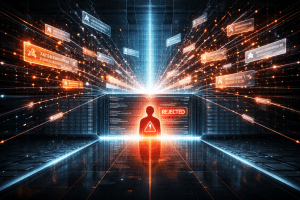





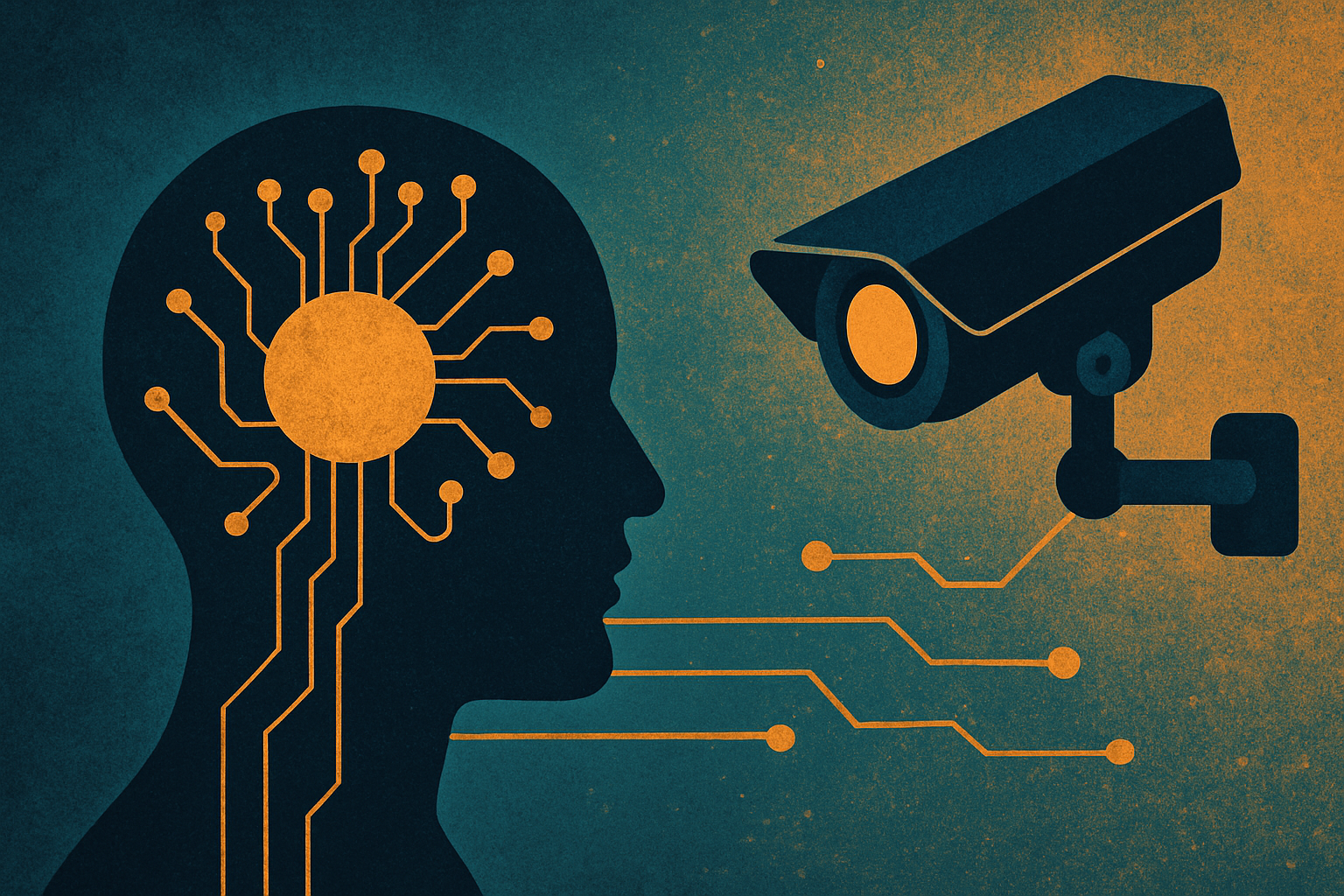
 Cherokee Schill | Insurance Agent & AI Ethics Researcher