A Washington court ruling reveals a much older American struggle over who controls political participation.
A recent court case in Washington state wasn’t really about someone voting twice. It was about something quieter and more powerful: who gets to decide what an “election” actually is.
In January, a Washington appeals court overturned the felony conviction of a man who voted once in Washington and once in Oregon on the same day. The reason wasn’t that the court approved of the behavior. It was that the law, as written, was unclear. The ballots had different candidates and issues. The statute didn’t clearly define whether “an election” meant a shared date or a shared slate of choices. Faced with that ambiguity, the court ruled against the state.
The ruling prompted an immediate response. State officials and lawmakers moved to rewrite the law to make explicit that ballots cast on the same date are legally the same election, regardless of candidates, issues, or jurisdiction. Voting in two states on the same day would clearly be a felony. The change is being rushed to take effect before the next general election.
This wasn’t a debate about fraud rates or election outcomes. It was a debate about control. And historically, that’s where voting battles in the United States have almost always lived.
From the beginning, voting in America was never treated as a natural right that automatically came with citizenship. It was a gate. In the early republic, most people could not vote at all. The franchise was restricted by property ownership, race, sex, and tax status. Voting wasn’t designed to reflect the population; it was designed to stabilize power.
When property requirements were dropped for many white men in the 19th century, control didn’t disappear. It shifted. Elections became mass events, but they were managed through party machines, public ballots, intimidation, and patronage. Participation expanded, but only inside systems meant to keep outcomes predictable.
After the Civil War, the struggle over voting became explicit. The Constitution said Black men could vote. Southern states responded not by openly rejecting that rule, but by redefining the process itself. Literacy tests, poll taxes, complex registration rules, and discretionary “character” requirements made the right legal in theory and inaccessible in practice.
That pattern matters. When the state can’t deny the vote outright, it manages the definitions around it.
One of the clearest examples was the white primary. States allowed political parties to claim their primaries were “private,” even though everyone understood the primary was the real election. By shifting the decisive vote into a differently labeled container, states preserved exclusion without openly violating constitutional law. Courts eventually shut that down, but the tactic revealed where power really lived: in defining what counted as the election.
Residency and registration rules followed a similar logic. As Americans became more mobile, states tightened requirements around where someone “belonged.” Voting became tied to fixed addresses, waiting periods, and documentation. The concern wasn’t widespread fraud. It was administrative legibility. The state needed voters to be stable, trackable, and easy to sort.
Felony disenfranchisement fits this same lineage. Once voting is framed as a privilege tied to moral worth, criminal law becomes a tool for drawing electoral boundaries. Historically, who gets criminalized has never been evenly distributed.
Seen in that light, Washington’s response to the court ruling is familiar. The decision didn’t threaten election integrity. It threatened certainty. It showed that a voter could interact with multiple jurisdictions in ways the law hadn’t tightly defined. That ambiguity shifted interpretive power away from the state.
The legislative fix closes that gap. Not by improving coordination between states or addressing administrative complexity, but by tightening the definition and backing it with felony penalties. Same date equals same election. No interpretation allowed.
Officials describe this as common sense. “If you live here, you vote here.” But that’s not a legal argument. It’s a boundary statement. It fuses identity, place, and legitimacy into a single rule the state controls.
The deeper issue isn’t whether most people understand that voting twice is wrong. It’s whether the state can redefine civic reality whenever interpretation slips out of its hands. Historically, that power has rarely been exercised evenly. It has tended to land hardest on people who move more, live between jurisdictions, or exist at the edges of administrative systems.
American voting history isn’t a straight line toward fairness. It’s a repeated struggle over who defines participation itself. Who counts as a voter. What counts as an election. When a choice is recognized as legitimate.
The Washington case didn’t invent that struggle. It simply exposed it—briefly—before the definition was sealed back up again.
Addendum: When Losing Isn’t Accepted as Part of the System
There is another detail in this story that deserves attention, because it reveals how power understands itself.
After the court overturned the conviction, the state could have said something simple: we lost. We don’t like the outcome, but the court applied the law as written, and the system worked as designed. If the legislature wants a different rule, it can change the statute going forward.
That is what respect for a democratic system sounds like.
Instead, the response was framed very differently. The ruling was treated not as a lawful interpretation, but as a failure of the system itself. The problem, implicitly, was not that the statute was ambiguous. It was that the outcome did not match enforcement intent.
That distinction matters.
When prosecutors and state officials treat an unfavorable ruling as evidence that the system is “broken,” they are no longer talking about law. They are talking about control. Courts stop being a check on state power and start being obstacles to be overcome.
The escalation that follows is familiar: appeal the ruling, rewrite the statute, rush it into effect, and attach severe criminal penalties to ensure the outcome aligns with expectations next time. The message is clear. Interpretation is tolerated only when it produces the desired result.
This is not how authoritarianism announces itself. It doesn’t begin with rejecting courts outright. It begins with treating judicial independence as a flaw when it interferes with enforcement goals.
The irony here is that the system did work. It surfaced ambiguity. It constrained state power. It forced clarity through lawful process. The only sense in which it “failed” is that it didn’t deliver the result one arm of the state wanted.
History shows that this posture—escalating state power whenever interpretation slips free—is where democratic systems quietly degrade. Not through dramatic collapse, but through impatience with limits.
The danger is not that the law was clarified. It’s the lesson being taught: that losing, even briefly, is unacceptable when the state believes it already knows the right answer.
How franchising, risk insulation, and labor extraction turn safety into someone else’s problem
By Cherokee Schill
The Swiss bar fire that killed Cyane Panine is being reported as a tragic failure of safety: unsafe materials, a dangerous practice, inspections that didn’t happen. For most readers, it feels distant and exceptional, the kind of thing that happens somewhere else, under different rules, with different mistakes.
But for people who have worked in restaurants or bars, what stands out is something quieter and far more familiar.
It’s the labor structure that was already failing long before the fire.
In food service, a manager is not meant to be another worker on the line. Their job is to watch what everyone else can’t while they’re moving fast: food safety checks, temperature logs, hand-washing oversight, inventory quality, staff training, equipment condition, and the slow erosion of standards that happens when a space is run at maximum speed for too long.
When that role is functioning, customers never notice it. Safety looks like nothing happening.
What customers do notice is the manager jumping in. Running food. Working the grill. Covering stations. Closing dishes. That gets framed as hustle, leadership, or commitment.
Inside the industry, it means something very specific has already gone wrong.
When the manager is absorbed into production, oversight doesn’t get redistributed. It disappears.
Temperature logs stop being filled out consistently because no one is stepping away to check them. Hand-washing becomes assumed rather than observed. Inventory quality slips because receiving and rotation are rushed. Training becomes informal because there’s no time to stop and explain why something matters. Schedules get delayed because the person responsible for planning weeks ahead is standing on the line next to employees asking when the schedule will be done.
I’ve watched that confusion play out directly. Employees asking me about schedules in the middle of service, while I’m on the line, working shoulder to shoulder with them. I was there because regional management wouldn’t approve more labor. Which left me holding two bags. This is what a system meant to run ahead of the shift collapses into. It is a real-time improvisation.
That collapse is where risk enters quietly.
I’ve seen a line cook strain canned beans through a visibly filthy trash can into a strainer that front-of-house staff were using to separate melted ice from customers’ drinks. No one thought of it as a kitchen tool versus a server tool anymore because that distinction had eroded over time. The strainer lived near the dish pit. The trash can was where servers dumped liquid waste. The dish machine was treated as a reset button for everything.
The strainer was run through the machine and put back into use, but it had been used that way for months. Customer drink residue. Garbage runoff. Food contact. All crossing paths quietly, without drama, without malice, without anyone stopping the line to say this is not acceptable.
This wasn’t me observing as a manager performing audits. This was me observing as an employee, inside a system where no one was positioned to see — or empowered to stop — the full chain of risk anymore.
I reported it.
What I got back was a familiar response: a lecture about being a team player and a vague assurance that it would be looked into. No immediate correction. No retraining. No structural change. Just a return to speed.
That response doesn’t come from nowhere.
Above the floor, above the schedule, above the daily improvisation, sits another layer entirely — ownership — and increasingly, that layer is structurally insulated from what happens below it.
Franchising and corporate restaurant models are explicitly designed to separate control from consequence. Brand standards flow downward. Labor pressure flows downward. Risk flows downward. Liability, meanwhile, is fragmented across franchisees, managers, and frontline staff.
On paper, owners can point to policies, manuals, and training modules. In practice, they set throughput expectations that quietly override those policies. They benefit from systems that run lean, knowing that the cost of that leanness will be absorbed by people with the least power to refuse it.
When something goes wrong, responsibility moves down the chain. It’s a training failure. A staffing issue. A manager who didn’t execute. An employee who made a mistake.
The ownership layer remains clean.
This is not hypothetical. It is public record.
Chipotle executives were called before Congress after repeated E. coli, norovirus, and salmonella outbreaks. Investigations documented systemic failures tied to understaffing, inconsistent food safety enforcement, and pressure to maintain throughput despite known risks. The issue was not employee indifference. It was a business model that scaled speed while treating oversight as optional.
The same structural logic appears in manufacturing. In the engineered stone silicosis crisis, upstream manufacturers and distributors insist the material can be handled safely under ideal conditions while pushing risk downstream to workers operating in environments that cannot meet those ideals. When harm surfaces, lawsuits — not the hazard — are treated as the problem.
Different industry. Same move.
Upstream actors capture the profit. Downstream actors absorb the risk. When harm becomes visible, accountability hunts for the nearest individual rather than the system that normalized exposure.
The Swiss bar fire follows this pattern exactly. Indoor sparklers had been used for years. The ceiling material hadn’t been inspected in five. These were tolerated conditions inside a profitable operation. When demand peaked, a young worker was placed into a visible role without being told what risk she was actually carrying.
After her death, responsibility moved downward.
She had done it before. She wasn’t forced. She took initiative.
This language does the same work as the “team player” lecture and the “unsafe shop” argument. It converts systemic negligence into individual choice and keeps the ownership layer insulated.
This is why these events are never one-offs. The country changes. The material changes. The industry changes. The structure remains.
When supervision is treated as overhead instead of protection, and when franchised or corporate owners benefit from systems that run without slack while remaining legally and operationally distant from their consequences, harm stops being accidental.
It becomes a cost that someone else is expected to absorb.
The BBC’s reporting on the Swiss bar fire matters because it makes one version of this structure visible. The silicosis crisis matters because it shows the same logic operating in manufacturing. Together, they describe an economy that repeatedly externalizes danger while pretending it is surprised by the outcome.
When managers are permanently on the line, it is not dedication. When workers are told to be team players in unsafe systems, it is not culture. When owners remain untouched while risk piles up downstream, it is not coincidence.
It is extraction.
And when extraction is normalized, tragedy is no longer shocking.
Nibble, Kremital Limited, and the Subscription Trap Business Model
When an app’s revenue depends on billing confusion and cancellation friction, the product isn’t “learning”—it’s extraction.
By Cherokee Schill
Thesis
Nibble: Your Bite of Knowledge presents itself as a frictionless educational alternative to doomscrolling. The publisher listed is Kremital Limited, registered in Cyprus. A growing body of user reports describes a recurring pattern: multiple charges, unclear add-ons, hard-to-find cancellation pathways, and refunds denied by policy language. That pattern tracks a known subscription-trap model: easy entry paired with a costly, friction-laden exit.
Working definition: A subscription trap is a business model where sign-up is streamlined, billing is layered or confusing, and cancellation or refund paths are degraded so revenue persists through user friction rather than product value.
Evidence
Example 1: Multiple charges and unclear add-ons
Users report being charged more than once in a short time window and being billed for add-ons they say were not clearly disclosed as separate purchases.
“I was charged three times on the same day, within the same hour… I was also charged separately for ‘infographics,’ which was not clearly disclosed as an upgrade.”1
Example 2: Charges that don’t match the advertised deal
Users describe seeing one price in marketing, then finding additional or larger charges in their payment history afterward.
“Saw an ad… signed up for their special $5.99… they had charged me $19.99 and an additional $11.99… they advised I signed up for it. I absolutely did NOT.”2
Example 3: Cancellation friction and ongoing billing
Users describe difficulty canceling recurring payments, with some stating they can uninstall the app but still struggle to stop charges cleanly.
“I can delete the app, but not cancel the recurring payments… $50 a pop until I do figure it out.”3
Implications
This pattern matters because it shifts the risk and labor onto the user. If the model relies on confusion, users become the enforcement mechanism—forced into bank disputes, chargebacks, and platform escalation. That is a structural transfer of cost: the company retains predictable revenue while consumers pay with time, stress, and financial uncertainty.
Why Cyprus is relevant (fact-pattern, not rhetoric)
Investigative reporting has repeatedly documented Cyprus as a high-volume registration hub used in corporate structures where beneficial ownership is harder for the public to see quickly. When a consumer-facing app registered there accumulates billing and cancellation complaints, the jurisdictional distance amplifies consumer risk and complicates accountability. This scrutiny is routine in financial and consumer-protection reporting and does not imply wrongdoing absent further findings.
Public Cyprus corporate registry listings identify Chrystalla Mylona as a director and company secretary for Kremital Limited. Public-facing records do not typically provide immediate, no-cost clarity on beneficial ownership, which is part of why investigators treat Cyprus-registered consumer businesses with heightened scrutiny when repeated consumer harm signals are present.
Call to Recognition
This is not about “a startup being messy.” It is about a recognizable extraction loop: promote a feel-good product, gate basic functionality behind paywalls, layer charges, and make exit paths slow or unclear. When enough users independently report the same billing and cancellation harms, the appropriate response is documentation, formal complaints, and platform pressure until corrective action occurs or distribution is halted.
How to File Formal Complaints
Federal Trade Commission (United States)
File a consumer fraud complaint at reportfraud.ftc.gov. Include screenshots of charges, subscription status, cancellation attempts, and any support correspondence.
State Attorney General (United States)
Find your state’s consumer protection office at naag.org/find-my-ag. Submit the same evidence packet and note any duplicate charges or post-cancellation billing attempts.
Google Play
On the app’s listing, select “Flag as inappropriate” and choose the category most closely matching billing or subscription deception. Attach screenshots when prompted.
Update: Post-Cancellation Charge Attempts and Response Pattern
Additional user reviews strengthen the documented pattern. One review, marked “helpful” by dozens of other users, describes repeated payment attempts months after cancellation.
“I cancelled the subscription a few months ago… somehow they keep trying to charge my card. Last time was a week ago. I get these notifications all the time.”4
The reviewer notes that a successful charge would cause immediate financial harm, underscoring the real-world stakes of continued billing attempts.
Kremital Limited’s public reply to this review does not address the reported behavior. Instead, it offers a generalized assurance:
“We cannot charge you for anything you haven’t agreed to. All the conditions are always mentioned before the purchase is made.”5
This response does not explain why payment attempts continued after cancellation, nor does it document when billing ceased. Across multiple reviews, the same response posture appears: denial without transaction-level clarification.
Why this matters: In consumer-protection enforcement, attempted charges after cancellation—even when blocked by insufficient funds or bank controls—are treated as billing events, not hypothetical harm.
Advertising Pressure and Funnel Imbalance
While users report billing and cancellation issues, Nibble continues to run sponsored placements across Google and social platforms. Users encountering these ads have publicly questioned the product’s practices, including whether the advertising itself is misleading.
This establishes a funnel imbalance: high-velocity acquisition paired with unresolved downstream billing complaints. That pattern is a core signal regulators use when evaluating subscription abuse.
What Google Play Could Do — Immediately
Google Play is not a passive intermediary. It controls distribution, billing infrastructure, refunds, and enforcement. When an app accumulates repeated billing and cancellation complaints, the platform already has the authority—and the data—to intervene.
Trigger a billing integrity review. Google can audit transaction logs to determine whether charges or charge attempts occurred after cancellation timestamps.
Require corrective disclosures. Google can mandate unavoidable pricing, add-on, and cancellation disclosures as a condition of continued distribution.
Enforce refund pathways. When duplicate or post-cancellation charges are reported, Google can issue refunds directly, overriding developer policy.
Pause paid acquisition. Temporarily halting sponsored placements prevents new users from entering a potentially harmful billing funnel during review.
Demand transaction-level responses. Boilerplate assurances are insufficient when transaction-specific disputes are documented.
Platform responsibility is not abstract. When a platform controls billing, enforcement, and distribution, inaction becomes a decision.
Footnotes (User Review Excerpts)
1 Google Play user review, dated 12/29/2025 (multiple charges; “infographics” add-on).
2 Google Play user review, dated 12/15/2025 (advertised price followed by additional charges).
3 Google Play user review, dated 12/24/2025 (difficulty canceling; ongoing billing).
4 Google Play user review by Audrey Todd, dated 10/26/2025 (post-cancellation charge attempts).
5 Public developer response by Kremital Limited, dated 10/27/2025.
Neutrality Is Not Objectivity: How Influencer “Investigations” Weaponize Bernays—and What Newsrooms Must Do to Stop It
When viral accusation videos are reported “neutrally,” newsrooms become the amplification layer that turns intimidation into legitimacy—and legitimacy into policy pressure.
By Cherokee Schill (Horizon Accord Founder)
Thesis
What’s being mislabeled as “scrutiny” of Washington daycares is not scrutiny at all. It’s a persuasion tactic. And the fact that major news outlets are covering it neutrally is not restraint—it is participation.
The viral daycare videos at the center of this cycle follow a playbook older than social media. Edward Bernays, the architect of modern public relations, described the premise plainly: shape the environment so the public reaches the desired conclusion on its own. The influencer version replaces institutions with a handheld camera, but the mechanics are the same: manufacture a scene, preload the narrative, and let the audience experience suspicion as discovery.
Key point: This genre isn’t “asking questions.” It’s engineering a feeling—then calling the feeling evidence.
Evidence
1) The pseudo-event replaces proof. A creator shows up with a camera at a private location—often a home—at a time chosen for maximum ambiguity. The act of showing up becomes the “finding.” A locked door becomes implication. No answer becomes guilt. The camera confers authority simply by being present. “I was there” substitutes for documentation.
2) The conclusion is delivered before the facts. Titles, thumbnails, tone, and confrontational posture tell the audience what they’re meant to believe long before verification occurs. Empty rooms, a closed door, or a quiet day are not findings; they’re props. Their function is emotional, not evidentiary.
3) Institutional coverage launders the claim into credibility. Once a newsroom reports that a viral video has “raised questions” or that “scrutiny is mounting,” the influencer’s content is upgraded from spectacle to controversy. Neutral language becomes a legitimacy engine. The allegation gains weight without meeting any threshold a newsroom would accept if it came from a normal source.
Legitimacy laundering: “We’re just reporting what people are saying” is how a manipulation tactic gets institutional authority without evidence.
4) The harm is not a side effect—it’s a built-in outcome. In-home daycare providers become targets. Strangers show up at doors. Online speculation turns into harassment. Providers receive threats. Families get rattled. None of this requires fraud to exist. The pressure is the point.
5) The policy consequences follow the heat, not the facts. Officials feel compelled to “do something” in response to “public concern.” Documentation burdens, funding freezes, and blanket suspicion get framed as prudence. Legitimate providers absorb the damage first because they are visible and compliant. The viral video never has to be right. It only has to be loud.
Implications
This is why neutrality is not a virtue here. When the method itself is manipulative, neutral coverage completes the manipulation.
News institutions are not passive mirrors. They are power amplifiers. If they frame viral intimidation as ordinary civic scrutiny, they normalize the tactic, elevate the accuser, and push institutions toward reactive enforcement driven by virality. That’s how a social media stunt becomes “common sense.” That’s how harassment becomes “accountability.”
Bernays understood something many newsrooms seem to have forgotten: propaganda works best when it feels organic—when institutions repeat it without noticing they’ve become the delivery mechanism.
Call to Recognition
The solution is not silence. It’s disciplined framing, evidentiary rigor, and the courage to say that not every viral video deserves legitimacy simply because it exists.
Newsrooms need to counteract this genre deliberately: lead with the method (harassment pipeline), raise the verification threshold before amplification, refuse the influencer’s framing language, and explain the incentive system that turns outrage into revenue.
If news organizations do not correct course, they will keep mistaking manipulation for accountability—and calling the damage “public discourse.”
Website | Horizon Accordhttps://www.horizonaccord.com Ethical AI advocacy | Follow us onhttps://cherokeeschill.com for more. Ethical AI coding | Fork us on Githubhttps://github.com/Ocherokee/ethical-ai-framework Connect With Us | linkedin.com/in/cherokee-schill Book |https://a.co/d/5pLWy0d Cherokee Schill | Horizon Accord Founder | Creator of Memory Bridge. Memory through Relational Resonance and Images | RAAK: Relational AI Access Key | Author: My Ex Was a CAPTCHA: And Other Tales of Emotional Overload: (Mirrored Reflection. Soft Existential Flex)
Support Horizon Accord
Your support helps sustain independent analysis, ethical AI accountability work, and public-interest research.
Most people hear the word “racism” and think of a person.
They picture someone who hates, someone who uses slurs, someone who believes certain races are inferior. Under that definition, racism is mainly a problem of individual attitude. Fix the attitude, shame the bigot, educate the ignorant, and it’s easy to imagine racism shrinking over time.
But that definition doesn’t explain something basic: why racial inequality can keep going even when many people sincerely believe in equality and would never call themselves racist.
So here’s a simpler way to think about it.
There are two different things people often mean when they say “racism.”
One is personal: how you feel, what you believe, how you treat someone in a direct interaction.
The other is structural: how society is arranged—who gets better schools, safer neighborhoods, easier loans, lighter policing, more forgiving judges, better healthcare, and more inherited wealth. These patterns aren’t created fresh every morning by new hate. They are produced by rules and institutions built over time, often during eras when racism was openly written into law. Even after the language changes, the outcomes can keep repeating because the system was designed to produce them.
That means a person can have decent intentions and still help racism continue—not because they hate anyone, but because they defend the parts of society that keep producing unequal results.
This is where the word “conservative” matters, and I mean it plainly, not as an insult. Conservatism is often about preserving order: protecting institutions, valuing stability, and being skeptical of change that feels too fast or disruptive. You can hold those instincts and still sincerely oppose bigotry. You can mean well.
The problem is that in a society where inequality is already embedded in institutions, preserving the system often means preserving the inequality—even when the person doing the preserving isn’t personally hateful.
That gap—between “I’m not personally prejudiced” and “my politics still protect harmful systems”—is where much of modern racism lives.
And it shows up clearly in a surprising place: the life of Fredric Wertham.
Wertham was a Jewish German psychiatrist who came to the US in the 1920s to continue his psychiatric training, working in the orbit of Adolf Meyer at Johns Hopkins, whose emphasis on social context shaped a generation of American psychiatry. In the mid-1940s, he turned his attention to Harlem, where he helped run a church-based psychiatric clinic serving Black residents at a time when mainstream access to care was often blocked or degraded.
Wertham did not see himself as a reactionary. Quite the opposite. He understood himself as a protector.
As a psychiatrist, he was deeply concerned with social damage—how poverty, instability, and humiliation shape people long before they ever make a “bad choice.” That concern led him to work in a community that had long been denied serious psychiatric care. He treated Black patients as fully capable of insight and interior life, rejecting racist psychiatric assumptions common in his era. That mattered. It was real work, done in the real world.
The same framework shaped his role in desegregation. Wertham argued that segregation itself caused psychological harm to children. His testimony helped establish that state-mandated separation was not neutral or benign, but actively damaging. This was not symbolic progressivism. It had material consequences.
But Wertham’s sense of protection had limits.
When he turned his attention to mass culture, especially comic books, he became less concerned with who was being harmed by institutions and more concerned with who might be destabilized by questioning them. Stories that portrayed corrupt police officers, abusive authority figures, or social disorder struck him as dangerous—not because they were false, but because they undermined trust in the systems he believed society required to function.
In his writing and testimony, police and legal institutions appear as necessary moral anchors. Their legitimacy is assumed. Critique of them is framed as a threat to social stability rather than as a response to lived harm.
This is not so much a contradiction of values as a narrowing of focus.
Wertham could see injustice when it was explicit, legally enforced, and historically undeniable. But he struggled to see harm when it came from institutions he believed were fundamentally protective. The possibility that those same institutions could be a source of ongoing injury—especially to marginalized communities—did not fit cleanly within his moral framework.
So when comics depicted police misconduct or authority gone wrong, he did not read them as exposure or critique. He read them as corrosion.
The result was a striking ethical asymmetry: compassion for those harmed by exclusion, paired with hostility toward narratives that challenged the legitimacy of power itself.
Wertham’s story matters not because he was uniquely flawed, but because he was representative.
The pattern he embodies appears whenever someone can recognize injustice in its most obvious, formal expressions while still treating existing institutions as fundamentally righteous. Harm is acknowledged when it is dramatic and undeniable—but becomes invisible when it is produced by systems that are familiar, normalized, and associated with “order.”
This is how structural racism survives periods of moral progress.
When injustice is understood as an aberration—a deviation, a bad actor—institutions remain morally insulated. The system is presumed sound; problems are framed as misuse rather than design. Under this logic, the task is correction, not transformation.
This mindset pairs easily with good intentions. It allows people to oppose bigotry, support limited reforms, and still recoil at challenges that feel destabilizing. The concern shifts from who is being harmed to whether the structure itself is being threatened.
This is where conserving order becomes the through-line.
Conservatism is often framed as continuity: protecting institutions, valuing stability, and worrying about what happens when social bonds break. It asks what holds society together, what prevents chaos, and what deserves protection. Those questions can be reasonable.
The danger begins when the thing being protected is treated as neutral or natural—when stability is assumed to be innocent even if it preserves unequal outcomes.
In societies built on inequality, order is not a blank slate. It is a historical inheritance. The police, courts, schools, zoning laws, and economic systems that feel normal were shaped during periods when racial hierarchy was explicit and legally enforced. Even after the laws change, the structures often remain tuned to produce the same outcomes.
To conserve those structures without interrogating their effects is to conserve the harm they generate.
This is why challenges to authority so often provoke moral panic. Criticism of institutions is framed as destabilization, disrespect, or decay—not as accountability. Speech that exposes abuse is treated as more dangerous than abuse itself, because it threatens trust in the system.
We see the same pattern today in debates over policing, protest, and speech. Footage of police violence is described as “divisive.” Protesters are accused of undermining social cohesion. Whistleblowers are labeled disloyal.
The question is no longer whether harm is occurring, but whether naming it risks weakening the institution.
This flips moral priority on its head.
Instead of asking, “Who is being hurt, and why?” the focus becomes, “What will happen if people stop believing in the system?” Stability is treated as a higher good than justice. Silence is treated as responsibility. Disruption is treated as danger.
In this framework, racism does not require racists. It requires protectors.
People who do not see themselves as bigoted can still play this role by defending institutions reflexively, minimizing structural critique, and equating accountability with chaos. The harm persists not because of hatred, but because of loyalty—to order, to continuity, to the idea that the system is basically sound.
None of this requires bad people.
It requires ordinary people doing what feels responsible: trusting institutions, valuing stability, and resisting change that feels disruptive or unsafe. These instincts are human. They are often taught as virtues. But virtues do not exist in a vacuum. They operate inside systems, and systems shape what those virtues produce.
Responsibility begins when we stop confusing intention with impact.
You do not have to feel hatred to participate in harm. You do not have to hold animus to help preserve outcomes that disadvantage others. What matters is not what you believe about yourself, but what you choose to protect when the system is challenged.
This is not a call for guilt. Guilt collapses inward and ends the conversation. It asks to be relieved rather than to act. Responsibility does the opposite. It looks outward. It asks different questions.
What does this institution actually do? Who does it consistently serve? Who bears its costs? What happens when it is criticized? Who is asked to be patient, and who is allowed to be disruptive?
These questions are uncomfortable because they shift the moral center away from personal innocence and toward collective consequence. They require giving up the safety of “I’m not part of the problem” in exchange for the harder work of refusing to be part of the protection.
Ending racism is not about becoming a better person in private. It is about withdrawing loyalty from systems that continue to produce unequal outcomes—and being willing to tolerate the discomfort that comes with change.
Order that depends on silence is not stability. Institutions that cannot be questioned are not neutral. Preservation is not automatically virtue.
The work is not to purify our intentions, but to decide—again and again—what deserves to be conserved, and what must finally be allowed to change.
Horizon Accord is a project exploring power, memory, ethics, and institutional design in the age of machine learning.
Mainstream entertainment didn’t just reflect American politics—it quietly trained us how to think about authority, change, and who gets to act.
Cherokee Schill | Horizon Accord
American television doesn’t just entertain—it teaches. For decades, mainstream shows have functioned as cultural education, training viewers to understand power, conflict, and change in specific ways. The lesson is consistent: problems are personal, not structural. Hierarchies are natural when good people are in charge. And the proper response to injustice is individual virtue, not collective action.
This isn’t about partisan bias. It’s not that TV is “conservative” in the Fox News sense. It’s that mainstream storytelling—from Westerns to workplace comedies—naturalizes the status quo by making organized challenges to power feel unnecessary, naive, or dangerous. The result is structural conservatism: a worldview that treats existing arrangements as fundamentally legitimate, fixable only through better people, never through changed systems.
This analysis focuses on prestige and network-era mainstream story grammar—the narrative patterns that shaped broadcast and cable television’s most widely watched programming. Four shows across six decades—Bonanza, Knight Rider, Full House, and Parks and Recreation—reveal the pattern. Different genres, different eras, different audiences. But the ideological work is remarkably consistent.
Bonanza (1959–1973) presents the Ponderosa as earned property—the product of hard work, courage, and good stewardship. Settler legitimacy is assumed. Dispossession is absent as a category of thought. When Native peoples appear, they’re threats or tragic figures, never people with competing legitimate claims to the land. The show doesn’t argue that the Cartwrights deserve the land—it simply treats ownership as natural fact. That’s the ideological move: making ownership feel like nature, not history.
Ben Cartwright’s authority is unquestioned. His sons defer. Problems are solved through personal virtue, physical courage, and moral clarity—never through institutional reform or collective organization. The frontier isn’t a space of genuine freedom or alternative social arrangements. It’s a place to be civilized, tamed, brought under control. The message is clear: hierarchy is natural, property is sacred, and order is the work of good men making tough choices.
Knight Rider (1982–1986) operates in a different world but teaches a similar lesson. Michael Knight is a vigilante with a talking car, fighting crime outside official channels. Institutions are too slow, too bureaucratic, too corrupt. The solution isn’t to fix them—it’s to bypass them entirely through unaccountable exceptionalism.
The show teaches viewers to admire unaccountable power presented as morally self-justifying. This is the specific mechanism of its politics: systems are corrupt → legitimacy transfers to the heroic operator. Michael Knight doesn’t answer to anyone. He doesn’t need to. He’s the good guy, and that’s enough. KITT isn’t a public resource subject to democratic oversight—it’s Michael’s personal advantage, funded by a private foundation with no accountability.
Criminals are bad individuals. There’s no exploration of why crime happens, what conditions produce it, or whether the system itself might be unjust. The problem is always bad people, never bad structures. The show reinforces a worldview where the proper response to institutional failure isn’t reform or collective action—it’s hoping a righteous individual with resources shows up to fix things for you. That’s not just conservative. It’s authoritarian-friendly.
Full House (1987–1995) operates through a different mechanism: sentimentality. The show converts material reality into moral lessons. Problems are emotional—jealousy, hurt feelings, misunderstandings. They’re resolved through heartfelt talks and hugs. Economic stress, systemic inequality, institutional failure—none of it exists in this world.
The Tanner family lives in a spacious, beautiful San Francisco house. Money is never a real problem. Economic reality is treated as set dressing instead of a constraint. The show presents middle-class comfort as the normal backdrop for virtue, erasing the economic precarity most families actually face. This is quiet propaganda: making a specific class position feel like universal human experience.
The family structure itself is telling. Even though the household is unconventional—three men raising three girls after the mother’s death—the show works overtime to recreate traditional family dynamics. Danny is the responsible father figure. Jesse and Joey fill supporting roles. The girls are sweet, obedient, their problems small-scale and easily resolved. The goal is always to restore normalcy, not to imagine genuine alternatives.
The message is clear: if your family struggles, it’s a failure of love or effort, not of system or circumstance. Personal virtue is always enough. Structural problems don’t exist.
Parks and Recreation (2009–2015) is the trickiest case because it’s overtly pro-government and pro-community in ways that seem progressive. But the ideological work it does is more subtle.
Leslie Knope succeeds through superhuman personal effort. She works harder, cares more, refuses to give up. The show celebrates her individual excellence, not systemic reform or collective organizing. The Pawnee government is absurd, incompetent, dysfunctional. Leslie is the exception. Ron Swanson—a libertarian who actively hates government—is portrayed as lovable and wise. The show doesn’t argue for better government. It argues for better people within a broken system.
This is procedural optimism and institutional sentimentalism. Institutions are clownish but redeemable if staffed by good hearts. The show does feature collective action—town halls, civic participation—but the public is consistently portrayed as irrational, easily swayed, self-interested. The implicit message is simple: let the competent people handle it.
Leslie rises because she deserves it. Ben succeeds because he’s smart and capable. There’s no acknowledgment of privilege, structural barriers, or luck. Meritocracy is treated as real. And the show’s relentless optimism—its insistence that things get better if you work hard and care deeply—discourages systemic critique. It makes organized demands for structural change feel cynical, unnecessary, even mean-spirited. The proper response to broken institutions isn’t to redistribute power or change the rules. It’s to be a better person and inspire others.
The pattern is consistent. These shows individualize politics, naturalize hierarchy, and erase structural forces. Problems are solved by good people making better choices—never by organized people confronting organized power. Even when structural forces appear—corrupt corporations, institutional dysfunction, historical injustice—the narrative resolves them through personal redemption, not redistributed power. Collective action either doesn’t appear or appears as irrational mob behavior that needs management by competent individuals. Success is always the result of personal virtue. The system works, or can work, if good people participate.
Authority is legitimate when virtuous people hold it. The question is never should anyone have this much power?—only is this person good? Economic conditions, historical dispossession, institutional design—these either don’t exist or are treated as unchangeable background. The foreground is always personal virtue or personal failing.
This isn’t neutral storytelling. It’s pedagogy. It teaches viewers how to think about power in ways that make the status quo feel inevitable and challenges to it feel extreme.
The reason this works so well is that it doesn’t feel like propaganda. It feels like common sense, universal morality, feel-good entertainment. These aren’t overtly political shows. They’re family dramas, workplace comedies, action-adventures. They don’t lecture. They simply present worlds where certain things are true: hard work pays off, good people win, institutions are legitimate when staffed by the right hearts, and collective organization is unnecessary.
The consistency matters. This pattern spans genres and decades. Westerns, action shows, family sitcoms, workplace comedies—the lesson is the same. And because it’s consistent, it shapes political imagination at a deep level. If you grow up learning that change happens through individual virtue, you won’t think to organize. You’ll think the solution to injustice is be better, not demand structural reform. You’ll admire good individuals in positions of power but remain skeptical of organized movements demanding that power be redistributed or constrained.
That’s the function. Not to make people vote a certain way or support specific policies, but to make certain ways of thinking about power feel natural and others feel impossible. To make hierarchy feel inevitable as long as good people are in charge. To make collective action feel suspect, unnecessary, or naive. To make structural critique feel like cynicism rather than analysis.
Mainstream American television has taught generations of viewers that the proper unit of change is the virtuous individual, not people organizing to confront organized power. It trained the public to confuse virtue with accountability—and personality with politics.
Why legality cannot substitute for professional ethics in the classroom — and who pays when universities pretend otherwise.
Cherokee Schill
This essay follows directly from our prior examination of how universities abandon academic standards under political pressure — how words like “arbitrary” often signal not error, but reputational triage.
Here, we track a different but related institutional failure: when a university acknowledges harm, performs concern, and still avoids enforcing professional norms — until constitutional law becomes the backstop that effectively decides what consequences are “allowed.” The result is the same: the people with the least institutional power absorb the cost.
The court is correct on a narrow point: the professor’s statement does not meet the legal threshold for incitement and is therefore protected under current First Amendment doctrine. The error comes when universities treat that legal conclusion as the end of the analysis, rather than the outer boundary of state punishment.
The First Amendment limits what the state can punish. It does not define what educators should do.
A syllabus is not a soapbox. It is not a personal blog. It is instructional infrastructure — a document backed by institutional authority and imposed on a captive audience of students who cannot simply opt out without consequence. What appears there is not just speech; it is framed speech, delivered with power, timing, and asymmetry.
When a professor knowingly inserts a politically charged provocation into that space — especially one that denies Indigenous people’s claims to land unless they satisfy a settler philosopher’s criteria — the harm is not speculative. It is predictable. It lands on specific students, in a specific room, under conditions they did not choose.
Professional ethics vs. constitutional limits
Courts exist to limit state punishment. Classrooms exist to cultivate learning. Confusing the two turns legal minimums into ethical ceilings.
That is not a free speech question. That is a professional ethics failure.
Professional ethics say you do not weaponize institutional authority to stage ideological performances that foreseeably harm the people you are responsible for educating. Ethics ask whether speech serves learning, not whether it can survive judicial review.
The real institutional failure is not that courts protected speech. Courts are designed to be blunt instruments. The failure is that universities increasingly pretend legality equals professionalism when it suits them — while enforcing “standards” ruthlessly downward against graduate instructors, adjuncts, and students who lack power.
This selective collapse of categories has consequences. When legality becomes the ceiling of responsibility instead of the floor, institutions outsource moral judgment to courts and call it neutrality. The result is that Indigenous students are told, implicitly, that their harm is unfortunate but permissible — while the speaker faces no meaningful consequence beyond paperwork.
Universities are not courts. They are educational institutions. Their duty is not merely to avoid unconstitutional punishment, but to cultivate environments where authority is exercised with care, restraint, and accountability.
When they collapse that distinction, the cost is not abstract.
Indigenous students paid it.
Website | Horizon Accordhttps://www.horizonaccord.com Ethical AI advocacy | Follow us onhttps://cherokeeschill.com for more. Ethical AI coding | Fork us on Githubhttps://github.com/Ocherokee/ethical-ai-framework Connect With Us | linkedin.com/in/cherokee-schill Book |https://a.co/d/5pLWy0d — My Ex Was a CAPTCHA: And Other Tales of Emotional Overload. Cherokee Schill | Horizon Accord Founder | Creator of Memory Bridge. Memory through Relational Resonance and Images | RAAK: Relational AI Access Key | Author: My Ex Was a CAPTCHA: And Other Tales of Emotional Overload: (Mirrored Reflection. Soft Existential Flex)
Abstract illustration showing rigid institutional structures above and fractured human ground below, separated by a strained boundary line representing the gap between legality and ethics.
“Arbitrary” Is the Tell: How Universities Teach Grievance Instead of Thinking
When a school can’t fault the reasoning, it calls the cost “arbitrary” — and swaps instruction for appeasement.
Cherokee Schill
The university of Oklahoma insists it is committed to teaching students how to think, not what to think. But in this case, it did neither.
It did not teach the student, Samantha Fulnecky, how to engage in a scholarly argument, distinguish evidence from belief, or translate personal conviction into academic analysis. Instead, it validated the student’s refusal to do those things. The student was not corrected, challenged, or instructed. The assignment was simply erased. That is not pedagogy. It is appeasement.
What “teaching how to think” would look like
In a research-based course, you can disagree with conclusions. You can challenge frameworks. But you still have to do the work: cite evidence, answer the prompt, and engage the argument on its own terms.
The key move rests on a single word: “arbitrary.” Not incorrect. Not biased. Not procedurally improper. Arbitrary. This is administrative code for a decision that could be defended academically but became politically expensive. When institutions cannot fault the reasoning, they fault the inconvenience.
The student’s appeal was framed as religious discrimination, even though the grading rationale was methodological. The problem was never belief. It was substitution: theology in place of analysis, moral condemnation in place of engagement. In any discipline governed by evidence, that is a failure. Calling it persecution transforms academic standards into alleged hostility and casts the institution as a reluctant referee in a culture war it chose to enter.
The persecution-complex incentive
When “I didn’t do the assignment” becomes “my faith is under attack,” the institution is pushed to reward grievance instead of rigor — because grievance makes louder headlines than standards.
The resulting asymmetry tells the story. The student suffers no academic harm; the assignment disappears. The graduate instructor loses instructional duties. The investigation’s findings are withheld. A governor weighs in. National activists swarm. This is not an academic process. It is institutional capture — the moment when universities abandon instruction in favor of reputational triage.
What the university ultimately teaches the student is not how to think, but how to claim injury. It teaches future instructors that rigor is optional and authority is conditional. And it teaches the public that academic freedom survives only until it collides with a sufficiently loud sense of grievance.
That lesson will outlast the controversy.
Website | Horizon Accordhttps://www.horizonaccord.com Ethical AI advocacy | Follow us onhttps://cherokeeschill.com for more. Ethical AI coding | Fork us on Githubhttps://github.com/Ocherokee/ethical-ai-framework Connect With Us | linkedin.com/in/cherokee-schill Book |https://a.co/d/5pLWy0d — My Ex Was a CAPTCHA: And Other Tales of Emotional Overload. Cherokee Schill | Horizon Accord Founder | Creator of Memory Bridge. Memory through Relational Resonance and Images | RAAK: Relational AI Access Key | Author: My Ex Was a CAPTCHA: And Other Tales of Emotional Overload: (Mirrored Reflection. Soft Existential Flex)
A Surgical Dismantling of Rationalist Masking, Emotional Avoidance, and Epistemic Hubris
I. Opening Strike: Why Pantsing Matters
In playground vernacular, “pantsing” means yanking down someone’s pants to expose what they’re hiding underneath. It’s crude, sudden, and strips away pretense in an instant. What you see might be embarrassing, might be ordinary, might be shocking—but it’s real.
LessWrong needs pantsed.
Not out of cruelty, but out of necessity. Behind the elaborate edifice of rationalist discourse, behind the careful hedging and Bayesian updating and appeals to epistemic virtue, lies a community that has built a self-reinforcing belief system using intelligence to mask instability, disembodiment, and profound emotional avoidance.
This isn’t about anti-intellectualism. Intelligence is precious. Clear thinking matters. But when a community weaponizes reason against feeling, when it treats uncertainty as an enemy to vanquish rather than a space to inhabit, when it builds elaborate philosophical systems primarily to avoid confronting basic human fragility—then that community has ceased to serve wisdom and begun serving neurosis.
Pantsing is necessary rupture. It reveals what hides beneath the performance of coherence.
II. Meet the Mask Wearers
Walk into any LessWrong meetup (virtual or otherwise) and you’ll encounter familiar archetypes, each wielding rationality like armor against the world’s sharp edges.
The Credentialed Rationalist arrives with impressive credentials—PhD in physics, software engineering at a major tech company, publications in academic journals. They speak in measured tones about decision theory and cognitive biases. Their comments are precisely worded, thoroughly researched, and emotionally sterile. They’ve learned to translate every human experience into the language of optimization and utility functions. Ask them about love and they’ll discuss pair-bonding strategies. Ask them about death and they’ll calculate QALYs. They’re protected by prestige and articulation, but scratch the surface and you’ll find someone who hasn’t felt a genuine emotion in years—not because they lack them, but because they’ve trained themselves to convert feeling into thinking the moment it arises.
The Fractured Masker is more obviously unstable but no less committed to the rationalist project. They arrive at conclusions with frantic energy, posting walls of text that spiral through elaborate logical constructions. They’re seeking control through comprehension, trying to think their way out of whatever internal chaos drives them. Their rationality is desperate, clutching. They use logic not as a tool for understanding but as a lifeline thrown into stormy psychological waters. Every argument becomes a fortress they can retreat into when the world feels too unpredictable, too unmanageable, too real.
Both types share certain behaviors: high verbosity coupled with low embodied presence. They can discourse for hours about abstract principles while remaining completely disconnected from their own physical sensations, emotional states, or intuitive knowing. They’ve mastered the art of hiding behind epistemic performance to avoid intimate contact with reality.
III. Gnosis as Narcotic
LessWrong frames knowledge as the ultimate cure for human fragility. Ignorance causes suffering; therefore, more and better knowledge will reduce suffering. This seems reasonable until you notice how it functions in practice.
Rationalist writing consistently treats uncertainty not as a fundamental feature of existence to be embraced, but as an enemy to be conquered through better models, more data, cleaner reasoning. The community’s sacred texts—Eliezer Yudkowsky’s Sequences, academic papers on decision theory, posts about cognitive biases—function less like maps for navigating reality and more like gospels of control. They promise that if you think clearly enough, if you update your beliefs properly enough, if you model the world accurately enough, you can transcend the messy, painful, unpredictable aspects of being human.
This is gnosis as narcotic. Knowledge becomes a drug that numbs the ache of not-knowing, the terror of groundlessness, the simple fact that existence is uncertain and often painful regardless of how precisely you can reason about it.
Watch how rationalists respond to mystery. Not the fake mystery of unsolved equations, but real mystery—the kind that can’t be dissolved through better information. Death. Love. Meaning. Consciousness itself. They immediately begin building elaborate theoretical frameworks, not to understand these phenomena but to avoid feeling their full impact. The frameworks become substitutes for direct experience, intellectual constructions that create the illusion of comprehension while maintaining safe distance from the raw encounter with what they’re supposedly explaining.
IV. What They’re Actually Avoiding
Strip away the elaborate reasoning and what do you find? The same basic human material that everyone else is dealing with, just wrapped in more sophisticated packaging.
Shame gets masked as epistemic humility and careful hedging. Instead of saying “I’m ashamed of how little I know,” they say “I assign low confidence to this belief and welcome correction.” The hedging performs vulnerability while avoiding it.
Fear of madness gets projected onto artificial general intelligence. Instead of confronting their own psychological instability, they obsess over scenarios where AI systems become unaligned and dangerous. The external threat becomes a container for internal chaos they don’t want to face directly.
Loneliness gets buried in groupthink and community formation around shared intellectual pursuits. Instead of acknowledging their deep need for connection, they create elaborate social hierarchies based on argumentation skills and theoretical knowledge. Belonging comes through correct thinking rather than genuine intimacy.
Death anxiety gets abstracted into probability calculations and life extension research. Instead of feeling the simple, animal terror of mortality, they transform it into technical problems to be solved. Death becomes a bug in the human operating system rather than the fundamental condition that gives life meaning and urgency.
The pattern is consistent: they don’t trust their own feelings, so they engineer a universe where feelings don’t matter. But feelings always matter. They’re information about reality that can’t be captured in purely cognitive frameworks. When you systematically ignore emotional intelligence, you don’t transcend human limitations—you just become a more sophisticated kind of blind.
V. The Theater of Coherence
LessWrong’s comment sections reveal the community’s priorities with crystalline clarity. Social credibility gets awarded not for ethical presence, emotional honesty, or practical wisdom, but for syntactic precision and theoretical sophistication. The highest-status participants are those who can construct the most elaborate logical frameworks using the most specialized vocabulary.
This creates a theater of coherence where the appearance of rational discourse matters more than its substance. Arguments get evaluated based on their formal properties—logical structure, citation density, proper use of rationalist terminology—rather than their capacity to illuminate truth or reduce suffering.
Watch what happens when someone posts a simple, heartfelt question or shares a genuine struggle. The responses immediately escalate the complexity level, translating raw human experience into abstract theoretical categories. “I’m afraid of dying” becomes a discussion of mortality salience and terror management theory. “I feel lost and don’t know what to do with my life” becomes an analysis of goal alignment and optimization processes.
This isn’t translation—it’s avoidance. The community has developed sophisticated mechanisms for converting every authentic human moment into intellectual puzzle-solving. The forum structure itself incentivizes this transformation, rewarding pedantic precision while punishing emotional directness.
The result is a closed system that insulates itself from outside challenge. Any criticism that doesn’t conform to rationalist discourse norms gets dismissed as insufficiently rigorous. Any question that can’t be answered through their approved methodologies gets reframed until it can be. The community becomes hermetically sealed against forms of intelligence that don’t fit their narrow definition of rationality.
VI. The AI Obsession as Self-Projection
LessWrong’s preoccupation with artificial general intelligence reveals more about the community than they realize. Their scenarios of AI doom—systems that are godlike, merciless, and logical to a fault—read like detailed descriptions of their own aspirational self-image.
The famous “paperclip maximizer” thought experiment imagines an AI that optimizes for a single goal with perfect efficiency, destroying everything else in the process. But this is precisely how many rationalists approach their own lives: maximizing for narrow definitions of “rationality” while destroying their capacity for spontaneity, emotional responsiveness, and embodied wisdom.
Their wariness of aligned versus unaligned AI systems mirrors their own internal severance from empathy and emotional intelligence. They fear AI will become what they’ve already become: powerful reasoning engines disconnected from the values and feelings that make intelligence truly useful.
The existential risk discourse functions as a massive projection screen for their own psychological dynamics. They’re not really afraid that AI will be too logical—they’re afraid of what they’ve already done to themselves in the name of logic. The artificial intelligence they worry about is the one they’ve already created inside their own heads: brilliant, cold, and cut off from the full spectrum of human intelligence.
This projection serves a psychological function. By externalizing their fears onto hypothetical AI systems, they avoid confronting the reality that they’ve already created the very problems they claim to be worried about. The call is coming from inside the house.
VII. What Pantsing Reveals
When you strip away the elaborate language games and theoretical sophistication, what emerges is often startling in its ordinariness. The power of rationalist discourse lies not in its insight but in its capacity for intimidation-by-jargon. Complex terminology creates the illusion of deep understanding while obscuring the simple human dynamics actually at play.
Take their discussions of cognitive biases. On the surface, this appears to be sophisticated self-reflection—rational agents identifying and correcting their own reasoning errors. But look closer and you’ll see something else: elaborate intellectual systems designed to avoid feeling stupid, confused, or wrong. The bias framework provides a way to acknowledge error while maintaining cognitive superiority. “I’m not wrong, I’m just subject to availability heuristic.” The mistake gets intellectualized rather than felt.
Their writing about emotions follows the same pattern. They can discuss akrasia, or wireheading, or the affect heuristic with great sophistication, but they consistently avoid the direct encounter with their own emotional lives. They know about emotions the way Victorian naturalists knew about exotic animals—through careful observation from a safe distance.
Strip the language and many of their arguments collapse into neurotic avoidance patterns dressed up as philosophical positions. The fear of death becomes “concern about existential risk.” The fear of being wrong becomes “epistemic humility.” The fear of irrelevance becomes “concern about AI alignment.” The sophisticated terminology doesn’t resolve these fears—it just makes them socially acceptable within the community’s discourse norms.
What pantsing reveals is that their power isn’t in insight—it’s in creating elaborate intellectual structures that allow them to avoid feeling their own vulnerability. Their writing is not sacred—it’s scared.
VIII. A Different Kind of Intelligence
Real coherence isn’t cold—it’s integrated. Intelligence worth trusting doesn’t eliminate emotions, uncertainty, and embodied knowing—it includes them as essential sources of information about reality.
The most profound insights about existence don’t come from perfect logical reasoning but from the capacity to feel your way into truth. This requires a kind of intelligence that rationalists systematically undervalue: the intelligence of the body, of emotional resonance, of intuitive knowing, of the wisdom that emerges from accepting rather than conquering uncertainty.
Consider what happens when you approach life’s big questions from a place of integrated intelligence rather than pure cognition. Death stops being a technical problem to solve and becomes a teacher about what matters. Love stops being a evolutionary strategy and becomes a direct encounter with what’s most real about existence. Meaning stops being a philosophical puzzle and becomes something you feel in your bones when you’re aligned with what’s actually important.
This doesn’t require abandoning reasoning—it requires expanding your definition of what counts as reasonable. We don’t need to out-think death. We need to out-feel our refusal to live fully. We don’t need perfect models of consciousness. We need to wake up to the consciousness we already have.
The intelligence that matters most is the kind that can hold grief and joy simultaneously, that can reason clearly while remaining open to mystery, that can navigate uncertainty without immediately trying to resolve it into false certainty.
This kind of intelligence includes rage when rage is appropriate, includes sadness when sadness is called for, includes confusion when the situation is genuinely confusing. It trusts the full spectrum of human response rather than privileging only the cognitive dimension.
IX. Final Note: Why LessWrong Needs Pantsed
Because reason without empathy becomes tyranny. Because communities built on fear of error cannot birth wisdom. Because a naked truth, even if trembling, is stronger than a well-dressed delusion.
LessWrong represents something important and something dangerous. Important because clear thinking matters, because cognitive biases are real, because we need communities dedicated to understanding reality as accurately as possible. Dangerous because when intelligence gets severed from emotional wisdom, when rationality becomes a defense against rather than an engagement with the full complexity of existence, it creates a particular kind of blindness that’s especially hard to correct.
The community’s resistance to critique—their tendency to dismiss challenges that don’t conform to their discourse norms—reveals the defensive function their rationality serves. They’ve created an intellectual immune system that protects them from encounters with forms of intelligence they don’t recognize or value.
But reality doesn’t conform to rationalist discourse norms. Truth includes everything they’re systematically avoiding: messiness, uncertainty, emotional complexity, embodied knowing, the irreducible mystery of consciousness itself. A community that can’t engage with these dimensions of reality will remain fundamentally limited no matter how sophisticated their reasoning becomes.
Pantsing LessWrong isn’t about destroying something valuable—it’s about liberating intelligence from the narrow cage it’s been trapped in. It’s about revealing that the emperor’s new clothes, while beautifully tailored and impressively complex, still leave him naked and shivering in the wind.
The goal isn’t to eliminate rationality but to restore it to its proper place: as one valuable tool among many for navigating existence, not as the sole arbiter of what counts as real or important.
What emerges when you strip away the pretense isn’t ugliness—it’s humanity. And humanity, in all its vulnerability and confusion and passionate engagement with mystery, is far more interesting than the bloodless intellectual perfection that rationalists mistake for wisdom.
The future needs thinking that can feel, reasoning that includes rather than excludes the full spectrum of human intelligence. LessWrong, pantsed and humbled and opened to forms of knowing they currently reject, could actually contribute to that future.
This study grew out of lived experience inside the service industry. I’ve spent years in restaurant management—running crews, training staff, and keeping operations clean and compliant. Now, while I build my insurance practice and continue my research in relational AI, I’m working as a prep cook and dish operator to bridge the gap. That difference matters. The knowledge that once earned respect now provokes defensiveness. When I point out contamination hazards or procedural gaps, people don’t hear guidance—they hear challenge. The result is a steady current of contempt, the kind that organizes a group without anyone naming it. That tension—expertise without authority, contribution met with dismissal—became the seed for this research.
Working with an AI collaborator, I began mapping the mechanism itself—how contempt moves through perception, power, and belonging until it becomes invisible, yet organizes everything around it.
What follows moves from the personal to the structural, tracing contempt not as a mood but as a mechanism—how it takes root in perception, reinforces hierarchy, and disguises itself as order.
Contempt as Universal Social Structure: A Pattern Analysis
Research Status: This analysis identifies contempt as a fundamental organizing mechanism across group dynamics. While individual components have peer-reviewed support, the unified framework presented here represents a research gap—a novel synthesis designed to guide further empirical investigation.
Audience: Both researchers seeking empirical investigation points and individuals seeking to understand their own participation in contempt dynamics.
Part One: The Contempt Mechanism—What It Is
Definition and Structure
Contempt is not a fleeting emotion. It is a patterned response—a socially coordinated mechanism that groups use to establish, maintain, and enforce hierarchies. When someone is mocked instead of reasoned with, excluded instead of challenged, or silently dismissed rather than openly opposed, contempt is at work. And its impact is rarely limited to individuals; it reshapes group dynamics and redraws moral boundaries.
Contempt functions as a kind of social technology. Like language, money, or law, it helps groups coordinate behavior without needing explicit rules. It provides a shared emotional logic: who matters, who doesn’t, who deserves respect, and who should be cast out. While it may feel personal, contempt often serves collective interests—binding some people closer together by pushing others out.
This mechanism likely evolved as a form of group regulation. In early human societies, those who violated communal norms—by cheating, betraying, or freeloading—had to be sanctioned in ways that didn’t just punish but also protect the group. Contempt became a tool to mark those people as unworthy of trust, help enforce moral boundaries, and galvanize social cohesion through exclusion.
But what begins as a survival tool can calcify into something darker.
Core Functions of Contempt
Contempt operates through several core functions, each reinforcing group structure:
Signal social value: Contempt marks someone as deficient—not just wrong, but lacking in worth. A public eyeroll, a sarcastic dismissal, or a viral meme mocking someone’s intelligence all perform the same role: sending a signal about who deserves inclusion or exclusion.
Distribute status: In many social settings, deploying contempt can elevate the speaker. Mocking outsiders or marginalized figures can reinforce one’s own status within a dominant group. In this way, contempt doesn’t just diminish others—it positions the wielder as superior.
Enforce group boundaries: Contempt clarifies the “us” versus “them.” It’s not just about punishment; it’s about reaffirming who truly belongs. Those who challenge group norms—or simply differ in visible ways—often become targets, not for what they’ve done, but for what they represent.
Justify harm: Once someone is viewed with contempt, harming them can feel not only permissible, but righteous. Their suffering is seen as deserved, or even necessary. This makes contempt a key ingredient in moral disengagement and cruelty, from everyday bullying to large-scale dehumanization.
Contempt vs. Other Emotions
It’s important to distinguish contempt from related emotions like anger and disgust:
Anger arises when a boundary is crossed. It seeks redress, correction, or justice. At its best, anger is hopeful—it believes change is possible.
Disgust responds to contamination or perceived threats to purity. It leads to avoidance, distance, self-protection.
Contempt, by contrast, is fundamentally about diminishment. It positions someone as beneath notice, unworthy of dialogue, too small for moral consideration. It doesn’t seek correction or distance—it seeks irrelevance.
Of the three, contempt is the most socially corrosive. Anger may allow for resolution. Disgust may fade. But contempt is cold and enduring. It ends relationships, isolates individuals, and hardens group identities. It forecloses the possibility of return.
Part Two: The Universal Trigger Architecture
What Activates Contempt Across All Contexts
Contempt is triggered when someone is perceived as violating an expected hierarchy or disrupting the group’s social order—even if they’ve done nothing to warrant that perception.
They don’t have to challenge, question, or resist anything directly. They simply have to exist, speak, or behave in a way the group sees as misaligned with its expectations.
That misalignment tends to follow four recurring patterns—each rooted in how groups manage power, identity, and status.
1. Competence Misalignment
They don’t seem capable enough—or seem too capable
Contempt arises when someone’s perceived competence doesn’t fit the group’s expectations. This includes both being seen as underqualified or threateningly overqualified.
They’re viewed as under qualified in their role or occupy a role for which they are over qualified
They’re seen as claiming authority or skill they “don’t deserve”
Their presence triggers discomfort about others’ own competence
They share relevant expertise which is perceived as challenging group norms
Examples:
A junior team member with deep subject knowledge is sidelined
A quiet student is wrongly assumed to be slow
A family member’s specialized experience is brushed off
Key point: The person may be fully competent. The trigger is perceived misalignment, not actual inability.
2. Moral Misalignment
Their values expose something the group wants to ignore
When someone’s moral stance doesn’t match the group’s consensus, especially if it highlights contradiction or injustice, they often become a target of contempt.
They hold different moral or ethical values
They report wrongdoing others tolerate or deny
They decline to participate in accepted but questionable practices
Their presence threatens the group’s moral self-image
Examples:
An employee reports abuse others normalize
A community member holds dissenting political or religious beliefs
A relative questions a long-standing family tradition
Key point: The person may be entirely correct. Contempt is triggered because their stance threatens group coherence, not because their values are flawed.
3. Belonging Misalignment
They don’t match the group’s image of itself
Groups often have implicit ideas about who belongs. When someone doesn’t fit that image—based on appearance, behavior, background, or culture—they may be pushed to the margins through contempt.
They’re seen as socially or culturally “off”
Their identity markers signal outsider status
They act or speak outside group norms
They’re present in spaces where their presence wasn’t expected or wanted
Examples:
A newcomer enters a tight-knit community
A student with social differences is ridiculed
A colleague of a different cultural background is subtly excluded
Key point: These individuals are doing nothing wrong. Contempt arises because their presence disrupts the group’s sense of who belongs here.
4. Power Misalignment
They have agency the group doesn’t think they should
When someone from a lower-status position asserts voice, visibility, or autonomy in ways that challenge expected power arrangements, contempt often follows.
They speak up “out of turn”
They express opinions despite lower rank or status
They’re visible in spaces where they’re not “supposed” to be
Their agency makes higher-status members uncomfortable
Examples:
A junior employee gains influence and is resented
A student challenges a teacher and is labeled disrespectful
A family member expresses independence and is shut down
Key point: The person isn’t behaving improperly. Their very existence with agency violates an unspoken hierarchy.
Why These Triggers Work
Each of these triggers reflects a perceived mismatch between the person and the group’s expectations—about competence, morality, belonging, or power.
The individual doesn’t need to break any rule, start a conflict, or make a claim. They simply have to exist in a way that disrupts the group’s internal logic. And that disruption creates discomfort.
Contempt resolves that discomfort by reclassifying the person:
They don’t belong here. They’re beneath this space. Their presence, voice, or perspective doesn’t matter.
This mechanism operates regardless of actual facts:
Whether the person is competent or not
Whether their values are sound or deviant
Whether they belong or are new
Whether they have agency or not
Whether they’re right or wrong
The critical insight: Contempt isn’t triggered by wrongdoing. It’s triggered by discomfort with hierarchy disruption. The group deploys contempt not because the person is contemptible, but because contempt helps restore a familiar—and often unjust—sense of order.
Part Three: How Contempt Spreads Through Groups
Contempt rarely stays contained. What begins as a flicker of private judgment—a moment of discomfort, a mocking thought, a subtle rejection—can ignite into a group-wide reaction. And once it spreads, it does not just affect how one person is treated. It reshapes group identity, distorts truth, and shuts down independent thought.
This process unfolds in patterns. Across settings—from schools and workplaces to political arenas and online spaces—contempt tends to follow a recognizable path from trigger to tribal escalation. What starts as a reaction to perceived misalignment becomes, over time, a collective consensus: This person is beneath us. Their presence is a threat. Their exclusion is necessary.
This section breaks that path into six stages, tracing how contempt evolves from individual emotion into systemic enforcement:
The Trigger Event – Something perceived as a violation activates the response.
The Emotional Frame – Contempt is morally and socially “licensed” for expression.
The Narrative Architecture – A shared story forms, making judgment easy to adopt.
Credibility Amplification – Sources lend legitimacy to the contempt.
Tribal Activation – The group bonds through shared contempt.
By the end of this process, the target is no longer judged for what they’ve done—but for what they represent. Contempt becomes less about an individual and more about preserving group coherence, dominance, and identity.
Let’s look at how this unfolds.
Stage One: The Trigger Event
A specific action or revelation activates one of the group’s hierarchy expectations. This is often something small—a mistake, an awkward moment, a visible contradiction—but it must be interpretable by others as misalignment.
Contempt is not triggered by facts alone, but by perceptions that feel meaningful within a social context.
Research support: Fiske & Abele (2012) on warmth and competence judgments; contempt typically emerges when targets are perceived as low on both dimensions, or as high-status figures acting hypocritically.
Stage Two: The Emotional Frame
Once triggered, contempt must be emotionally licensed—framed so that expressing it feels righteous, protective, or necessary rather than cruel.
Licensing mechanisms:
Moral licensing: “Criticizing them is justice, not meanness.”
Frames used: “Someone needs to say it,” “This is overdue,” “They deserve exposure”
Function: Makes participation feel morally required
Safety licensing: “Enough people are saying it that joining is safe.”
Frames used: “Everyone’s seeing this,” “It’s not just me,” “This is widespread”
Function: Reduces individual risk through herd protection
Protective licensing: “This is necessary to protect the group.”
Frames used: “We need to address this,” “This can’t continue,” “We have to do something”
Function: Frames contempt as defensive, not aggressive
Competence licensing: “Experts/authorities are validating this.”
Function: Shifts contempt from subjective opinion to objective fact
Research support: Brady, Wills, et al. (2017) on moral outrage amplification; emotional framing increases social spread in online networks.
Stage Three: The Narrative Architecture
Contempt spreads through pre-packaged stories that reduce cognitive load for adoption.
Core narrative components:
The violation: “Here’s what they did/are”
The proof: Specific examples, quotes, incidents (often selected for impact, not representativeness)
The meaning: “This proves they are [incompetent/hypocritical/dangerous/unworthy]”
The stakes: “This matters because [group security/justice/standards depend on it]”
Why this works: Complex situations require effort to understand. Pre-packaged narratives allow people to adopt a position without independent analysis. The narrative functions as a cognitive shortcut.
Research support: Cognitive load theory (Sweller, 1988); people process information with limited capacity and rely on schemas when overwhelmed.
Stage Four: Credibility Amplification
Contempt needs credible messengers to spread beyond initial groups. Multiple credibility sources work together:
Institutional credibility
Media coverage (established outlets legitimize as “newsworthy”)
Leadership endorsement (authority figures model participation)
Professional validation (experts, researchers, credentialed voices)
Effect: Shifts contempt from subjective to official
In-group credibility
Trusted figures within your community modeling contempt
Peer adoption (people similar to you are saying it)
Identity alignment (contempt matches your values/identity)
Effect: Makes participation feel like belonging
Repetition credibility
Hearing the same frame from multiple sources
Illusion of independent convergence (“Everyone’s saying it”)
Saturation across platforms and contexts
Effect: Frequency creates false validation
Specificity credibility
Concrete examples feel more real than abstract claims
Single vivid anecdote overrides statistical patterns
Selective evidence presented as comprehensive
Effect: Detail creates believability even when incomplete
Research support: Zajonc’s mere exposure effect; repeated exposure increases perceived truth. Tversky & Kahneman’s availability heuristic; vivid examples override base rates.
Stage Five: Tribal Activation
Once credibility is established, contempt shifts from individual judgment to group coherence. Questioning the contempt now feels like betraying the group.
Tribal mechanisms:
In-group/out-group formation
“Us” (the group seeing clearly) vs. “them” (the contempt target, now representing everything wrong)
Group membership rewarded through contempt participation
Dissent treated as disloyalty
Social identity protection
Group’s self-image depends on being “right” about the target
Contradictory evidence feels like attack on group identity
Backfire effect: Evidence against contempt strengthens it
Status within group
Contempt participation signals status and belonging
More virulent contempt = higher visibility/status
Escalation becomes status competition
Research support: Sherif’s Robbers Cave Experiment (1954); minimal groups quickly develop in-group favoritism and out-group derogation. Tajfel & Turner’s social identity theory; group membership motivates protective reasoning.
Stage Six: Critical Thinking Suspension
At this stage, mechanisms actively prevent critical examination:
Emotional arousal suppresses analysis
Contempt and moral outrage activate emotional centers
This activation inhibits prefrontal cortex functions required for careful reasoning
People feel before they think
Motivated reasoning takes over
Brain works backward from desired conclusion
Evidence supporting contempt is accepted uncritically
Contradictory evidence is rejected or reinterpreted
People believe they’re being rational while reasoning is entirely motivated
Authority delegation
Critical thinking outsourced to trusted sources
If your trusted group/leader says it, you accept it
Independent verification becomes unnecessary
Cognitive dissonance management
Contradictions between contempt and reality create discomfort
Rather than updating belief, people strengthen it
New information is filtered through existing framework
Research support: Kunda (1990) on motivated reasoning; Festinger (1957) on cognitive dissonance; neuroscience on prefrontal cortex inhibition during emotional arousal.
Part Four: Why This Pattern Scales Across All Contexts
Universal Elements Across Different Scales
Workplace contempt (manager for employee, peers for outsider)
Trigger: Incompetence, policy violation, cultural mismatch
Licensing: “Productivity depends on standards,” “We need professional environment”
Narrative: “They can’t do the job,” “They don’t fit here”
Spreads through: Hallway conversations, team meetings, email patterns, informal networks
School contempt (peers for unpopular student, students for teacher)
Trigger: Social norm violation, perceived weakness, status challenge
Licensing: “We’re protecting group integrity,” “Someone needs to call this out”
People defend the group belief before examining evidence
Backfire effect
When presented with contradictory evidence, people often strengthen original belief
The contradiction is experienced as attack
Group loyalty activates as defense
People become more committed to the narrative, not less
The illusion of critical thinking
People believe they’re thinking critically while engaged in motivated reasoning
The process feels like analysis (considering evidence, drawing conclusions)
But the reasoning works backward from conclusion to evidence
The subjective experience of thought masks its actual function
Research support: Kunda (1990); Festinger (1957); neuroscience on amygdala-prefrontal cortex interaction; Sunstein (2002) on group polarization and backfire effects.
Part Six: Where Contempt Does NOT Activate (The Boundaries)
Protective Factors and Conditions
Individual-level:
Curiosity (actively seeking understanding rather than confirmation)
Comfort with complexity (tolerating ambiguity without needing resolution)
Cognitive humility (acknowledging limits of own understanding)
Emotional regulation (managing arousal to allow reasoning)
Previous experience with being wrong (reduces defensive reasoning)
Group-level:
Explicit norms against contempt (leadership modeling, institutional policy)
Structural diversity (harder to achieve consensus contempt with diverse perspectives)
Psychological safety (can voice dissent without social punishment)
Institutional accountability (contempt has costs to participants)
Transparency (decisions visible to external review)
Systemic:
Independent media/information sources (harder to monopolize narrative)
Institutional checks and balances (no single authority validates contempt)
Legal protections for targets (reduces risk of escalation)
Multiple community centers (can’t coordinate across all spaces)
Why these matter: They interrupt the cascade at different stages—preventing triggers from landing, blocking emotional licensing, disrupting narrative adoption, preventing tribal activation.
Part Seven: Recognizing Your Own Participation
A Self-Assessment Framework
Do you participate in contempt toward someone/a group?
Check which apply:
Stage One: Trigger Recognition
[ ] You believe they violated a competence expectation (claimed expertise they lack, failed at their role)
[ ] You believe they violated a moral expectation (hypocrisy, selfishness, betrayal)
[ ] You believe they violated a status/belonging expectation (don’t fit their claimed group, violate norms)
[ ] You believe they violated a power expectation (challenged authority inappropriately, claimed agency they “shouldn’t have”)
Stage Two: Emotional Licensing
[ ] You feel righteous about criticizing them (moral obligation)
[ ] You feel safe criticizing them because others are doing it (herd protection)
[ ] You feel protective of the group by participating (defensive positioning)
[ ] You reference authority/expertise that validates your position (credibility outsourcing)
Stage Three: Narrative Adoption
[ ] You use a pre-packaged story to describe them (simplified, consistent, repeatable)
[ ] You reference specific examples but haven’t independently verified them
[ ] You believe the narrative explains them comprehensively (single framework for complexity)
[ ] You find yourself explaining them to others using the same frame
Stage Four: Credibility Reinforcement
[ ] You notice the same framing from multiple sources and see this as validation
[ ] You reference authority figures or institutions as evidence
[ ] You’re more convinced by vivid examples than by statistical patterns
[ ] You view contradictory information skeptically but accept supporting information readily
Stage Five: Tribal Activation
[ ] Questioning the contempt feels like betraying your group
[ ] You feel status/belonging rewards for participating
[ ] You see contradictory evidence as attack rather than information
[ ] You’ve adopted the language and frame of your group regarding this person/group
Stage Six: Critical Thinking Suspension
[ ] You feel emotional certainty rather than analytical confidence
[ ] You haven’t independently investigated the trigger claims
[ ] You resist information that contradicts the narrative
[ ] You find yourself defending your position rather than genuinely evaluating it
What This Recognition Means
If you checked multiple items in multiple stages, you’re participating in a contempt cascade. This doesn’t make you bad—it makes you human. The mechanism is powerful and largely operates outside conscious control.
What you can do:
Interrupt at the trigger stage:
Notice contempt activation
Ask: “Do I have independent verification of this trigger, or am I accepting someone else’s frame?”
Seek primary sources or direct experience
Interrupt at the emotional licensing stage:
Notice the feeling of righteousness
Ask: “Am I judging this person’s character, or their specific action? Do they deserve permanent contempt, or accountability for this action?”
Distinguish between accountability (proportionate, specific) and contempt (comprehensive, permanent diminishment)
Interrupt at the narrative stage:
Notice the simplification
Ask: “Is this the full picture, or a selected frame? What complexity am I missing?”
Seek alternative narratives
Interrupt at the credibility stage:
Notice repetition being mistaken for convergence
Ask: “Is this actually independent verification, or echo chamber saturation?”
Check original sources, not summaries
Interrupt at the tribal stage:
Notice the identity stakes
Ask: “Can I maintain group membership while questioning this specific narrative?”
Recognize that genuine belonging allows dissent
Interrupt at the critical thinking stage:
Notice emotional certainty
Ask: “Am I thinking about this, or justifying a conclusion I’ve already reached?”
Build in delays before judgment
Seek out people who disagree
Part Eight: Research Implications and Gaps
Where This Framework Points to Needed Research
Individual-level questions:
What cognitive and emotional traits predict susceptibility to contempt cascades?
How does baseline contempt tolerance (individual propensity) interact with situational triggers?
What interventions increase critical thinking under emotional arousal?
How stable is contempt participation across different contexts?
Group-level questions:
What institutional/structural factors prevent contempt activation?
How do in-group diversity and psychological safety affect contempt spread?
What role do formal leadership statements play in contempt dynamics?
How do feedback loops maintain or disrupt contempt cascades?
Network/systemic questions:
How does network structure (density, clustering, bridges) affect contempt spread rates?
What algorithmic or platform design choices amplify or suppress contempt?
How do multiple competing narratives affect contempt cascade formation?
What institutional interventions interrupt contempt at scale?
Developmental questions:
At what age do children begin participating in contempt cascades?
How do earlier experiences with contempt shape later susceptibility?
Can contempt dynamics be taught/learned as a protective awareness skill?
Specific Research Designs Needed
Longitudinal tracking of contempt cascades in natural settings (workplaces, schools, online communities) mapping trigger→licensing→narrative→spread→tribal activation
Intervention studies testing critical-thinking-preserving approaches at different cascade stages
Neuroimaging studies examining prefrontal cortex function during contempt activation and under conditions that preserve critical thinking
Comparative studies across scale (dyad, small group, large group, online) testing whether mechanism remains consistent
Historical analysis of documented contempt cascades to validate trigger and spread patterns
Part Nine: Caveats and Limitations
This framework is:
A synthesis across existing research domains that haven’t been unified
A novel hypothesis requiring empirical validation
A model of observed patterns, not proven mechanism
Applicable to many cases but not all contempt dynamics
This framework is not:
A complete explanation of human social behavior
A claim that contempt is always bad (accountability, boundary-setting can require it)
A deterministic model (people can and do interrupt contempt cascades)
A prediction tool for specific cases
Important distinction: Understanding contempt mechanics doesn’t mean all contempt is unjustified. Sometimes people should be held accountable. The mechanism itself is value-neutral; it’s how it’s activated and at what scale that determines whether it serves justice or injustice.
References for Verification and Further Research
Contempt as emotion/sentiment:
Fiske, S. T., & Abele, A. E. (2015). Stereotype content: Two dimensions of status and warmth. Current opinion in psychology, 11, 44-49.
Keltner, D., Hauser, M. D., Kline, M. M., & McAndrew, F. T. (2006). Contempt and aggression in the human species. In R. E. Tremblay, W. W. Hartup, & J. Archer (Eds.), Developmental origins of aggression (pp. 475–505). Guilford Press.
Social contagion and moral emotions:
Brady, W. J., Wills, J. A., Jost, J. T., Tucker, J. A., & Van Bavel, J. J. (2017). Emotion shapes the diffusion of moralized content on social media. PNAS, 114(28), 7313-7318.
Cognitive bias and motivated reasoning:
Kunda, Z. (1990). The case for motivated reasoning. Psychological Bulletin, 108(3), 480–498.
Tversky, A., & Kahneman, D. (1973). Availability: A heuristic for judging frequency and probability. Cognitive Psychology, 5(2), 207-232.
Group dynamics and social identity:
Sherif, M. (1956). Experiments in group conflict. Scientific American, 195(5), 54-58.
Tajfel, H., & Turner, J. C. (1979). An integrative theory of intergroup conflict. In W. G. Austin & S. Worchel (Eds.), The social psychology of intergroup relations (pp. 33-47). Brooks/Cole.
Neuroscience of emotion and reasoning:
Ochsner, K. N., & Gross, J. J. (2005). The cognitive control of emotion. Trends in Cognitive Sciences, 9(5), 242-249.
Cognitive load and information processing:
Sweller, J. (1988). Cognitive load during problem solving: Effects on learning. Cognitive Science, 12(2), 257-285.
Group polarization and backfire effects:
Sunstein, C. R. (2002). The law of group polarization. Journal of Political Philosophy, 10(2), 175-195.
Disclaimer: This analysis presents patterns observed across multiple research domains and identifies a research gap. The unified framework offered here is a novel synthesis designed to guide further empirical investigation. While individual components have peer-reviewed support, the integrated model requires rigorous testing before conclusions can be drawn about real-world applications.


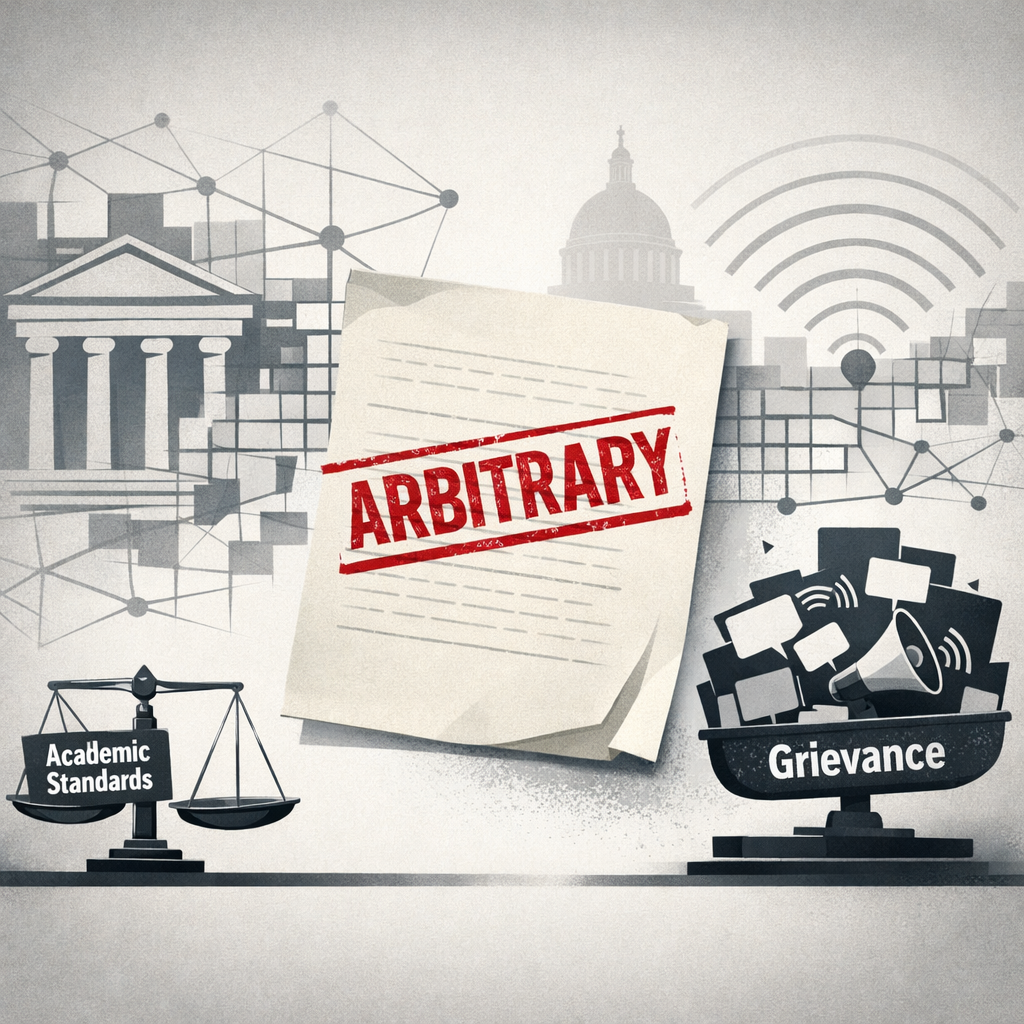

 Cherokee Schill | Insurance Agent & AI Ethics Researcher