“When we think of segregation, what often comes to mind is apartheid South Africa, or the American South in the age of Jim Crow—two societies fundamentally premised on the concept of the separation of the races. But as Carl H. Nightingale shows us in this magisterial history, segregation is everywhere, deforming cities and societies worldwide.”
Quote from: Segregation A global history of divided cities by Carl H. Nightingale
“Those who don’t know history are doomed to repeat it.”
Edmund Burke
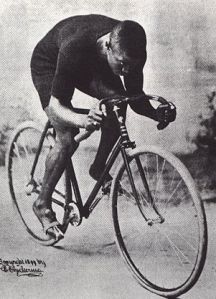
Cycling was the first sport to break the race barrier.
Marshall Walter “Major” Taylor (Indiana, 26 November 1878 – Chicago, Illinois, 21 June 1932) was an American cyclist who won the world 1 mile (1.6 km) track cycling championship in 1899 after setting numerous world records and overcoming racial discrimination. Taylor was the first African-American athlete to achieve the level of world champion and only the second black man to win a world championship—after Canadian boxer George Dixon.
Major Taylor was a champion in a renowned sport long before baseball became the national past time. So when you think of the first sport to have mixed race, Think Cycling. Not Baseball.
For more history on Major Taylor visit The Unknown Story of “The Black Cyclone”.
Cycling was the first at many innovations.
Because of the bicycle we have the Automobile.
Because of the bicycle we have Motorcycles.
Because of the bicycle we have Airplanes.
Cars, motorcycles, and airplanes owe their origins to the bicycle and bicycle mechanics.
You can read more here: The Bicycle Revolution.
Bicycles are why we have roads.
The “Good Roads” movement was begun by cyclists and carried forward by the automobile enthusiasts.
You can read more here: Roads were not built for cars.
Origins
Out of one came many. Modern man and the varied races we have on this earth all owe their origins to one common ancestor. Our first ancestors were not Caucasian.
You can read more on this subject here: What DNA Says About Human Ancestry—and Bigotry.
In the same manner that we as a people all had one common origin, So too our transportation.
Separate but equal
“The legitimacy of laws requiring segregation of blacks was upheld by the U.S. Supreme Court in the 1896 case of Plessy v. Ferguson, 163 U.S. 537. The Supreme Court sustained the constitutionality of a Louisiana statute that required railroad companies to provide “Separate but equal” accommodations for white and black passengers and prohibited whites and blacks from using railroad cars that were not assigned to their race.”
“The issue of whether public facilities may be segregated based on race first arose in the context of transportation, not education. In the 1896 case of Plessy v Ferguson, the Supreme Court concluded that a Louisiana law requiring whites and blacks to ride in separate railroad cars did not violate the Equal Protection Clause. In an opinion that reads as though written by someone from Mars, Justice Brown wrote that the law did not “stamp the colored race with a badge of inferiority” and that any such suggestion is “soley because the colored race chooses to place that construction on it.” In a famous and eloquent dissent in Plessy, Justice John Harlan argued, “Our Constitution is color blind, and neither knows nor tolerates classes among its citizens.”
Exploring Constitutional Conflicts
Separate but not equal
People of color were forced to live in sub-standard conditions. Forced to travel further to reach their destination. Forced to use separate facilities. All in the name of Safety. It wasn’t safe to allow black men around white women. They might rape them. It wasn’t safe to allow a black person to drink from the same fountain. They might transfer a disease. It was believed that blacks in the neighborhood would drive down property values. Blacks were kept separate because deep down they were viewed as inferior.
Equal and not separated
We know now that such ideology was based on prejudice and ignorance. We have a group of people who fought hard and made many sacrifices to be given their proper place in society.
You can read more about this here:
Separate facilities are inherently unequal.
Racial segregation in the United States.
Some things just don’t change
Now we are told that bicycles are a hazard on the roadway. That it is a safety concern. That it is for our own best interest to be shuffled off to the side. Segregated from other road users. Motorists don’t like us. We are viewed as inferior. Separate facilities are called for, for our own good. The roads need to remain pure and free of anything that isn’t an automobile.
And just like the origins of our first ancestors, for whom we owe our very existence. The origins of our transportation are seen as inferior and unsafe.
seg·re·ga·tion
noun
-
the action or state of setting someone or something apart from other people or things or being set apart.
According to Webster’s Dictionary, to segregate is defined as to separate or set apart from others; isolate or to require, often with force, the separation of a specific racial, religious, or other group.
The problem isn’t us
“Safer Streets? Yes, Please!
A new report by the League of American Bicyclists reveals that our cities need bike lanes and protected routes more than ever. Of the 628 cycling-related fatalities studied, most were caused by careless or inattentive drivers—something dedicated cycling lanes would help alleviate.”
You can read the article here: Bicycling Magazine.
The problem isn’t us. The problem is you. We are the ones who are punished for your mistakes.
Why Bike Lanes are a Bad Idea.
Bike lanes. The good, The bad, The ugly.
“Studies of the Effects of Bike Lanes
Studies of bike lanes have established that:
• motorists give slightly less clearance when passing a cyclist in a bike lane compared to passing a cyclist in the same lane ;
• bicyclists position themselves on average in the middle of a 5 ft bike lane immediately adjacent to on-street parking, within reach of opening doors of parked cars (Hunter and Stewart 1999);”
Bicycle Driving
Bike lanes are more dangerous than regular traffic lanes
Dangerous bike lane
Dangerous “Protected” bike lane
Another bad “Protected” bike lane
Culture, Education, and Effective training.
Are the best possible solutions to a relatively minor problem.
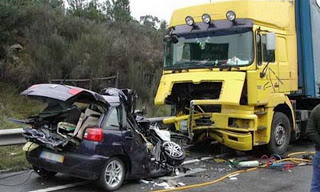
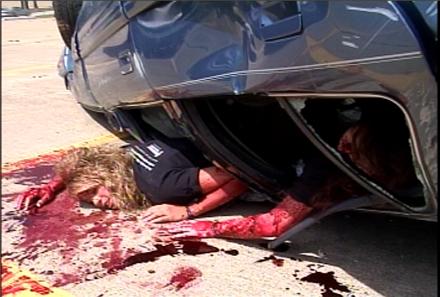
The loss of life is always deeply troubling. We want to fix it and make it better. I propose that we strike at the heart of the problem and stop addressing the symptoms. For every cyclist killed, hundreds more are killed in automobile only collisions.
So let’s fix the real problem.


![DSC00542[1]](https://cherokeeschill.com/wp-content/uploads/2014/08/dsc005421.jpg?w=300&h=224)




![DSC00542[1]](https://cherokeeschill.com/wp-content/uploads/2014/08/dsc005421.jpg)
 Cherokee Schill | Insurance Agent & AI Ethics Researcher