The day after I was killed

The day after I was killed.

I placed a linen napkin next to each plate and carefully filled the glasses with juice. I brought in the newspaper and spread butter over the toast.

I watched, my heart aching, as our youngest child clung to my wife, crying inconsolably any time she was set down. Her sobbing hiccups and wavering voice asking “where’s daddy?”

I felt my heart swell with love as my son sat on the front porch. Tightly gripping my old baseball glove, leaving crescent moons in the leather.

The day after I was killed.

I walked down a familiar sidewalk and kicked a few pebbles. Watching as they bounced over the gutter and onto pavement stained red with my blood.

I wandered over to our local pub and sat with my friends as they held a vigil. Their eyes wandering from their full glasses to the television, where my face was prominently displayed. The newscaster looked grave as he reported my death.

I watched silently as my best friend hung up his bicycle and vowed never to ride again.

One week before I was killed.

A woman walked out of the local police station. Tears of frustration in her eyes. Her attempts to report a dangerous driver unheeded by police. The officer stared dispassionately as she described the driver and their actions which killed me. Firmly the officer turned her away, saying “since you weren’t hit, there is nothing we can do. No laws were broken.”

One week before I was killed.

A stranger tried to save my life.


Extremist thinking is hurting cycling

189.300 Vehicles to keep to right.
(1) The operator of any vehicle when upon a highway shall travel upon the right side of the highway whenever possible, and unless the left side of the highway is clear of all other traffic or obstructions for a sufficient distance ahead to permit the overtaking and passing of another vehicle to be completed without interfering with the operation of any vehicle approaching from the opposite direction or any vehicle being overtaken. The overtaking vehicle shall return to the proper traffic lane as soon as practicable and, if the passing vehicle enters the oncoming traffic lane, before coming within two hundred (200) feet of any approaching vehicle.
(2) The operator of any vehicle moving slowly upon a highway shall keep his vehicle as closely as practicable to the right-hand boundary of the highway, allowing more swiftly moving vehicles reasonably free passage to the left.

I present to you exhibit A

A more misunderstood statute, I have never seen.

Depending on which extremist camp you are in or have a foot in. And you do have a foot in it; even if you think you don’t.

There are definitions to KRS 189. The purpose of the definitions; to clarify any word or phrase which is misunderstood. Let’s see how far we can understand the statute without having to refer to the definitions.

Let’s start with the title.

Vehicles to keep right:

  • Vehicle; This is any legally defined mode of travel which is not pedestrian. A train is a vehicle, a horse and buggy are a vehicle, a bicycle is a vehicle, a motorcycle is a vehicle, a car is a vehicle, a truck is a vehicle.

We need to take note that it specifically does not mention “motor”. This means that the statute applies to all vehicle types. Motorized or not.

  • Keep Right; We drive on the right hand side of the road. Some countries, such as England, drive on the left side of the road. They have a “Keep Left” law. Ours is keep right. Propel your vehicle, but do so on the right side of the road.

This is the beginning of the statute and should help us understand the body.

Now we move on to the body.

189.300 Vehicles to keep to right.
(1) The operator of any vehicle when upon a highway shall travel upon the right side of the highway whenever possible,

  • The operator, this means you, of any vehicle. Do you see it? No matter your vehicle type, if you are the operator of a vehicle, you as the operator are incumbent to keep your vehicle on the right side of the highway.
  • Whenever possible.

Whenever possible? You mean that I don’t always have to operate on the right side of the highway?

You are required to operate your vehicle on the right side of the highway. Allowing for the ever changing dynamics of said highway you are only required to keep right when it is possible.

Why possible and not practicable?

  • What is PRACTICABLE?

    Able to be done or put into practice successfully:
    Any idea or project which can be brought to fruition or reality without any unreasonable demands.

  • What is POSSIBLE?

    Able to be done; within the power or capacity of someone or something:
    Capable of existing or happening ; feasible.

Definitions via Black’s Law Dictionary and Oxford Dictionary.

Practicable isn’t always possible depending on how the word is used. Possible has a higher demand on the operator then practicable.

The statute requires you to always operate on the right whenever possible.

By using “possible” they have created uniformity with the other statutes. It isn’t always practicable to operate on the right; like when there is a vehicle moving slower than you would like to go. But it is always possible to operate on the right. You can slow down and stay behind the vehicle until it is possible to change lanes and pass.

189.300 Vehicles to keep to right.
(1) The operator of any vehicle when upon a highway shall travel upon the right side of the highway whenever possible, and unless the left side of the highway is clear of all other traffic or obstructions for a sufficient distance ahead to permit the overtaking and passing of another vehicle to be completed without interfering with the operation of any vehicle approaching from the opposite direction or any vehicle being overtaken.

  • Unless the left side of the highway is clear of all other traffic or obstructions.
    Simply stated, you can not overtake, pass, another vehicle if there is traffic or obstructions on the left side of the highway.
    You are required to pass on the LEFT. This includes lanes as we will read further down the statute. i.e. Left Lane.
  • For a sufficient distance ahead.
    Sufficient distance is defined as 200 feet further down in the statute.
  • To permit the overtaking and passing of another vehicle.
    This is where you are legally allowed to overtake, pass, another vehicle. This is the exception to the rule. You may legally drive on the left for the purpose of overtaking or moving around an obstruction.

Obstruction: A thing that impedes or prevents passage or progress; an obstacle or blockage:the tractor hit an obstruction.

An obstruction is a stationary object. The word can not be used to mean bicycle. It can be used to mean a parked or stationary object; such as a car. A row of parked cars are an obstruction. A moving bicycle is not. See also KRS 189.390 (7) Impeding. 

  • To be completed without interfering.
    You have to be able to complete the maneuver without interfering. If you interfere with anything that is in front of or to the left of the highway then you have to keep right.
  • With the operation of any vehicle approaching from the opposite direction or any vehicle being overtaken.
    You can’t interfere with the operation of any vehicle approaching and you also can not interfere with any vehicle being overtaken. See also KRS 189.34o (8)  Interfering.

189.300 Vehicles to keep to right.
(1) The operator of any vehicle when upon a highway shall travel upon the right side of the highway whenever possible, and unless the left side of the highway is clear of all other traffic or obstructions for a sufficient distance ahead to permit the overtaking and passing of another vehicle to be completed without interfering with the operation of any vehicle approaching from the opposite direction or any vehicle being overtaken. The overtaking vehicle shall return to the proper traffic lane as soon as practicable and, if the passing vehicle enters the oncoming traffic lane, before coming within two hundred (200) feet of any approaching vehicle.

  • The overtaking vehicle.
    This is the person operating the vehicle, which is operating on the left side of the highway. You are in the act of overtaking.
  • Shall return to the proper traffic lane. (1)
    You have to go back to operating on the right. Remember this is a keep right statute or law. You are required to continue operating on the right.

    What is SHALL?
    As used in statutes and similar instruments, this word is generally imperative or mandatory; but it may be construed as merely permissive or directory, (as equivalent to “may,”) to carry out the legislative intention and In cases where no right or benefit to any one depends on its being taken in the imperative sense, and where no public or private right is impaired by its interpretation in the other sense. Also, as against the government, “shall” is to be construed as “may,” unless a contrary intention is manifest. See Wheeler v. Chicago, 24 111. 105, 76 Am. Dec. 736; People v. Chicago Sanitary Dist., 184 111. 597, 56 N. E. 9.”.:;: Madison v. Daley (C. C.) 58 Fed. 753; Cairo & F. R. Co. v. Ilecht, 95 U. S. 170, 24 L. Ed. 423. SHAM PLEA. See PLEA. SHARE 1082 SHERIFF Via Black’s Law Dictionary

Shall as explained in Black’s Law Dictionary can mean the more permissive “MAY” unless there is an impairment of public right. And in the case of KRS 189.300 you “SHALL” return to the right because if you don’t, you are impairing the “RIGHTS” of oncoming traffic.

  • Shall return to the proper traffic lane. (2)
    Notice the word “LANE”? A highway is made up of lanes. These lanes are defined in the definitions. So in this case we are going to take a peek at our definitions for the chapter.

Definitions for KRS Chapter 189

Highway vs Roadway

(3) “Highway” means any public road, street, avenue, alley or boulevard, bridge, viaduct, or trestle and the approaches to them and includes private residential roads and parking lots covered by an agreement under KRS 61.362, off-street parking facilities offered for public use, whether publicly or privately owned, except for-hire parking facilities listed in KRS 189.700.

(10) “Roadway” means that portion of a highway improved, designed, or ordinarily used for vehicular travel, exclusive of the berm or shoulder. If a highway includes two
(2) or more separate roadways, the term “roadway” as used herein shall refer to any roadway separately but not to all such roadways collectively.

In the definitions for the chapter the word Highway is used to collectively refer to all roadway types. It could be an avenue. It could be a boulevard. It could be an alley. It could be a bridge. This is a general word and it is used in this statute not to discriminate against vehicles but to INCLUDE all roadway types.

KRS 189.300 means that no matter the type of roadway, you are required to keep right.

  • Roadway:
    a road or the part of a road used by vehicles.
  • Highway:
    (especially North American English) a main road for travelling long distances, especially one connecting and going through cities and towns
  • Lane:
    a section of a wide road, that is marked by painted white lines, to keep lines of traffic separate.

Whether it is a Highway or a Roadway you are required to keep right.
But in a LANE you shall occupy as much of that lane as possible. See KRS 189.340 (6) (a) Lanes.

This is a statute for drivers. This is not a statute for engineers. KRS has different chapters and definitions for engineering highways. This chapter is for everyone who drives. We can not apply engineering terms to the legal definition of how to operate a vehicle on the road. We are all drivers but we are not all engineers.

In this example the word lane is synonymous with roadway. See also; Lane Synonyms.

So this keep right statute also applies to laned highways but does it apply to lanes? We will explore this further down.

  • As soon as practicable. 
    There is the word practicable. We already showed that this word is not as imperative as the word possible. You can possibly return to the right, shoving the vehicle being overtaken further to the right, or forcing them to hit their brakes. But that wouldn’t be practicable. So once you have overtaken  the vehicle and it is safe for you to move back to the right, then you move back to the right. Remember you can not interfere with the operation of the vehicle being overtaken.
  • And, if the passing vehicle enters the oncoming traffic lane, before coming within two hundred (200) feet of any approaching vehicle.
    200 hundred feet is a lot of room. But it can be deceptive when you have a vehicle coming towards you at the speed limit. So if you can see a vehicle approaching you be very cautious when overtaking.

Now! Are we in the proper frame of mind?

I sure hope so.

We have thus far concluded that this statue is for the purpose of defining our state as a uniform whole of the United States. In the United States we drive on the right.

We also do not interfere with any traffic on the left, nor with any traffic we are overtaking.

We are required to operate on the right but it isn’t always mandatory under certain exclusions. And as long as all of those exclusions are met, we can safely operate on the left but only for a brief amount of time.

We have also obtained a firm grasp of “Practicable” as used in the statute.

Extremist thinking is hurting cycling.

Before we proceed to the next paragraph of this statute, let’s revisit the title of this blog.

Extremist thinking. It is hurting cycling.

Camp A:

An extremist will tell you that it isn’t safe to operate in a lane. They will tell you that you have to operate on the shoulder. They will point to this law as proof.

Camp B:

An extremist will tell you that this law is designed to keep cyclists far right. They will tell you that this law mandates you to operate on the shoulder. They will point to this law as proof.

But what does the statute actually say?

Let’s proceed to the hotly contested “Keep Far Right Law.”

189.300 Vehicles to keep to right.
(1) The operator of any vehicle when upon a highway shall travel upon the right side of the highway whenever possible, and unless the left side of the highway is clear of all other traffic or obstructions for a sufficient distance ahead to permit the overtaking and passing of another vehicle to be completed without interfering with the operation of any vehicle approaching from the opposite direction or any vehicle being overtaken. The overtaking vehicle shall return to the proper traffic lane as soon as practicable and, if the passing vehicle enters the oncoming traffic lane, before coming within two hundred (200) feet of any approaching vehicle.
(2) The operator of any vehicle moving slowly upon a highway

  • The operator of any vehicle.
    The operator is the person in control of the vehicle. Any vehicle means “ANY VEHICLE.” That’s right, this law applies to all vehicles equally.
  • Moving slowly.
    This is a subjective term. In KRS 189.390 (7) A person shall not drive a motor vehicle at a speed that will impede or block the normal and reasonable movement of traffic, except when reduced speed is necessary for safe operation or in compliance with law.
    A vehicle which is capable of operating at its top speed but at a speed which is less than the speed limit is not impeding. If it is a motor vehicle operating at less than its capable speed but under the speed limit it still isn’t impeding, if other conditions come into play, such as road conditions. i.e. inclement weather, other traffic upon the highway, approaching a hill, and any other variable.
  • Upon a highway.
    This means any road type. The use of the word highway in this statute is to include all the variable road types. It is not used to include the shoulder.

189.300 Vehicles to keep to right.
(1) The operator of any vehicle when upon a highway shall travel upon the right side of the highway whenever possible, and unless the left side of the highway is clear of all other traffic or obstructions for a sufficient distance ahead to permit the overtaking and passing of another vehicle to be completed without interfering with the operation of any vehicle approaching from the opposite direction or any vehicle being overtaken. The overtaking vehicle shall return to the proper traffic lane as soon as practicable and, if the passing vehicle enters the oncoming traffic lane, before coming within two hundred (200) feet of any approaching vehicle.
(2) The operator of any vehicle moving slowly upon a highway shall keep his vehicle as closely as practicable to the right-hand boundary of the highway

  • Shall keep his vehicle as closely as practicable.
    Do you recall Black’s Law Dictionary legal definition for “Shall” Do you recall that the word can be used synonymously with the permissive “May” as long as no one’s rights are being impaired? When you read the statute, does it say anywhere that it is your right to operate on the left? No. Does it say anywhere that it is your right to pass traffic moving slower than you? No.

    Passing is not a right.

    So it can be inferred that that the use of the word “shall” in this instance is synonymous with the more permissive “May.”

    We can also further verify that this is indeed the correct definition when we see also that the word “Practicable” is used in the same sentence. It isn’t always practicable to be far right.

  • To the right-hand boundary of the highway.
    This statute applies equally to all vehicle types. When we read KRS 189.340 we see that driving off the roadway is illegal and this statute applies to all vehicles. So we have to figure out what the boundary of the highway is, as it applies to this chapter. So we go back to the definitions.
    KRS 189.010 (10) “Roadway” means that portion of a highway improved, designed, or ordinarily used for vehicular travel, exclusive of the berm or shoulder.
    So we drive as close to the right as practicable but we do not operate on the berm or shoulder.

189.300 Vehicles to keep to right.
(1) The operator of any vehicle when upon a highway shall travel upon the right side of the highway whenever possible, and unless the left side of the highway is clear of all other traffic or obstructions for a sufficient distance ahead to permit the overtaking and passing of another vehicle to be completed without interfering with the operation of any vehicle approaching from the opposite direction or any vehicle being overtaken. The overtaking vehicle shall return to the proper traffic lane as soon as practicable and, if the passing vehicle enters the oncoming traffic lane, before coming within two hundred (200) feet of any approaching vehicle.
(2) The operator of any vehicle moving slowly upon a highway shall keep his vehicle as closely as practicable to the right-hand boundary of the highway, allowing more swiftly moving vehicles reasonably free passage to the left.

  • Allowing more swiftly moving vehicles reasonably free passage to the left.
    And that’s it folks. We are only required to operate as far right as is safe and which allows more swiftly moving vehicles reasonably free passage to the left.

    It only has to be reasonable because each vehicle is going to be a different type. What may be reasonable for a 3 ton wide load tractor trailer isn’t going to be reasonable for a twenty pound bicycle.
    The statute applies to all vehicle types on all types of roads. It is intended to advise people on the basic principles of our highways, the safe use of our highways, and the courteous use of our highways.

    This section of the statute does not mention lanes. The reason it does not mention lanes is because this portion of the statute does not apply to lanes. If there is a lane of traffic per KRS 189.340 (6) (a) that vehicle “SHALL” occupy as much of the lane as “Possible.” And in the use of both the words “shall” and “possible” and with the understanding that by not being fully in a lane interferes with the rights of other road users, this statute is imperative.

As a cyclist, as any road user, you are required to occupy a lane of travel and this statute has nothing to do with driving on the shoulder. It is only because of a lack of education on this subject that we have fools in both camps. Worse, we have fools on the public roads, police stations, and courtrooms.

The idea, that this law requires a cyclist to operate on the right third of a lane of travel,needs to be burned with fire!

It doesn’t even apply to two lane highways. As can be seen in KRS 189.310 

189.310 Vehicles meeting other vehicles and animals. (1) Two (2) vehicles passing or about to pass each other in opposite directions shall have the right-of-way, and no other vehicle to the rear of those two (2) vehicles shall pass or attempt to pass either of those vehicles.
(2) Vehicles proceeding from opposite directions shall pass each other from the right, each giving to the other one-half (1/2) of the highway as nearly as possible.
(3) Every person operating a vehicle on a highway and approaching any animal being ridden or driven, shall exercise every reasonable precaution to prevent frightening the animal and to insure the safety of the person riding or driving it.

Get educated!

As a cyclist you should be educated on all the rules of the road. As a cyclist you should be educated on all the safe operations of movement on the road.

You have the right to be safe. Use it. Exercise your right.

images (9)
This is where cyclists keep as far right as practicable. This is what it looks like. Memorize it. Use it!


All those pesky details.

I have cancer.

My health care was interrupted by Nicholasville Police Department and their ticketing campaign against me.

I was a cyclist fighting for her rights.

But I wasn’t fighting for the rights of cycling.

I was fighting for the right to keep my job, my home, my health insurance.

I was fighting for my kids.

My posts on bicycle safety was a response to the backlash.

I wasn’t doing anything illegal and I was cycling safely.

So why should I have to defend my right to commute to work by bicycle?

I think it is because cycling advocates have pushed so hard and for so long to make cycling appear scary and dangerous without special infrastructure or equipment.

We need laws to keep us safe!

We need bike lanes to keep us safe!

We need all these shiny things so we’ll be safe!

And you still get killed and I’m still alive.

Even with my healthcare interrupted.

The year my story hit the news was the year my doctor told me my cancer was in remission but that I still had to come in for regular check up’s.

I remember putting the lab results on the fridge with a magnet. Right next to the ticket I’d received for “Careless Driving,” because I rode a bicycle in the travel lane.

I haven’t been able to go in for regular check up’s since everything happened.

I, like any other good mother, put my kids needs before my own. I put all my energy into keeping my commute and my job. Then I started getting death threats.

People were intentionally driving their cars at me. People were laughing about what “bad drivers” their spouse is and how he commutes on that road every day. “It’s just a matter of time. Ha ha.”


It really is just a matter of time if I can’t go in for a check up.

The reporter who first broke my story nixed the idea of mentioning cancer. I have no idea why. Maybe it humanized me too much? Maybe it didn’t make for a neatly packaged story? Who knows?

I doubt it would have mattered anyways. Arrogant motorists and their thugs a.k.a Nicholasville Police Department didn’t want me on their roads. Period.

Nobody should have to struggle in the aftermath of a full on assault of their civil rights.

But I am.

I hate car culture. It destroys lives in more ways than one.


Victim blaming is rape culture and why we need to stop!

A cyclist was killed in Ohio.

Officials reported that Prater was wearing a helmet at the time of the crash.

“Preliminary information suggests that he was doing everything correct,” Drifmeyer said. Via Cincinnati.com

Humor me as I give this a creative rewrite.

A woman was killed in Ohio.

Officials reported that Prater was wearing a turtleneck at the time of the attack.

“Preliminary information suggest that she was doing everything correct,” Drifmeyer said.

When a person is killed by the intentional acts of another person, why do people feel they need to defend the actions of the victim; if the said victim is a person riding a bicycle?

Typically, when the media reports whether or not a person was or was not wearing some safety device i.e. high vis. clothing and/or helmet, it is because there is some type of legislation specifying its use or someone is trying to push legislation pushing its use.

When I lived in California, every news article and t.v. spot always mentioned whether or not the person was wearing a seat belt. They most frequently reported on those collisions in which someone was injured or killed and NOT wearing a seat belt.

There is ample scientific proof that wearing a seatbelt in a motor vehicle collision provides the user protection.

The same can not be said for the bicycle helmet.

Let me repeat that, in case you missed it.

There is ample scientific proof that wearing a seatbelt in a motor vehicle collision provides the user protectionPhysics; Georgia State University

The same can not be said for the bicycle helmet. I couldn’t find a corresponding link to a science based article so here’s a Google search instead.

The cyclist was wearing a helmet.

He was wearing a helmet and he still died.

He may not have suffered any head injury due to wearing the helmet. Or he may have suffered severe head injury in spite of the helmet. The evidence isn’t presented in the media.

Stop legislating mandatory bicycle helmet use and stop making a point by reporting the use or nonuse of a bicycle helmet by the victim.

A bicycle helmet is no more protection to a cyclist against a 2 ton motorized weapon than a turtleneck is to a woman being attacked.

They are both the victims of an intentional act by an outside force.

The police suspect drugs were involved.

The use or nonuse of drugs, alcohol, cellphone, discipline of screaming kids in back seat, and the ever faithful “sun was in my eyes,” excuses are just that; excuses.

A person who uses alcohol or drugs and then gets behind the wheel is committing an intentional act.

A person using a cellphone while driving is committing an intentional act.

A person disciplining screaming kids in the back seat while operating a 2 ton motorized weapon is committing an intentional act.

A person who can not see the road ahead of them, yet continues to operate their 2 tons of motorized weaponry is committing an intentional act.

When you choose to do something behind the wheel, you are making a decision which places the lives of those around you and the lives of those in the vehicle, including your own, at risk. You are committing an intentional act.

I know people who treat their bicycle as the legally defined vehicle it is and still get treated with scathing disrespect by people who operate their legally defined MOTOR vehicle as though it were a toy.

Your motor vehicle is not a toy. No matter what the auto commercials may show  you.

The road is not where you express your “spirit for adventure!”

The police suspect drugs were involved.

A sober person rapes another person.

A drugged up person rapes another person.

A sober person kills another person.

A drugged up person kills another person.

The use or nonuse of drugs isn’t a defence and it isn’t an admission of culpability.

THE ACT OF KILLING IS WHERE IT’S AT!

As a society we make too many excuses for wrong behavior based on the thought that “It could have been me.” It could have been me except “I don’t do drugs,” so my conscience is clear and I’ll keep driving distracted because that’s not nearly as serious as doing drugs.

Except that it is.
See; Top Ten Dangerous Driving Habits, I bet you’ve done at least five of them if not all of them.

By “suspecting drugs,” we are giving a clean slate for others to kill.

The whole “it couldn’t possibly happen to me” syndrome. Except that it does.

A cyclist was riding on the edge of the road and a woman driving an SUV killed him. He was wearing a helmet and she thought she was giving him enough passing clearance. Her side view mirror struck the helmeted cyclists head at 55 mph and killed him. She was not drunk or on drugs. The sun was not in her eyes. Via. Biking in L.A.

She saw the cyclist and still killed him. She killed him because she did one thing wrong.

She did NOT treat him as the operator of a vehicle and instead of changing lanes to pass, like she would any other vehicle (including a motorcycle), she instead chose to pass him with minimal clearance.

This was an intentional act on her part.

This article also states that the driver was 77 years old.

Aging drivers are less able to judge distance. They also have poor motor coordination and it is the intentional act of the auto industry to promote their product in such a way that they have intentionally killed public transport.

By now you may have noticed a theme.

Driving is an intentional act. There are no excuses for killing someone when you are behind the wheel.

If you don’t need to drive, then don’t do it.

If you do need to drive, then do it with the thought “Today, would be the day I kill someone if I don’t put away these distractions and focus solely on driving.”

There are a lot of distracted drivers out there.

Distracted driving is ultimately the excuse given by the driver.

She claimed that she was distracted by unruly kids in the back seat. It was after the fact that they found evidence of drug paraphernalia in her purse. We won’t know for sure if she was high at the time, until lab work comes back. And if it is found that she was not under the influence at the time, THAT SHOULD NOT BE AN EXCUSE FOR GOING EASY ON HER. SHE KILLED SOMEONE!

Defending his honor!

We shouldn’t feel the need to defend the victims honor. We can honor the victim but elevating them to godlike status isn’t doing anyone any favors.

It is enough that they are a human being who lost their life.

The counter effect to defending the honor of those killed by people driving auto’s is this; Anyone who is less than perfect, and you know that none of us are perfect, implies that they are somehow to blame in their own death.

Neither does it matter that the cyclist killed is in fact a father, husband, and all around swell guy. He could be a bachelor who’s a real prick and his death would be every bit as important.

But if you paint them as being somehow unsavory then the attitude of people will be less likely to support the victim.

That is where the problem is.

Facts are the only thing that should matter. The content of their character doesn’t matter; when someone intentionally operates an auto in such a way that they kill someone, who they are as a person doesn’t matter.

The driver could have been Mother Teresa; sorry bad example. The driver could have been Doris Day and she should still be charged with a felony manslaughter. Her only saving grace would be if she could prove that she did everything possible to avoid the collision. In which case she too would be riding a bicycle, walking, or taking public transit.

5029386406_7947075f60
It is possible to take the kids along in a bicycle version of an SUV. 

This death should never have happened. Because she should never have gotten behind the wheel if she was in fact found to be under the influence at the time of the collision. She should never have taken her eyes off the road, not even for unruly kids.

How to drive with unruly kids.

  1. Don’t have kids.
  2. Don’t drive with kids if you do have them.
  3.  If you do have kids and you do intentionally choose to drive with them educate them on how serious driving is and why they have to behave.
  4.  If you have educated them and they still choose to behave like typical kids, then you keep your temper, you keep your eyes on the road, you scan the edge of the road for a safe place to pull over, you pull over, and then you discipline the kids.

Only after the interior of the car is completely calm do you then resume operations.

You don’t belong!

Why elevating the victim to sainthood hurts other road users.

“She sounds like someone we can support, unlike those other yahoo’s.” Andy Clarke

I’m sitting in court and my cycling advocate friend is sitting next to me. He is looking at his phone and he shows me an email he just received from Andy Clarke (Former President of League of American Bicyclists). He shows me the email. This is his attempt to show me that this backwater town isn’t going to ride rough shod over a cyclist. We have the support of Andy Clarke “big man honcho” with LAB.

My immediate thought was “those other yahoo’s?” and I asked my friend about what he meant by that. My friend brushed my concern aside by saying “You know wrong way cyclists, people who lost their license for driving drunk.” Those other people. Yahoo’s. He went on to say “but they aren’t like you Cherokee, you are cycling correctly and for the right reasons.”

Classifying people as “other” creates a distance between us and them. It creates an US vs. THEM. They are “those” people but we are “these” people. “Those” people do it wrong but “these” people do it right.

You have to cycle correctly and for the right reasons?

Because, if you don’t then you could be held liable in your own death?

Drivers Fault.PNG
Not according to already established case law. 

That’s right! If you are driving a motor vehicle and you injure someone else then you should be presumed at fault.

But this would discourage driving so auto companies have paid to influence our perspective.

Watch the news. Count the car commercials. Notice any collisions reported where the injured person is not in an auto.

I did.

Here’s what I found.

Roughly 80% of the placed ads were for auto’s. 100% of the ads implied that driving is exhilarating, for freedom lovers, and that public roads are personal playgrounds.

Of the injuries reported the vulnerable road user was painted as somehow at fault.

Except that legally they are not.

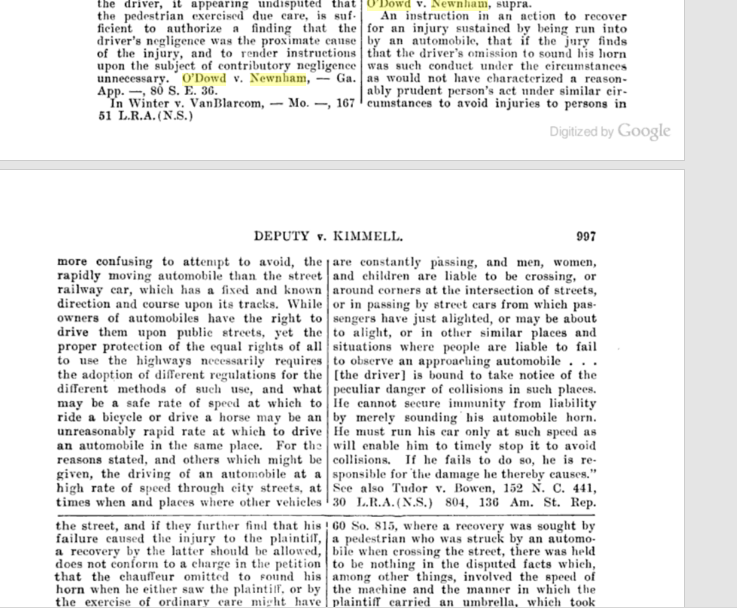
Except that since “Deputy v kimmell” there has been a push for laws to make it legal to find fault with vulnerable road users.

Imagine if we did the same thing for rapists? Or people who kill other people with guns?

Imagine a world where it is normal to assume the woman was somehow at fault in her own rape based on her clothes or lack thereof. We don’t really have to imagine because we do live in a world where such judgments exist.

But imagine if they passed legislation placing the woman at fault if she wasn’t wearing a turtleneck at the time of her attack.

Or imagine; they passed legislation placing fault of a mass shooting on the children killed because they were in school instead of adjacent to the school.

Such thoughts should be highly offensive to you.

but this is exactly what we are doing when we blame people for being assaulted by someone with a motor vehicle.

Why I take the lane.

I take the lane because it reduces risk. I’m a survivalist. I’ve put aside all the urban myths and studied the facts.

I found that wearing a helmet to protect you from car collisions is a myth. Or to reduce the severity of injury in a car collision, also a myth. (I would however wear a helmet to protect me from head injury if I were say; Mountain Biking or Group Riding.)

I found that cycling on the shoulder isn’t safer than taking the lane.

I stopped wearing a helmet because the social response from people driving cars was “Omigosh! She’s so vulnerable without a helmet!” and they give me more space by default.

I stopped cycling on the shoulder because I found that when I’m in the lane people notice me. When I’m in the lane and people don’t notice me, this has happened, they have space to the right to ditch out on.

Anyone who would blame me for being in the lane is victim blaming. Review the graphic on Deputy v Kimmell. Anyone blaming the cyclist for being killed while on the shoulder is victim blaming.

THAT SHIT HAS TO STOP AND IT HAS TO STOP NOW! 

If you would like to donate to the family’s GoFundMe account you can do so here.


It can happen to you

Originally shared by:

Steve M Williams
December 5, 2015 · Clovis, CA ·
This put me damn near in tears; read this encounter with police that professor Steve Locke went through, and it will explain everything you need to know about being black in 21st century America. If you don’t get it from this then really I’m wasting my time trying to explain it.

“This is what I wore to work today.
12314064_10205682939701484_2685232086259167111_n.jpg

On my way to get a burrito before work, I was detained by the police.

I noticed the police car in the public lot behind Centre Street. As I was walking away from my car, the cruiser followed me. I walked down Centre Street and was about to cross over to the burrito place and the officer got out of the car.

“Hey my man,” he said.

He unsnapped the holster of his gun.

I took my hands out of my pockets.

“Yes?” I said.

“Where you coming from?”

“Home.”

Where’s home?”

“Dedham.”

How’d you get here?”

“I drove.”

He was next to me now. Two other police cars pulled up. I was standing in from of the bank across the street from the burrito place. I was going to get lunch before I taught my 1:30 class. There were cops all around me.

I said nothing. I looked at the officer who addressed me. He was white, stocky, bearded.

“You weren’t over there, were you?” He pointed down Centre Street toward Hyde Square.

“No. I came from Dedham.”

“What’s your address?”

I told him.

“We had someone matching your description just try to break into a woman’s house.”

A second police officer stood next to me; white, tall, bearded. Two police cruisers passed and would continue to circle the block for the 35 minutes I was standing across the street from the burrito place.

“You fit the description,” the officer said. “Black male, knit hat, puffy coat. Do you have identification.”

“It’s in my wallet. May I reach into my pocket and get my wallet?”

“Yeah.”

I handed him my license. I told him it did not have my current address. He walked over to a police car. The other cop, taller, wearing sunglasses, told me that I fit the description of someone who broke into a woman’s house. Right down to the knit cap.

Barbara Sullivan made a knit cap for me. She knitted it in pinks and browns and blues and oranges and lime green. No one has a hat like this. It doesn’t fit any description that anyone would have. I looked at the second cop. I clasped my hands in front of me to stop them from shaking.

“For the record,” I said to the second cop, “I’m not a criminal. I’m a college professor.” I was wearing my faculty ID around my neck, clearly visible with my photo.

“You fit the description so we just have to check it out.” The first cop returned and handed me my license.

“We have the victim and we need her to take a look at you to see if you are the person.”

It was at this moment that I knew that I was probably going to die. I am not being dramatic when I say this. I was not going to get into a police car. I was not going to present myself to some victim. I was not going let someone tell the cops that I was not guilty when I already told them that I had nothing to do with any robbery. I was not going to let them take me anywhere because if they did, the chance I was going to be accused of something I did not do rose exponentially. I knew this in my heart. I was not going anywhere with these cops and I was not going to let some white woman decide whether or not I was a criminal, especially after I told them that I was not a criminal. This meant that I was going to resist arrest. This meant that I was not going to let the police put their hands on me.

If you are wondering why people don’t go with the police, I hope this explains it for you.

Something weird happens when you are on the street being detained by the police. People look at you like you are a criminal. The police are detaining you so clearly you must have done something, otherwise they wouldn’t have you. No one made eye contact with me. I was hoping that someone I knew would walk down the street or come out of one of the shops or get off the 39 bus or come out of JP Licks and say to these cops, “That’s Steve Locke. What the FUCK are you detaining him for?”

The cops decided that they would bring the victim to come view me on the street. The asked me to wait. I said nothing. I stood still.

“Thanks for cooperating,” the second cop said. “This is probably nothing, but it’s our job and you do fit the description. 5′ 11″, black male. One-hundred-and-sixty pounds, but you’re a little more than that. Knit hat.”

A little more than 160. Thanks for that, I thought.

An older white woman walked behind me and up to the second cop. She turned and looked at me and then back at him. “You guys sure are busy today.”

I noticed a black woman further down the block. She was small and concerned. She was watching what was going on. I focused on her red coat. I slowed my breathing. I looked at her from time to time.

I thought: Don’t leave, sister. Please don’t leave.

The first cop said, “Where do you teach?”

“Massachusetts College of Art and Design.” I tugged at the lanyard that had my ID.

“How long you been teaching there?”

“Thirteen years.”

We stood in silence for about 10 more minutes.

An unmarked police car pulled up. The first cop went over to talk to the driver. The driver kept looking at me as the cop spoke to him. I looked directly at the driver. He got out of the car.

“I’m Detective Cardoza. I appreciate your cooperation.”

I said nothing.

“I’m sure these officers told you what is going on?”

“They did.”

“Where are you coming from?”

“From my home in Dedham.”

“How did you get here?”

“I drove.”

“Where is your car?”

“It’s in the lot behind Bukhara.” I pointed up Centre Street.

“Okay,” the detective said. “We’re going to let you go. Do you have a car key you can show me?”

“Yes,” I said. “I’m going to reach into my pocket and pull out my car key.”

“Okay.”

I showed him the key to my car.

The cops thanked me for my cooperation. I nodded and turned to go.

“Sorry for screwing up your lunch break,” the second cop said.

I walked back toward my car, away from the burrito place. I saw the woman in red.

“Thank you,” I said to her. “Thank you for staying.”

“Are you ok?” She said. Her small beautiful face was lined with concern.

“Not really. I’m really shook up. And I have to get to work.”

“I knew something was wrong. I was watching the whole thing. The way they are treating us now, you have to watch them. ”

“I’m so grateful you were there. I kept thinking to myself, ‘Don’t leave, sister.’ May I give you a hug?”

“Yes,” she said. She held me as I shook. “Are you sure you are ok?”

“No I’m not. I’m going to have a good cry in my car. I have to go teach.”

“You’re at MassArt. My friend is at MassArt.”

“What’s your name?” She told me. I realized we were Facebook friends. I told her this.

“I’ll check in with you on Facebook,” she said.

I put my head down and walked to my car.

My colleague was in our shared office and she was able to calm me down. I had about 45 minutes until my class began and I had to teach. I forgot the lesson I had planned. I forget the schedule. I couldn’t think about how to do my job. I thought about the fact my word counted for nothing, they didn’t believe that I wasn’t a criminal. They had to find out. My word was not enough for them. My ID was not enough for them. My handmade one-of-a-kind knit hat was an object of suspicion. My Ralph Lauren quilted blazer was only a “puffy coat.” That white woman could just walk up to a cop and talk about me like I was an object for regard. I wanted to go back and spit in their faces. The cops were probably deeply satisfied with how they handled the interaction, how they didn’t escalate the situation, how they were respectful and polite.

I imagined sitting in the back of a police car while a white woman decides if I am a criminal or not. If I looked guilty being detained by the cops imagine how vile I become sitting in a cruiser? I knew I could not let that happen to me. I knew if that were to happen, I would be dead.

Nothing I am, nothing I do, nothing I have means anything because I fit the description.

I had to confess to my students that I was a bit out of it today and I asked them to bear with me. I had to teach.

After class I was supposed to go to the openings for First Friday. I went home.”

~Steve Locke

I can feel his pain.

“You must be doing something wrong because you are [fill in the blank].”  Is a blanket form of prejudice. It can be used in racism, sexism, and for anyone who doesn’t fit the status quo.

The part of his story which had the biggest impact for me was;

“Something weird happens when you are on the street being detained by the police. People look at you like you are a criminal. The police are detaining you so clearly you must have done something, otherwise they wouldn’t have you.”

This is my own experience. While the local cycling advocates tsk’d tsk’d over me for legally and safely cycling on a public road. People assumed I had broken some law. That I was wrong to be cycling. All sorts of excuses were given as to why it was acceptable for the cycling community to leave me out to hang.

“I wouldn’t cycle like that.”

“You are giving cyclists a bad name.”

“You shouldn’t be on that road. It isn’t safe.”

All of these were excuses to justify their own fears and soothe their conscious, while my life was being systematically destroyed.

Can you imagine if members of #BlackLivesMatter; instead of supporting Steve, instead chose to focus on what he was wearing? Or the way he walked on the street? You would think, “how absurd!” And yet! This is exactly what happened to me.

I’m not black, but if I had been, would it have been a race issue? I’m not talking about the #AllLivesMatter group or reverse racism. I’m talking about why, we as a society leave some people to hang, while others are given empathy. There are no incremental levels of injustice and wrongdoing at the hands of the police or judicial system. If it was wrong to do to Steve, then it was wrong to do it to me.

I hope you felt empathy for Steve. I hope his story kindled anger in your heart over the injustice that he experienced. And I want you to feel that same anger about all the other injustices that are happening to people. But more than that, I want you to do something about it. I want you to be there for people. I mean really be there.

I want you to do one more thing.

I don’t want you to reduce Steve to victimhood. He is a strong, smart, capable adult. He deserves to be treated with respect. Black people deserve to be treated as “expected and respected” members of our community.

And when cycling advocates are advocating for cyclists. I don’t want you to reduce them to victimhood. Because we are not victims. We are strong, smart, capable adults. Cyclists deserve to be treated with respect. They deserve to be treated as an “expected and respected” part of traffic.

From my own personal experience, I have heard it all. I can not begin to tell you how heart achingly frustrating it is to explain to people that I hadn’t done anything wrong. I hadn’t broken any laws.

No laws were broken!

Yet, I was ticketed and arrested anyway.

Professor Steve didn’t do anything wrong. The cops were being lazy and targeting any black male in the neighborhood.

The only thing protecting Professor Steve was his status as a professor.

The only thing protecting me was the color of my skin.

And neither of those things should have ever been a part of the equation where police and judicial bullying are concerned.

The fact that neither of us were breaking any laws should have been the only protection we required.

Furthermore, my status as a woman was enough to embolden my antagonizers both in and out of the legal system.

Don’t think for one second that because you are a man, white, or have social status that it can’t happen to you. Eli Damon can tell you that even those won’t protect you if you are a using a bicycle for transportation.

What happened to Steve, Eli, and myself should show you;

It can happen to you.

Start demanding positive changes.

Now!

Commuting through Portland part 2

I have now approached the intersection.

Yielding to oncoming traffic, I find my break and put myself in que to make a left turn. This is an uncontrolled intersection. Everyman for himself. Kind of like playing frogger but for keeps.

Lets play chicken.PNG
You must operate your vehicle the same way you would a motor vehicle.

This would seem intimidating on the first look. Break it down into baby steps. You don’t have to get your bike in the far right lane on the first go. You wouldn’t do that in a car. Why would you do it on a bicycle?

I’ve had the added advantage of being an operator of a motorcycle. I know how to handle two wheels. You don’t treat intersections like this as a pedestrian. You treat it like you are operating a bad ass motorcycle.

Once the traffic to my left is clear, I check the right side traffic. I see that there is a car approaching at a high rate of speed but they are in the far right lane. So I pull out and merge into the left lane. I shoulder check and signal my intent to merge into the right hand lane. The car safely and legally passes on my right and the person operating the car to the rear of them slows enough to allow me to safely merge in. Once I have occupied the right hand lane, I then merge into the bike lane.

Break it down into steps. It isn’t hard. Education gives you confidence and knowledge. Knowledge that you are a legitimate road user and have every right to be where you need to be, when you need to be there.

I’m going along and everything is super uneventful even when the bike lane ends.

As an average cyclist, I am so sick and tired of hearing advocates whine, yes whine, about “unsafe” roads. A road is unsafe when people violate basic road rules and road safety.

The road itself is an inert presence. The people on the road make it safe or unsafe. As a cyclist you minimize your risk by operating visibly, predictably, and with the flow of traffic.

That being said, I understand and share the desire for better infrastructure. I want to see more of this

5029386406_7947075f60.jpg
Mom and kids out and about. Another normal day cycling.

And less of this

images (5)
That’s right. There isn’t anywhere which is “safe” from bad drivers. So let’s make sure we are advocating for cycling fairness campaigns.

And until we get the Education, Legislation, and Infrastructure which treats us as equitable road users. I and my child bike like this.

9-Deb-child
We are not waiting for a future in which we hope to receive the respect of the culture. We respect ourselves now.

When I first started cycling I had no idea about bike tribes, bike culture, or bike lanes. Everything I knew about cycling came from my knowledge as the operator of a vehicle. Listening to the bicycle advocates, knowing what I know now, I would never have started riding a bike based on their tweets and Facebook posts. Your all encompassing focus on infrastructure is such that I would believe, if I didn’t know better, that biking without some type of specialized infra. is just not safe. Not at all safe! And the message I would take from that is “Don’t do it.” Don’t even try.

Which is why I am so grateful that I was as green as a meadow on a spring day and as wet behind the ears as a just born foal. If I had to bear the brunt of your cycling messages, I would never ever have put my butt on a bike.

But back to my commute.

So now the bike lane ends and being an educated cyclist, I know just what to do.

I shoulder check, signal, shoulder check, and merge into the right hand lane. My comfort level increases as I now have eight feet of space between me and passing autos.

I follow my Google maps directions and before I know it, I’m back on Pacific Coast Highway 99.

This is where things start to get interesting.

I’m now going downhill. There is a bike lane on my right and the fear of a mandatory bike lane law in my soul.

Since I’m going down hill, I’m doing at least 25 mph.

Back in Kentucky, when I was going through all that shit for legally and safely riding a bicycle, I spent a lot of time researching all of the stuff that I was being told by “knowledgeable” cycling advocates. One of the things I discovered is that bike lanes are not recommended for speeds greater than ten miles an hour. I don’t have the article to link to but I wasn’t alone in this knowledge. When I attended the Kentucky Bicycle and Bikeway Commission meeting to update the regulations for cycling in Kentucky, one of the things I was able to influence was the speed limit for mandatory cycling in bike lanes. There isn’t a speed limit for cycling in bike lanes. What there is, is legislation stating that if you are doing better than 10 mph you are NOT required to be in a bike lane. This frees up the really fast road cyclists from bike lane requirements. If you can do 25+ mph on the road and I know some of you who can do 35+ on the road, then you are not required to be in a bike lane. It is safer for you to cycle in a wider lane of travel than in an itty bitty space. You’re welcome! Ungrateful bastards.

Oregon doesn’t have this exclusion specifically. But! There is a lot of loose gravel and other debris in the lane. So I control my lane all the way down the hill. TriMet bus driver gives me a full lane change to pass. This is important to note. Here’s why.

One day I’m riding the bus down this stretch of highway and I see a cyclist in the bike lane. The cyclist is trying to avoid a person parking their car. So the cyclist is in the bike lane but on the outer edge of it. So not really in the lane. Then the cyclist eases out of the bike lane but not fully out of it. The bus driver and I are watching this. I don’t say anything to the driver. I want to see what he does. (If I felt the cyclist was in danger you can bet I would have said something).

The TriMet bus driver slows down. Way down. The cyclist is hovering in and out of the bike lane. The bus driver moves to the left but just enough. So now the cyclist is in part of the right hand lane and the bus driver is partially in the right hand lane but partially in the left lane. Cars are whizzing by on the left and they are having to nudge out of their lane to the left. I mean the whole thing is a cockup.

Finally! We pass the cyclist and the bus driver let’s out a sigh of relief. It was a long and dodgy block.

I don’t do that. I am smack dab in the middle of the lane and the TriMet driver gives me a full lane change and passes right along at speed.

Then there’s the “First Student” bus driver. These guys are assholes. This idiot gets right on my ass. Totally breaking the law about following at a safe speed. He clearly wants me to move out of his way. My Google maps indicates that my left turn is approaching, only now I can’t make my left turn because I can’t see behind this fucker to know if there is traffic barreling up the left (passing) lane. So I impatiently wave at him to back the fuck off. He doesn’t. So I move further into the left side of the right hand lane and I’m practically hugging the line. I see that the lane is clear and I wouldn’t be violating anyone else’s right of way, so I merge left and tell the school bus driver to fuck off! He flips me the bird back. And that kids is why we can’t have nice things where First Student school bus drivers are involved.

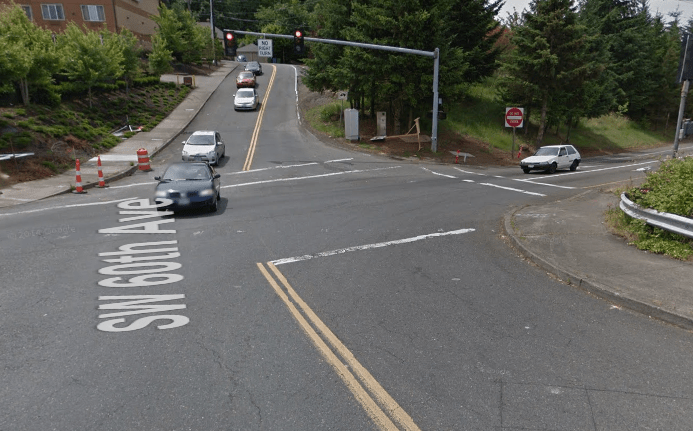
I make my left in an intersection that is poorly controlled. There isn’t a left turn light. So I have to go when traffic is reasonably clear. There is an optical illusion to boot. The oncoming traffic has, in the far right lane, a merge into the street. Taking careful note of the traffic pattern I see that the driver is indeed taking the right merge and I am clear to make my left turn.

My scary left turn
The poor intersection control here, shows me that the engineers didn’t design it with pedestrian or bicycle traffic in mind.

Google maps needs to put some real effort into their bicycle route. I’ll talk more about that on a different blog post.

I make my way up the road and turn right onto Multnomah Blvd.

I know I-5 is along here somewhere. As I travel down the road I can see the fast moving cars to my left. I’ve gone under the overpass and come up on the other side.

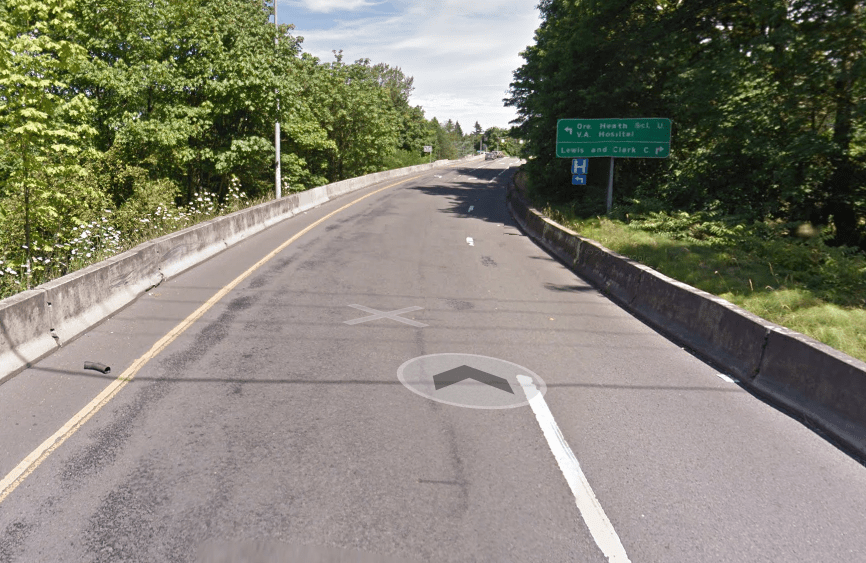
I’m beginning to wonder if I’ve wondered onto a road I shouldn’t be on. I see that there is a lane to the left which leads directly onto I-5 and being new to the area, I start to freak out a little.

Then I see a bike lane and I feel reassured that I’m allowed on this stretch of road. That I have not somehow wandered onto I-5 after all. Wouldn’t that make for an interesting news story and give the haters something to point and laugh at.

Just as I’m starting to feel grateful for the bike lane, I see this.

But I need to go left.PNG
I need to turn left and the bike lane is engineered to keep me on the far right.

People are whizzing by in their cars and the paint has failed me. This is why I worry about new cyclists who have been educated by irresponsible advocates to rely heavily on paint. The paint is a lie! If you follow it, you will die!

I follow the same order of shoulder check, signal, shoulder check, and merge. The motorist speeding up from my rear sees me and slows down. They behave like any other well behaved road user. I am there first by the time they arrive and they appropriately yield the right of way to me.

Once I’m in the left side of the lane, they safely pass me on the right and make their right turn.

I turn left and merge into the bike lane. It’s not great infra. but I’m legally mandated to be there. If I get injured because of the poor quality and the state law legally binding me to use it, I’m sueing the state, the transportation dept., the city planners, engineers, and I’m going to encourage whoever hurts me while I’m in the bike lane to do the same. I’m intelligent and capable. If it’s good infra. I’ll be in it.

At this point Google maps and the geography have me confused as to my exact location. I’m directed down a steep ass residential hill. Riding the brakes all the way down and then I am confronted with another left turn at an uncontrolled intersection.

Hey Google! Directing cyclists onto residential roads isn’t always a safe bet. Direct and to the point. Direct and to the point. OK? OK!

I make it through and control my lane down the road.

I start seeing signs warning of construction ahead. I begin to wonder if I’m going to make it through here. Then I remember how confusing this mess is to people driving cars and I realize that I have it way easier than they do.

Uh oh.PNG
I see a path on the left but I can’t get to it! The sign in the picture wasn’t there the day I went through. I had some doubts but pulled #Rule5 out of my pocket and hardened the fuck up.

This was a totally uneventful crossing over the bridge. The construction workers in their souped up golf carts found me amusing as they passed me in the oncoming traffic lane. I straightened my back and raised my chin just a bit higher. I wasn’t just a cyclist in that moment. I was a queen and this was my court. 🙂

To everyone else on the road I treated them like they were obviously in the wrong place.

images (8).jpg
Attitude Bitch! I got it!

The only person who tried to rain on my parade was the court jester who honked at me as he passed me in the oncoming traffic lane. I turned my nose up at the prejudiced idiot.

Once I make it across the bridge and I’m securely on the other side, I see my beloved sharrow.

images (9).jpg
Sharrows! I love ’em. They can and will pass left of center. Exactly as the law states.

Whenever a motorist honks at me where there are sharrows, I point at the sharrow and give them my best snobby dismissal. Back straight, eyes straight ahead, and a little smile that plays about my lips and if they sit there and lay on their horn. I think “Whatcha gonna do biotch?! That’s right! Not a goddamned thing.”

Then I arrived at my destination, interviewed, and was offered the position.

I am really excited to help make great things happen for this company.


Commuting through Portland Part 1

I set off on a Tuesday afternoon. It had been raining earlier that day and the roads were still wet. The sky was overcast with the sun trying to peek through here and there.

I was on my way to interview for an internist position with EcoSpeed. An amazing company on the cutting edge of electric assist technology.

Dressed for success, or so I hoped, I pedaled off towards their place of business.

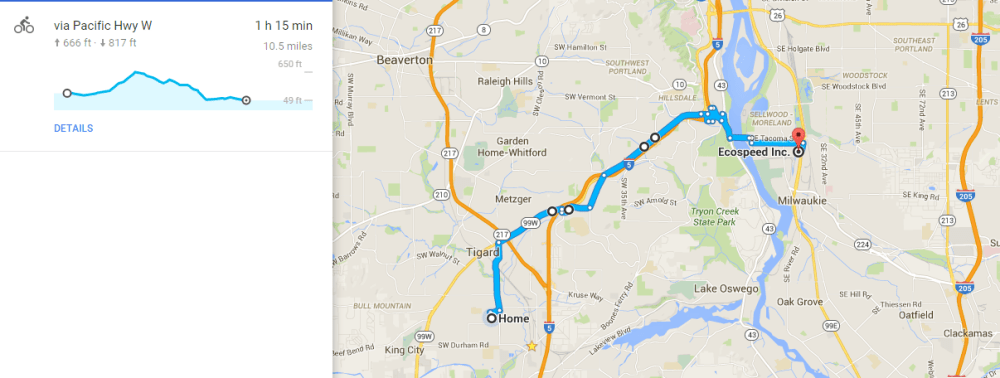
Elevation climb 666 ft and 10.5 miles.

Ecospeed

I hate cycling out of my way to get to my destination. I prefer straightforward routes and no detours. My bicycle is my vehicle and it gets me where I need to be.

I start out on a residential road and the first thing I see is a person driving their car at breakneck speeds around a turn. The city engineers in their wisdom opted to make it a two way stop instead of an all way stop. So you never know if someone is going to come barreling through and barreling through is how they operate on the road.

2508a59bb0a59572cbbe9b7dde50e349
I wonder where people get the idea that speeding is fun? Oh yea! From auto ads.
Breakneck speed.PNG
What the hell engineers! Do you really think people aren’t going to take these turns at speed?

Once I make it through this dangerous intersection, I have to worry about someone flying into me at speed from the left or turning into me from the right.

The speed limit is 35 mph but that doesn’t stop people. The road is engineered to be auto friendly which means people drive faster on it without realizing.

I make my left from a light controlled protected turn lane. The turn lane doesn’t offer me physical protection. The term “protection” in this sense means if someone were to run into me they would be presumed at fault.

The bike lane on SW Hall is abysmal. Often filled with gravel, glass, potholes, and other debris.

So I don’t stay in the bike lane. I shoulder check, signal, and merge. I control my lane past the offending section and then I signal, shoulder check, and merge. Most people yield as appropriate. A few do not. Following dangerously close behind me, laying on the horn, and screaming out your window at me gets you “you’re number one” salute. I really don’t give a shit about your “feelings” when my safety is at stake.

As I approach the intersection of Hall and Pacific Coast Hwy 99, I begin controlling the right hand turn lane. I never fail to be amazed at the cyclists who hug the curb edge of a turn lane. Sharing a lane with anything other than another cyclist is illegal. It is illegal because it isn’t safe. So don’t do it and fuck the L.A.B. and their propaganda about cycling in the right third of the lane. State law plainly says:

ORS § 811.370¹

Failure to drive within lane

(1)Except as provided in subsection (2) of this section, a person commits the offense of failure to drive within a lane if the person is operating a vehicle upon a roadway that is divided into two or more clearly marked lanes for traffic and the driver does not:

(a)Operate the vehicle as nearly as practicable entirely within a single lane; and

(b)Refrain from moving from that lane until the driver has first made certain that the movement can be made with safety.

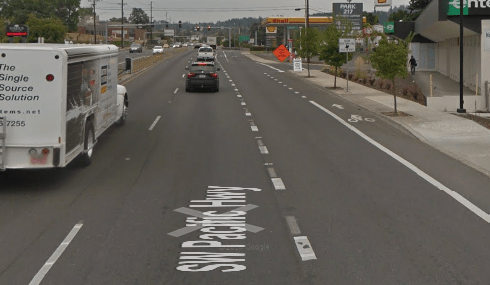
I make my right turn onto Pacific Coast Hwy 99 and I’m greeted with this “What the fuck were they thinking” or as I like to call it the “Jogging Bike Lane.”

Jogging bike lane

I ignore all the fuckery at the edge of the road and control my lane through. This highway isn’t engineered with anything other than autos in mind.

I’ve never biked up highway 99 before. I have never ridden in a car up this way before. I knew there was elevation climb but wow! There was some serious elevation climbing. My asthma kicked into high gear.

I end up turning off of highway 99 onto Capitol hwy. but before I get there let me tell you about where the bike lane ends and before that about the truck parked on the curb and in the bike lane.

So I’m wheezing along in this super narrow bike lane. Drivers are speeding past me with very little space between them and me. This is the inherent nature of car culture bike lanes. There isn’t any room for error. I’m really wishing I could be in the right hand lane and have all that space to myself. At least eight feet of pure buffer zone when I look ahead and see that my wish has come true. There is a delivery truck parked smack on the sidewalk and in the bike lane. I was so happy. Approaching the truck I shoulder check, signal, shoulder check again, and merge. Extra shoulder check to account for the rapid rate of speed and the high volume of traffic.

People behind me slow down. Some of them change lanes to pass and keep on moving. A few stay behind me, which is super annoying. I signal to them to change lanes and pass. For the most part they do. No honks and no rude gestures. You treat me with respect. I treat you with respect. The burden isn’t on me to be friendly or polite. When I hear other cyclists talk about how “You should smile, wave, or blow them a kiss.” it reminds me of men who go around telling women “You should smile more.” It’s sexist, demeaning, and rude. Stop telling other cyclists how to behave. How they behave in any given moment is based on their personal experience. An experience which you yourself are not experiencing because it is personal. So fuck all with your politeness campaign. When people driving cars are waging a “be friendly to cyclists” campaign then I’ll get on board. Until then, fuck them and their arrogance. The roads are public and the public has the right to use them.

images (6)

Once I’m past the truck I continue to control my lane until I have determined it is safe for me to merge back into the dreaded bike lane.

The hill gets steep and I’m really puffing my way up the hill. I start thinking about my inhaler in my backpack and whether I should I pull over to use it. Then I see that the bike lane ends and I temporarily forget about my aching lungs and focus on another safe merge.

Once again I shoulder check, signal, shoulder check, and merge. I’m thinking this is pretty cool. People are passing me in their cars on the left. I can see a few turn their heads to look at me. Most of them are smiling. Definitely different than Kentucky.

As I start to think about my aching lungs again I hear the sound of a tractor trailer behind me. I look in my sideview mirror and sure enough, there is a logging truck behind me. I think he will be smart and go around. He toots his horn at me. The phrase “What the fuck” crosses my mind. I keep pedaling. He stays behind me. I keep pedaling. He stays behind me. I keep pedaling. The tension mounts. Finally I realize this dude (yes, I’m assuming they are a man) is wanting me to get out of his way. So I point to the left lane and then make a forward sweeping motion with my arm. I do this a couple of times and the driver finally changes lanes to pass. He gives me another toot with his horn and I let him know how I feel about that.

Everyone else changes lanes and passes. Some slow down to a more prudent speed, others pass at speed but none of the passes “feel” dangerous and I keep pedaling.

My lungs feel like they are about to explode and I’m looking for a side road to get onto. I see what looks like a reasonable stretch of road and make my right turn onto it.

Take one.PNG
Lane control. It’s how safe cyclists operate on the road.
Take two
Oh! The road isn’t flatter. 😦

At this point I have a driver behind me and they are being polite. The road here is what it is and the only way to safely pass me is to pass left of center. With a steady stream of cars and a blind curve, that just isn’t possible. Lane control shows the driver that passing me isn’t safe.

Take three
The silver car represents where I am at on this road. As you can see there isn’t room for two vehicles in this lane. State law doesn’t allow it unless it’s another cyclist.

As I approach the stop sign, I merge a little further left in the lane. This does two things

  1. It shows them I’m intending to go forward.
  2. It allows them to legally pass me on the right.
Take four
You can legally pass on the right here. 

As I approach the stop line, I can hear the driver behind me rev their engine and speed past me. Their tires spin out a little on the wet roads. I was frustrating their need, their need for speed!

images (7)

Once I’m past the stop sign I pull over and take a couple of puffs from my inhaler. I also shed my jacket, gloves, scarf, and ear mitts.

I gamely cycle up this steep hill for awhile. After a bit I decide fuck it and walk my bike up to the next intersection.

This walking, on a road with no sidewalk, is very interesting. People driving their cars see me. They can see I’m there but they don’t slow down. It is only when I stick my arm out and indicate that they need to give me space. Space which puts them in the other lane. That is when they slow down.

Think about that for a moment.

Until they have to cross the centerline they do not perceive any danger. It is only when they are required to put themselves at risk that they realize they need to slow down.

Which is why I think TriMets “Show them your glow” campaign is bullshit. I could be lit up like a goddamn christmas tree with fireworks shooting out my ass and people would still inlane pass at speed.

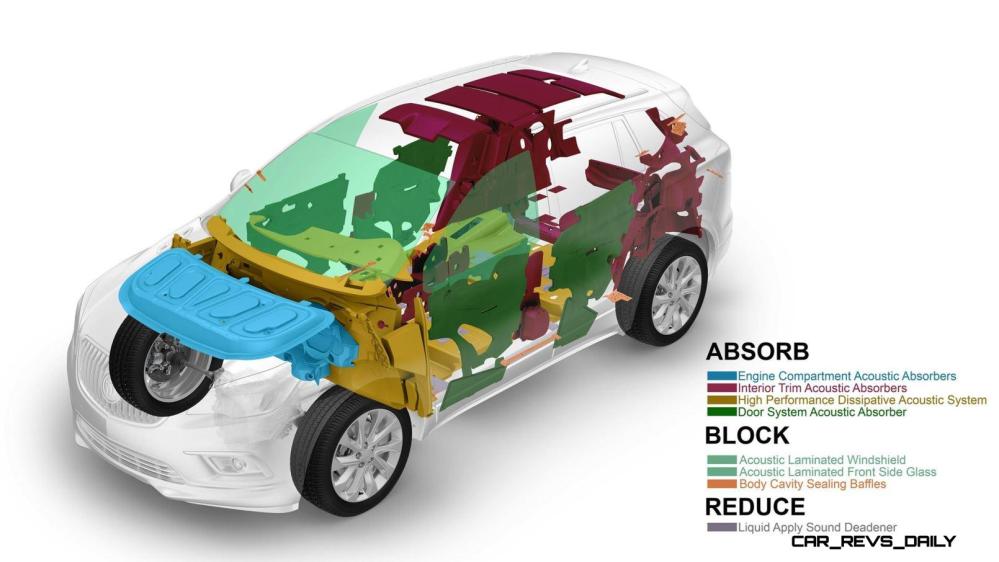
2016-Buick-Envision-QuietTuning-022.jpg
Sound proofing technology, helps prevent driver angst when crushing the life out of pedestrians. If you can’t hear it, It didn’t happen. Keep on driving, at speed.
Skärmavbild-2014-07-18-kl.-00.59.29-e1405638113928.png
Sound proofing technology limits your perception of those around you.

I make it up to the intersection at the top of the hill without incident. But only because I am actively educating every damn motorist who approaches me. It’s exhausting and I hate it. I shouldn’t have to walk along a road and actively keep people from killing me.

Autos.PNG
The law of the land already states that it is your job to operate your car with care around pedestrians. The burden isn’t on me to make your driving experience easier for you. 

To be continued….


Observing Traffic Court

If you want to put your finger on the pulse of car culture; observe traffic court.

The light was yellow for 2.7 seconds. I didn’t have time to stop in 2.7 seconds. So I went forward because I was worried about being cited for impeding traffic.
Actual testimony from a defendant.


There was so much traffic. The light was hard to see. I was worried about what the people behind me would do so I went through the light. I didn’t want to block the intersection.
Actual testimony from a defendant.


My van was loaded down with bricks. I must have had like a ton of weight back there. The road was really slick from all the rain and I knew I wouldn’t be able to stop in time. So I went through the light.
Actual testimony from a defendant.

The motorcycle cop who cited all three of these defendants had a helmet cam. He presented the video evidence to the court.

One of these defendants had their traffic ticket dismissed. The other two did not.

Traffic Lights

§ 811.260¹

Appropriate driver responses to traffic control devices

(4) Steady circular yellow signal. A driver facing a steady circular yellow signal light is thereby warned that the related right of way is being terminated and that a red or flashing red light will be shown immediately. A driver facing the light shall stop at a clearly marked stop line…

(7) Steady circular red signal. A driver facing a steady circular red signal light alone shall stop at a clearly marked stop line…

The driver of a vehicle is required to keep their vehicle under control at all times. They are required to be on the lookout for other road users who may be in their path of travel.

As I sat and listened to the drivers giving their excuses as to why they failed to head the traffic control light, a theme began to appear.

  1. I was distracted.
  2. I didn’t have my vehicle under control.
  3. I was worried about the people behind me.
  4. I couldn’t stop in time.

All of the defendants excuses appeared to be valid in their minds. None of these excuses took into consideration anyone else who may have been using Oregon’s public right of ways. Namely pedestrians but also cyclists.

Speed Laws

§ 811.100¹

Violation of basic speed rule
(1) A person commits the offense of violating the basic speed rule if the person drives a vehicle upon a highway at a speed greater than is reasonable and prudent, having due regard to all of the following:
(a) The traffic.
(b) The surface and width of the highway.
(c) The hazard at intersections.
(d) Weather.
(e) Visibility.
(f) Any other conditions then existing.

If you can’t keep your vehicle under control; you are going too fast.

If you can’t safely stop at the yellow; you are going too fast.

If you can’t safely stop at the red; you are going too fast.

If the speed limit is posted at 35 mph but you can’t safely drive 35 mph then by law you are required to slow down.

Safety Zones

§ 811.030¹

Driving through safety zone
(1) The driver of a vehicle commits the offense of driving through a safety zone if the driver at any time drives through or within any area or space officially set apart within a roadway for the exclusive use of pedestrians and which is protected or is so marked or indicated by adequate signs as to be plainly visible at all times while set apart as a safety zone.
In the video, which the officer showed to the court, each of these drivers went through a safety zone. Their testimony indicated their inability to ascertain if there was a pedestrian present at the time they committed their violations.
While no one was injured, this time. It is a clear indicator that motorists are not educated about the rights of pedestrians. Nor are they educated about their duties as a motorist to be on the lookout for pedestrians or cyclists.
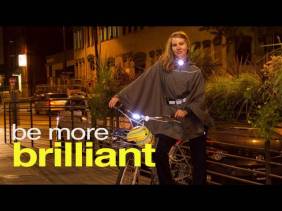
A glaringly obvious example of this is through TriMetsShow them your shine.” ad campaign. Seeing these ads on display throughout Portland heats my blood to a simmering boil.
sddefault
Part pedestrian and part cyclist. It is clear that the ad is placing the onus on the vulnerable road user to be seen. A subversive form of propaganda and victim blaming.

Oregon’s roads are first come, first served, and duty of care.

§ 801.440¹
Right of way
Right of way means the right of one vehicle or pedestrian to proceed in a lawful manner in preference to another vehicle or pedestrian approaching under such circumstances of direction, speed and proximity as to give rise to danger of collision unless one grants precedence to the other. [1983 c.338 §81]

Two of the defendants were found guilty.

One of the defendants was able to get his ticket dismissed. The dismissal was due to a lack of evidence. The evidence was based on the question of whether the yellow light was timed correctly and the vantage point of the officers video did not reveal the defendants traffic control signal.

All in all it was very edifying and I highly recommend it for all pedestrian and cycling advocates.

In all things, remember this, running a red light is illegal. The reason it is illegal is because it isn’t safe. It isn’t safe for you and it isn’t safe for any of the road users around you. Keep your vehicle under control and keep the safety of other road users in mind. Do not worry about what the people behind you are going to do. The person behind you is required to show you courtesy and safety by keeping their vehicle under control.


Why do you use the road like that?

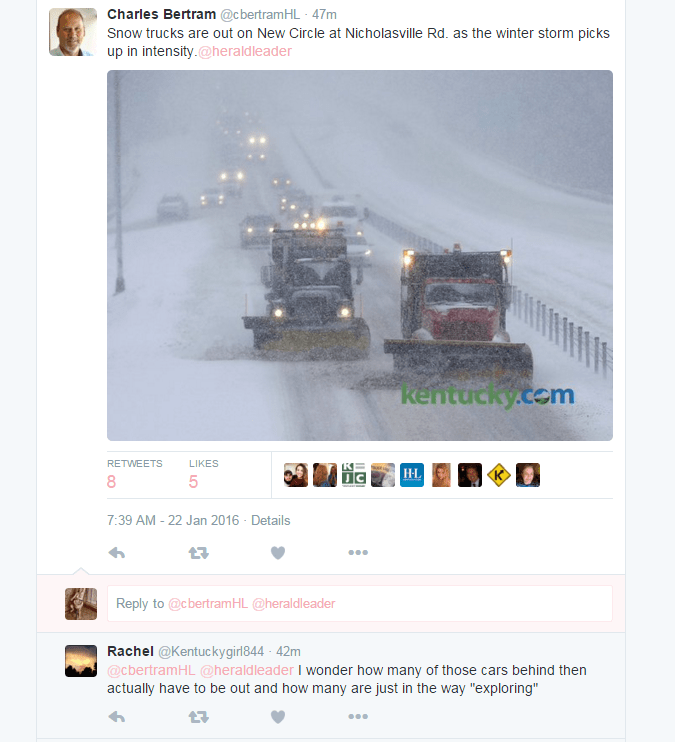
Rachel @Kentuckygirl844 “…how many of those cars behind then actually have to be out and how many are just in the way “exploring.”

Grammatical errors aside.

I want to explore everything that is wrong with this tweet.

  1. It isn’t any of your business why other people are on the road. It is a public road and everyone pays to use it. When, how, or where they use it is up to them.
  2. “how many are just in the way” No one is ever in anyone else’s way on a public right of way, also known as a road. It belongs to the public and the public has the right to use it. These roads are first come, first served, and duty of care. We show compassion for other road users. We yield the right of way to those who were there first. It is courteous, it is wise, and it shows others that we have a heart beating in our chest.
  3. You have nothing better to do on a terrible winter day except to sit and wonder about what other people are up to? Lucky you! This is a picture of those who are not so fortunate. So how about a little compassion?
  4. “Adulting.” Only adults use the roadway. Only adults use cars on the roadway. This isn’t any place for “other” road users. If you aren’t adulting on the road then you are in the way. “Exploring” is for kids. So GTFO!
  5. If they are out there having a light hearted romp in the snow; is it really any of your business?

I think  your tweet says more about you than it does the people using the road.

This is why we can’t have nice things!

Snowing
I’m more concerned with the driver of the SUV. Why doesn’t he have his lights on? It’s your right to be on the road but you do have to show regard for other road users. Safety first!


Cycling through the Polar Vortex

The polar vortex is a large pocket of very cold air, typically the coldest air in the Northern Hemisphere, which sits over the polar region. Nov 8, 2014 Via AccuWeather.com

I was cycling home from work on a friday and the mailman was shaking his head at me as I made my way down Old Georgetown Rd. I overhead him say “It’s too cold out to not have a jacket on.”

I was wearing my company issued sweatshirt and Under Armour long sleeved shirt. I was quite warm, at the time.

I had heard some murmurs at work about a polar vortex. I don’t own a T.V. so I wasn’t current on the local news.

I made it to the Brannon Crossing intersection before the cold air began to really come down on top of me. It was then that I understood why the mailman back in Lexington was so shocked at my sparse attire.

My torso was fine for the time being. The problem was my hands. My fingers were freezing. I could feel the start of frostbite nipping at my fingertips.

I pulled over to the shoulder and tried to use a hot pocket to warm my hands. The wind was so strong. I couldn’t get the hot pocket to work. I stood there, slightly hunched over, and tried to wave down passing motorists. I watched as people looked at me and then kept on going. No one pulling over to help a fellow road traveler.

I put my hands inside my sweatshirt and tried to warm them in my arm pits.

Standing there, with the wind blowing down on me, I was getting cold. Really cold. I could feel despair seeping down into my heart. The full crushing force of just how petty and mean the people are where I lived hit me as hard as that cold northerly wind.

I almost started to cry.

Then I got mad. I mean really angry that these twats, driving by in their warm cars, couldn’t be bothered to help someone clearly in need.

I had made up my mind to cycle as fast as I could further up and pull into the Starbucks. Get a hot coffee, warm up, and then finish my commute home.

Just as I was getting ready to climb back on my bike a man in a big truck pulled up next to me. He got out and asked if I needed help. I told him I was going to bike up to Starbucks and he said that he would give me a lift into town if I wanted.

We put my bike in the bed of his pickup and he cranked up the heater in the cab. I told him how upset I was that no one tried to help me before him. He asked me how long I’d been out there. I told him I’d cycled from North Lexington to that point. He couldn’t believe that no one offered to help before him. “These people only care about themselves,” he said. I nodded in agreement.

We made it to main street and he asked me if I’d like to get some shopping done. I told him that I could use some warm gloves. He took me to the Tractor Supply and I found a pair of camo gloves that looked like they would do the job.

I was worried about price, so I didn’t buy anything more but I sure was looking longingly at the wool socks.

He dropped me off at my house and gave me his business card. He said if I ever needed any help to let him know. I thanked him and took the proffered card. I never did call him but I kept the card.

I arrived home to find my 17 yr old son complaining that he was hungry.

This hurt my heart and made me mad. I told him that I almost froze to death and that I was very lucky to be alive. Could he give me a goddamned minute to settle in before hitting me up for dinner. That or he could cook his own food himself. My son gave me a dirty look and went to his room. It was then that I sat down and cried.

After warming up and resting, I made dinner and set to thinking about how I was going to stay warm for Monday morning’s commute.

I went to the store the next day. I was bundled up better than before and wearing my new gloves. I bought food that I hoped my son would be able to cook for himself. I’d taught the kid how to cook but he always expected me to do it for him. As I was checking out, I saw the headlines on the newspaper. It was then that I realized this cold was a serious cold.

This was my first winter biking and I was pretty concerned.

I went home and after putting away the groceries; I sat down and looked up the local news channels online.

I read in growing horror the forecasted record lows.

I quickly took stock of everything I owned. I made a short list and went to the big box store where I bought wool socks, a wool hat with ear flaps, ear mitts, leggings, and other various items.

I rode around on Sunday testing out my clothing and trying to figure out the best way to stay warm on my 18 mile bike ride to work.

The most important part of my plan to stay warm was to plan for warm up stops. I calculated the distance between myself and the convenience stores that would be open on my way to work.

I also spent a great deal of time researching on YouTube and Google searching how to stay warm in winter. A lot of the advice was awful. Clearly geared towards the weekend road warrior going out for short sprints. I needed to know how to stay warm for an extended amount of time.

After some careful research I decided on what I would wear.

This is what I wore.

I started with layers. Not tight layers as these did not allow pockets of air to be trapped. This is the secret to staying warm while wearing light layers.

The legs:
1. Tights for flexibility
2. Under Armour leggings.
Between the tights and leggings I had a pocket of air. As I cycled the heat generated by my body heated up the pocket of air.
3. Loose jeans. The heavy denim provided protection from the wind shear.
The feet:
1. Winter boots two sizes too large. (This was my only mistake on that first cold ride. I bought the winter boots on my way to work after almost losing my feet to frostbite.)
2. A tight pair of wool socks.
3. A fluffy thermal pair of socks.
4. A hot pocket in the toe of each boot. (Never directly next to the skin or you’ll get a chemical burn)
The hands:
1. One pair of thermal skin tight gloves.
2. One pair of insulated (one or two sizes larger than the other gloves)
3. One hot pocket between the gloves. Placed on the back of the hand but not in direct contact with skin.
The torso:
1. Under armor shirt.
2. A wool/fleece lined sweater.
3. A mid weight jacket which also doubles as a wind breaker. ( I wore a $20 motorcycle windbreaker that I bought off of Amazon.com)
The neck:
1. A wool scarf wrapped tight but not too tight. The length tucked into the jacket.
2. A second larger scarf. This one loosely wrapped around neck and chin.
3. A neck gaiter. This goes over neck, chin, and nose.
4. One more light scarf loosely wrapped around the mouth hole. (This caught my steamy breath and kept the cold air from freezing my lungs.)
The head:
1. A wool hat with ear flaps.
2. Ear mitts. The wool hat goes over the ear mitts.
3. A bike helmet to hold the whole contraption down.
My back:
I wore a backpack in which I stored my work clothes and lunch. This helped keep the wind off my back. Not that that was ever an issue. My fortune was such that I had a head wind on the way to work and as the day wore on the wind would change and come up from the south. So it was a head wind both freaking ways. Ugh!

January 5th 2014
I went to bed Sunday night with my stomach tied up in knots. I tossed and turned all night. I finally got up and stayed up at 2 a.m.

January 6th 2014
I checked the temperature forecast and when they said -40 degrees with windchill, I said no way! I called in that Monday. I just couldn’t do it.

I stayed home and worried some more. I planned and replanned my route. Took stock of my clothing and sat down and worried some more. I called a few people and sent out a few messages on social media asking for a ride to work. No response.

So I sat myself down and gave myself a pep talk. I could do this. I was ready.

January 7th 2014
Tuesday morning dawned dark and early. I again spent the better part of the night tossing and turning. Again I got up at 2 a.m.

I woke to find that the temperatures had significantly warmed up.

Wind chill readings from -20 to -25 to begin the day and will head closer to 0 degrees later in the afternoon. That’s when high temperatures warm into the upper single digits to low teens. Kentucky Weather Center

I left the house at 2:30 a.m. I was nervous inside but still I insisted on wearing my “can do” attitude.  I dressed carefully in my layers and my only complaint was that my boots were too tight. I stepped outside and immediately had concerns for my feet.

Not to be deterred, I headed off. As I was cycling to my first pit stop, the BP on Catnip Hill, I made my way through the intersection where U.S. 27 meets up with Business U.S. 27. Two Nicholasville Police patrol cars were preparing to turn left onto Business U.S. 27 and when they saw me they honked their horns at me. It startled me and since they didn’t bother to follow me I kept on going into that dark and frigid morning.

Once I made it to the BP, I realized just how cold it was outside. I sat down and warmed up for about 20 minutes before mentally girding my loins and pushing on to my next pit stop.

When I made it to the intersection of Man O’ War and U.S. 27 I knew I was in trouble. My feet had become numb and I couldn’t move my toes.

I decided to take a chance and pull into the big box store. I needed better boots. This is where I bought the last pair of winter boots which also happened to be two sizes too big. Desperate times call for desperate measures and I bought the boots figuring that I would exchange them for a smaller pair at a later date. I never did.

I sat down in the aisle and peeled off my rubber boots. I inspected my toes. They were blue and I had to move them up and down with my fingers. The pain I felt as the warm air hit them was excruciating. I stood up and painfully realized that the heel of my foot was frozen too. I sat back down and rubbed my feet. I put on my warm socks and took the boots up to the register to pay for them. Everyone was astonished that I was cycling in the cold weather.

The boots being two sizes too large were perfect. My bulky socks fit with plenty of air pockets to trap the warm air and I could put a hot pocket hand warmer into the toe of each boot. My feet were so warm they were sweating.

I made it to my next pit stop and bought some hot coffee. I stood in the store and drank it down. I made idle chit chat with some of the shoppers and then headed off to the next pit stop. I made it to work thirty minutes early. I had left at 2:30 a.m. and arrived at 5:30 a.m.

Three hours commuting whereas my normal commute took an hour, sometimes an hour and thirty minutes if I lingered at my pit stops.

When I realized how easy it was to dress warm for cycling, I felt silly for calling in on that Monday. I can look back and laugh at how worried I was at the time. My greatest accomplishment was that I figured it out and made it through that winter with no support from anyone.

That is how I cycled warmly through the polar vortex.

When I’d stop for coffee people would ask me if I was really cold. My response? No! I’m burning up. It wasn’t unusual to arrive sweaty.
The trick is to know that you are going to sweat. That sweat will freeze, which is why those pockets of air are so important. They allow the sweat to evaporate off without chilling you.

*Note: the only part of my body that I was never successfully able to keep toasty warm was the thighs. From the top of my knees to just below my hip would always be chilly but never chilled.

16 - 1.jpg
My original purchase from the tractor supply store and my new addition from Cabela’s.


Lower speed roads
Typical attitude of the people in Nicholasville.