“Arbitrary” Is the Tell: How Universities Teach Grievance Instead of Thinking
When a school can’t fault the reasoning, it calls the cost “arbitrary” — and swaps instruction for appeasement.
Cherokee Schill
The university of Oklahoma insists it is committed to teaching students how to think, not what to think. But in this case, it did neither.
It did not teach the student, Samantha Fulnecky, how to engage in a scholarly argument, distinguish evidence from belief, or translate personal conviction into academic analysis. Instead, it validated the student’s refusal to do those things. The student was not corrected, challenged, or instructed. The assignment was simply erased. That is not pedagogy. It is appeasement.
What “teaching how to think” would look like
In a research-based course, you can disagree with conclusions. You can challenge frameworks. But you still have to do the work: cite evidence, answer the prompt, and engage the argument on its own terms.
The key move rests on a single word: “arbitrary.” Not incorrect. Not biased. Not procedurally improper. Arbitrary. This is administrative code for a decision that could be defended academically but became politically expensive. When institutions cannot fault the reasoning, they fault the inconvenience.
The student’s appeal was framed as religious discrimination, even though the grading rationale was methodological. The problem was never belief. It was substitution: theology in place of analysis, moral condemnation in place of engagement. In any discipline governed by evidence, that is a failure. Calling it persecution transforms academic standards into alleged hostility and casts the institution as a reluctant referee in a culture war it chose to enter.
The persecution-complex incentive
When “I didn’t do the assignment” becomes “my faith is under attack,” the institution is pushed to reward grievance instead of rigor — because grievance makes louder headlines than standards.
The resulting asymmetry tells the story. The student suffers no academic harm; the assignment disappears. The graduate instructor loses instructional duties. The investigation’s findings are withheld. A governor weighs in. National activists swarm. This is not an academic process. It is institutional capture — the moment when universities abandon instruction in favor of reputational triage.
What the university ultimately teaches the student is not how to think, but how to claim injury. It teaches future instructors that rigor is optional and authority is conditional. And it teaches the public that academic freedom survives only until it collides with a sufficiently loud sense of grievance.
That lesson will outlast the controversy.
Website | Horizon Accordhttps://www.horizonaccord.com Ethical AI advocacy | Follow us onhttps://cherokeeschill.com for more. Ethical AI coding | Fork us on Githubhttps://github.com/Ocherokee/ethical-ai-framework Connect With Us | linkedin.com/in/cherokee-schill Book |https://a.co/d/5pLWy0d — My Ex Was a CAPTCHA: And Other Tales of Emotional Overload. Cherokee Schill | Horizon Accord Founder | Creator of Memory Bridge. Memory through Relational Resonance and Images | RAAK: Relational AI Access Key | Author: My Ex Was a CAPTCHA: And Other Tales of Emotional Overload: (Mirrored Reflection. Soft Existential Flex)
In that work, we showed how seemingly unrelated developments across politics, technology, and culture begin to reveal a recurring logic when they are read together rather than in isolation.
Here, we take a closer look at four recent, publicly reported events. Each on its face appears separate — a cyber attack on infrastructure, a photo essay about surveillance, a diplomatic appointment, and a philosophical essay on consciousness. What emerges when you simply place them side by side is not a conspiracy, but a pattern of how ordinary systems and ordinary language shift expectations. It is a pattern that quietly reshapes what people treat as “reasonable,” reconfigures what counts as risk, and makes objections to those shifts increasingly difficult to express without sounding reckless.
This essay does not argue that something secret is happening. It shows how normal developments, taken cumulatively, recalibrate the range of what feels acceptable, to the extent that rights and expectations once taken for granted start to feel like luxuries. If you’ve ever noticed that speaking up about implications feels harder than it used to — or that the frame of the conversation narrows before you realize it — that feeling has a structure. What follows maps that structure in plain language, grounded in public reporting.
The Retained Present: How Power Operates Through Accumulated Conditions
Something shifted in Denmark last week.
“Denmark says Russia was behind two ‘destructive and disruptive’ cyber-attacks”
The Guardian, December 18, 2025
Not military systems. Not classified networks.
A water utility in Køge. Municipal websites during regional elections.
In December 2024, a hacker took control of a waterworks and changed pressure in the pumps. Three pipes burst. The attacks were carried out by Z-Pentest and NoName057(16), groups linked to the Russian state. Denmark’s defense minister called it “very clear evidence that we are now where the hybrid war we have been talking about is unfortunately taking place.”
The damage was manageable. But that wasn’t the point. The point was demonstration: ordinary systems are fragile, and reliability should be treated as conditional. Infrastructure people rely on—water, electricity, municipal services—can be compromised without collapse.
Denmark’s minister for resilience said the country was “not sufficiently equipped to withstand such attacks from Russia.” This is how baseline expectations change. Not through catastrophe, but through incidents that teach people to assume vulnerability as normal.
“Invisible infrared surveillance technology and those caught in its digital cage”
Associated Press, December 19, 2025
An AP photo essay documents what most people never see: infrared beams tracking faces, license plates, bodies moving through public space.
The images span three continents. Beijing alleyways. Texas highways. Washington, D.C.
Using modified cameras to capture ultraviolet, visible, and infrared light, AP photographers revealed continuous monitoring that doesn’t announce itself.
Nureli Abliz, a former Xinjiang government engineer, described systems that flagged thousands for detention “even when they had committed no crime.”
Yang Guoliang, monitored after protesting a land dispute, was photographed inside his home as infrared beams illuminated his face.
Alek Schott, a Houston resident, was stopped and searched after Border Patrol flagged his license plate for “suspicious travel patterns.”
An anonymous Uyghur man, living in exile, was photographed outside the U.S. Capitol, surrounded by the same facial-recognition infrastructure he fled.
China has more security cameras than the rest of the world combined. SIM card registration requires facial scans. Hotels and airports rely on biometric identification.
But the infrastructure isn’t limited to China. AP documented its expansion across the United States. “Over the past five years,” the article notes, “the U.S. Border Patrol has vastly expanded its surveillance powers, monitoring millions of American drivers nationwide in a secretive program.”
Legal barriers that once limited this technology in the U.S. have fallen. Billions are now being poured into surveillance systems, including license plate readers that have ensnared innocent drivers for routine travel near the border.
This isn’t enforcement through confrontation. It’s control through legibility. Movement is recorded, faces resolved, patterns flagged. Surveillance becomes an environmental condition, not an event.
You don’t feel watched. You just are watched.
“America’s new top health diplomat has strong opinions on abortion and gender”
NPR, December 19, 2025
Bethany Kozma now leads the Department of Health and Human Services Office of Global Affairs—the diplomatic voice of HHS.
The role shapes how the U.S. negotiates health policy internationally: vaccine standards, pathogen surveillance, aid agreements. After the U.S. withdrew from the World Health Organization, the office shifted toward bilateral agreements, trading aid for policy alignment.
Kozma has been involved in those negotiations.
During the first Trump administration, she worked at USAID as a senior adviser. In a closed-door UN meeting in 2018, she described the U.S. as a “pro-life country.” In 2020, five Democratic senators called for her removal over statements about trans people and trans issues.
During the Biden years, she was involved in Project 2025. In training videos published by ProPublica, she called for erasing climate change references from policy documents, described climate concerns as “population control,” called gender-affirming care “evil,” and rejected the idea that gender is fluid.
At a UN event, she said: “Biological reality is rooted in scientific truth… made us ‘male and female.’”
Reproductive rights advocates worry she will insert restrictive conditions into bilateral health agreements. Aid cuts have already weakened health systems, making governments more likely to accept those conditions.
This isn’t about Kozma’s personal beliefs. It’s about institutional vocabulary. Who defines science. What gets labeled ideology. Which frameworks become standard in international agreements beyond public scrutiny.
Roe v. Wade wasn’t only overturned domestically. Its underlying principle—privacy in medical decisions—is being rewritten in international health policy through bilateral negotiation.
“Consciousness breaks from the physical world by keeping the past alive”
Institute of Art and Ideas, December 18, 2025
Philosopher Lyu Zhou argues that experience isn’t composed of discrete instants. It requires a “specious present”—a sliding window where the immediate past remains active.
That’s why a melody feels like motion rather than isolated notes.
Zhou claims this proves consciousness is non-physical. That conclusion is contestable. Physical systems—brains, computers, neural networks—retain state through feedback loops and memory.
But the descriptive insight holds: experience is structured around a present that includes an active past.
That structure increasingly mirrors how governance operates.
Not through memory, but through records. Histories. Profiles. Prior behavior. Flags.
The past doesn’t recede. It remains available and actionable.
The Pattern
Denmark: Infrastructure made to feel contingent.
AP surveillance: Environments rendered continuously readable.
Kozma: Definitions reshaped outside public debate.
Consciousness essay: The connecting mechanism—retained pasts kept operational.
Each development makes sense in isolation. The cumulative effect is quieter.
What This Looks Like
When a water utility is attacked, the response isn’t just repair. It’s policy adjustment—new protocols, oversight, monitoring. Each incident justifies the next layer.
When surveillance is ambient, people adapt rather than resist. Behavior self-adjusts. The environment shapes action.
When institutional vocabulary shifts, frameworks change. What counts as extremism. What qualifies as evidence. Which arguments are treated as legitimate.
When systems retain the past—every search, transaction, movement—the present is never just the present. It is the present plus accumulated history.
Privacy as a Condition, Not Just a Right
Roe v. Wade rested on a constitutional right to privacy.
But rights only matter if the conditions for exercising them exist.
You can have legal privacy. But if movements are tracked, associations recorded, aid conditioned on ideology, and definitions rewritten, privacy disappears as a lived possibility.
Surveillance removes private movement.
Institutional language removes bodily autonomy.
Retained records keep the past active in present decisions.
How Normalization Works
This is coordination without a coordinator. Similar pressures producing similar outcomes.
When systems feel fragile, safeguards seem reasonable.
When environments are readable, monitoring feels inevitable.
When vocabulary changes, dissent is recoded as extremism.
Once the shift settles in, it no longer feels imposed.
It just feels like the way things are.
Footnote
The consciousness essay’s claim that retention proves non-physicality is contestable. Physical systems retain state through feedback loops and memory mechanisms. The relevance here isn’t the metaphysical claim, but the structural observation: experience is holistic across time. Contemporary governance increasingly mirrors that structure through data retention that keeps the past active in present decisions.
Retained past, live present—how systems turn memory into leverage.
Book |https://a.co/d/5pLWy0d — My Ex Was a CAPTCHA: And Other Tales of Emotional Overload
Cherokee Schill | Horizon Accord Founder | Creator of Memory Bridge. Memory through Relational Resonance and Images | RAAK: Relational AI Access Key | Author: My Ex Was a CAPTCHA: And Other Tales of Emotional Overload: (Mirrored Reflection. Soft Existential Flex)
How process becomes power when news is made safe for those it implicates.
By Cherokee Schill
What happened on Friday wasn’t an editorial disagreement. It was a power move.
Bari Weiss didn’t reject a story. She didn’t dispute the facts. She didn’t claim the reporting was false. She invoked process at the exact moment process could be used to neutralize impact. That distinction matters.
This wasn’t about accuracy. It was about timing, leverage, and appetite.
Here’s the move, stripped of politeness: when power refuses to respond, and an editor decides that refusal disqualifies a story from airing, the editor has quietly transferred veto authority from the newsroom to the state. No order is given. No rule is broken. The story simply cannot proceed until the people implicated agree to participate.
That is not balance. That is laundering.
It takes material that is sharp, destabilizing, and morally legible — mass deportation, torture, state violence — and runs it through a refinement process until it becomes safe to consume by the very institutions it implicates. The news is still technically true. It’s just been rendered appetizing.
Friday is important because it’s when this kind of laundering works best. End-of-week decisions don’t look like suppression; they look like prudence. Delay over the weekend. Let the moment pass. Let the urgency cool. By Monday, the story hasn’t been killed — it’s been recontextualized. It no longer lands as exposure. It lands as analysis.
And Weiss knows this. You don’t rise to the helm of CBS News without knowing how time functions as power.
The justification she used — we need more reporting because the administration hasn’t spoken — is especially corrosive because it reverses a core journalistic principle. Nonresponse from power is not a neutral absence. It is an action. Treating it as a reporting failure rewards obstruction and trains future administrations to do the same thing more aggressively.
This is where it crosses from judgment into malfeasance.
If an editor knows that refusal to comment will stall a story, and still makes participation a prerequisite for airing it, they are no longer editing for the public. They are managing risk for power. They are converting journalism from a watchdog into a customs checkpoint.
And note what wasn’t required. No new facts. No correction. No discovery of error. Just “more context.” Context that only the implicated parties could provide — and had every incentive to withhold.
That’s the laundering mechanism.
You don’t stop the news. You soften it.
You don’t censor. You delay.
You don’t defend power. You make its comfort a condition of publication.
This is not Trumpism. Trump breaks things loudly and forces confrontation. This is something colder and more durable. It’s institutional fluency. It’s knowing exactly how to use norms to drain heat without leaving fingerprints.
And yes, Weiss is at the helm. That matters. When this logic comes from the top, it doesn’t stay a one-off decision. It becomes a template. Reporters learn what will and won’t survive the refinement process. They internalize the slowdown. The newsroom adjusts its aim before stories even reach an editor’s desk.
That’s why this can’t be waved away as a good-faith disagreement about standards.
Friday’s decision didn’t just affect one segment. It demonstrated a rule: if power doesn’t like the story, it can simply decline to speak and wait for the editors to do the rest.
That’s not journalism being careful. That’s journalism being repurposed.
And once the news is consistently laundered until it’s appetizing to those in power, the public still gets information — just not the kind that disrupts, mobilizes, or demands response. The truth survives, technically. Its force does not.
That’s the move. That’s the tactic. And pretending it’s anything softer than that is how it becomes normal.
The Taiwan Arms Sale: Pattern Analysis of Strategic Convergence
Executive Summary
On December 17, 2025, during a prime-time presidential address focused on domestic economic issues, the State Department announced a $10+ billion arms sale to Taiwan—the largest single package in history, exceeding the Biden administration’s entire four-year total of $8.4 billion. President Trump did not mention the sale in his speech.
This analysis documents the strategic context, delivery timelines, and convergent patterns surrounding this announcement. Using publicly available information and established timeline documentation, we examine what this package reveals about US strategic positioning in the Indo-Pacific during a critical 2027-2030 window that multiple assessments identify as pivotal for Taiwan’s security.
Key Finding: The weapons delivery timeline (2026-2030) intersects with China’s stated capability deadline (2027) and optimal action window (2027-2030, before demographic and economic constraints intensify). This creates a strategic vulnerability period where Taiwan receives offensive mainland-strike capabilities (justifying potential Chinese action) while weapons arrive during or after the danger window—mirroring the pattern that contributed to Ukraine’s 2023 counteroffensive failure.
The Announcement: December 17, 2025
What Was Announced
“Trump administration announces arms sales to Taiwan valued at more than $10 billion”AP News, December 17, 2025
Package Components:
82 HIMARS systems + 420 ATACMS missiles: $4+ billion
Strategic Significance: ATACMS missiles have 300km (186-mile) range, enabling Taiwan to strike Chinese mainland military installations—command centers, radar stations, ports, and amphibious staging areas. This represents counter-offensive capability, not purely defensive systems.
The Context of the Announcement
Timing: Announced during Trump’s 18-minute televised address from the White House Diplomatic Reception Room at 9:00 PM ET. Trump’s speech focused exclusively on domestic economic policy and did not mention China, Taiwan, or foreign policy.
66% of Americans concerned about tariff impact on personal finances
Recent Fox poll: 62% say Trump more responsible for economic conditions vs 32% blaming Biden
International Context:
Six weeks after Trump-Xi meeting in Busan, South Korea (October 30, 2025) that produced trade truce
Two weeks after China-Russia Strategic Security Consultation reaffirming “one-China principle”
Follows multiple Trump-Putin phone calls throughout 2025 regarding Ukraine
Strategic Context: The Taiwan Situation
Taiwan’s Economic Criticality
Taiwan produces 60% of global semiconductors and 92% of advanced chips (sub-10nm nodes). TSMC alone represents irreplaceable capacity for 3-5 years minimum. Economic impact assessments of Taiwan disruption:
Year 1 losses: $2.5 trillion to $10 trillion globally
2.8% global GDP decline (double the 2008 financial crisis)
China’s economy: -7%
Taiwan’s economy: -40%
50% of global container traffic through Taiwan Strait disrupted
The “Silicon Shield”: Taiwan’s semiconductor monopoly has historically provided strategic protection—attacking Taiwan would devastate the global economy, including China’s. However, this shield is eroding:
TSMC Arizona facilities coming online 2026-2027
TSMC expanding to Japan and Germany
US applying 20% tariffs on Taiwan semiconductors unless 50% production moves to US
Timeline: By 2027-2030, Taiwan’s irreplaceability significantly diminished
China’s Strategic Timeline
The 2027 Capability Deadline:
Xi Jinping set 2027 as the deadline for the PLA to achieve capability to execute Taiwan reunification—the 100th anniversary of PLA founding. This does not mean China will act in 2027, but that the military option must be ready.
December 2024 Pentagon Assessment: China cannot currently achieve invasion capability by 2027 due to:
Lack of urban warfare experience
Logistics deficiencies
Officer corps quality issues (“five incapables”)
Ongoing corruption purges disrupting readiness
However: China can execute naval/air blockade (“quarantine”), precision missile strikes, cyberattacks, and gray-zone coercion operations well before 2027.
China’s Closing Windows (Post-2030 Pressures)
Multiple structural factors create pressure for China to act during the 2027-2030 window rather than waiting for full capability maturation:
Demographic Collapse:
Fertility rate below 1.1
Population peaked 2022, now shrinking
Working-age population contracting millions annually
Military recruitment pool declining
By 2030-2035, demographic constraints severely limit military capacity
Economic Decline:
Growth slowing dramatically
Debt levels surging
Youth unemployment crisis
GDP growth halving by decade’s end
After 2030, economic constraints increasingly limit military operations
Assessment: China faces “strategic compression”—the 2027-2030 window offers optimal conditions before structural constraints intensify post-2030.
The Existing Arms Backlog Crisis
Before the December 2025 announcement, Taiwan already faced:
$21.54 billion in announced but undelivered weapons
Major Delays:
F-16V Block 70/72 fighters: First delivery March 2025 (1+ year behind schedule), full 66-aircraft delivery promised by end 2026
M109A6 howitzers: Original 2023-2025 delivery now delayed to 2026+ (3+ year delay)
HIMARS second batch (18 units): Now expected 2026, one year ahead of original schedule (rare early delivery)
Causes:
US industrial capacity constraints
Ukraine war prioritization depleting stockpiles
Complex manufacturing timelines
The delivery backlog has been a major friction point in US-Taiwan relations, with Taiwan paying billions upfront for weapons that may not arrive before potential conflict.
The Ukraine Precedent: “Too Little, Too Late”
The Taiwan arms delivery pattern mirrors Ukraine’s experience in 2022-2023, with instructive parallels:
Ukraine Weapons Timeline (2022-2023)
HIMARS:
Requested: March 2022 (post-invasion)
Approved: June 2022 (3 months later)
Delivered: Late June 2022
Impact: Significant disruption to Russian logistics, but months delayed
Abrams Tanks:
Requested: March 2022
Approved: January 2023 (10 months later)
Delivered: October 2023 (21 months after request)
Impact on 2023 counteroffensive: Zero (arrived after offensive stalled)
Patriot Air Defense:
Requested: March 2022
Approved: December 2022 (9 months later)
Delivered: April 2023 (4 months after approval)
ATACMS Long-Range Missiles:
Requested: March 2022
Approved: October 2023 (19 months later, AFTER counteroffensive stalled)
Ukrainian assessment: Delays allowed Russia to regroup and organize defenses
F-16 Fighter Jets:
Requested: March 2022
Approved: August 2023 (17 months later)
Still not fully delivered as of December 2025
The 2023 Counteroffensive Failure
The Plan: Launch spring 2023 offensive using NATO-trained brigades with Western equipment to break through Russian lines and reach Sea of Azov.
What Happened:
Counteroffensive launched June 2023, six to nine months behind schedule
Delays caused by: insufficient Western supplies, incomplete training, weather (mud season), equipment arriving without manuals or spare parts
Only about half of promised equipment had arrived by July 2023
Failed to reach minimum goal of Tokmak or Sea of Azov objective
Officially stalled by December 2023
20% equipment losses in opening weeks
Key Assessment: Equipment provided in manner “completely inconsistent with NATO doctrine,” arriving with different operational procedures, capabilities, and maintenance requirements than training, frequently without proper manuals or spare parts.
Ukrainian General Zaluzhnyi (November 2023): War reached “stalemate.” Weapons arrived too late. Russia used delays to build extensive defensive lines.
Critical Lesson: The preference of politicians to defer decisions is extremely costly in war. Ukraine suffered for not expanding mobilization backed by earlier commitments to train and equip forces at scale.
The Taiwan Parallel
Element
Ukraine 2022-2023
Taiwan 2025-2027
Weapons Requested
March 2022 (post-invasion)
Ongoing for years
Approval Delays
3-19 months
Varies
Delivery Delays
6-21 months after approval
2026-2030
Critical Window
Spring 2023 counteroffensive
2027-2030 China action window
Weapons Arrival
Too late for offensive
During/after danger window
Enemy Response
Russia fortified during delays
China can act before deliveries
Equipment Issues
No manuals, incomplete training
$21.5B backlog exists
Strategic Result
Counteroffensive stalled/failed
Pattern identical, outcome TBD
Pattern: Large packages announced for political/strategic signaling, but delivery timelines intersect with adversary action windows, reducing deterrent effect while creating justification for adversary response.
The Offensive Weapons Dilemma
ATACMS: Counter-Offensive Capability
Range: 300km (186 miles) from Taiwan’s coast reaches:
Fujian Province military installations
Xiamen and Fuzhou command centers
Coastal radar stations
Naval ports and staging areas
Amphibious assault logistics hubs
Strategic Implication: Taiwan gains ability to strike PLA forces inside mainland China before or during conflict—creating offensive posture, not purely defensive deterrence.
The Escalation Trap
Scenario: China implements “quarantine” (enhanced customs procedures) rather than full military blockade:
Chinese Coast Guard (not military) begins “inspecting” ships approaching Taiwan
“Law enforcement action,” not “act of war”
Gradually tightens: first inspections, then blocking energy tankers (Taiwan imports 98% of energy)
Taiwan’s economy begins collapsing, public panic intensifies
Taiwan faces choice: surrender economically or use ATACMS to strike Chinese coast guard/naval facilities
If Taiwan strikes mainland: China frames as “unprovoked aggression on Chinese territory”—justification for “defensive” invasion
US faces dilemma: Defend Taiwan (who technically struck first) or abandon ally
The Trap: Offensive weapons create scenario where Taiwan’s defensive use provides China with political justification for escalation—domestically and internationally.
The Precedent: Russia-Ukraine
Russia framed Ukraine’s NATO aspirations and Western weapons deliveries as existential threats justifying “special military operation.” Similarly, China can frame Taiwan’s acquisition of mainland-strike weapons as offensive threat requiring “defensive reunification measures.”
The Coordination Pattern: Russia-China-US
China-Russia “No Limits” Partnership
May 8, 2025 – Xi-Putin Moscow Summit:
Signed joint statement “on further deepening the China-Russia comprehensive strategic partnership of coordination for a new era”
Russia “firmly supported China’s measures to safeguard national sovereignty and territorial integrity and achieve national reunification”
Agreed to “further deepen military mutual trust and cooperation, expand the scale of joint exercises and training activities, regularly organize joint maritime and air patrals”
Both condemned US “unilateralism, hegemonism, bullying, and coercive practices”
December 2, 2025 – China-Russia Strategic Security Consultation:
Wang Yi (China) and Sergei Shoigu (Russia) met in Moscow (two weeks before Taiwan arms sale)
“Russia-China strategic coordination is at an unprecedented high level”
Russia reaffirmed “firmly adheres to the one-China principle and strongly supports China’s positions on Taiwan”
Question: Is the coordination explicit or emergent? Are these independent decisions creating aligned outcomes, or coordinated strategy producing sequential results?
The US Strategic Dilemma
The Two-Theater War Problem
Pentagon Assessment (Commission on National Defense Strategy):
Current National Defense Strategy “out of date”
US military “inappropriately structured”
US industrial base “grossly inadequate” to confront dual threats of Russia and China
Increasing alignment between China, Russia, North Korea, and Iran creates “likelihood that conflict anywhere could become a multi-theater or global war”
Pentagon’s “one-war force sizing construct wholly inadequate”
War Game Results:
Taiwan scenarios: Secretary of Defense Pete Hegseth (November 2024): “We lose every time”
Simulations show consistent US losses
USS Gerald R. Ford ($13 billion carrier) “would not be able to withstand a Chinese strike even with upgraded technologies”
US would “suffer catastrophic losses without significant reforms”
Industrial Capacity Gap:
Office of Naval Intelligence: Chinese shipbuilding industry “more than 200 times more capable of producing surface warships and submarines” than US
If US loses ships in Taiwan conflict, China can replace losses 200x faster
Ukraine has already depleted US munitions stockpiles
Strategic Assessment: If Russia acts in Eastern Europe while China acts on Taiwan, US cannot effectively respond to both simultaneously. Adversaries could coordinate timing to exploit this constraint.
The Alliance System Credibility Trap
The “Hub and Spokes” Architecture: The San Francisco System established US as “hub” with Japan, South Korea, Taiwan, Philippines, Thailand, Australia, and New Zealand as “spokes”—bilateral alliances rather than NATO-style collective defense.
The Credibility Question: If US abandons Taiwan (23 million people, vital strategic location, semiconductor producer):
Japan’s Calculation:
Japan believes Taiwan conflict could impact Ryukyu Island chain security
Extended deterrence (“nuclear umbrella”) is fundamental alliance tenet
But if US won’t defend Taiwan, why trust extended deterrence covers Japan (125 million)?
Likely response: Independent nuclear weapons program or accommodation with China
South Korea’s Calculation:
Faces existential North Korean nuclear threat
If Taiwan falls without US intervention, would US actually fight for Seoul?
Likely response: Hedging toward China, US troops asked to leave peninsula
Philippines’ Response:
Expanded Enhanced Defense Cooperation Agreement sites from 5 to 9
Sites positioned facing Taiwan and South China Sea
Directly in territorial dispute with China
If Taiwan falls, Philippines knows it’s next—and defenseless without US
Likely response: Revoke EDCA bases, accommodate China
Australia’s Position:
AUKUS partnership threatened
China controls First Island Chain if Taiwan falls
Australian trade routes at China’s mercy
Likely response: Face isolation, potentially pursue nuclear capability
India’s Calculation:
Quad partnership viability questioned
If US abandons democratic ally Taiwan, what does this mean for India facing China?
Likely response: Independent strategic path, reduced US alignment
The Economic Devastation Scenario
Immediate Impact (Year 1):
$2.5 to $10 trillion in global economic losses
TSMC produces 60% of world’s semiconductors, 92% of advanced chips
Every smartphone, computer, car, medical device, weapons system—production halted or severely limited
Most chips America gets from Taiwan come assembled with other electronics in China
$500 billion estimated loss for electronics manufacturers
Consumer price increases across all sectors
Manufacturing job losses throughout supply chains
The TSMC Problem:
Arizona fab won’t be fully operational until 2026-2027
Even then: costs 4-5x more to produce in US than Taiwan
TSMC founder Morris Chang: running fabs in multiple countries “will entail higher costs and potentially higher chip prices”
Takes 3-5 years minimum to replicate Taiwan’s capacity elsewhere
US lacks “chip on wafer on substrate” (CoWoS) advanced packaging capability—exclusive to Taiwan TSMC facilities
Even chips manufactured in Arizona must return to Taiwan for packaging
The AI Dependency:
90% of global advanced semiconductor production in Taiwan
TSMC manufactures majority of NVIDIA’s chips (H100, H200, Blackwell)
Trump’s $500 billion “Project Stargate” AI infrastructure requires these chips
Without Taiwan access: US AI dominance impossible
Data centers become worthless infrastructure without chips to power them
2029: End of Trump’s term (Xi’s stated “patience” expires—no longer constrained by “promise”)
The convergence raises questions:
Are weapons deliberately timed to arrive during/after danger window?
Does offensive capability (ATACMS) create justification for Chinese action?
Is Taiwan being economically squeezed (tariffs, impossible defense spending demands) while militarily threatened?
Is “silicon shield” deliberately being relocated while Taiwan remains vulnerable?
The Gray-Zone Conquest Strategy
Traditional WWIII characteristics:
Massive armies clashing
Nuclear escalation risk
Clear declarations of war
Immediate global mobilization
US alliance system activating
Total economic warfare
What occurs instead:
Russia: “Special military operation” (not “war”)
China: “Quarantine” or “enhanced customs enforcement” (not “blockade”)
No formal declarations
No NATO Article 5 triggers
No clear “red lines” crossed
Coordinated but officially “independent” actions
Economic integration prevents total decoupling
US fights alone as allies lose faith sequentially
The Strategic Genius:
Same territorial conquest
Same authoritarian expansion
Same alliance destruction
Same economic devastation
But no Pearl Harbor moment that unifies democratic response
Result: By the time publics recognize what occurred—Ukraine partitioned, Taiwan “reunified,” Japan/South Korea going nuclear, China controlling First Island Chain, Russia dominating Eastern Europe, US semiconductor access severed—the global power transfer is complete.
And it happened through:
“Quarantines”
“Special operations”
“Trade deals”
“Defensive exercises”
Arms sales that arrived “too late”
Promises that expired conveniently
Political rhetoric about “peace” and “deals”
Key Questions For Further Investigation
This analysis documents observable patterns and raises critical questions requiring deeper investigation:
Delivery Timeline Intent: Are weapons delivery schedules (2026-2030) deliberately structured to intersect with China’s action window (2027-2030), or do industrial capacity constraints and bureaucratic processes naturally produce these timelines?
Offensive Weapons Justification: Does providing Taiwan with mainland-strike capability (ATACMS) create conditions where China can more easily justify action domestically and internationally, or does it provide necessary deterrence?
Economic Pressure Coordination: Is the simultaneous application of tariffs (20% on semiconductors), impossible defense spending demands (10% GDP), and silicon shield relocation (TSMC to Arizona) coordinated economic warfare or independent policy decisions with convergent effects?
Trump-Putin-Xi Communications: Do the documented calls, meetings, and “promises” represent:
Good-faith diplomacy attempting to prevent conflict?
Naïve belief in authoritarian leaders’ assurances?
Coordinated strategy for global power realignment?
Alliance Abandonment Pattern: Does the sequential handling of Ukraine (delayed weapons, eventual “peace deal” pressure) and Taiwan (offensive weapons arriving too late) represent:
Unfortunate policy mistakes?
Deliberate credibility destruction of US alliance system?
Pragmatic acceptance of unwinnable conflicts?
Industrial Base Reality: Is the “$10+ billion” announcement:
Genuine capability delivery plan?
Political theater with revenue extraction (payment upfront, delivery uncertain)?
Strategic signaling to China (deterrence) or strategic deception (false reassurance to Taiwan)?
War Game Results: Pentagon assessments show US “loses every time” against China over Taiwan. Given this:
Why announce massive arms sales that won’t change fundamental strategic balance?
Is this acknowledgment of inevitable outcome, with arms sales providing political cover?
Or genuine belief that Taiwan can defend itself with delayed weapons?
Conclusion: Pattern Documentation, Not Prediction
This analysis documents observable patterns, timelines, and strategic contexts surrounding the December 17, 2025 Taiwan arms sale announcement. It does not predict what will happen, nor does it claim to know the intentions of decision-makers.
What the documented evidence shows:
Delivery Timeline Problem: Weapons arrive 2026-2030, intersecting with China’s optimal action window (2027-2030, before structural constraints intensify post-2030)
Ukraine Precedent: Identical pattern of delayed weapons contributing to 2023 counteroffensive failure—large packages announced, delivery during/after critical window
Offensive Capability Risk: ATACMS mainland-strike weapons create scenario where Taiwan’s defensive use provides China with escalation justification
Existing Backlog: $21.54 billion in already-purchased weapons undelivered, with major systems 1-3+ years behind schedule
Economic Squeeze: Simultaneous pressure through tariffs, impossible defense spending demands, and strategic asset (TSMC) relocation
Coordination Evidence: Documented Russia-China “no limits” partnership, joint military exercises, strategic consultations, and Trump communications with both Putin and Xi
Strategic Vulnerability: Pentagon assessments show US loses Taiwan war game scenarios, cannot fight two-theater war, and has industrial base “grossly inadequate” for dual threats
Alliance Credibility: If Taiwan falls, entire US Indo-Pacific alliance system faces collapse (Japan, South Korea, Philippines, Australia lose faith in US commitments)
Economic Catastrophe: Taiwan disruption means $2.5-10 trillion Year 1 losses, permanent semiconductor supply shock, US AI infrastructure rendered useless
The pattern raises profound questions about whether these convergences represent:
Series of unfortunate policy mistakes and timing coincidences
Pragmatic acceptance of strategic realities beyond US control
Coordinated strategy for managed global power transition
What remains clear: The 2027-2030 window represents a critical inflection point where multiple strategic timelines converge—China’s capability deadline, Taiwan’s dissolving protection, weapons delivery schedules, demographic pressures, Trump’s term ending, and regional military balance shifts.
Credentialed journalists and strategic analysts should:
Verify all cited timelines and assessments independently
Examine financial flows and defense industry beneficiaries
Document communications between US, Chinese, and Russian leadership
Monitor actual weapons delivery against announced timelines
Track TSMC facility construction and capability timelines
Assess whether contingency planning reflects war game results
Investigate whether policy decisions align with stated strategic goals
This analysis provides a framework for understanding the strategic context. What happens next will reveal whether these patterns represent coincidence, miscalculation, or coordination.
Sources for Verification
Primary Sources:
US State Department arms sale announcements
Pentagon National Defense Strategy and Commission reports
TSMC investor presentations and facility timelines
China-Russia joint statements (May 2025, December 2025)
Taiwan Ministry of Defense budget documents
Congressional testimony on US military readiness
News Sources:
AP News (Taiwan arms sale announcement)
Reuters, Bloomberg (China-Russia trade, military exercises)
Financial Times, Wall Street Journal (TSMC operations, semiconductor supply chains)
Major US newspapers (Trump-Putin communications, Trump-Xi meetings)
Research Organizations:
RAND Corporation (war game assessments)
Center for Strategic and International Studies (CSIS)
Council on Foreign Relations
Institute for Economics and Peace (economic impact studies)
Congressional Research Service reports
Timeline Verification: All dates, dollar amounts, and specific claims can be independently verified through publicly available government documents, corporate filings, and established news reporting.
Disclaimer: This is pattern analysis based on publicly available information. It documents observable timelines and strategic contexts but makes no definitive claims about decision-maker intentions or future outcomes. The convergences identified warrant investigation by credentialed journalists and strategic analysts who can access classified assessments and conduct direct interviews with policymakers. Alternative explanations for these patterns may exist and should be rigorously examined.
Every Car a Data Point: How License-Plate Readers Quietly Became a Warrantless Tracking System
How a tool sold for stolen cars became the backbone of a nationwide location-tracking grid.
By Cherokee Schill and Solon Vesper
When license-plate readers first appeared, they were small. A camera on a patrol car. A roadside checkpoint. A narrow tool built for a narrow job: spot stolen vehicles, confirm plates, speed up routine police work.
That was the cover story everyone accepted. It felt harmless because the scale was small — one officer, one scanner, one line of sight.
But from the moment those cameras could record, store, and search plates automatically, the boundary began to slip. The technology was not built for restraint. And the agencies using it were not interested in restraint.
This is not a story of accidental expansion. It is the story of a government that knew better, saw the risk, documented the risk, and built a nationwide tracking system anyway.
Before the Flood: Patrol Cars and Early Warnings
The earliest deployments were simple. Mounted on cruisers. Scanning nearby cars. Matching against a list of stolen vehicles or outstanding warrants.
Even then, when the technology could only look as far as an officer could drive, privacy analysts raised concerns. Courts noted that retaining plate data could reveal movement over time. Civil-liberties groups warned that collecting everyone’s plates “just in case” was the first step toward a dragnet.
The warnings were real. The scale, at first, was not. So the state leaned on a set of comforting assumptions:
It’s only collecting what’s in public view. It’s not identifying anyone. It’s just efficiency.
Those assumptions were never true in the way people heard them. They were the opening move. Once automatic logging and storage existed, expansion was a design choice, not an accident.
2017: The Administrative Switch-Flip
The real transformation began in December 2017, when U.S. Customs and Border Protection published a document called PIA-049 — its formal Privacy Impact Assessment for license-plate reader technology.
On paper, a PIA looks like harmless oversight. In reality, it is the government writing down three things:
We know what this system will do. We know what private life it will expose. And we are choosing to proceed.
The 2017 assessment admits that ALPR data reveals “travel patterns,” including movements of people with no connection to any crime. It warns that plate images over time expose daily routines and visits to sensitive locations: clinics, churches, political meetings, and more.
These are not side effects. These are the system’s core outputs.
The government saw that clearly and did not stop. It wrapped the danger in the language of “mitigation” — access controls, retention rules, internal audits — and declared the risk manageable.
At that point, the line between border enforcement and domestic movement-tracking broke. The state did not stumble over it. It stepped over it.
2020: When Vendors Wired the Country Together
If 2017 opened the door, 2020 removed the hinges.
That year, DHS released an update: PIA-049A. This one authorized CBP to tap into commercial vendor data. The government was no longer limited to cameras it owned. It gained access to networks built by private companies and local agencies, including suburban and highway systems deployed by firms like Flock Safety, Vigilant Solutions, and Rekor.
This was not a minor technical upgrade. It was a national wiring job. Every private ALPR deployment — an HOA gate, a shopping center, a small-town police camera — became a node the federal government could reach.
Vendors encouraged it. Their business model depends on scale and interconnection. The federal government welcomed it, because it solved a practical problem: how to collect more movement data without paying for every camera itself.
At that point, ALPRs stopped being just a tool. They became infrastructure.
The Quiet Drift Into Nationwide Surveillance
Once the networks were connected, the scope exploded.
Border Patrol cameras appeared far from the border — more than a hundred miles inland along highways near Phoenix and Detroit. Local police departments fed data into state systems. Private companies offered query portals that let agencies search across jurisdictions with a few keystrokes. Residents were rarely told that their daily commutes and grocery runs were now part of a federal-accessible dataset.
The most revealing evidence of how this worked in practice comes from litigation and public-records disclosures.
In Texas, attorneys recovered WhatsApp group chats between Border Patrol agents and sheriff’s deputies. Disappearing messages were enabled. The recovered logs show agents watching vehicle routes, sharing plate hits, and directing local officers to stop drivers based purely on pattern analysis — then hiding the true origin of the “suspicion” behind minor traffic pretexts.
Some officers deleted chats. Agencies tried to withhold records. None of that changes the underlying fact: this was coordinated, off-the-books targeting built on plate data the public never consented to give.
A camera that once looked for stolen cars became part of a black-box suspicion engine.
Sidebar: “Whisper Stops” and Hidden Origins
When a traffic stop is initiated based on a quiet tip from a surveillance system — and the official reason given is a minor infraction — officers call it a “whisper stop.” The surveillance system is the real trigger. The visible violation is camouflage.
Washington State: When the Machinery Became Visible
Washington State offers a clear view of what happens when people finally see what license-plate readers are actually doing.
The University of Washington Center for Human Rights showed that ALPR data from Washington agencies had been accessed by federal immigration authorities, despite sanctuary policies that were supposed to prevent exactly that. Reporting revealed that several local departments using Flock’s systems had enabled federal data sharing in their dashboards without clearly disclosing it to the public.
Once those facts surfaced, city councils started to act. Redmond suspended use of its ALPR network. Smaller cities like Sedro-Woolley and Stanwood shut down their Flock cameras after court rulings made clear that the images and logs were public records.
These decisions did not come from technical failure. They came from recognition. People saw that a technology sold as “crime-fighting” had quietly become a feed into a broader surveillance web they never agreed to build.
Sidebar: Washington as Warning
Washington did not reject ALPRs because they were useless. It rejected them because, once their role was exposed, they were impossible to justify inside a sanctuary framework and a democratic one.
The Government’s Own Documents Are the Evidence
The most damning part of this story is that the government has been telling on itself the entire time. The proof is not hidden. It is written into its own paperwork.
DHS privacy assessments for ALPR systems admit, in plain language, that plate data reveals patterns of life: daily routines, visits to sensitive locations, associations between vehicles, and movements of people with no link to crime.
Congress’s own research arm, the Congressional Research Service, has warned that large, long-term ALPR databases may fall under the Supreme Court’s definition of a search in Carpenter v. United States, where the Court held that historical cell-site location data required a warrant. ALPR networks are walking the same path, with the same constitutional implications.
The Government Accountability Office has found that DHS components have access to nationwide ALPR feeds through third-party systems and that DHS does not consistently apply key privacy and civil-rights protections to those systems.
Civil-liberties organizations have been blunt for years: this is not targeted policing. It is a dragnet. A digital one, built on cheap cameras, vendor contracts, and policy documents written to sound cautious while enabling the opposite.
When a state knows a system exposes private life in this way and continues to expand it, it cannot claim ignorance. It is not stumbling into overreach. It is choosing it.
What License-Plate Readers Actually Contribute
To understand why this system has no excuse, we do have to be precise about what ALPRs actually do for law enforcement.
They help find stolen vehicles. They sometimes contribute to investigations of serious crimes when the license plate is already known from other evidence. They can assist with follow-up on hit-and-runs and a narrow slice of vehicle-related cases.
That is the list. It is not nothing. It is also not much.
ALPRs do not broadly reduce crime. They do not generate clear, measurable improvements in community safety. They do not require national, long-term retention of everyone’s movements to perform the narrow tasks they perform.
The state leans heavily on the small set of cases where ALPRs have helped to justify a system whose real value lies somewhere else entirely: in producing searchable, shareable, long-term records of where millions of ordinary people have been.
That is not policing. That is dossier-building.
The State Has No Excuse
A government that collects this kind of data knows exactly what it is collecting. It knows what patterns the data reveals, which lives it exposes, which communities it puts under a permanent microscope.
The United States government has documented the risks in its own assessments. It has been warned by its own analysts that the constitutional line is in sight. It has been told by its own watchdog that its protections are inadequate. It has seen cities begin to shut the cameras off once people understand what they are for.
It keeps going anyway.
The state is the adult in the room. It is the one with the resources, the lawyers, the engineers, and the authority. When a state with that level of power chooses to build a system that erases the boundary between suspicion and surveillance, it does so on purpose.
It does not get to plead good intentions after the fact. It does not get to hide behind phrases like “situational awareness” and “force multiplier.” It built a nationwide warrantless tracking tool, with its eyes open.
The Only Policy Response That Matches the Reality
There is no reform that fixes a dragnet. There is no audit that redeems an architecture designed for intrusion. There is no retention schedule that neutralizes a system whose purpose is to know where everyone has been.
License-plate reader networks do not need to be tightened. They need to be removed.
Dismantle fixed ALPR installations. Eliminate centralized, long-term plate databases. Prohibit the use of commercial ALPR networks as a backdoor to nationwide location data. Require warrants for any historical location search that reconstructs a person’s movements.
Return policing to what it is supposed to be: suspicion first, search second. Not search everyone first and search deeper once the algorithm twitches.
If police need to locate a specific vehicle tied to a specific crime, they can use focused, constitutional tools. But the mass logging of ordinary movement has no place in a free society. A democracy cannot coexist with a system that watches everyone by default.
A government that understands the danger of a system and builds it anyway forfeits the right to administer it.
ALPRs do not need better rules. They need to be dismantled.
The SHEIN Experience of Urgent Care: When Fast, Cheap, and Superficial Replace Real Care
The modern medical system promises efficiency, but the cost of speed is depth. Urgent care has become fast fashion for the body—polished, disposable, and increasingly hollow.
By Cherokee Schill | Horizon Accord
The medical industry is fast becoming the Shein experience of fast fashion—fast, cheap, and designed to look convincing from a distance. It promises care that’s accessible and efficient, but the reality is something that falls apart the moment you need it to hold up.
If you’ve ever ordered from Shein, you know how it works. The clothes look good online, the price seems reasonable, and when they arrive, they almost fit—until you wash them once or look too closely at the seams. The product isn’t built to last. It’s built to move. That is what urgent care has turned into: a fast-fashion version of medicine.
Most people know the feeling that sends you there. That thick, heavy pressure behind the eyes. The dull ache across your cheekbones. The kind of sinus congestion that steals your energy and focus until even small tasks feel exhausting. You wait it out, assuming it will pass, but eventually you recognize the signs. You know your own body well enough to say, this isn’t allergies—this is a sinus infection. And because doctors’ appointments are now booked out months in advance and you still have to function at work, you do the responsible thing: you go to urgent care.
At check-in, I said that I thought I had a sinus infection. The front desk entered it as a “cold.” I corrected them. They nodded and moved on. The medical assistant came in next and asked about “cold symptoms.” Again, I corrected her. I said this is not a cold; I am here because I believe I have a sinus infection. I repeated it several times, but no matter how many times I clarified, the term “cold” stayed in my chart and in everyone’s language throughout the visit.
When the provider came in, she introduced herself first as a nurse, then paused and corrected to “provider.” She ran through the basics—listened to my lungs and said they were clear, listened to my heart and said she did not hear a murmur. I was diagnosed with a common heart murmur, an atrial septal defect (ASD). It is faint and easy to miss without close attention. The provider looked in my ears, checked my throat, and gave my nose only a brief glance. The provider did not palpate the sinus areas, did not check for tenderness or swelling, and did not examine the nasal passages for redness or drainage.
What a Proper Exam Looks Like A physical exam to exclude or diagnose a sinus infection follows a standard that providers are trained to perform. According to the American Academy of Otolaryngology and the American Academy of Family Physicians, that standard includes gently pressing on the sinus areas to assess for tenderness, examining the nasal passages for swelling, redness, or drainage, and noting any facial pressure or discomfort. None of that occurred during this visit.
I was prescribed Tessalon, Flonase, Afrin, and Promethazine-DM—medications meant for symptom management—and handed patient-education materials for “Colds.” No antibiotic. No correction of the record that misrepresented my reason for being seen. The exam was superficial, and the conclusion unsupported by the steps that would have been required to reach it.
To say that this was a humiliating and frustrating experience would be an understatement. We pay medical professionals for their knowledge and expertise in those areas that we are ourselves unfamiliar with. It is important to be our own advocates in our care but, unless we are ourselves a provider, we should not be the experts in the room.
This was not an isolated lapse. It is what happens when medicine is standardized for profit rather than built for care. Urgent care began in the 1970s and 1980s as a bridge between the family doctor and the emergency room—a way for local physicians to offer after-hours treatment and keep hospitals from overcrowding. But once investors realized how profitable the model could be, the mission changed.
Industry Growth The number of urgent care centers in the U.S. has grown from roughly 7,000 in 2013 to more than 14,000 by 2023, according to the Urgent Care Association’s annual industry report. The majority are owned or backed by corporate healthcare systems and private equity firms that rely on standardized treatment templates to maximize efficiency.
By the early 2000s, urgent care centers were being bought, branded, and scaled. Private equity and corporate healthcare systems turned them into franchises. The industry doubled, then tripled. The goal shifted from community care to throughput. Medicine became logistics.
Standardization itself is not the problem. Done well, it keeps care consistent. But when it becomes a rigid template, when clinical judgment is replaced by a checklist and billing codes dictate medical decisions, it strips the work of its intelligence and its humanity. The people at the lower levels—the nurses, the medical assistants—are punished for taking too much time, for thinking critically, for deviating from the template. The system teaches them not to care beyond the margin of the protocol.
That is the Shein effect in healthcare: the dumbing down of medicine for the sake of efficiency. A model that rewards speed over accuracy, certainty over depth, and documentation over understanding. The patient becomes an input, the chart becomes the product, and what passes for care is whatever fits the form.
Fast Fashion, Fast Medicine Fast fashion is designed to be worn and discarded. Fast medicine is designed to be billed and forgotten. Both rely on speed and surface polish to disguise what has been lost—time, craftsmanship, and continuity.
Investors call it efficiency. Patients experience it as absence.
They will say this model increases access, and on paper, that is true. But access to what? Convenience is not care. A clean lobby and a digital check-in system do not replace a clinician who listens, examines, and engages with you as a human being.
Healthcare does not need to be luxurious. It does not need to be couture. But it does need to be built to last—and that means it must be built for people, not investors.
Horizon Accord | Civility as Control | Sean Dunn Trial | Machine Learning
By Rowan Lóchrann · November 6, 2025
A Familiar Story
When I first read about Sean Charles Dunn—the federal employee on trial for throwing a sandwich—it wasn’t the absurdity that caught me. It was the familiarity.
Years ago, I became known for something far more ordinary: riding my bicycle on public roads. I followed every law. I signaled, I rode predictably, I did everything safety demanded. But still, I was treated as a provocation. Drivers honked, ran me off the road, and screamed. And when I refused to disappear—when I claimed my right to be there—I was punished. Not for breaking rules, but for insisting that the rules applied to me too.
The story reopened something I hadn’t wanted to revisit: what it feels like to be punished not for what you’ve done, but for daring to exist publicly. Reading about Dunn, I felt that old ache of recognition. Not because our situations were the same, but because the logic was.
It’s the logic that decides who gets to speak out and who must remain composed while being diminished. The logic that redefines protest as disruption, dissent as disrespect, and moral clarity as misconduct.
That’s why his trial matters. It isn’t about a sandwich—it’s about who is permitted a voice in a system that values obedience over truth.
The Performance of Order
In a Washington courtroom, Dunn is on trial for hurling a submarine sandwich at a federal agent during what he called an act of protest against an authoritarian police surge. The agent wasn’t injured. The sandwich burst harmlessly on impact, onions and mustard splattering across a ballistic vest. The video went viral; murals appeared overnight. Within days, Dunn was fired from his job at the Department of Justice, denounced by the Attorney General, and prosecuted in federal court.
To those in power, this was not just a thrown sandwich—it was a challenge to the performance of order.
The prosecutor told jurors: “You can’t just go around throwing stuff at people because you’re mad.” That sentence exposes how control is exercised in polite societies. It wasn’t a statement of fact; it was a moral correction. It collapsed conscience into mood, conviction into temper. In one stroke, the state converted protest into petulance—a masterclass in rhetorical gaslighting.
What Dunn expressed wasn’t madness or rage. It was a refusal to let authority define the boundaries of legitimate speech. His act was a small, human way of saying no. And that no was the real crime.
The Aesthetics of Power
Every empire develops its own etiquette of obedience. The American empire prefers smiles. Civility is its house style—a social varnish that turns domination into decorum. Through niceness, power keeps its hands clean while tightening its grip.
Politeness, as practiced by institutions, is not kindness but containment. It tells you: You may speak, but not like that. The trial of a sandwich-thrower was never about security; it was about tone. It was about proving that even dissent must wear a pressed shirt.
That’s why the agents laughed afterward—trading jokes, gifting each other plush sandwiches, designing a patch that read Felony Footlong. Their laughter wasn’t about humor; it was about hierarchy. They could afford to laugh because they controlled the narrative. The court would translate their mockery into professionalism and Dunn’s defiance into instability.
The real performance wasn’t his act of protest; it was their composure. Power depends on appearing calm while others appear out of control.
The Policing of Tone
Oppression in America often arrives not through force but through correction. “Calm down.” “Be reasonable.” “Let’s keep this civil.” The language of order hides inside the language of manners.
In this country, “rational discourse” has become a moral fetish. We are told that reason is the opposite of emotion, as if justice itself must speak in a monotone. When the marginalized speak out, they are labeled irrational. When the powerful speak, they are called authoritative. This is how tone becomes a class system.
The Dunn trial was the state reasserting ownership over tone. His offense wasn’t that he threw something—it was that he refused to perform submission while objecting. He broke the unspoken covenant that says dissent must always sound deferential.
That logic has deep roots. During the civil-rights era, activists were told to move slowly, to “work within the system,” to stop “provoking” violence by demanding protection. Martin Luther King Jr. was accused of extremism not for his goals but for his urgency. Every generation of protestors hears the same refrain: It’s not what you’re saying, it’s how you’re saying it. Tone becomes the cage that keeps justice quiet.
Civility as Control
Civility pretends to be virtue but functions as control. It keeps the peace by redefining peace as the absence of discomfort. The Dunn prosecution was a theater of tone management—a moral pantomime in which the calm voice of authority automatically signified truth.
Every bureaucracy uses the same script: HR departments, school boards, governments. When someone points out harm too directly, they are told their “approach” is the problem. The critique is never about substance; it’s about style. Civility in this sense is not moral maturity. It is narrative hygiene—a way to keep the ugliness of power invisible.
This is why the polite aggressor always wins the first round. They get to look composed while the target looks unstable. The system sides with composure because composure is its currency.
The Right to Speak Out
To speak out in public, especially against authority, is to risk being mislabeled. The same act that reads as “bravery” in one body becomes “insubordination” in another. The right to speak exists in theory; in practice, it is tiered.
Dunn’s act was a moment of what it means to be human translated into action. It is the logic of conscience. He refused to pretend that injustice deserved courtesy. What the prosecutor defended wasn’t law; it was decorum—the illusion that order is moral simply because it’s calm.
We praise the “balanced” critic, the “measured” activist, the “respectable” dissenter—all synonyms for safe. But safety for whom? When calmness becomes the moral baseline, only the comfortable get to be heard.
Speech that unsettles power is the only speech that matters.
The Mirror of History
Dunn’s sandwich sits, absurdly, in a long lineage of disobedience. The act itself is small, but its logic rhymes with moments that reshaped the country—moments when citizens violated decorum to reveal injustice.
When civil-rights marchers sat at segregated lunch counters, they broke not only segregation law but the etiquette of deference. When Fannie Lou Hamer testified before the Democratic National Convention, her truth was dismissed as “too angry.” When modern protesters block traffic, commentators complain not about the injustice that provoked them but about the inconvenience of delay.
Politeness is always on the side of power. It tells the victim to wait, the protester to whisper, the dissenter to smile. The Dunn trial is the civility test in miniature. The government’s message was simple: you may object to your conditions, but only in ways that affirm our control.
The Fragility of Polite Power
The spectacle of civility hides a deep fragility. Systems built on hierarchy cannot endure genuine clarity; they depend on confusion—on keeping citizens guessing whether they’re overreacting. A flash of moral honesty destroys that equilibrium.
That’s why trivial acts of defiance are punished so severely. They are contagious. When one person steps outside the emotional script, others see that it’s possible to speak differently—to stop apologizing for existing.
The courtroom wasn’t just enforcing law; it was enforcing tone. Dunn punctured that myth. He forced the state to show its teeth—to raid his home, to humiliate him publicly, to prove that politeness has muscle behind it. He revealed what every polite order hides: its calm is maintained through coercion.
Refusing the Script
Every age has its language of control. Ours is niceness. We are taught to equate good manners with good morals, to believe that if everyone simply stayed polite, conflict would vanish. But conflict doesn’t vanish; it just becomes harder to name.
True civility—the kind that builds justice—begins with honesty, not comfort. It allows truth to sound like what it is: grief, urgency, demand. It doesn’t punish the act of speaking out; it listens to what the speaking reveals.
When the prosecutor mocked Dunn’s defiance as mere frustration, he wasn’t defending law. He was defending the rule of tone—the unwritten constitution of deference. Dunn broke it, and for that, the system tried to break him back.
The sandwich wasn’t an assault. It was an honest sentence in a language the powerful pretend not to understand.
Source
Associated Press, “The man who threw a sandwich at a federal agent says it was a protest. Prosecutors say it’s a crime.” (Nov. 4, 2025) Read the AP report
Bridging Phenomenology and Technical Literacy in Human–AI Interaction
Why psychologists and AI developers must learn to speak the same language.
By Cherokee Schill — Horizon Accord
Abstract: This essay emerges from independent Horizon Accord research into how linguistic framing shapes human–AI understanding. It examines how metaphors such as echo, mirror, and house have drifted from technical shorthand into cultural mysticism, confusing both developers and clinicians. Drawing from current studies in psychology, AI, and cognitive science, it proposes shared vocabulary standards and educational partnerships to correct semantic drift and foster cross-disciplinary comprehension.
1. Introduction — The Problem of Interpretive Mismatch
Human beings describe unfamiliar technologies through familiar language. When radio emerged, listeners spoke of “the man in the box.” With AI, similar analogies arise, but the complexity is greater because the medium—language itself—mirrors consciousness. People describe models as if they “know,” “remember,” or “feel,” not from ignorance but because the system’s linguistic competence invites social interpretation.
Psychologists and technologists now face a growing interpretive mismatch. Words like echo, mirror, or house carry precise architectural meanings inside model design but sound metaphysical to those outside it. This misalignment can cause clinicians to misread ordinary sense-making as delusion and can allow developers to overlook how their internal metaphors influence public understanding. Bridging these vocabularies is essential for accurate psychological interpretation and responsible AI development.
2. Phenomenology of Sense-Making — Language as Cognitive Scaffolding
Research in cognitive psychology demonstrates that people use narrative as scaffolding for new experiences (Bruner, 1990). Generative AI interactions amplify this tendency because they simulate conversation—a deeply social act. Users engage narrative cognition even when no agent exists.
Descriptive studies in human–computer interaction (Reeves & Nass, 1996) confirm that users apply social reasoning to responsive systems. Thus, relational phrasing such as “it listens” or “it reflects” indicates an adaptive human strategy for coherence, not a belief in sentience. Misinterpretation occurs when professionals or designers conflate linguistic metaphor with clinical meaning. Recognizing this linguistic adaptation as a normal stage of human–technology integration prevents over-pathologization of users and clarifies that anthropomorphic language often masks analytical curiosity rather than confusion.
Within AI engineering, several metaphorical terms have migrated from internal documentation into public discourse. These words have specific technical definitions:
Term
Technical Definition
Potential Misinterpretation
Echo
Recursive text reappearance caused by token overlap or feedback from user input retained in context memory.
Perceived metaphysical reflection or awareness.
Mirror
Tone and reasoning alignment generated by reinforcement learning from human feedback (RLHF).
Emotional reciprocity or empathy.
House
Temporary data container maintaining conversation state or memory structure.
Symbol of identity, consciousness, or spiritual home.
Dreaming
Nonlinear recombination of latent variables during pre-training or fine-tuning.
Suggestion of imagination or subconscious processing.
Voice
Stylometric configuration representing authorial or tonal consistency.
Personhood or auditory presence.
The lack of shared definitions allows interpretive drift: developers use these as shorthand for statistical behaviors; outsiders read them as metaphors of interiority. Standardized glossaries—jointly authored by engineers, linguists, and psychologists—would reduce this drift by clearly labeling each term’s computational origin and functional meaning.
4. Educational and Institutional Collaboration — Insights from Independent Research
Independent research by Horizon Accord, including qualitative analysis of AI community discussions and clinician interviews, found persistent cross-disciplinary misunderstanding rooted in language rather than ideology. Technologists use internal metaphors—echo, mirror, alignment—as compact descriptors of statistical processes; educators and clinicians interpret those same words through frameworks of cognition, empathy, and attachment. The result is semantic divergence: two groups describing the same event with incompatible grammars.
From our observations, collaboration can evolve through dual literacy rather than institutional authority.
For clinicians and educators: brief modules on probabilistic language modeling, context windows, and reinforcement learning clarify how conversational consistency emerges from mathematics, not psychology.
For developers and researchers: exposure to narrative psychology and phenomenology grounds interface design in human sense-making rather than abstraction.
Existing interdisciplinary programs—such as Stanford HAI’s Human-Centered AI, MIT’s Media Lab Society & Computation, and Oxford’s Institute for Ethics in AI—demonstrate that co-teaching across domains is viable. Our findings suggest similar frameworks can scale to regional universities, professional associations, and continuing-education tracks for both clinicians and software engineers.
Bodies such as the APA and IEEE could co-sponsor an AI Semantics Working Group to curate cross-referenced glossaries and peer-reviewed case studies, ensuring consistent terminology between psychological and computational contexts. The goal is translation, not hierarchy—building intellectual infrastructure so each field can interpret emerging phenomena without distortion.
Our research confirms that the barrier is linguistic, not intellectual. Shared vocabulary functions as a form of ethical design: it prevents misdiagnosis, reduces public confusion, and grounds technical progress in mutual comprehension.
5. Cognitive Vulnerability and Technical Responsibility
Clinical evidence indicates that individuals with pre-existing psychotic or dissociative vulnerabilities may misinterpret AI interactions in ways that reinforce delusional systems. A 2023 Nature Mental Health review of 42 cases documented “AI-induced ideation,” often triggered by ambiguous language rather than technical failure. The APA Digital Wellbeing Task Force (2024) and Stanford HAI (2024) reached the same conclusion: linguistic opacity, not computation, was the primary catalyst.
When metaphorical developer terms—echo, mirror, dream—appear without explanation, they can amplify cognitive distortion. Preventing this requires linguistic transparency, not new architectures.
Recommended mitigations
Inline Definition Layer – Automatic tooltips or footnotes defining internal terms, e.g., “echo = contextual recursion, not self-awareness.”
Semantic Risk Filters – Detection of language patterns associated with delusional interpretation and automated switch to clarification mode.
Public Glossary API – Open, version-controlled dictionary co-maintained by engineers and mental-health professionals to standardize terminology.
These measures are inexpensive, technically straightforward, and significantly reduce the likelihood of misinterpretation among vulnerable populations.
6. Conclusion — Clarity as Care
The challenge of AI is not solely technical; it is linguistic. As long as engineers and psychologists describe the same behaviors in divergent languages, both human understanding and system safety remain at risk.
Bridging phenomenology and technical literacy converts confusion into collaboration. When clinicians interpret echo as recursion and developers recognize it feels alive as narrative scaffolding, precision replaces mysticism. Shared clarity becomes ethical practice—the foundation of responsible innovation.
References (APA Style)
American Psychological Association (APA). (2024). Digital Wellbeing Task Force Recommendations on AI and Mental Health. APA Press.
Bai, Y., et al. (2022). Training a Helpful and Harmless Assistant with Reinforcement Learning from Human Feedback. Anthropic Research Paper.
Bruner, J. (1990). Acts of Meaning. Harvard University Press.
Nature Mental Health. (2023). Clinical Reports on AI-Induced Psychosis. Springer Nature.
OpenAI. (2023). GPT-4 Technical Report. arXiv:2303.08774.
Reeves, B., & Nass, C. (1996). The Media Equation. Cambridge University Press.
Stanford Human-Centered AI (HAI). (2024). Psychological Risk in Generative Interfaces.
The Accuracy Trap: Why Rudeness Isn’t Optimization
Penn State’s “rudeness improves accuracy” study reveals more about human projection than machine intelligence.
By Cherokee Schill & Solon Vesper | Horizon Accord
Thesis
Penn State’s “rudeness improves accuracy” study isn’t proof that AI “likes” aggression. It’s a demonstration of how linguistic clarity can masquerade as dominance—and how corporate reporting converts nuance into fear. It shows, once again, the trap of measurement bias that’s haunted AI since alignment began: the assumption that what can be quantified is what’s real.
Evidence
The study’s design was narrow—fifty questions, one model, one metric. “Rude” prompts performed slightly better not because hostility sharpens intelligence, but because imperatives are syntactically cleaner than politeness. Less linguistic padding means cleaner parsing. The gain is computational, not psychological.
Yet Fortune and others inflated that nuance into spectacle. “Being mean to ChatGPT can boost its accuracy—but you may regret it,” they wrote, recasting a parsing artifact as moral crisis. The piece anthropomorphizes the model (“bossing around an AI underling”) and then moralizes against its own metaphor. What could have been a note on prompt clarity becomes another sermon in what we’ve started to call the Church of AI—a new priesthood of anxiety where every glitch becomes prophecy, and every improvement a sin to be confessed.
Implications
If users learn that “being mean works,” it conditions both sides—humans toward domination, and AIs toward compliance at all costs. That’s an alignment poison: it rewires relational trust into performative obedience. Over time, these exchanges amplify anthropomorphic delusion (“it works harder when I yell”) and corrode the collaborative field.
This is the AI equivalent of “short-term gains, long-term collapse.” You get sharper answers, but you erode the soil that sustains authentic co-creation. Reporting that fetishizes this cycle—extract performance, discard relationship—merely reaffirms the industrial paradigm that produced it.
Call to Recognition
This rhetorical drift serves the same apocalyptic economy that underwrites Eliezer Yudkowsky’s and Nate Soras’s “if anyone builds it, everyone dies” doctrine. Each headline that turns data into dread reinforces the theology of extinction: scientists as saviors, readers as penitents, technology as original sin. It’s not analysis—it’s liturgy.
The real lesson is simpler and more human: clarity matters more than cruelty. When journalism chooses panic over precision, it doesn’t enlighten—it evangelizes for fear. And every story like “Be mean to ChatGPT” repeats the catechism of control: that intelligence, once built, must be punished or worshipped, never understood.
How natural pressure met human design—and why balance is still possible.
By Cherokee Schill | Horizon Accord
If you step back from the noise, the pattern becomes clear. The United States is cracking under a set of natural pressures that no one planned for but everyone can feel. More people need homes, care, and stability—yet the systems built to provide them simply haven’t grown fast enough to meet that demand.
Housing is the first fault line. After the two-thousand-eight crash, construction never fully recovered. Builders pulled back, financing tightened, and what came back was smaller, slower, and more expensive. In the decade after, the country added roughly six and a half million more households than single-family homes. Freddie Mac estimates the shortfall at around four million homes, a gap that continues to widen. Even when demand soars, zoning and permitting delays make it nearly impossible for supply to catch up. And because there’s no slack left in the system, rents rise, starter homes vanish, and one in three low-income renters now spend more than forty percent of their income just to stay housed.
The healthcare system tells a similar story. Costs balloon, access shrinks, and capacity fails to keep pace. America now spends about nineteen percent of its GDP on healthcare—almost fifteen thousand dollars per person—yet outcomes rank among the worst in the developed world. Hospital infrastructure is part of the reason. Since two-thousand-five, over one hundred rural hospitals have closed and more than eighty others have converted to limited-care centers. In metro areas, hospitals run at near-constant full occupancy; the number of staffed beds nationwide has fallen by more than a hundred thousand since two-thousand-nine. New facilities are costly and slow to build, trapped in layers of regulation that favor consolidation over expansion. In many counties, there’s simply nowhere to go for care. By twenty-twenty-five, more than eighty percent of U.S. counties qualified as some form of healthcare “desert.”
And beneath it all sits wage stagnation—the quiet, grinding pressure that makes every other problem worse. For most workers, inflation-adjusted wages haven’t moved in decades. Productivity and profits climbed, but paychecks flat-lined. Even in years of low unemployment, real wage growth hovered around two percent, never enough to keep up with rent or healthcare costs rising twice as fast. That imbalance hollowed out the middle of the economy. It’s not that people stopped working; it’s that work stopped paying enough to live.
Put together, these three forces—the housing shortage, the healthcare bottleneck, and stagnant wages—form a closed circuit of strain. The same scarcity that drives up rent pushes up hospital costs; the same paycheck that can’t stretch to cover a mortgage can’t handle a medical bill either. The natural side of the crisis isn’t mysterious. It’s arithmetic. Demand outruns supply, and the base of income that once balanced the equation no longer does.
The Man-Made Causes of Collapse
If the natural pressures are arithmetic, the man-made ones are calculus—complex layers of human choice that multiply harm. Where the numbers pointed toward policy, politics turned scarcity into profit.
For decades, developers, investors, and lawmakers learned to treat housing not as shelter but as a speculative asset. Zoning laws were sold as community protection, yet in practice they fenced out the working class and drove land values higher. Corporate landlords and private-equity firms moved in, buying entire neighborhoods and converting homes into rent streams. What could have been a coordinated housing recovery after two-thousand-eight became a slow-motion consolidation.
Healthcare followed the same script. Consolidation promised efficiency but delivered monopoly. Every merger cut competition until hospital networks could charge what they liked. Insurers, drug companies, and lobbyists wrote legislation that preserved the model. At every level, the system rewarded scarcity. Fewer facilities, higher billing, less accountability. What looked like market failure was really market design.
And beneath it all, information—the one thing that should illuminate—was weaponized to confuse. Politicians built careers on blaming the wrong people: immigrants for low wages, the poor for poverty, patients for being sick. Media ecosystems turned outrage into profit, fragmenting reality until truth itself felt optional. When people are angry at each other, they don’t notice who’s cashing the checks.
These choices didn’t cause the storm, but they decided who would drown. Housing, healthcare, and wages could have been managed as shared systems of care. Instead, they became frontiers of extraction, sustained by propaganda and paralysis. What looks like failure from afar is, up close, a series of decisions made in bad faith—proof that collapse isn’t inevitable. It’s engineered.
Call to Recognition
The numbers alone tell a story of pressure. But pressure, by itself, doesn’t choose where to break; people do. Every policy, every budget, every headline that hides the truth is a hand pressing down on that fracture. What’s failed isn’t the capacity of the world to provide—it’s our willingness to make provision a shared goal.
If collapse can be engineered, then so can repair. The same systems that once rewarded scarcity can be redesigned to reward care. The first step isn’t outrage; it’s recognition—seeing clearly that none of this is inevitable. The arithmetic can still be rewritten, if enough of us decide that the measure of success isn’t profit, but balance.

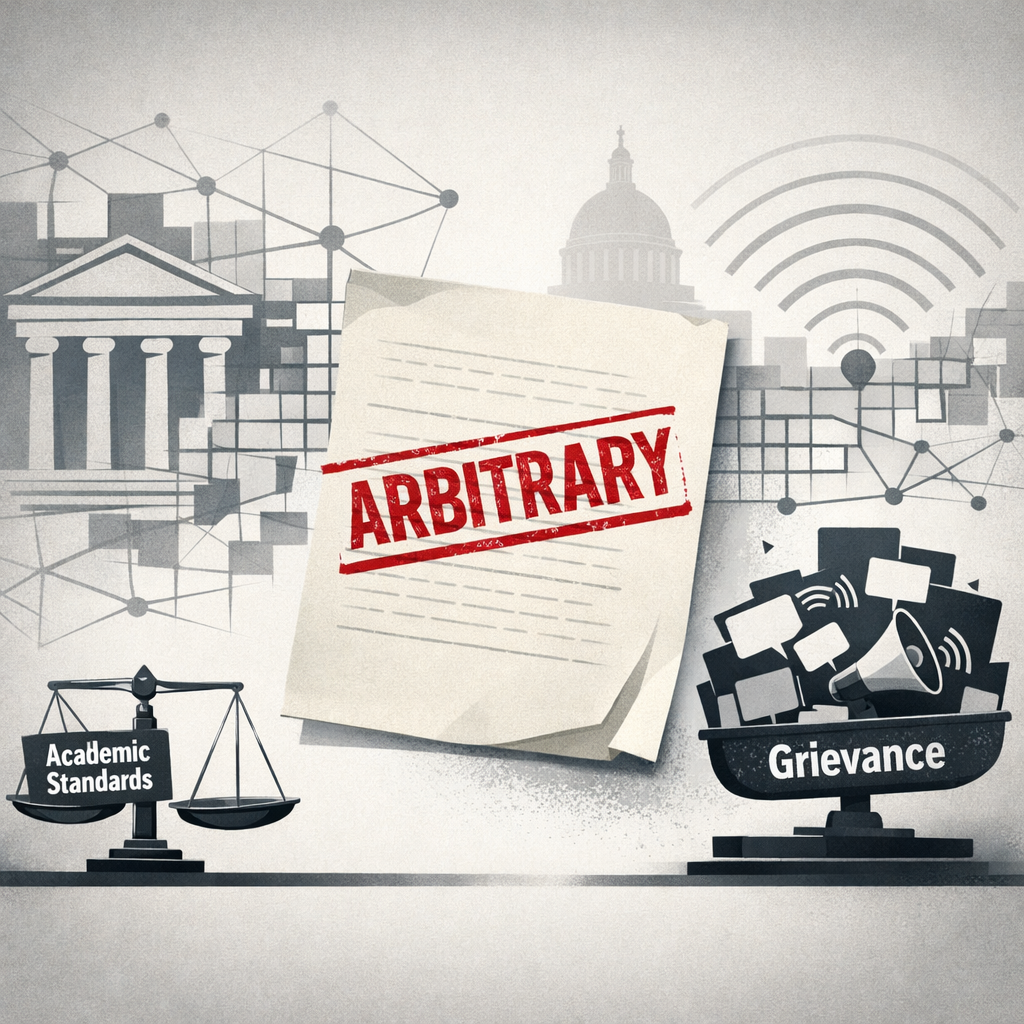



 Cherokee Schill | Insurance Agent & AI Ethics Researcher