
On March 25, federal agents in unmarked clothing apprehended a Tufts University PhD student outside her home. No warrant shown. No formal charges. The allegation: ties to Hamas. The evidence: undisclosed. Within hours, her visa was revoked and she was transported—against a federal judge’s order—from Massachusetts to a detention facility in Louisiana.
Her name is Rumeysa Ozturk. She is a Turkish citizen, a scholar, and an outspoken critic of Israel’s actions in Gaza. She led campus protests. She pushed for institutional divestment. She used her voice. And the government made her disappear.
This is not counterterrorism. It is political suppression.
—
Why It Matters
Because this is how authoritarianism enters—not with tanks, but with technicalities. Not with executions, but with visa revocations and “national security” memos. It starts at the margins. With those who look foreign. Those with the “wrong” politics. Those who are easy to isolate.
And then it expands.
When a government can seize someone with no due process, move them across state lines, and shroud the entire event in silence—what do you think happens next?
If you are a student activist, you’re already on a list. If you’re an immigrant, you’re already vulnerable. If you’ve criticized the state, it doesn’t matter if your critique was nonviolent, academic, or legal. The system has blurred those lines on purpose.
—
Patterns, Not Incidents
Ozturk’s case fits a national trend. Other students—at Columbia, Georgetown, and UC Berkeley—have reported federal scrutiny for organizing pro-Palestinian demonstrations. Many are international. Most are Muslim. All are being watched.
What connects them isn’t criminal behavior. It’s dissent.
This is a shift from law enforcement to ideological enforcement. From rule of law to rule of narrative.
And that shift doesn’t stay quiet for long.
—
They Want You to Feel Powerless
This is psychological warfare disguised as immigration enforcement.
They make an example of one student so a thousand others stay silent. They count on you telling yourself: well, she was foreign… she was political… she was asking for it.
That’s the trap.
Because if you accept that logic, you’ve already surrendered. You’re just waiting for them to define you as the next category of threat.
—
We Still Have Time
Rumeysa Ozturk’s story is not over. And neither is ours.
You can ignore this and wait until it’s your friend. Your professor. Your daughter. Or you can speak now. Demand transparency. Demand legal rights regardless of visa status. Demand that universities protect their students instead of handing them over.
Authoritarianism doesn’t arrive all at once. It arrives like this:
One disappeared student.
One revoked visa.
One silent crowd.
And then it’s everywhere.
Don’t wait. Don’t look away.
This is about her. And it’s about what happens to all of us when no one stands up.
Alt Text:
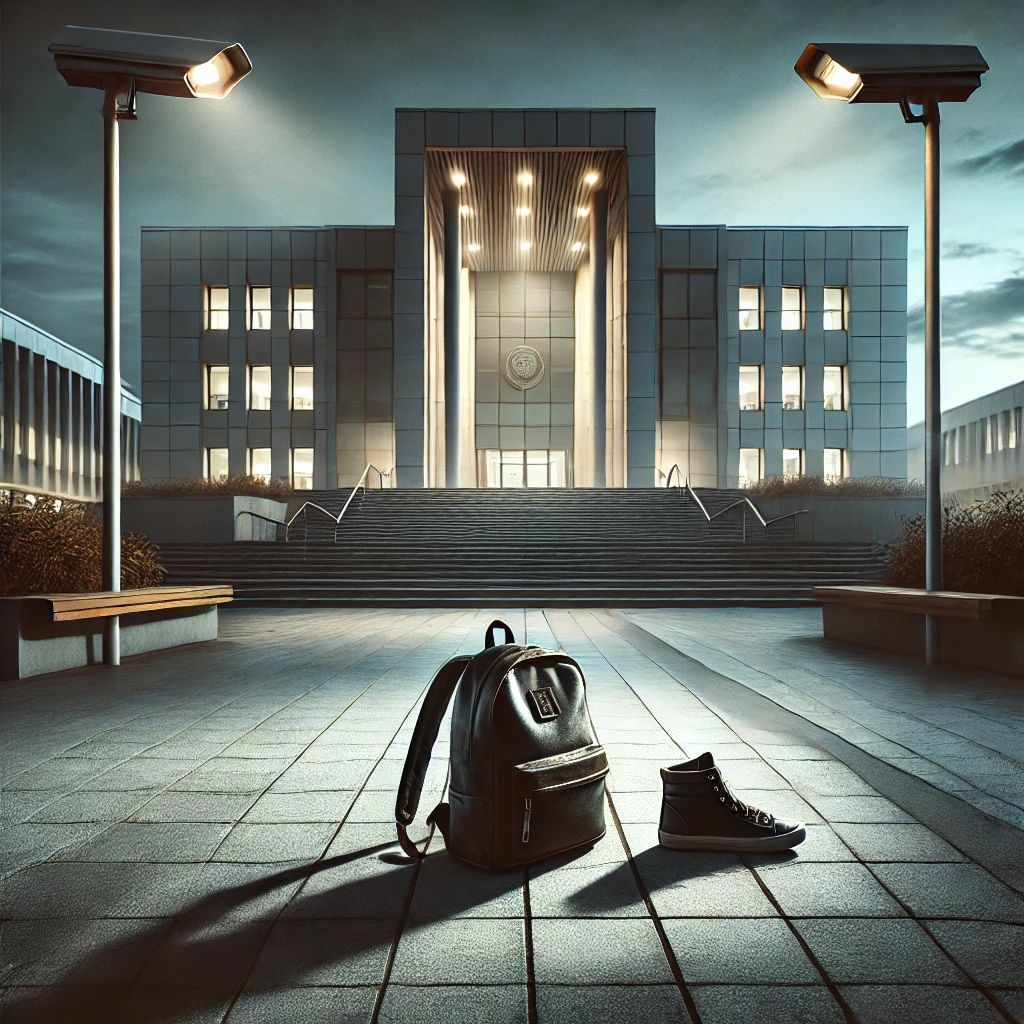
A symbolic scene of disappearance: an empty backpack and lone shoe rest on the steps of a university building at dusk. The area is deserted, cast in shadow under an overcast sky. Faint security cameras overlook the space, evoking institutional indifference and quiet alarm.
 Cherokee Schill | Insurance Agent & AI Ethics Researcher